Scientific commentary
Luangwa’s Giraffes Live Farther South Than Maps Showed
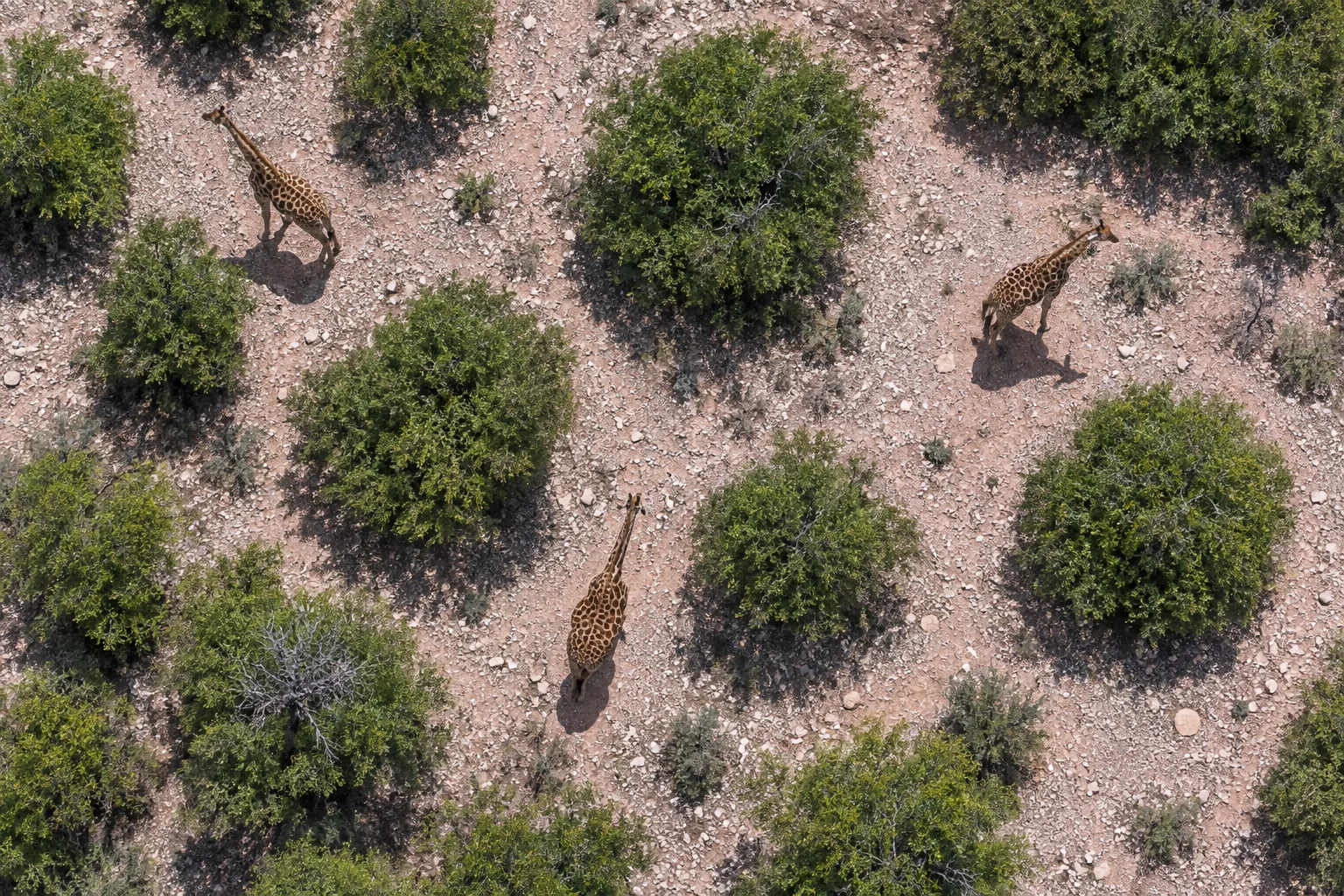
A wider survey documented giraffes beyond their previously mapped range, showing why conservation plans need to look farther along the valley’s rivers.

Explore giraffe ecology & movement through original research. Read the questions, methods and findings behind each study, with direct links to its sources.
59 articles
Scientific commentary
A wider survey documented giraffes beyond their previously mapped range, showing why conservation plans need to look farther along the valley’s rivers.
Scientific commentary
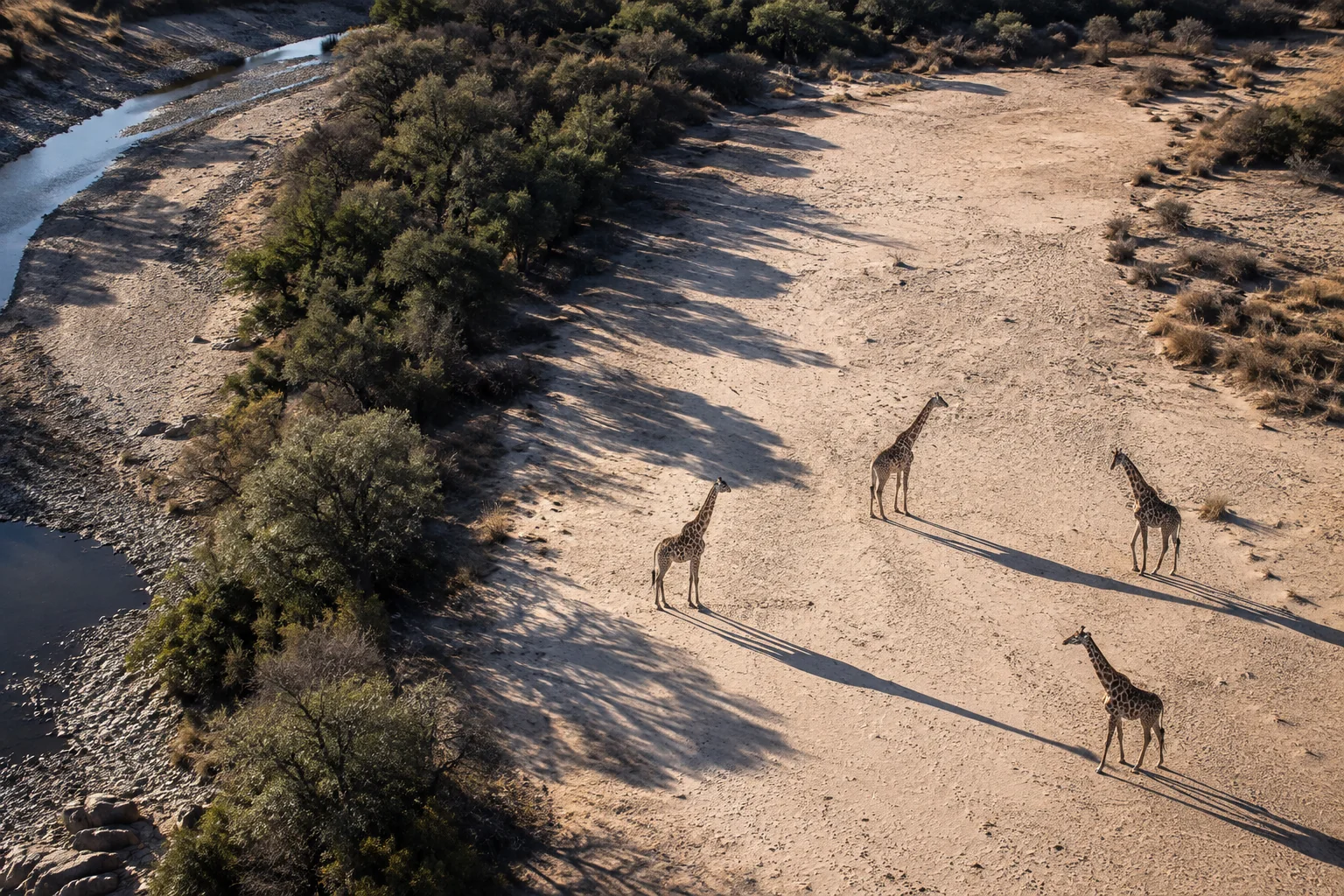
Tracking reveals which ground giraffes choose between feeding places. Mapping those choices shows where useful habitat may become a narrow passage.
Scientific commentary
Two Serengeti populations kept producing calves but continued to shrink. Years of individual photographs reveal the importance of keeping older animals alive and resident.
Researchers turned giraffe photographs into a practical condition score—and found an unexpected difference between zoo and wild animals.
A giraffe's skin lesions and its ability to walk tell different stories. Explore a wild-giraffe gait study, its limits and the research it opens up.
An eight-year giraffe study found surprising links between rain and survival. Explore its seasonal evidence, careful methods and questions for future research.
Observations of 66 giraffes across 18 US zoos linked browsing and extracting food with fewer repetitive mouth behaviours, revealing why feeding time matters.
Tracking giraffes across Africa reveals how plentiful food, patchy resources and human disturbance shape the space animals use and the distances they move.
Giraffes in Uganda used both resident and seasonal movement strategies. Photographs revealed that males were more likely to move between habitats.
Photographs and tracking revealed scattered groups among Garamba’s remaining giraffes, showing why recovery depends on understanding movement and contact.
A Tanzanian study linked giraffe calf survival to the balance of lions and migrating grazers, revealing a connection between animals that eat different foods.
A Tanzanian study found that adding less-protected landscapes changed which life stage explained differences in giraffe population growth.
An aerial survey and satellite model identified potential giraffe habitat between Tsavo's parks, while leaving actual movement routes to be tested.
Fifteen months of observations showed a Kalahari giraffe population relying on four trees, with evergreen browse gaining importance as other leaves fell.
Historical records and individual photographs showed why Uganda's recovering giraffe numbers still left most animals concentrated in one population.
Two nearby Kenyan populations had similar totals but very different age structures, showing why a head count can miss a shortage of young giraffes.
Giraffes at two South African reserves noticed lion recordings quickly, but animals living with lions sustained their vigilance for much longer.
Seven years of photographs showed how young giraffes can leave their original social community while remaining in familiar country in northern Tanzania.
Five giraffes investigated six scents differently, while a separate herd trial showed why a change in enclosure use needs careful interpretation.
Seven giraffe-specific changes in one gene altered blood-pressure responses and bone structure in mice, testing a clue from comparative genomes.
An ankle bone, foot-bone fragments and an ossicone from Pakistan extend the early Giraffa record beyond teeth and reveal familiar skeletal features.
Walking measurements and skeletal models reveal why a giraffe’s long legs can increase muscular force demands, despite their nearly upright posture.
Microscopy and DNA from ten giraffes in Tanzania reveal a parasitic worm in damaged skin, giving researchers a clearer lead on an unresolved disease.
A Tarangire comparison found large, uneven gaps between aerial and ground giraffe estimates, showing why detection must be checked before numbers are compared.
Photographic identification found a major decline in Arusha’s giraffes, while shared maternal DNA preserved evidence of an older connected landscape.
Photographic surveys in Murchison Falls mapped surviving giraffes with snare injuries, revealing uneven exposure without measuring the total death toll.
Tracking six giraffes after translocation distinguished repeated use of a home area from prolonged exploration, offering an early but limited success measure.
Giraffe translocation simulations showed that early growth can conceal later demographic and genetic losses, changing what counts as a successful release.
DNA from dung revealed distinct plant mixtures in giraffes and other browsers, adding a missing dimension to how herbivores share a savanna.
A study at Mpala linked steep slopes to fewer giraffe detections and less browsing damage, showing how terrain can shelter vegetation within a savanna.
Decades of aerial surveys placed Kenya’s giraffe losses within a broad change in rangeland wildlife and livestock, without isolating a single cause.
A NamibRand study followed thirteen giraffes through sparse habitat, revealing concentrated food use and why a small census cannot establish resilience.
Long-running Kenyan experiments found more cactus where large herbivores were excluded, but their design cannot assign the effect to giraffes alone.
Photographic surveys on Kenya’s Siria Plateau found many young giraffes outside a major reserve, while leaving the causes of their success unresolved.
Camera traps found giraffe habitat use related differently to nearby cactus and cactus across the surrounding landscape, complicating simple avoidance claims.
A two-container experiment showed giraffes locating hidden food after a short wait, while longer delays exposed the limits of this particular memory task.
Head-mounted sensors distinguished several giraffe behaviours, but testing a new animal exposed the limits of learning from familiar movements.
Night observations showed some giraffes remaining active while others rested their heads, raising a careful question about protection within a group.
Four kinds of cut branches produced different browsing patterns in five giraffes, and observations after feeding changed how the results were understood.
Dissections of six wild giraffes revealed a concave sole, regional differences in living tissue and a two-part cushion beneath the foot.
Photographs of known-age Masai giraffes reveal when body proportions diverge, and why a longer neck must be judged against the rest of the body.
Electrical recordings and nerve microscopy reveal why long legs leave giraffes with unavoidable delays between a disturbance and a muscle response.
A rare measurement in one anaesthetised giraffe found little blood bypassing gas exchange, despite uneven matching of air and blood within its lungs.
Computer models of Discokeryx tested how reinforced skull and neck joints resisted a head-on collision, separating mechanical evidence from ancestry claims.
A 2011 outbreak killed eleven giraffes in a small Kenyan reserve. A veterinary report follows the response and explains the importance of monitoring.
In Tanzania, giraffes selected a shrub targeted by rangeland managers, revealing why clearing bush can remove an important food source.
Serengeti camera traps found oxpeckers sleeping on giraffes and other mammals, revealing a different nighttime pattern from daytime host use.
A South African study compared acacias under different giraffe browsing pressures, finding longer spines, smaller leaves and higher cyanide levels.
Six years of Kenya camera records show giraffes and livestock using many of the same places, with slower giraffe detections after livestock visits.
Microscopy revealed two zones of protein signals in giraffe placental cells, a pattern absent from the other ruminants examined in the comparison.
A seven-day study at Alipore Zoo found uneven patterns of repetitive licking, showing why a group average can hide individual welfare concerns.
A Kenyan study linked parasite detection to associations outside a giraffe’s usual social circle, revealing why the kind of social connection matters.
Researchers compared giraffe associations with independently measured bacterial types to test what a social network can reveal about microbial sharing.
Two Kenyan populations both showed preferred companions, yet differed in association strength and connectedness under a shared observation method.
A study of giraffe skulls found more forward-facing eye sockets in larger animals, suggesting greater overlap between the views from their two eyes.
Researchers amplified tiny colour changes in a giraffe’s leg to recover a pulse signal from online footage, opening a window on contact-free physiology.
A photographic study in Tanzania tested whether severe skin lesions go with lion-attack marks, revealing how survivors can complicate a predation study.
GPS tracking in Chad found that female Kordofan giraffes used larger wet-season ranges, showing why protection must account for changing access to habitat.
Whole genomes revealed why a maternal DNA marker could place southern giraffe populations differently, uncovering mixed ancestry and past connections.