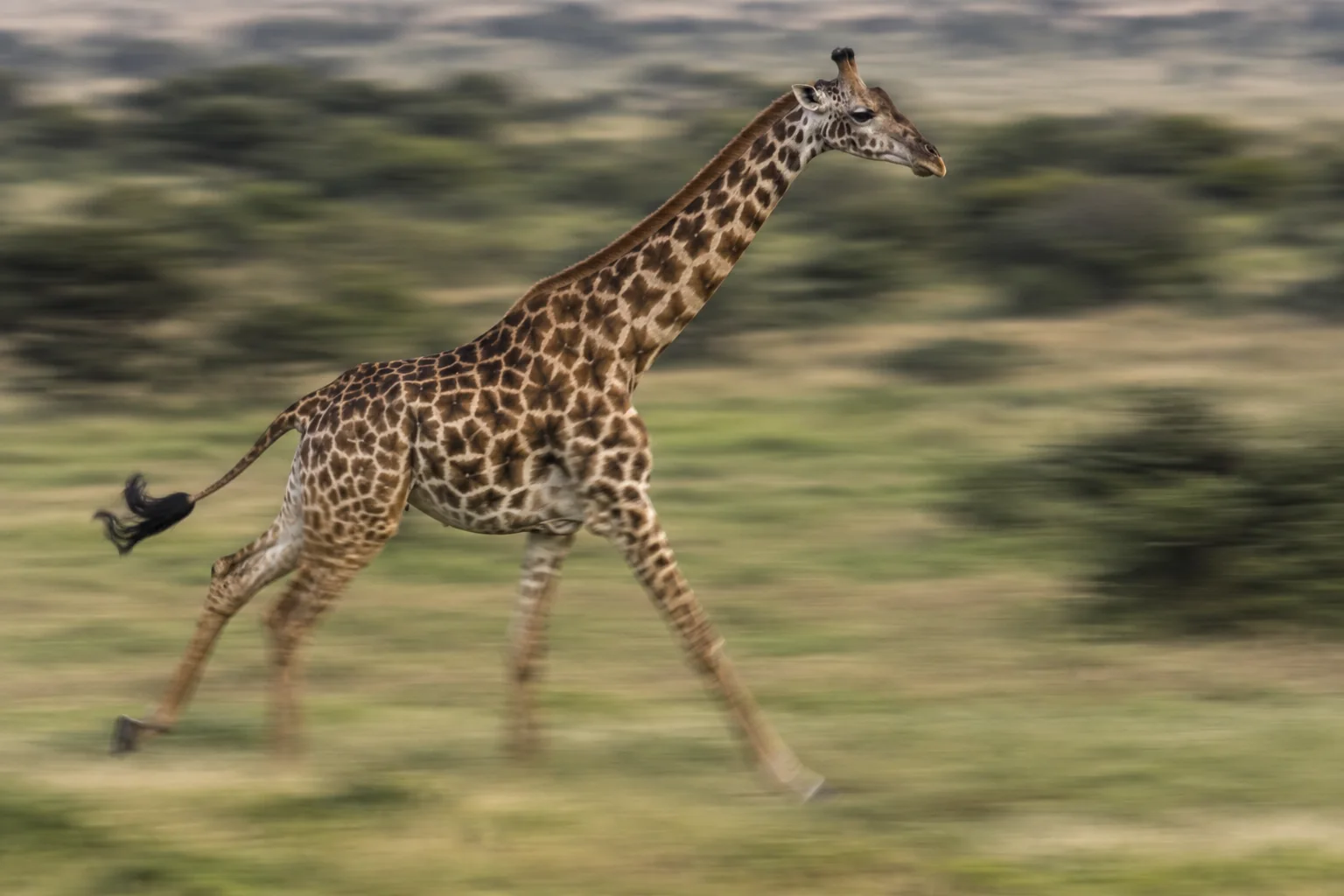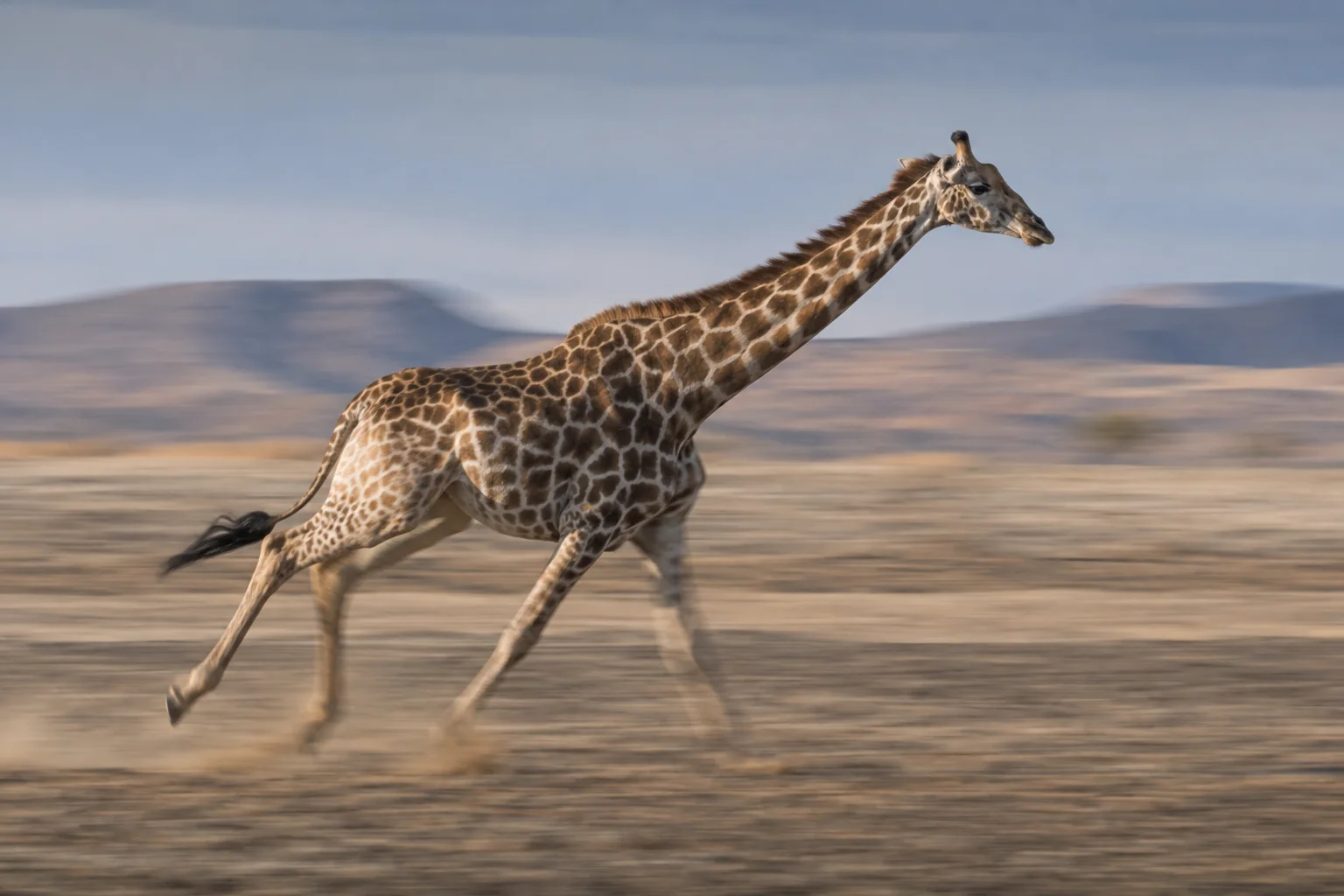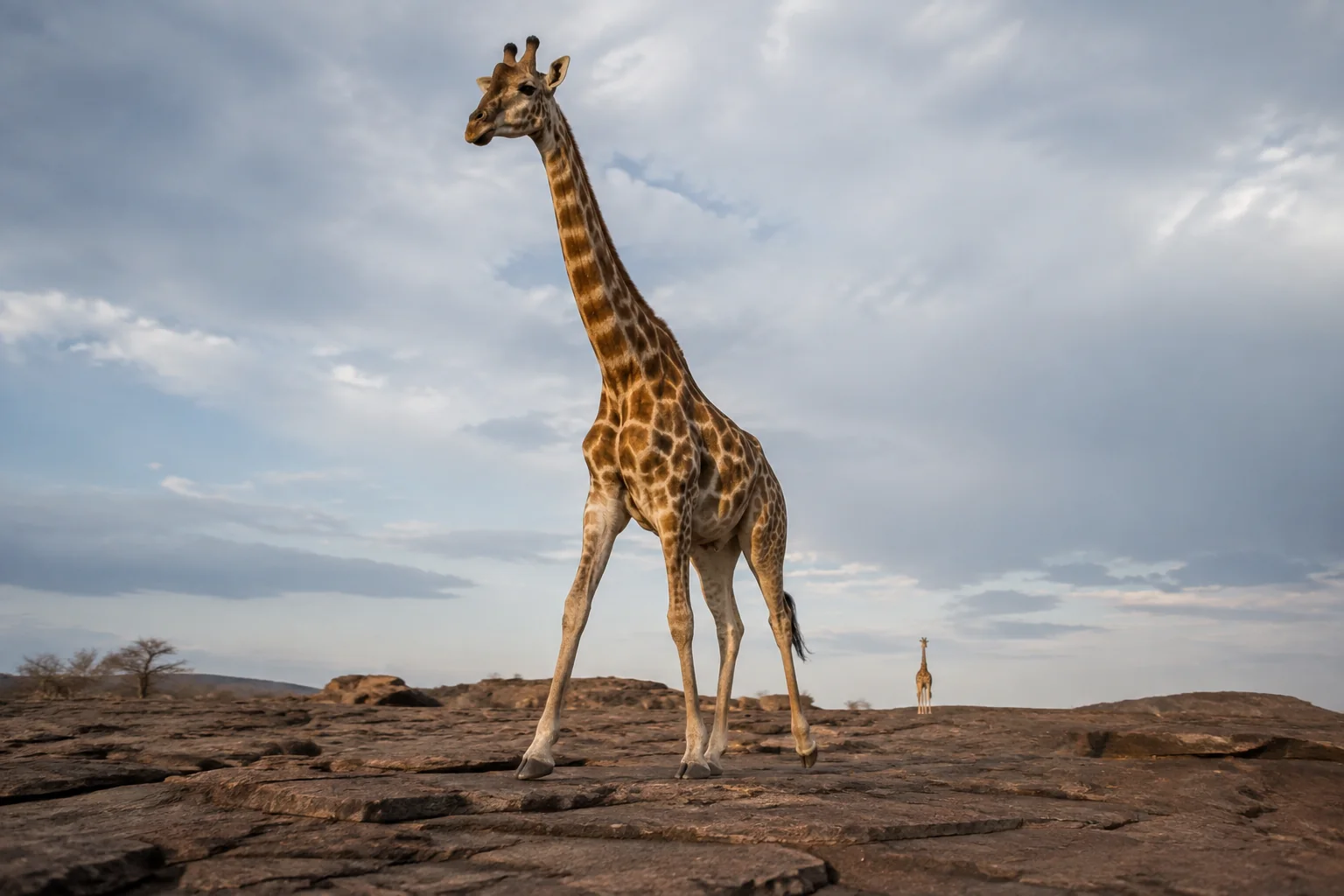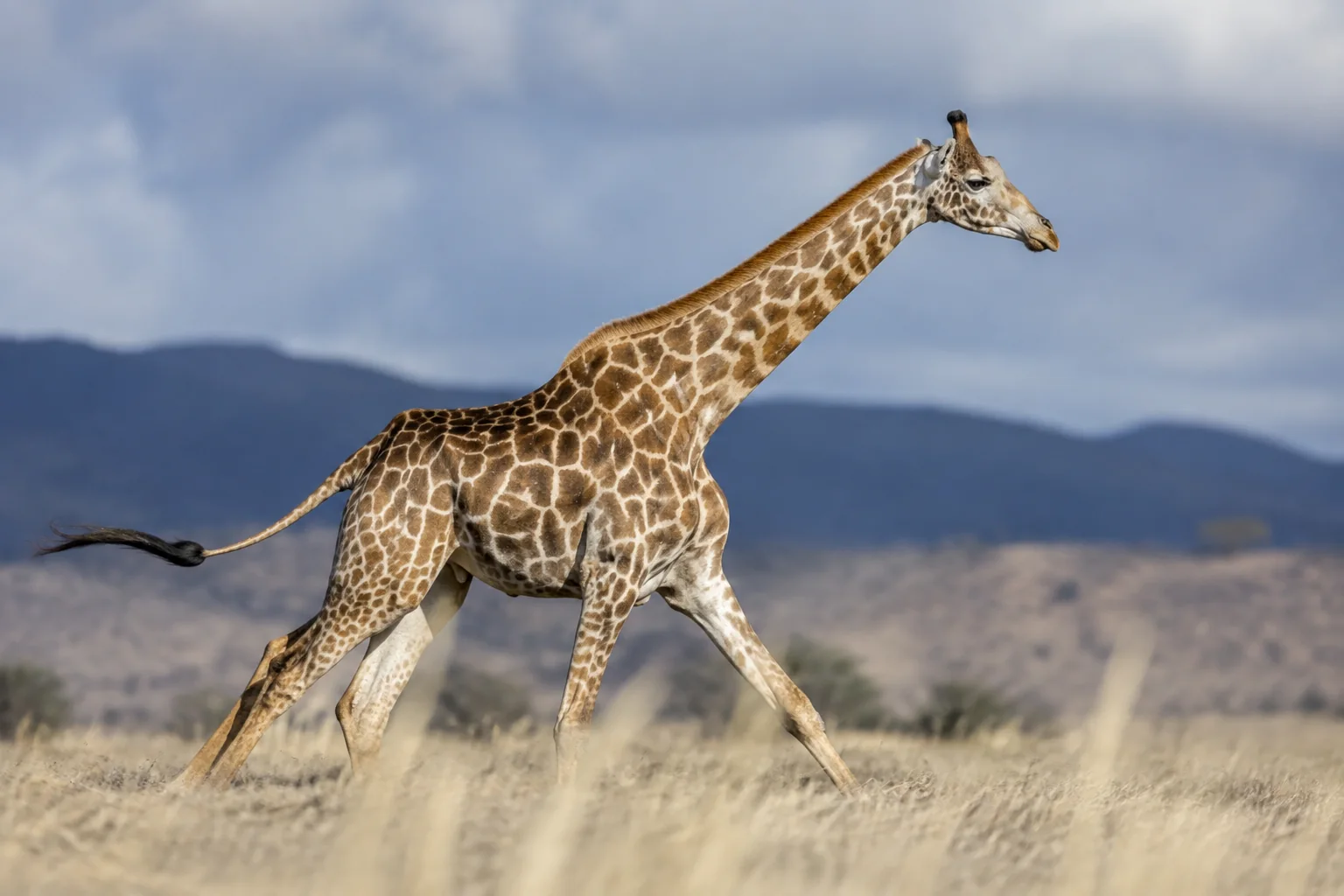
A giraffe’s legs look like an efficient way to stand high above the ground. They are long, slender and held relatively upright. But height and mechanical leverage are not the same thing. A tall limb can expose its joints to large turning forces that the muscles must work hard to oppose.
In 2022, Christopher Basu and John R. Hutchinson combined walking measurements with models of giraffid skeletons to investigate that problem. Their estimated giraffe forelimb leverage was much lower than a prediction based on smaller mammals. Comparisons with the okapi and the extinct, heavily built Sivatherium suggested why: extending a leg does not necessarily give its muscles a matching increase in leverage.
The two levers at every loaded joint
When a foot presses against the ground, the ground pushes back. Unless the line of that force passes directly through a joint, it tends to rotate the bones around the joint. Muscles produce an opposing turning effect, helping prevent the limb from folding under the animal.
The strength of each turning effect depends both on the force and on its perpendicular distance from the joint. That distance is the lever arm. A muscle with a short lever arm must pull harder to balance an external force acting through a longer one.
The researchers expressed this relationship as effective mechanical advantage: the muscle lever arm divided by the ground-force lever arm. A higher value generally means less muscle force is needed to balance a given ground force. Near-upright posture can help by keeping joints close to the force line, but it cannot make all the relevant distances disappear throughout a step.
Building a moving forelimb
The anatomical foundation was a forelimb from an adult giraffe that had died. CT scans and dissection supplied bone shapes, muscle paths and muscle dimensions. Some missing anatomical information came from a younger specimen. The resulting model was scaled to match the size of the living giraffe whose steps were analysed.
An earlier recording session had collected videos and force-platform measurements from three adult reticulated giraffes. For this detailed analysis, the researchers selected 14 unobscured walking steps from one individual, moving at about 0.8–1.2 metres per second. Thus, the experiment contained repeated observations of one walker, rather than a sample of 14 giraffes.
Video supplied joint positions through each step. The platform supplied the force exerted against the ground. Combining those observations with the anatomical model allowed the authors to estimate joint turning forces and the muscle forces needed to balance them. The muscle forces were calculated, not measured by instruments implanted in living muscles.
A large animal with unexpectedly low leverage
The estimate focused on the middle portion of stance was about 0.29. A relationship fitted to smaller mammals, then extended to the giraffe’s body mass, predicted a value around 1.3. The giraffe fell well below the prediction interval—roughly one quarter of the expected value.
That is a comparison against an extrapolation, not a universal rule that all large mammals should obey. The other species had also been measured under different locomotor conditions, around the transition from trotting to galloping. The giraffe was walking. These qualifications affect interpretation, but the discrepancy was large enough to challenge the idea that a giraffe’s height automatically gives it excellent locomotor leverage.
Calculations covering the entire stance phase gave a similarly low overall value. Changing the assumed point where the ground force acted under the foot altered the result modestly without removing the principal difference from the smaller-mammal prediction.
The mechanical explanation was that long limb segments and high joints created substantial ground-force lever arms. Muscle attachments did not supply proportionally large opposing lever arms. Looking at the upright outline alone therefore missed the relationship between the two sides of the joint.
The fossil relative that supplied a useful comparison
To separate limb proportions from body size, the researchers built simpler models for giraffe, okapi and Sivatherium. These comparisons used assumed postures and giraffe-derived patterns of ground-force direction. They were controlled geometric comparisons, not direct recordings of the other species walking.
Sivatherium was a particularly useful contrast because its substantial body was carried on shorter, more robust limbs. Its elbow had a strongly projecting olecranon—the bony attachment region that provides leverage for the muscles extending the joint. Relative to shoulder height, the model gave that elbow lever arm approximately twice the giraffe value.
The combination of shorter external lever arms and larger muscle lever arms produced greater estimated overall leverage in Sivatherium, about twice the giraffe model’s value. The okapi fell between them. The comparison suggests that a large body does not force every giraffid into the same mechanical arrangement.
The exact fossil result remains conditional on reconstruction. Joint angles, missing bones and muscle lever arms require assumptions, and the models held internal joint angles fixed during their simulated steps. They identify a plausible effect of skeletal proportions without recreating an observed extinct gait.
Force demand is not a measured running limit
Lower leverage implies greater muscle force for a given external load. It does not by itself establish how much energy an animal uses per kilometre. The study’s estimates of active muscle volume were broadly compatible with other quadrupeds, possibly because giraffes combine relatively short muscle fibres with long steps. No direct metabolic measurement established the energetic cost of the observed walking.
Nor did the researchers measure maximal running performance. They proposed that force demands could help constrain athletic ability, a hypothesis that needs faster-gait measurements or more complete simulations.
The secure conclusion concerns support during walking: giraffe height brings a leverage problem as well as a feeding opportunity. Their limbs illustrate how a feature useful for reaching above other browsers can impose demands elsewhere in the same body.
Sources
Christopher Basu, John R Hutchinson (2022). Low effective mechanical advantage of giraffes’ limbs during walking reveals trade-off between limb length and locomotor performance. Proceedings of the National Academy of Sciences of the United States of America. DOI: 10.1073/pnas.2108471119. Read the full paper.
Christopher Basu, Peter L. Falkingham, John R. Hutchinson (2016). The extinct, giant giraffid Sivatherium giganteum: skeletal reconstruction and body mass estimation. Biology Letters. DOI: 10.1098/rsbl.2015.0940. Read the full paper.