Scientific commentary
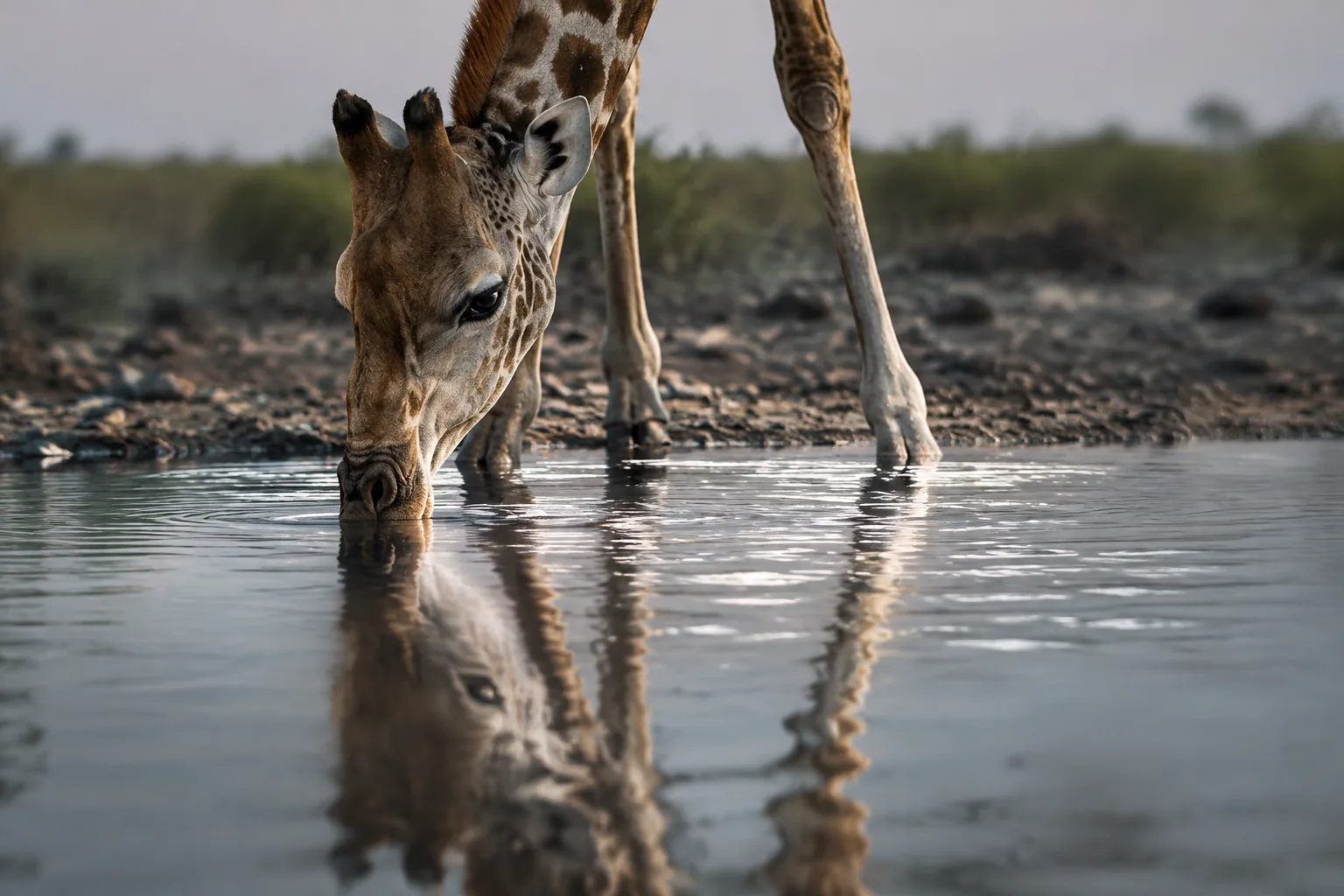
A Giraffe’s Swallow May Help Pump Blood Back to Its Heart
Lowering the head can leave blood collecting in neck veins. Recordings during real drinks suggest the muscles moving water down the neck may also help blood return.

Explore giraffe anatomy & morphology through original research. Read the questions, methods and findings behind each study, with direct links to its sources.
49 articles
Scientific commentary
Lowering the head can leave blood collecting in neck veins. Recordings during real drinks suggest the muscles moving water down the neck may also help blood return.
Scientific commentary
Zoo giraffes were expected to look leaner than their wild counterparts. A scale built from hip photographs revealed the opposite pattern—and a way to monitor condition from a distance.
Scientific commentary
A visible wound is one observation. What happens when the animal takes its next step is another.
Scans and microscopic examinations of giraffe feet reveal damage across bone, tendons and hoof attachments, opening questions about earlier detection.
A small study combined blood measures and body condition to investigate whether accumulated life events leave a measurable physiological signal in giraffes.
Three-dimensional scans of giraffe and five other mammal hearts reveal branching muscle groups, changing how researchers picture the pumping wall.
A numerical giraffe model shows how long legs raise the heart and reduce the pumping cost of reaching the same height with an even longer neck.
CT reconstructions of three giraffe heads reveal an adult-like brain blood-supply pattern at birth, alongside changes around developing ossicones.
Computer models of mammal vertebrae suggest that the giraffe’s neck-like first chest vertebra sacrifices compressive robustness for mobility.
Fossil neck bones of Samotherium reveal a mixture of giraffe-like, okapi-like and intermediate features, showing how complex neck evolution can be.
Rich fossils from Spain revealed Decennatherium rex, connecting its four-ossicone headgear and skeleton with the history of giant extinct giraffids.
A remarkably preserved fossil ossicone from Inner Mongolia helped researchers name Qilin and reassess an early branch near living giraffes.
An ankle bone, foot-bone fragments and an ossicone from Pakistan extend the early Giraffa record beyond teeth and reveal familiar skeletal features.
A three-dimensional fossil reconstruction estimated Sivatherium at about 1.25 tonnes, challenging elephant-sized claims based on its imposing bones.
A seven-giraffe study found rumen microbial communities clustered by recent diet, while fluid and solid samples showed less overall separation.
Walking measurements and skeletal models reveal why a giraffe’s long legs can increase muscular force demands, despite their nearly upright posture.
A more continuous okapi genome revealed striking chromosome differences from giraffes, showing why close relatives need not share the same DNA packaging.
Head-mounted sensors distinguished several giraffe behaviours, but testing a new animal exposed the limits of learning from familiar movements.
Sensors followed three wild giraffes through whole nights, revealing two periods of greater rest separated by increased activity around midnight.
Dissections of six wild giraffes revealed a concave sole, regional differences in living tissue and a two-part cushion beneath the foot.
Laser scans of giraffes, okapis and rhinoceroses show how to compare trunk shape, while exposing the gap between measuring outline and measuring fat.
Photographs of known-age Masai giraffes reveal when body proportions diverge, and why a longer neck must be judged against the rest of the body.
Microscopic lines in giraffe molars record different rhythms of growth, revealing why the right clock matters when reconstructing an animal’s life.
An isolated vertebra and mismatched limb estimates expose the assumptions behind reconstructing the size and shape of the fossil giraffe Giraffa sivalensis.
A newborn and an adult giraffe helped test how changing joint geometry affects attempts to reconstruct the movements of a sauropod neck.
Measurements from 46 giraffes reveal a relatively narrow windpipe and lungs that grow more slowly than body mass, with consequences for breathing models.
A study of wild giraffes found that stomach and intestinal mass scale differently with body size, raising new questions about how digestion changes.
Microscopic study of two pregnancies found hormone-related proteins in maternal, placental and fetal tissues, revealing an unexpectedly distributed system.
Computer models of Discokeryx tested how reinforced skull and neck joints resisted a head-on collision, separating mechanical evidence from ancestry claims.
Serengeti camera traps found oxpeckers sleeping on giraffes and other mammals, revealing a different nighttime pattern from daytime host use.
A study of East African giraffe genetics found that the timing of rain distinguished regional groups better than several other habitat measures.
Fossil comparisons and a mathematical transformation reveal how different parts of giraffe neck vertebrae contributed unequally to their length.
A small giraffid from Pakistan had fused ossicone bases resembling those of a much larger relative, yet its family-tree position told another story.
Microscopic growth marks in extinct giraffid bones reveal interruptions in growth, but a South African study shows why counting them is not enough.
A giraffe artery study combined dissection with a tubing experiment to explore brain blood flow. The distinction between anatomy and model matters.
A comparison of giraffe and porpoise brains found a shared group of small orexin cells, while cell counts and cell sizes differed between them.
A chromosome-scale giraffe genome combined DNA sequencing with physical maps, showing why reading genetic letters is only part of the problem.
Measurements of beating giraffe hearts revealed how a thick wall and small pumping chamber control muscle stress while limiting blood per beat.
Microscopy revealed two zones of protein signals in giraffe placental cells, a pattern absent from the other ruminants examined in the comparison.
Dissections mapped giraffe salivary glands and ducts, revealing a familiar ruminant arrangement with important differences in shape and position.
A newborn giraffe developed muscle damage linked to low vitamin E even though its mother’s estimated dietary supply exceeded cited giraffe feeding guidance.
Examination of one adult giraffe found retained testes and abnormal external anatomy, showing why appearance and hormone levels cannot tell the whole story.
Observations in Namibia connect giraffe urine sampling, a curled lip and the sensory route that may help males find females approaching fertility.
Two Kenyan populations both showed preferred companions, yet differed in association strength and connectedness under a shared observation method.
A computer model explored giraffe buoyancy. Discover why staying afloat, keeping the nose clear and moving through water are different challenges.
Giraffes sometimes chew bones. Field observations and a digestion experiment reveal why the mineral explanation needs a closer look.
A study of giraffe skulls found more forward-facing eye sockets in larger animals, suggesting greater overlap between the views from their two eyes.
Whole genomes revealed why a maternal DNA marker could place southern giraffe populations differently, uncovering mixed ancestry and past connections.
A study of 515 giraffe skulls separated growth and sex differences from species patterns, revealing how distinctive head shapes support genetic evidence.