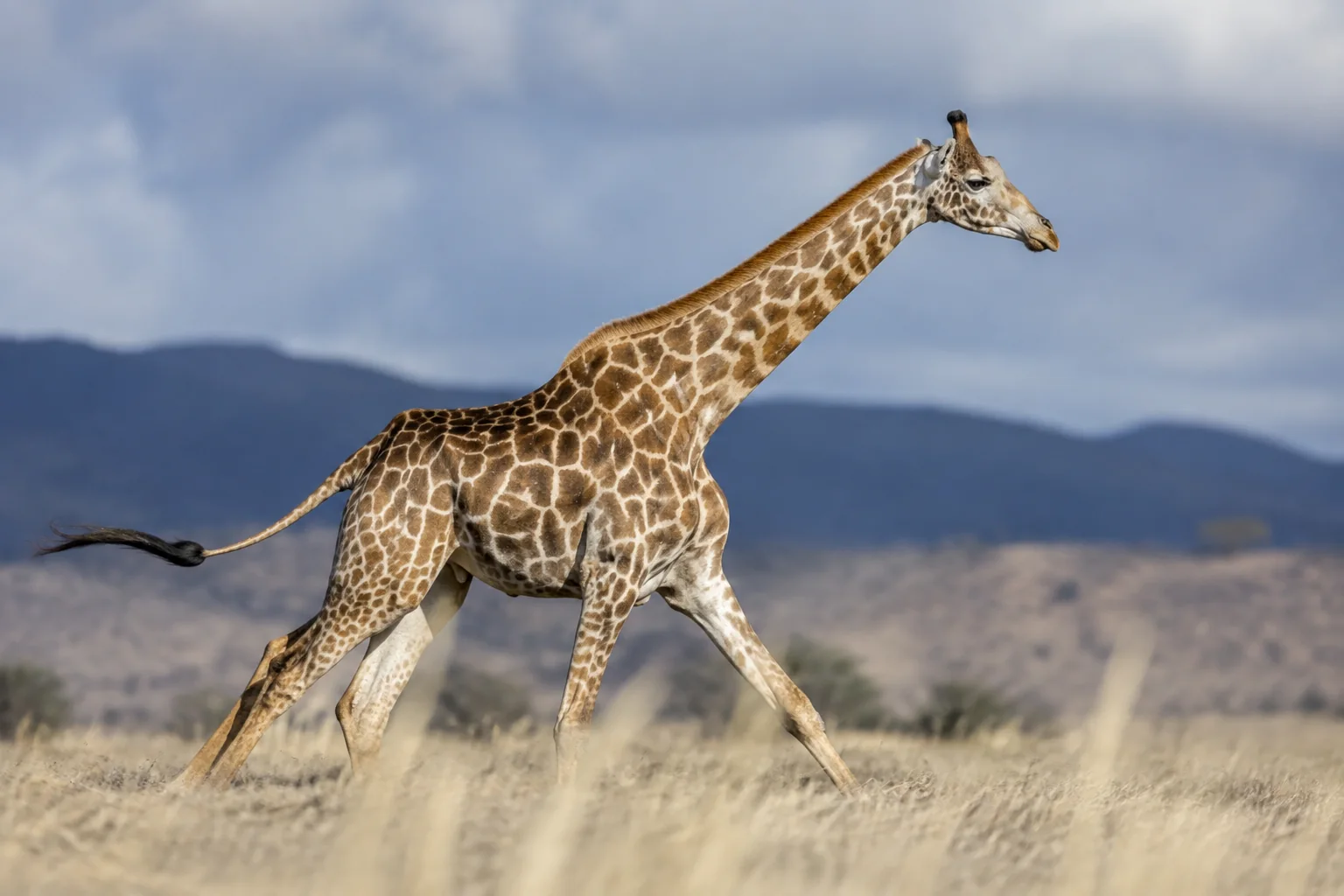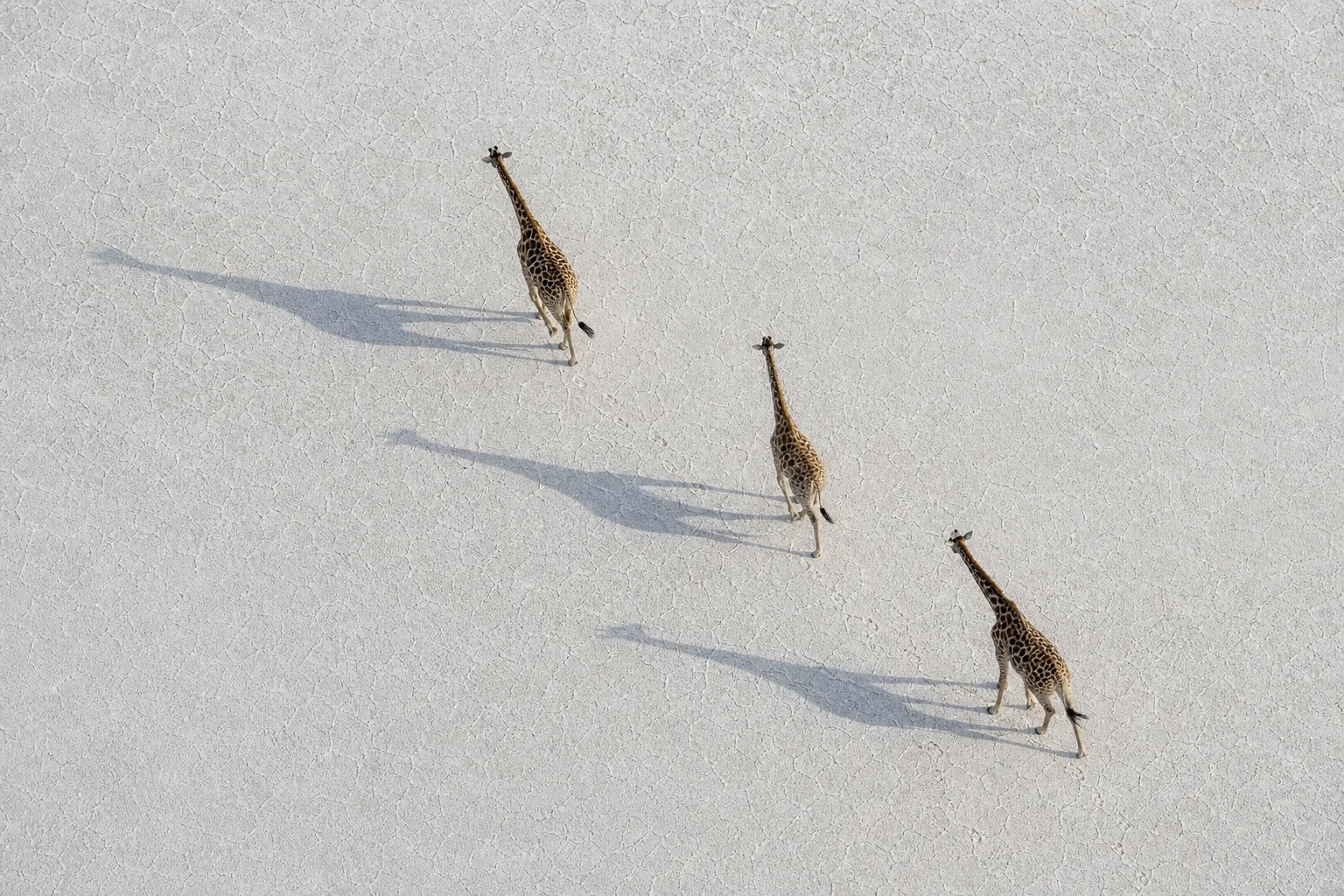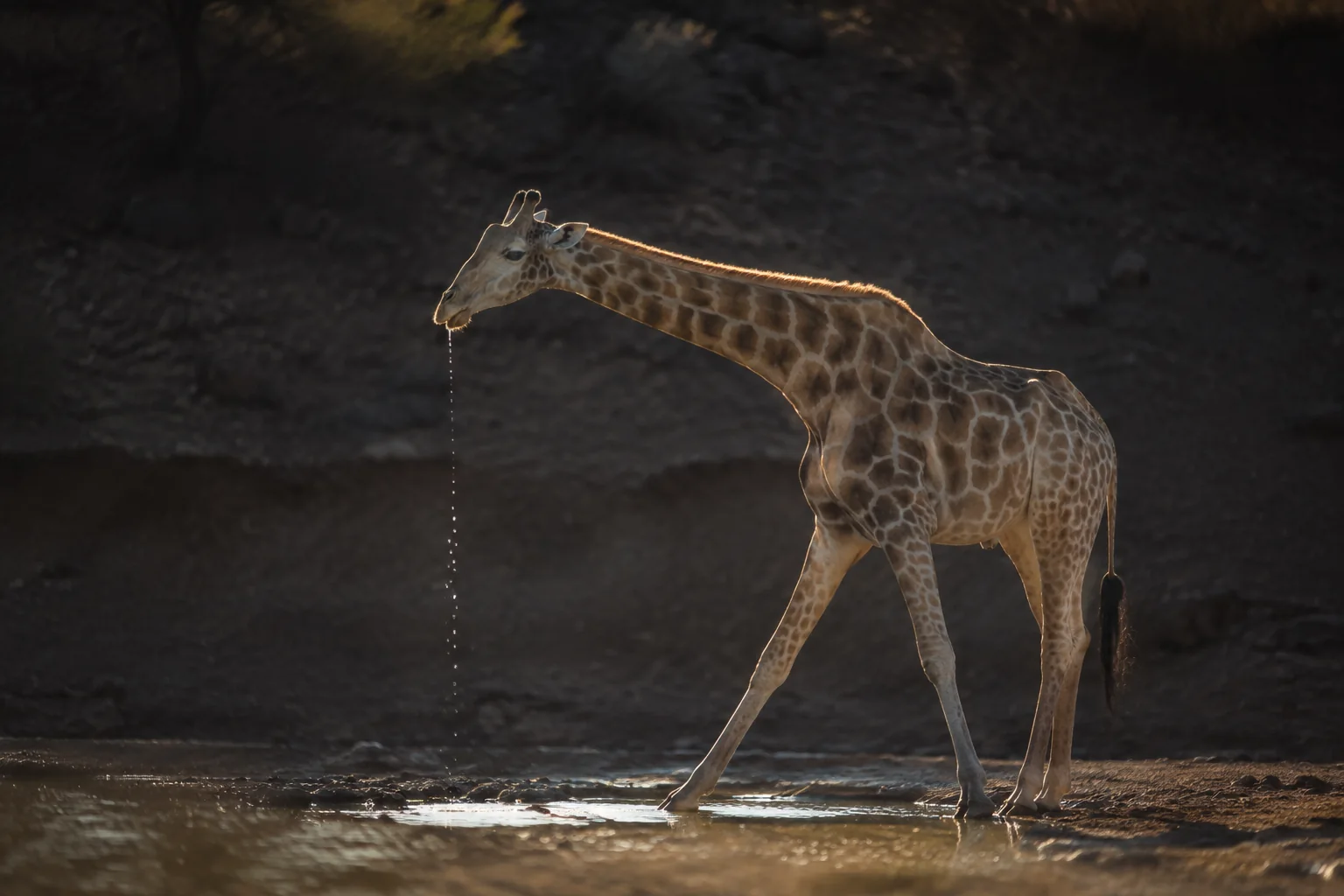
A photograph of a giraffe in a river leaves an important question unanswered: are its feet still touching the bottom? A very tall animal can stand in water deep enough to conceal the legs of a smaller one. To understand swimming, we have to separate support from the riverbed, support from the water, and the ability to move once the feet are free.
Donald Henderson and Darren Naish investigated this distinction with digital giraffe and horse models. They also compared the animals at equal mass, helping separate the effects of shape from size.
Water supports a volume, not a silhouette
Imagine lowering a sealed container into a tank. As more of it enters the water, it pushes more water aside. The upward force grows with the weight of that displaced water. If this force balances the container’s weight before the whole container is submerged, it floats at the surface.
An animal adds complications: its body contains materials of different densities and air spaces, and it can change posture. Height alone tells us little about whether it will float. A long neck contributes both weight and volume; we need to consider the entire body.
The distribution matters too. Think of a floating tray loaded heavily at one end. It tips until the submerged shape supplies enough support in the right places. Likewise, knowing that water can hold up an animal does not tell us where its nose will be.
The giraffe model settled with its hindquarters higher than its shoulders and its neck directed forward, leaving its nostrils submerged. A living animal would need to adjust that posture to breathe. Lung volume was uncertain, although halving the assumed volume still left the model buoyant.
Staying up is different from going somewhere
A floating object can remain supported while drifting helplessly. An animal attempting a crossing also needs propulsion, a way to maintain its orientation, and access to air. Those requirements make a simple “yes” or “no” answer about swimming less informative than it first appears.
To push water backwards, a limb has to move through it. Swing your own hand slowly and then quickly through a basin: the faster movement meets more resistance. The returning stroke matters as well. Repeated paddling involves accelerating, slowing and reversing a limb, rather than merely holding it in place.
A long limb also places some of its mass farther from the joint around which it swings. That changes its resistance to rotation. Length can therefore be useful for reaching while making rapid changes of direction more demanding. The mechanics of giraffe walking explore a related distinction on land: an impressive outline does not, by itself, establish an efficient movement.
Henderson and Naish inferred substantial difficulties for aquatic movement from their calculations. They did not simulate a complete paddling cycle or measure swimming speed, endurance or energy use in live giraffes.
What would make a crossing informative?
The next useful observation would show how support changes during a naturally occurring crossing. A visible body moving across a channel is not enough: a viewer needs some way to distinguish steps against the bottom from strokes made while floating.
A continuous record could also show whether the head stays clear, whether the animal maintains its direction, and how it reaches the bank. Water depth, current and the slope of the exit would help interpret the behaviour. Such observations should come from crossings that animals undertake themselves, without driving them into water.
This distinction matters when thinking about connections between giraffe habitats. A blue line on a map does not describe the same obstacle in every season or at every point along a river. Demonstrating a crossing at one place would answer a local question; it would not establish that any deep channel is passable.
For the reader, the useful question has changed. Instead of treating the giraffe’s unusual proportions as an automatic verdict, ask what keeps the body supported, what keeps the airway clear, and what produces forward movement. Each requires its own evidence.
Sources
Donald M. Henderson and Darren Naish (2010). Predicting the buoyancy, equilibrium and potential swimming ability of giraffes by computational analysis. Journal of Theoretical Biology, 265, 151–159. DOI · Author’s full paper.