Scientific commentary
A Giraffe’s Swallow May Help Pump Blood Back to Its Heart
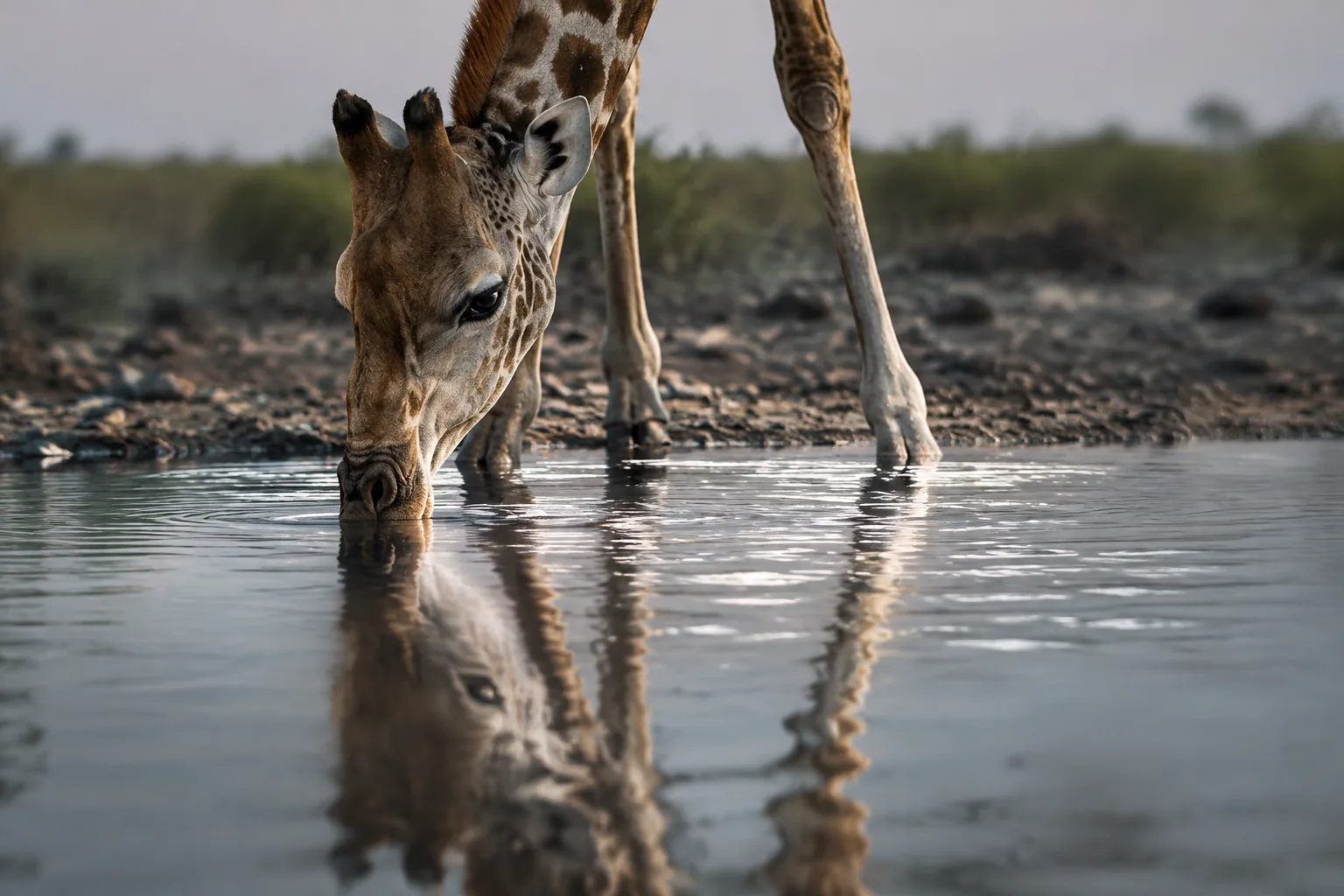
Lowering the head can leave blood collecting in neck veins. Recordings during real drinks suggest the muscles moving water down the neck may also help blood return.

Explore giraffe physiology through original research. Read the questions, methods and findings behind each study, with direct links to its sources.
29 articles
Scientific commentary
Lowering the head can leave blood collecting in neck veins. Recordings during real drinks suggest the muscles moving water down the neck may also help blood return.
Scientific commentary
Four months without visitors created an unusual comparison, but the animals’ lives kept changing while the gates were closed.
Scientific commentary
Researchers tested a way to look beyond a single stress hormone, using stored samples and the animals’ medical histories.
GPS records, observations and dung samples revealed how seven giraffes responded to researchers—and why appearing accustomed to people can mislead.
Seven giraffe-specific changes in one gene altered blood-pressure responses and bone structure in mice, testing a clue from comparative genomes.
A numerical giraffe model shows how long legs raise the heart and reduce the pumping cost of reaching the same height with an even longer neck.
CT reconstructions of three giraffe heads reveal an adult-like brain blood-supply pattern at birth, alongside changes around developing ossicones.
A seven-giraffe study found rumen microbial communities clustered by recent diet, while fluid and solid samples showed less overall separation.
A study of milk from five giraffes traced chemical changes late in lactation, revealing a transition whose cellular causes still need testing.
Dissections of six wild giraffes revealed a concave sole, regional differences in living tissue and a two-part cushion beneath the foot.
Laser scans of giraffes, okapis and rhinoceroses show how to compare trunk shape, while exposing the gap between measuring outline and measuring fat.
Electrical recordings and nerve microscopy reveal why long legs leave giraffes with unavoidable delays between a disturbance and a muscle response.
A rare measurement in one anaesthetised giraffe found little blood bypassing gas exchange, despite uneven matching of air and blood within its lungs.
Measurements from 46 giraffes reveal a relatively narrow windpipe and lungs that grow more slowly than body mass, with consequences for breathing models.
A study of wild giraffes found that stomach and intestinal mass scale differently with body size, raising new questions about how digestion changes.
Microscopic study of two pregnancies found hormone-related proteins in maternal, placental and fetal tissues, revealing an unexpectedly distributed system.
A study of twelve zoo giraffes found different bacterial and fungal communities in animals with diarrhoea, raising questions about cause and recovery.
A giraffe artery study combined dissection with a tubing experiment to explore brain blood flow. The distinction between anatomy and model matters.
Urine from 44 zoo giraffes provided reference measurements and a first protein catalogue, showing why a positive dipstick need not signal kidney disease.
A chromosome-scale giraffe genome combined DNA sequencing with physical maps, showing why reading genetic letters is only part of the problem.
Measurements of beating giraffe hearts revealed how a thick wall and small pumping chamber control muscle stress while limiting blood per beat.
Microscopy revealed two zones of protein signals in giraffe placental cells, a pattern absent from the other ruminants examined in the comparison.
A newborn giraffe developed muscle damage linked to low vitamin E even though its mother’s estimated dietary supply exceeded cited giraffe feeding guidance.
A Knowsley Safari case study followed two male giraffes through an intervention, reduced sparring and a later reversal in their relationship.
A comparison of six laboratory assays showed why measuring hormone traces in giraffe dung needs validation before it can inform welfare decisions.
A video study tested whether focusing on the mouth could help distinguish giraffe licking from standing, walking and eating in a zoo enclosure.
Giraffes sometimes chew bones. Field observations and a digestion experiment reveal why the mineral explanation needs a closer look.
Giraffes have no exceptional amount of skin for their mass. Their proportions, the wind and how they face the sun still matter for heat exchange.
Researchers amplified tiny colour changes in a giraffe’s leg to recover a pulse signal from online footage, opening a window on contact-free physiology.