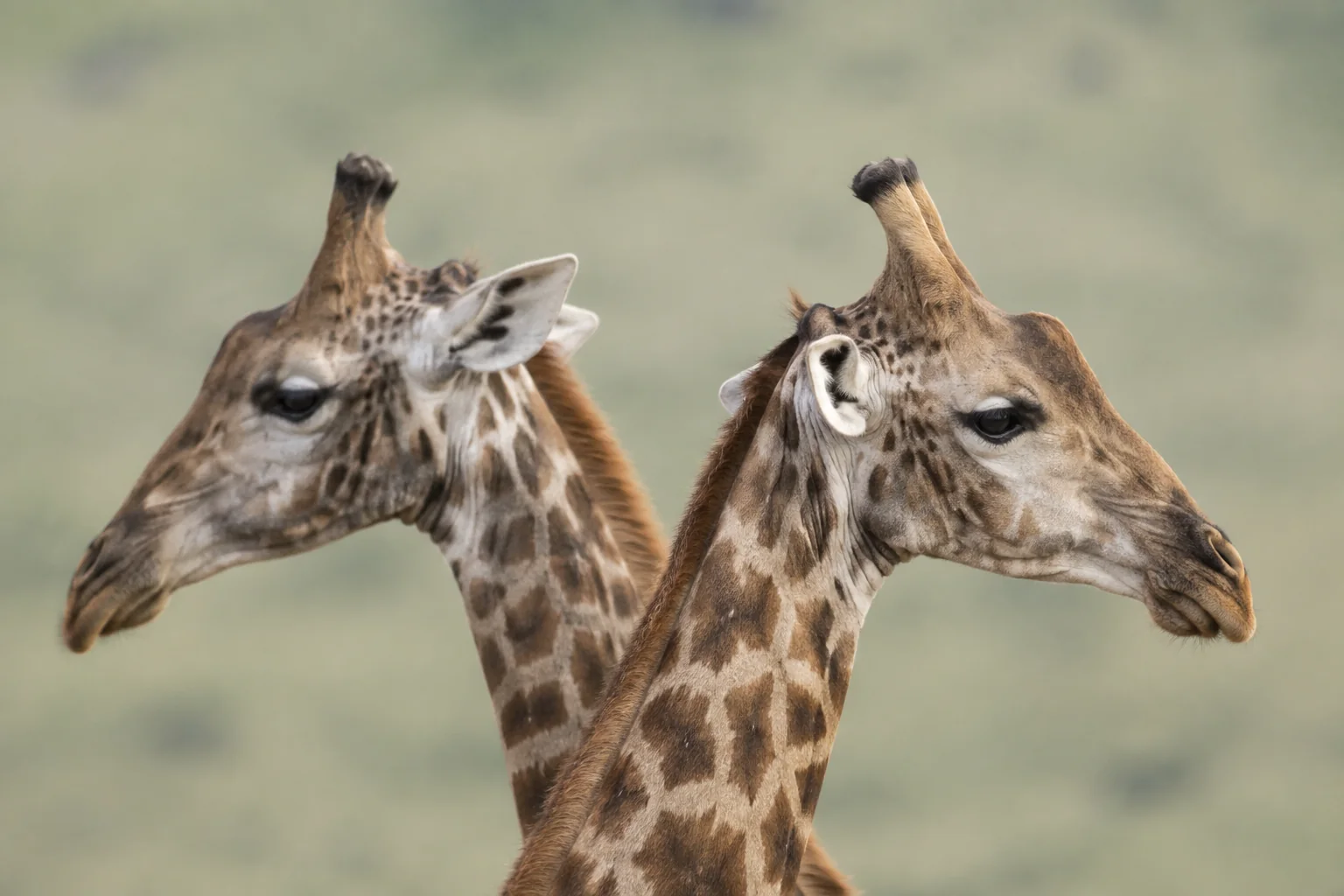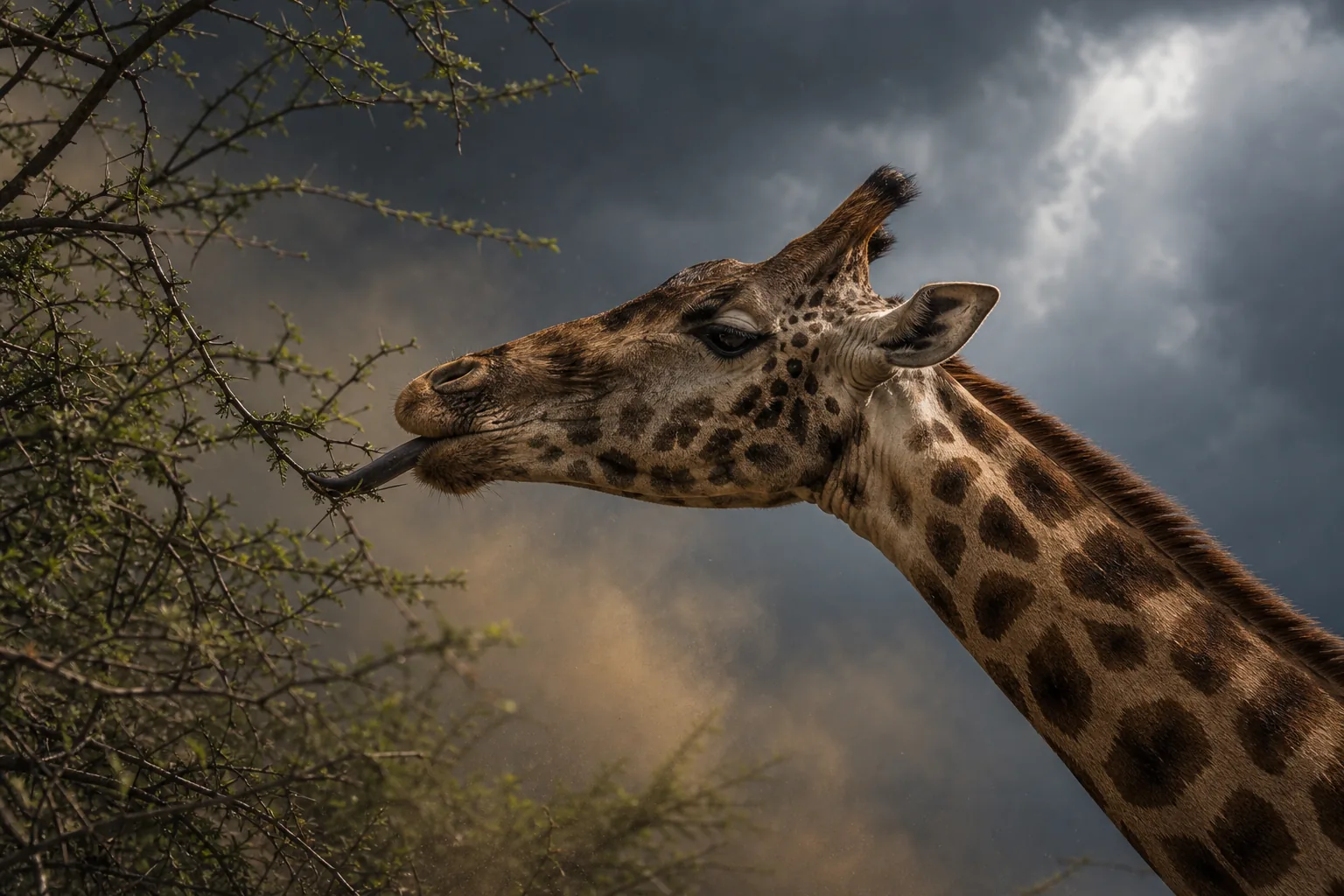
A giraffe with a bone in its mouth can seem difficult to reconcile with the familiar animal reaching for leaves. Yet bone-chewing, known as osteophagia, is a documented part of giraffe behavior. The harder question is what the animal gets from it.
Minerals offer a plausible explanation. Bones contain calcium and phosphorus, both essential to the skeleton. But the minerals inside a piece of bone are not automatically available to the animal holding it. Between selecting a bone and gaining a nutrient lie several separate events: chewing, swallowing, digestion and absorption.
A giraffe leaves its marks
One unusually informative observation came from Zimbabwe’s Kyle Recreational Park in 1987. Gary Haynes watched an adult giraffe gnawing a wildebeest shoulder blade, then collected the bone after the animal dropped it. Jarod M. Hutson, Chrissina C. Burke and Haynes later described the specimen in their 2013 study of bone damage by large hoofed mammals.
That direct connection between an animal and a recovered object matters. The bone carried damage that could be examined after the giraffe had gone: worn surfaces and missing portions of the blade. Such evidence gives researchers more than a momentary glimpse of something protruding from an animal’s mouth.
It also answers a limited question. Damage establishes that chewing can alter a bone. It does not reveal how much of the missing material was swallowed, let alone how much entered the giraffe’s body as usable nutrients. A fragment falling to the ground and a fragment being digested would have very different consequences, even if both left a similar gap in the original bone.
Bone-chewing can interrupt a drink
Lynette A. Hart and Benjamin L. Hart reported further observations from Etosha National Park in their 2023 behavioral study. During waterhole observations, they saw giraffes searching for bones and chewing with their heads raised. They also recorded occasions when a bone appeared lodged in the mouth; two females were unable to drink while this was happening.
These were field observations made during a broader behavioral project. They do not provide a rate of such incidents across giraffe populations. They do show why an unusual feeding behavior deserves attention on its own terms: what looks like a brief curiosity can affect what an animal is able to do next.
The same observers also studied how giraffes investigate urine during courtship. Mouth movements can serve very different purposes, so context matters when interpreting a sighting.
A bone has to pass through a digestive system
Giraffes are ruminants. Their digestive tract includes a four-compartment stomach complex, with microbial processing in the foregut and a later glandular stomach, the abomasum. “Inside the stomach” therefore does not describe one uniform environment.
In a 2008 experiment, I. P. Bredin, J. D. Skinner and G. Mitchell placed giraffe bone cubes in nylon bags in five sheep’s rumens. Over 30 days, they compared effects with water and artificial saliva. Both dense and porous bone softened in the rumen, without significant loss of calcium or phosphorus.
Chewing and later digestion in the acidic abomasum and intestines were outside the experiment; sheep also remain a proxy for giraffes. The authors considered further breakdown possible but questioned how well prolonged exposure matched natural feeding.
A softer object and a source of absorbed nutrients are different outcomes. Establishing one cannot substitute for measuring the other.
What would establish the nutritional benefit?
A useful next question is how much bone actually leaves the mouth by being swallowed. That would connect the visible behavior to intake. Researchers would then need to connect intake to mineral uptake, while accounting for minerals already supplied by the animal’s ordinary diet.
The reason an animal starts chewing also needs separate evidence. Comparing bone-chewing with dietary quality or mineral status could identify an association. Establishing that a shortage causes the behavior would require a stronger comparison, with other explanations considered. A photograph cannot diagnose a deficiency.
These distinctions help make sense of an observation without dismissing it or turning it into a complete nutritional story. Giraffes remain animals whose diet centers on browse. Their encounters with bones open a narrower, intriguing question: how much nourishment can they recover from material that their teeth can work on, but their digestive system must still process?
Sources
I. P. Bredin, J. D. Skinner and G. Mitchell (2008). “Can osteophagia provide giraffes with phosphorus and calcium?” Onderstepoort Journal of Veterinary Research, 75, 1–9. DOI. Full paper.
Lynette A. Hart and Benjamin L. Hart (2023). “Flehmen, Osteophagia, and Other Behaviors of Giraffes (Giraffa giraffa angolensis): Vomeronasal Organ Adaptation.” Animals, 13(3), 354. DOI. Full paper.
Jarod M. Hutson, Chrissina C. Burke and Gary Haynes (2013). “Osteophagia and bone modifications by giraffe and other large ungulates.” Journal of Archaeological Science, 40(12), 4139–4149. DOI. Author-posted full text.