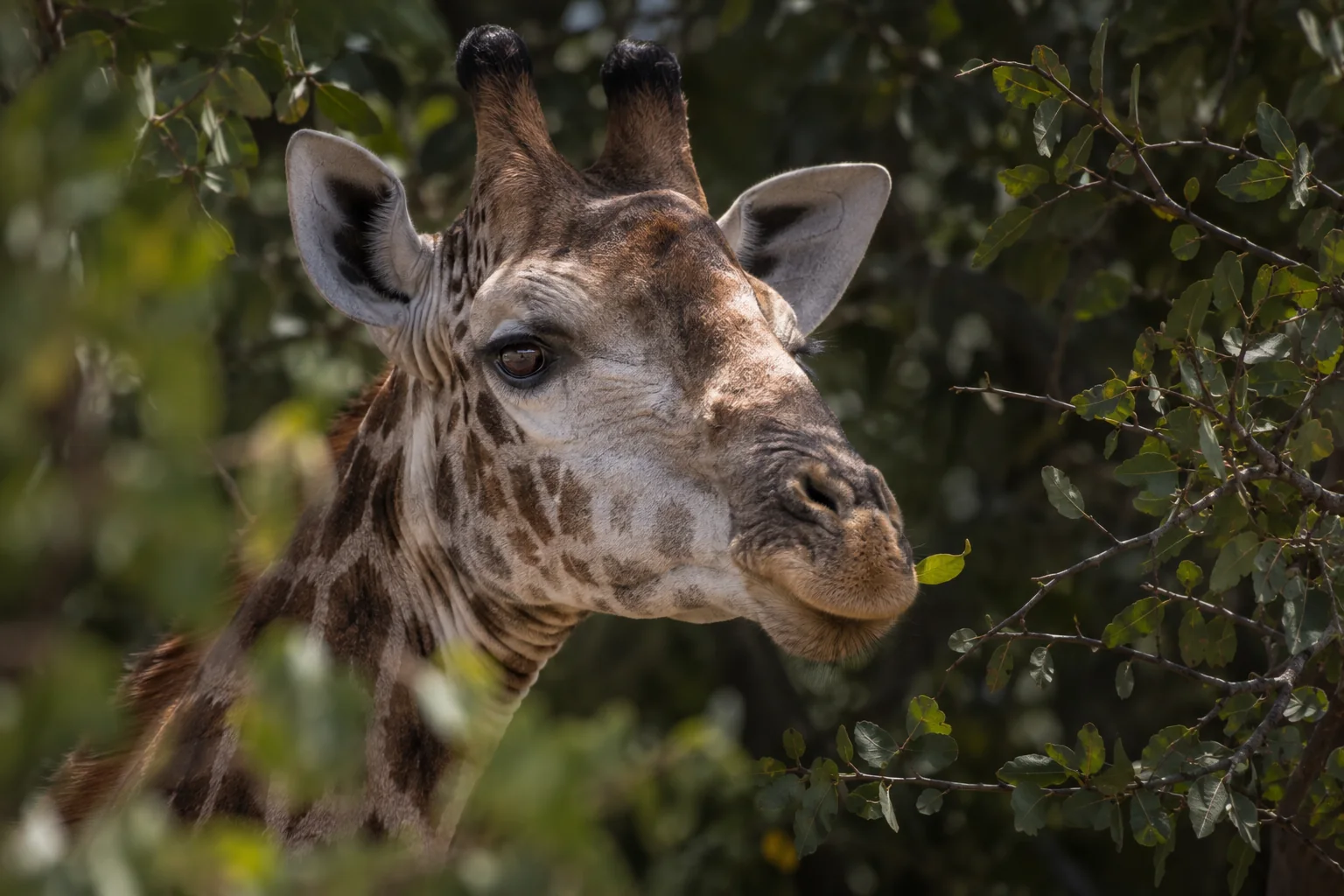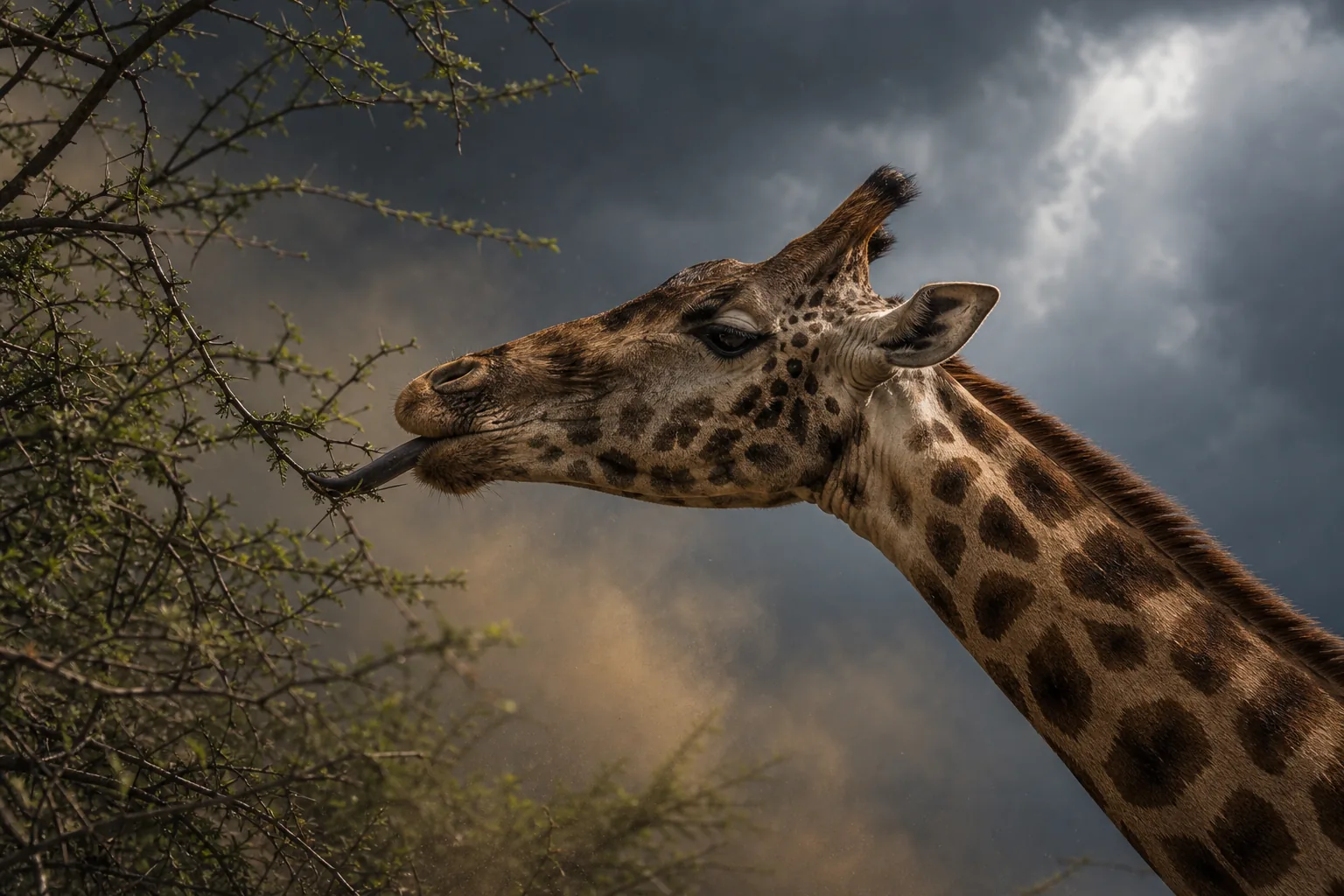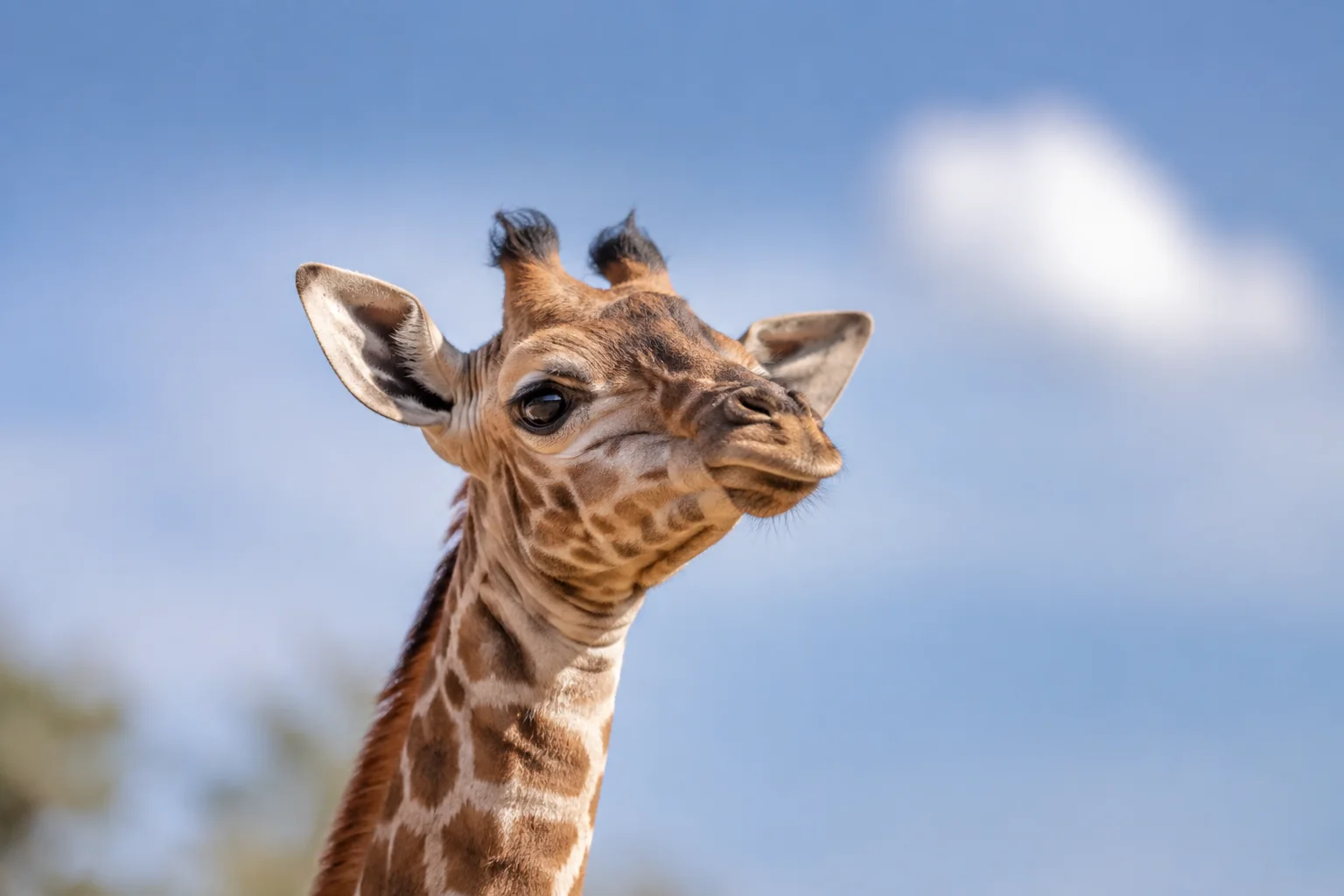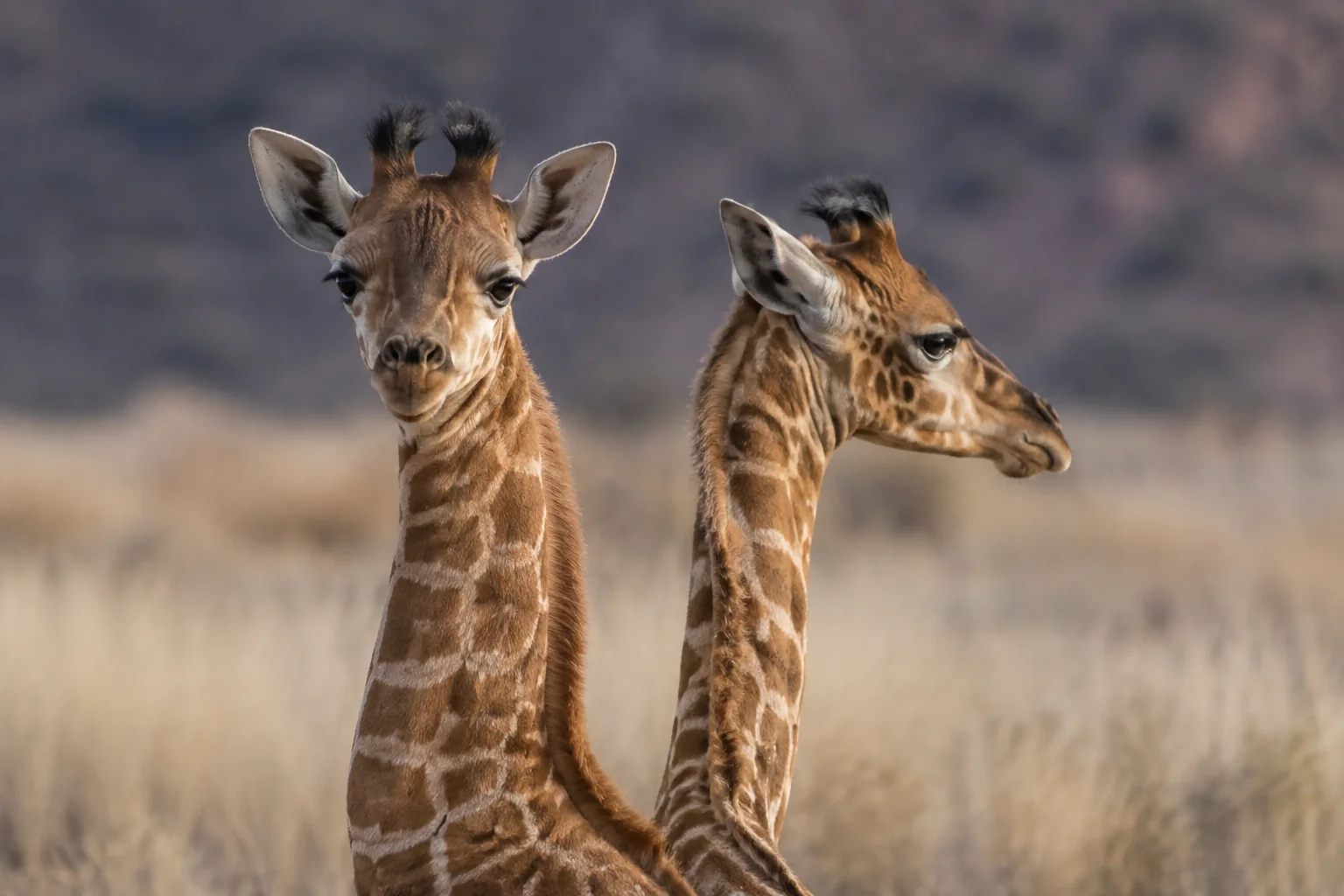
A young giraffe cannot become an adult simply by enlarging every part of its body at the same rate. Its proportions change, and so can the internal machinery that processes its food. For an animal that depends on microbes to help break down plant material, the relative size of its digestive compartments raises an important question: does a larger giraffe rely on the same arrangement of digestive capacity as a smaller one?
A 2015 study by Graham Mitchell, D. G. Roberts and Sybrand J. van Sittert approached that question through anatomy. The stomach complex and intestines both became heavier in larger giraffes, but they did so at different rates. The stomach complex increased more slowly than body mass, while intestinal mass kept closer pace.
That finding concerns the changing proportions of a functioning, filled digestive system. Turning it into a claim about where a giraffe obtains its energy requires another step—and further evidence.
Weighing a digestive system in use
The researchers collected digestive measurements from 32 wild giraffes spanning a broad range of body sizes, using animals taken during authorised culling in Zimbabwe. They could not obtain every measurement from every individual: total digestive-tract mass was available for 30, stomach-complex mass for 21 and intestinal mass for 21.
The stomach complex included the rumen, reticulum, omasum and abomasum. The first compartments support the processing and microbial fermentation characteristic of ruminants; the abomasum is the glandular stomach. The study weighed that complex together, rather than treating a rumen measurement as a measurement of all four compartments separately.
Crucially, the organs were not emptied before weighing. Their recorded mass included the food, fluid and microbes inside them, as well as the organ walls. Associated supporting tissue and fat were also retained. A heavy digestive tract could therefore reflect more tissue, more contents or some combination of both.
This is a useful measurement in its own right. The filled system occupies space and contributes to the load an animal carries. But it answers a different question from weighing a cleaned stomach wall or measuring the volume that an empty organ can hold.
Bigger in kilograms, smaller as a share of the body
The researchers fitted relationships between body mass and digestive mass. The key distinction is between absolute size and relative size.
Imagine comparing a smaller giraffe with an animal twice as heavy. If a digestive compartment also doubled in mass, it would retain the same share of body weight. If it became heavier by less than double, it would occupy a smaller share of the larger animal's weight even though the organ itself had grown.
The stomach complex followed the second pattern. Its fitted scaling exponent was about 0.64, below the value of one that represents growth in direct proportion to body mass. The intestinal estimate was about 0.92, with uncertainty compatible with proportional growth. The combined digestive tract also increased more slowly than body mass.
Across the sampled size range, the fitted total digestive mass declined from roughly one fifth to roughly one seventh of body weight. Those proportions describe the whole measured tract, including its contents; they should not be relabelled as the percentage of the body occupied by the rumen alone.
The individual measurements scattered around the fitted relationships. The curves describe an overall association across animals, not a precise calculator that determines the gut mass of every giraffe at a given weight.
A growth comparison is different from a species comparison
The study's result may initially seem surprising because discussions of herbivore size often compare small species with large species. Larger species can have different digestive proportions, feeding requirements and ways of processing food. But those comparisons do not establish what happens as one giraffe grows.
Here, the relevant contrast was among giraffes of different sizes. It was also a cross-sectional comparison: the researchers did not repeatedly measure the same individuals from youth to adulthood. Body size serves as an informative indicator of growth, while differences among animals remain part of the observed variation.
The paper also compared the giraffe measurements with published relationships for other ruminants. Such comparisons require careful attention to what was weighed. A published estimate of rumen contents alone is not directly equivalent to a stomach complex weighed with its tissue and contents together. Nor is a relationship across species automatically the same biological process as a relationship across body sizes within one species.
The direct result therefore stands on its own: in this sample, the filled stomach complex occupied a smaller proportion of body mass in larger giraffes.
What changes when the organs are emptied?
A useful comparison comes from Cathrine Sauer and colleagues' quantitative anatomical study, which included material from 25 wild-caught and 13 zoo giraffes. Their dissection method separated organ tissue from digestive contents. They carefully trimmed associated tissues, emptied and rinsed the stomach compartments, and allowed them to drip before weighing.
In that dataset, cleaned rumen-and-reticulum tissue mass increased approximately in proportion to body mass. That differs from the slower increase of the filled stomach complex in Mitchell and colleagues' study, but the two measurements are not interchangeable. One describes selected, cleaned stomach walls; the other includes all four stomach compartments, their contents and associated tissues.
The animals also differed. Sauer's wild-caught giraffes had spent about two months in managed conditions before examination and were generally in poorer body condition than the zoo animals. The limited overlap in their body sizes constrained comparisons between origins. These data cannot isolate a single effect of captivity or diet.
Together, the studies show why the phrase “stomach size” can hide several biological quantities. Tissue growth, the amount of material retained inside an organ and its potential capacity need separate measurements if researchers want to connect anatomy to digestion.
From compartment size to an energy hypothesis
Mitchell and colleagues used their anatomical relationships to explore how energy supply might change with body size. Their reasoning was that different growth rates of the stomach complex and intestines could alter the balance between fermentation before and after the small intestine.
That is a worthwhile hypothesis, but the energy contributions were modelled. The study did not directly measure the production and absorption of fermentation products in each compartment, or the daily energy expenditure and intake of every sampled giraffe. It combined anatomical measurements with assumptions and values drawn from other work.
A filled compartment's mass cannot by itself determine how rapidly microbes work, how long food remains there or how efficiently the animal absorbs what they produce. Two compartments with the same mass could have different rates of passage and fermentation. Measurements of digestive contents, microbial activity and nutrient absorption would be needed to establish the proposed shift in energy supply.
The anatomical result makes that next question more specific. As giraffes grow, the filled stomach complex does not keep the same proportional place in the body, while the intestines follow a different trajectory. The task is now to determine how those changing proportions affect the work each compartment performs.
Sources
Graham Mitchell, D. G. Roberts and Sybrand J. van Sittert (2015). “The digestive morphophysiology of wild, free-living, giraffes.” Comparative Biochemistry and Physiology Part A: Molecular & Integrative Physiology, 187, 119–129. Primary study. The authors subsequently published a correction to calculations about available browse and home range; those calculations are not used here.
Cathrine Sauer, Mads Frost Bertelsen, Peter Lund, Martin Riis Weisbjerg and Marcus Clauss (2016). “Quantitative macroscopic anatomy of the giraffe (Giraffa camelopardalis) digestive tract.” Anatomia, Histologia, Embryologia, 45, 338–349. Related anatomical study.