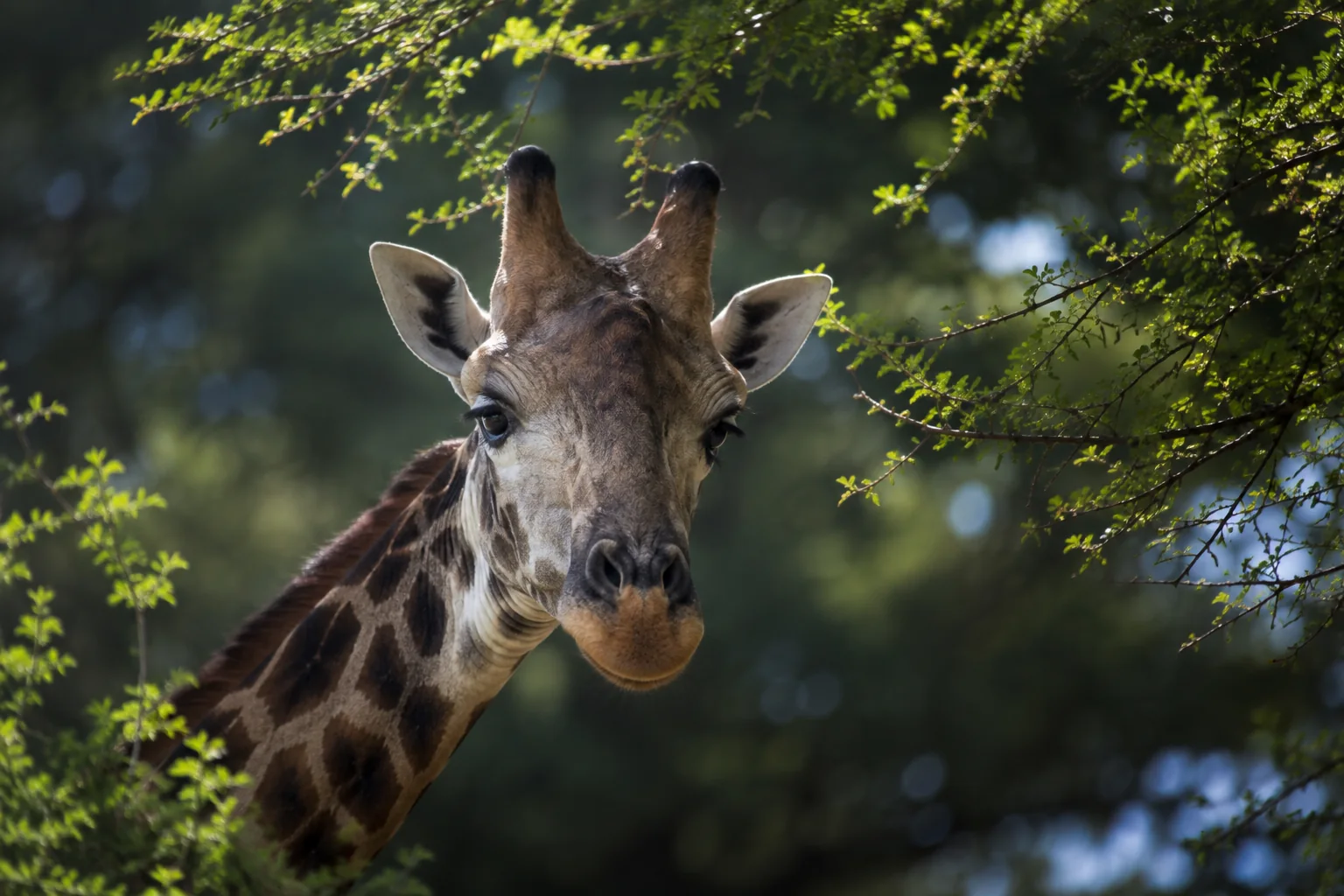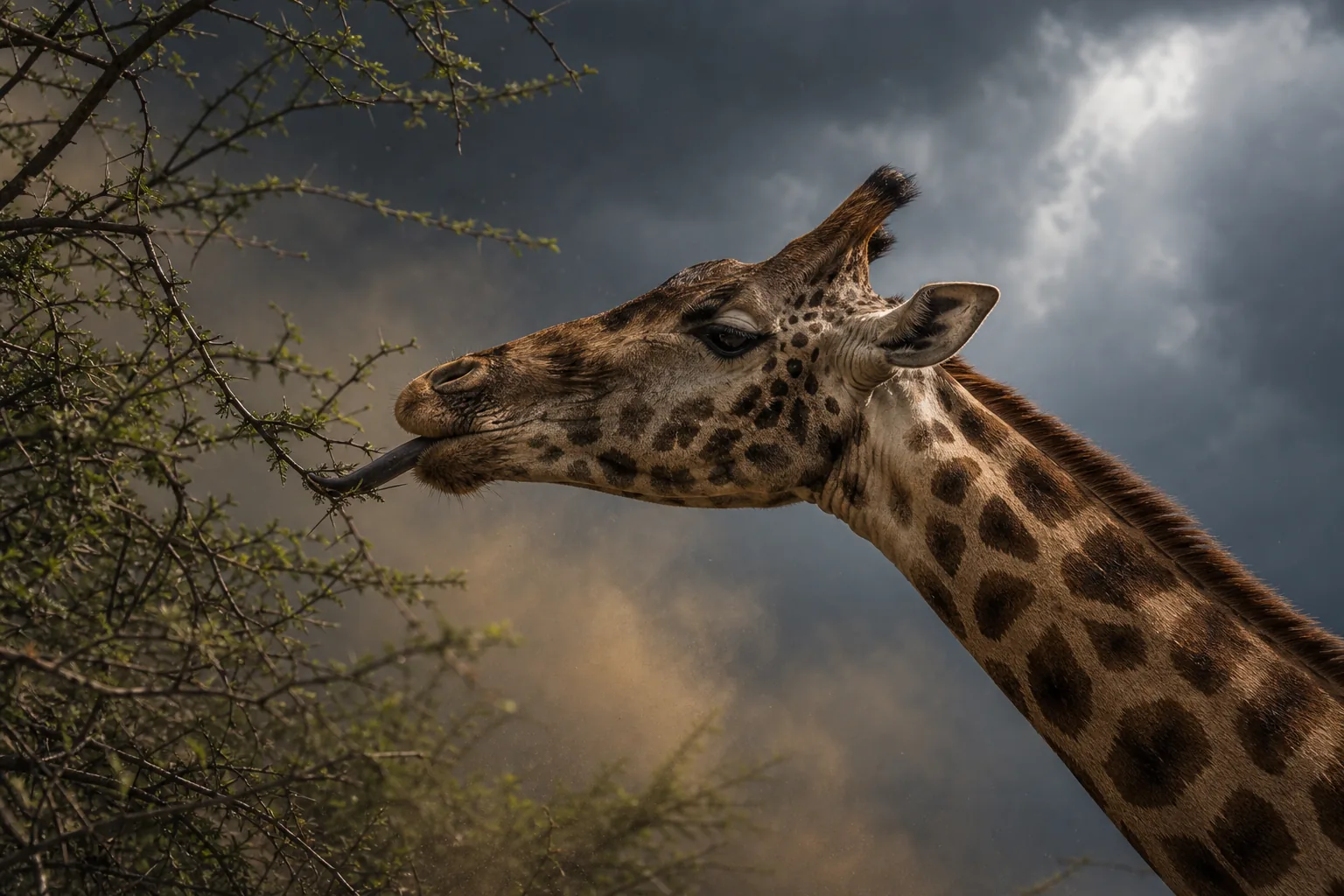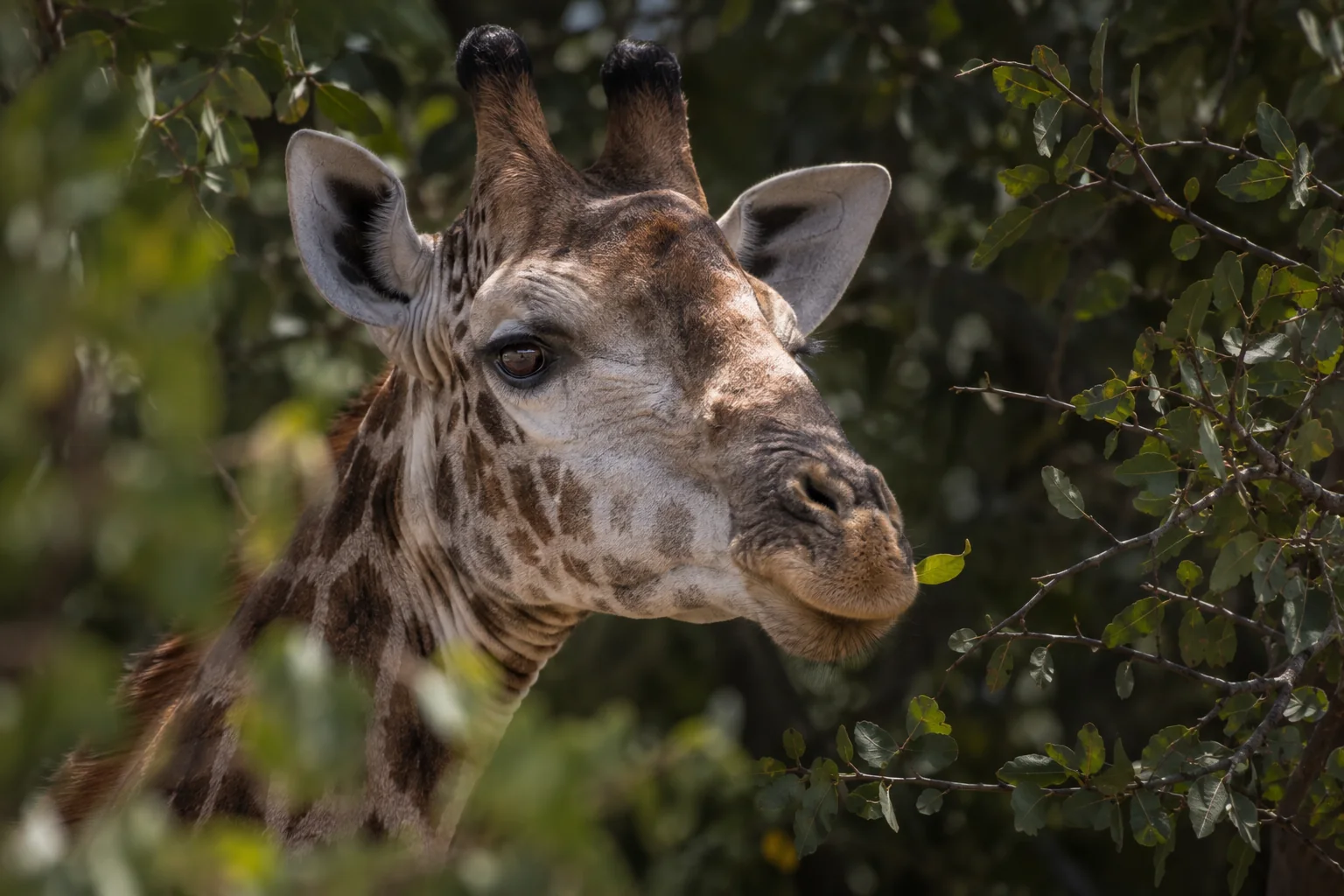
A giraffe does not digest a mouthful of leaves alone. Inside its rumen, a large fore-stomach compartment, microorganisms break down plant material and produce compounds the animal can use. The giraffe supplies a suitable environment; the microbes help unlock food that would otherwise be difficult to exploit.
The microbes’ identities matter because different organisms can process different materials. Michael Roggenbuck and colleagues asked how that community varied among giraffes eating different diets and between the rumen’s liquid and solid contents. Their 2014 study in FEMS Microbiology Ecology provided an early molecular survey of this largely unexplored digestive habitat.
A feeding difference created an informative comparison
The study involved seven juvenile giraffes originally caught in South Africa and held for physiological research. All initially received a mixture of pellets, leafy alfalfa hay and cut browse for one to two months.
Four continued on that diet. The other three had access to natural browse alone for four to six days before sampling. This was a short change in feeding conditions within a small group, rather than a continent-wide comparison of wild and zoo giraffes.
After the animals were euthanised as part of the wider research project, the team collected rumen contents from several locations. Material from each animal was combined and separated into fluid and solid fractions.
That design asked two related questions. Would giraffes with different recent diets have different communities? And would microbes living mainly among fluid differ from those associated with the solid particles? The animal remained the biological unit: taking more than one fraction did not create additional independent giraffes.
Identifying microbes through a shared genetic marker
Many rumen organisms cannot easily be grown and identified in a laboratory culture. The researchers instead sequenced part of the microbial 16S ribosomal RNA gene, a marker useful for comparing bacteria and archaea.
Closely similar sequences were grouped into operational taxonomic units, or OTUs. These are practical sequence groups, not automatically distinct, formally described species. Comparing their relative representation gave the researchers a way to assess the community without first naming every organism.
Sequence coverage varied among samples, and two fluid samples yielded too little information for downstream comparison. The study also did not exhaust the microbial diversity: rarer organisms were likely to be missed. These limits make the results most informative about the more abundant detected groups.
The two most common broad bacterial groups were Firmicutes and Bacteroidetes. Their dominance was shared across diets and rumen fractions. The interesting differences therefore appeared at a finer level than simply whether one major group replaced another.
Composition changed without a clear change in richness
The microbial profiles of the three browse-only giraffes clustered together, apart from those of the animals continuing on the mixed ration. The overall comparison supported a relationship between feeding group and community composition.
Yet estimated richness and diversity did not differ significantly between the feeding groups. This is a useful distinction. Two communities can contain comparable numbers of microbial types and still differ in which types are common. A change in membership or relative abundance is not the same as a gain or loss of diversity.
The fluid and solid samples, meanwhile, did not separate clearly in the overall community analysis. Variation among giraffes was greater than the general difference between fractions. That does not establish that every organism occupies both fractions equally; some individual microbial groups differed, and rare groups were incompletely sampled.
The authors interpreted diet as a likely driver of the observed grouping. Because the study was small and did not follow the same individuals with repeated rumen samples before and after the change, it could not establish how quickly a community shifted or attribute every difference to the ration alone.
Much of the community still lacked names
Approximately 70% of the recovered sequences could not be assigned to a known genus. That result showed how incomplete the reference knowledge was for this habitat.
It should not be translated into “70% newly discovered species.” A sequence can resist classification because its close relatives are poorly represented in databases, because resolution is limited, or because it belongs to an insufficiently characterised lineage. Naming and describing an organism requires more than a short unmatched marker.
The missing identities also limited functional interpretation. Even a named broad group can include organisms with different metabolic capabilities. The survey could say that communities differed; it could not establish exactly how their combined digestion, energy yield or handling of plant compounds differed.
That boundary matters for applying research to giraffe feeding. A microbial profile does not by itself identify the healthiest ration, and a difference between profiles is not a diagnosis of disease.
Connecting community to digestive performance
The next useful step would combine more carefully controlled feeding comparisons with measurements of what the microbes do. Their genes, fermentation products and effects on food breakdown could help connect community composition to digestive consequences.
Repeated observations would also distinguish a brief response to changed food from a stable community, while broader sampling could test whether the same pattern appears in other animals. Fungi and protozoa, which also participate in rumen ecosystems, were outside this survey and would need their own examination.
Roggenbuck and colleagues established a concrete starting point: the giraffe rumen contains a diverse, incompletely characterised community, and recent diet was associated with a detectable shift in that community. Understanding what a giraffe gets from its food therefore includes understanding the organisms sharing the meal.
Sources
Michael Roggenbuck, Cathrine Sauer, Morten Poulsen, Mads F. Bertelsen and Søren J. Sørensen (2014). The giraffe (Giraffa camelopardalis) rumen microbiome. FEMS Microbiology Ecology 90, 237–246. DOI: 10.1111/1574-6941.12402. Read the full paper.