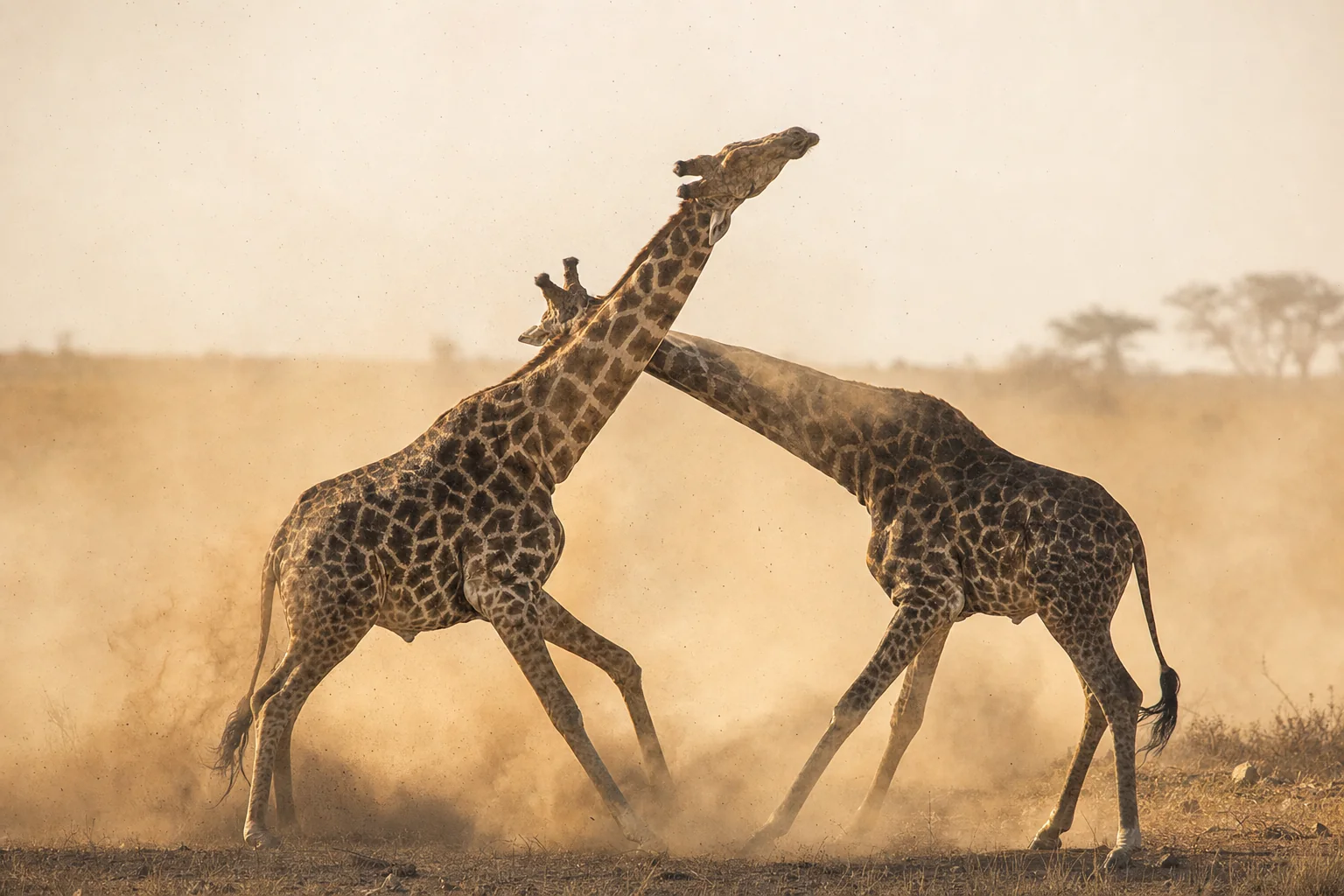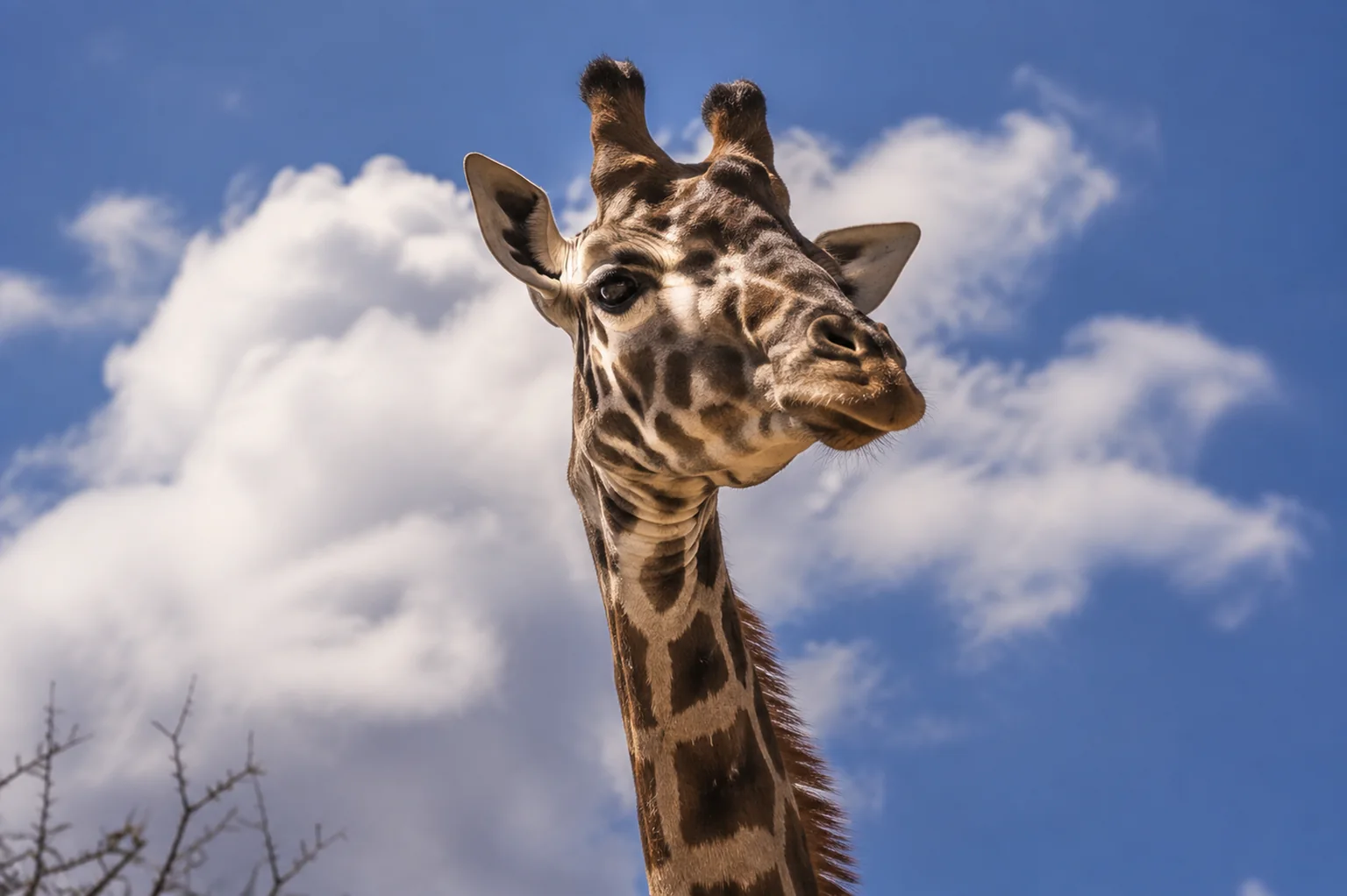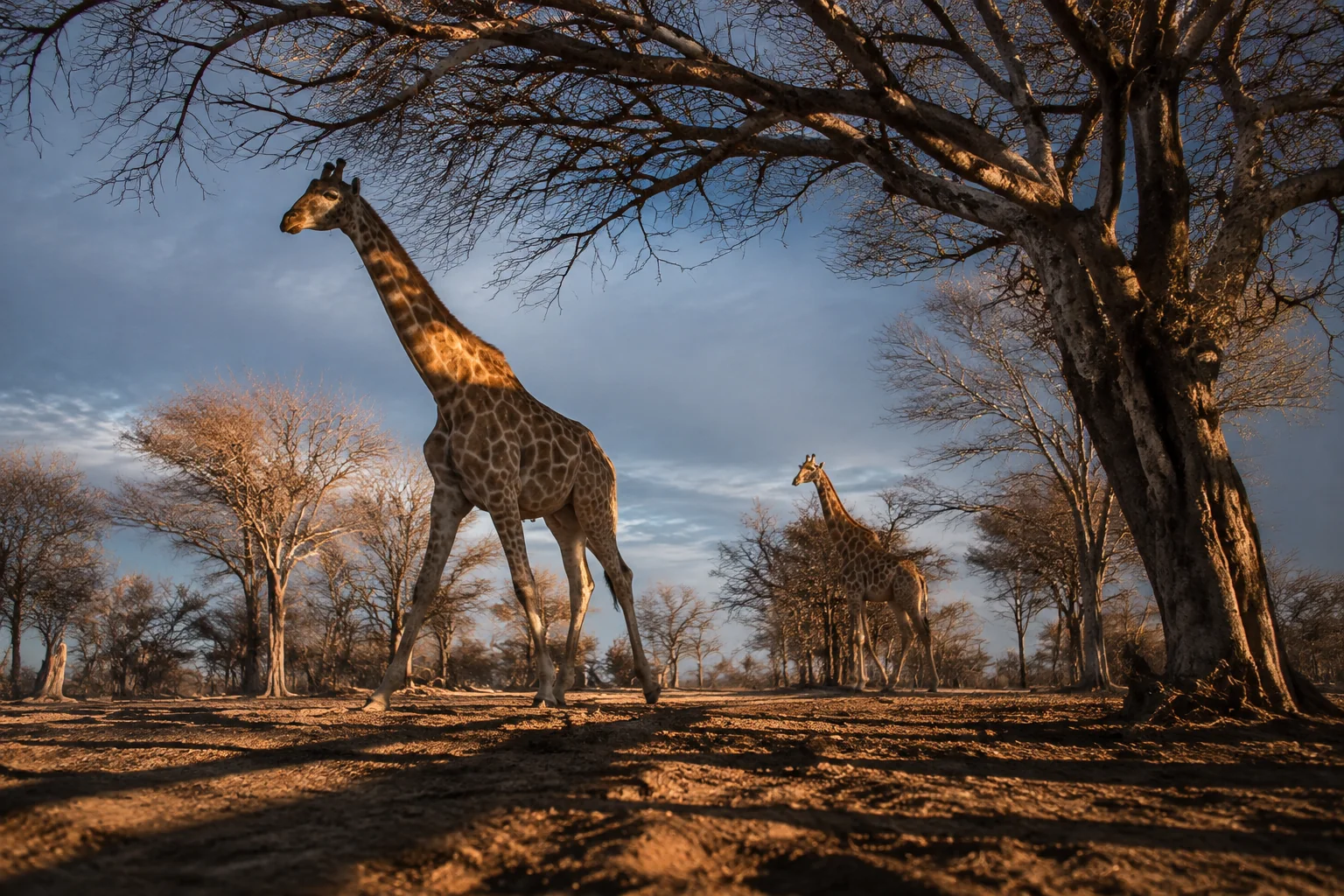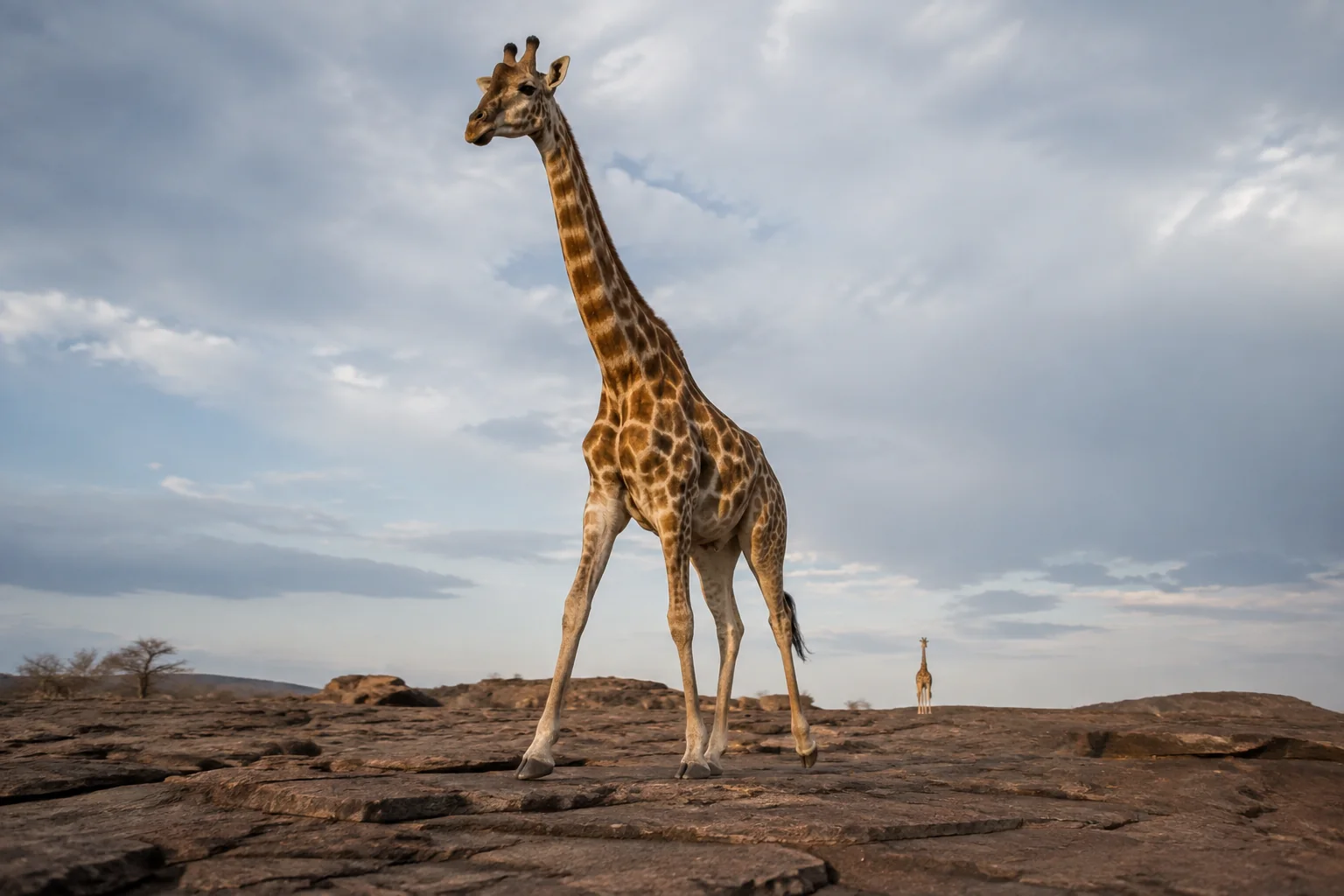
A long neck looks like a radiator: an extended surface across which heat might escape. But the relevant comparison is with an animal of the same mass. An impressive outline does not necessarily mean an exceptional amount of skin.
Graham Mitchell and colleagues tested that premise in their 2017 study of giraffe surface area. They estimated area from body measurements of 60 giraffes culled in Zimbabwe, representing both sexes and different sizes. Geometric approximations and estimates for missing measurements were necessary; the team did not spread out and measure 60 complete hides.
The result was consistent with a standard mammal equation relating surface area to mass. This was a comparison with a prediction, not a newly measured control herd. More area on the neck and legs was balanced by less on the trunk.
The amount of skin is only one part of cooling
Imagine two objects with equal surface areas. One is a broad block; the other has several narrow projections. Giving them the same number of square metres does not give them identical contact with moving air. Air can flow differently around each shape, altering how efficiently heat crosses between the surface and its surroundings.
The researchers therefore proposed that slender body parts could favour convective and evaporative heat exchange. They did not measure a whole giraffe’s cooling performance.
Convection means heat transfer involving moving air or another fluid. Its direction matters. If the skin is warmer than the air, air flowing past can carry heat away. If the air is warmer, improving that exchange brings heat in. Wind is not an unconditional cooling mechanism.
Evaporation is a separate route: turning liquid water into vapour consumes heat. It depends on water being available and on conditions that let vapour leave the surface. An animal’s outline cannot, by itself, reveal how much cooling it obtains through that route.
Facing the sun changes a different area
Hold a sheet of paper broadside to a light, then turn its edge towards it. The paper retains the same surface area, but intercepts much less light. For a standing animal, total skin area and the profile presented to direct sunshine likewise answer different questions.
Volker Kuntzsch and J. A. J. Nel’s Etosha field study recorded roughly 660 observations of about 290 giraffes, with possible repeat sightings. At temperatures above 30°C, 91% of observations placed animals either in shade or aligned lengthwise with the sun’s rays, instead of broadside. The lengthwise category included facing towards or away from the sun.
That pattern is consistent with limiting incoming solar heat. However, winter observations came from waterholes and summer observations from road surveys. The study linked conditions with posture; it did not experimentally isolate temperature or measure the resulting heat savings.
The two studies sharpen what to notice when watching a giraffe. Its height and narrow outline, whether it stands broadside to sunlight, and whether cooler air is moving past it are distinct parts of the heat-exchange problem. Calling the whole animal a radiator hides those distinctions. Nor does a possible thermal benefit settle why the long neck evolved: a useful consequence of a body shape and the historical cause of that shape are different claims.
Sources
Mitchell, G., van Sittert, S., Roberts, D., and Mitchell, D. (2017). Body surface area and thermoregulation in giraffes. Journal of Arid Environments, 145, 35–42. DOI: 10.1016/j.jaridenv.2017.05.005. University of Pretoria manuscript.
Kuntzsch, V., and Nel, J. A. J. (1990). Possible thermoregulatory behaviour in Giraffa camelopardalis. Zeitschrift für Säugetierkunde, 55, 60–62. Full paper in the ZOBODAT/Biodiversity Heritage Library scan.