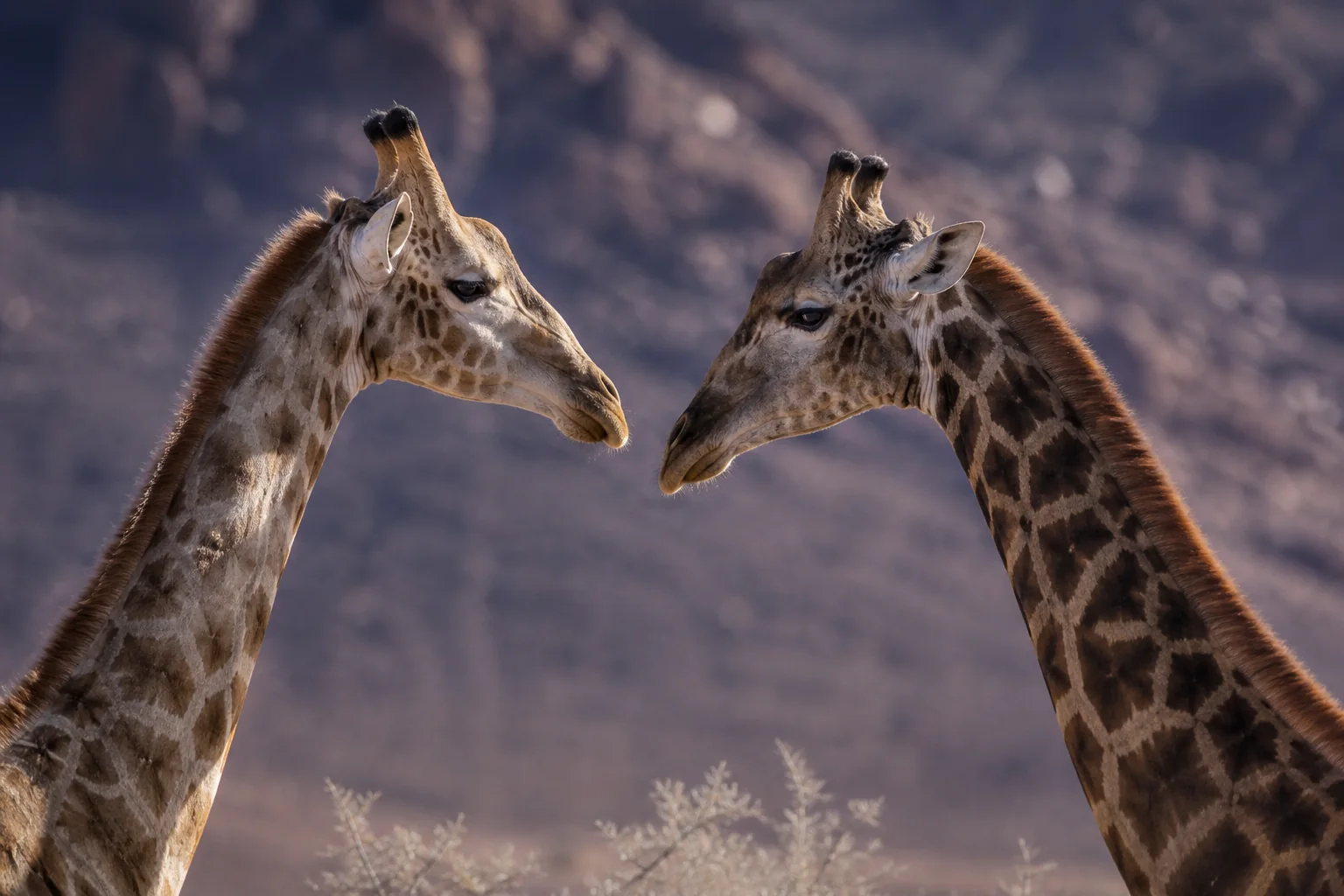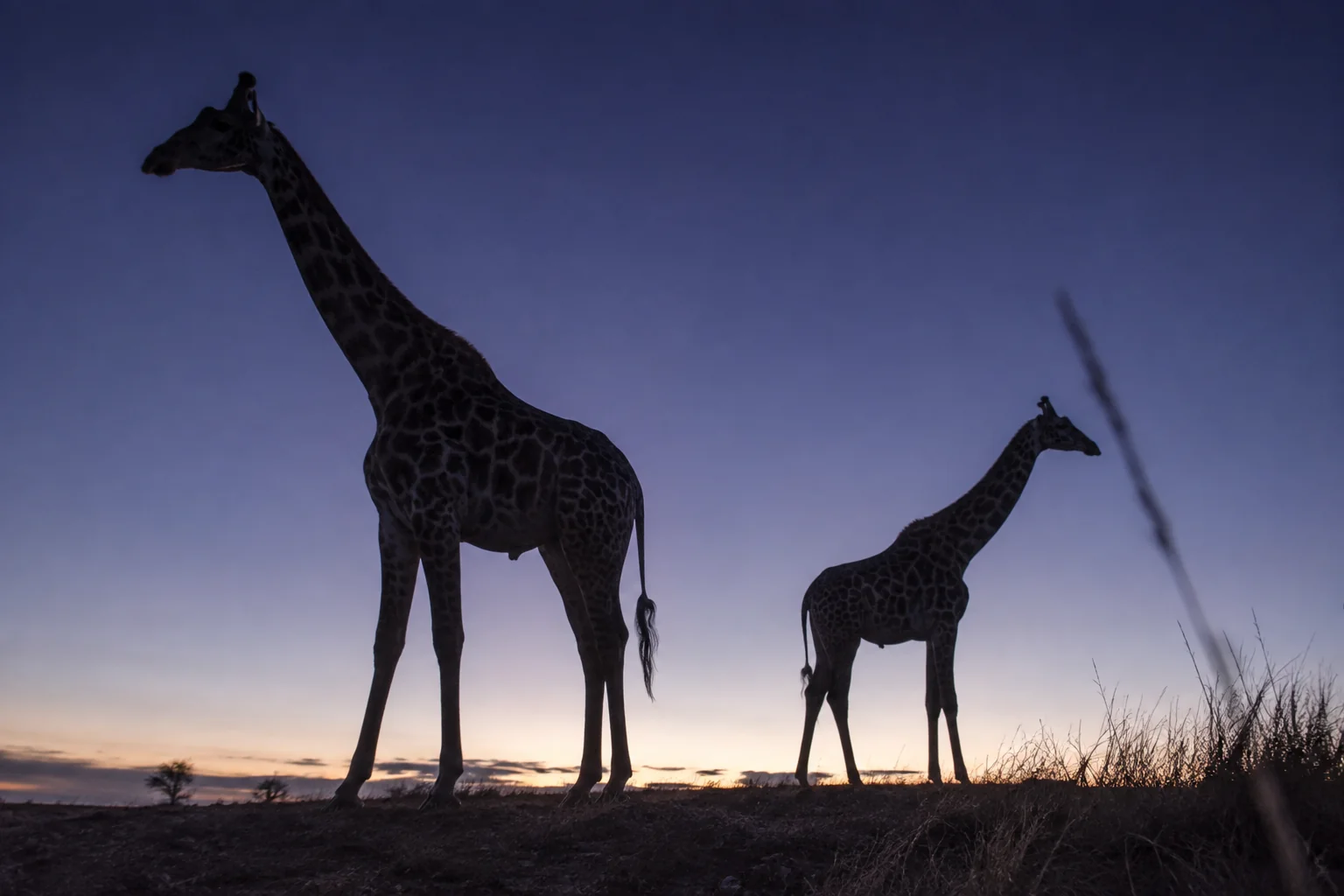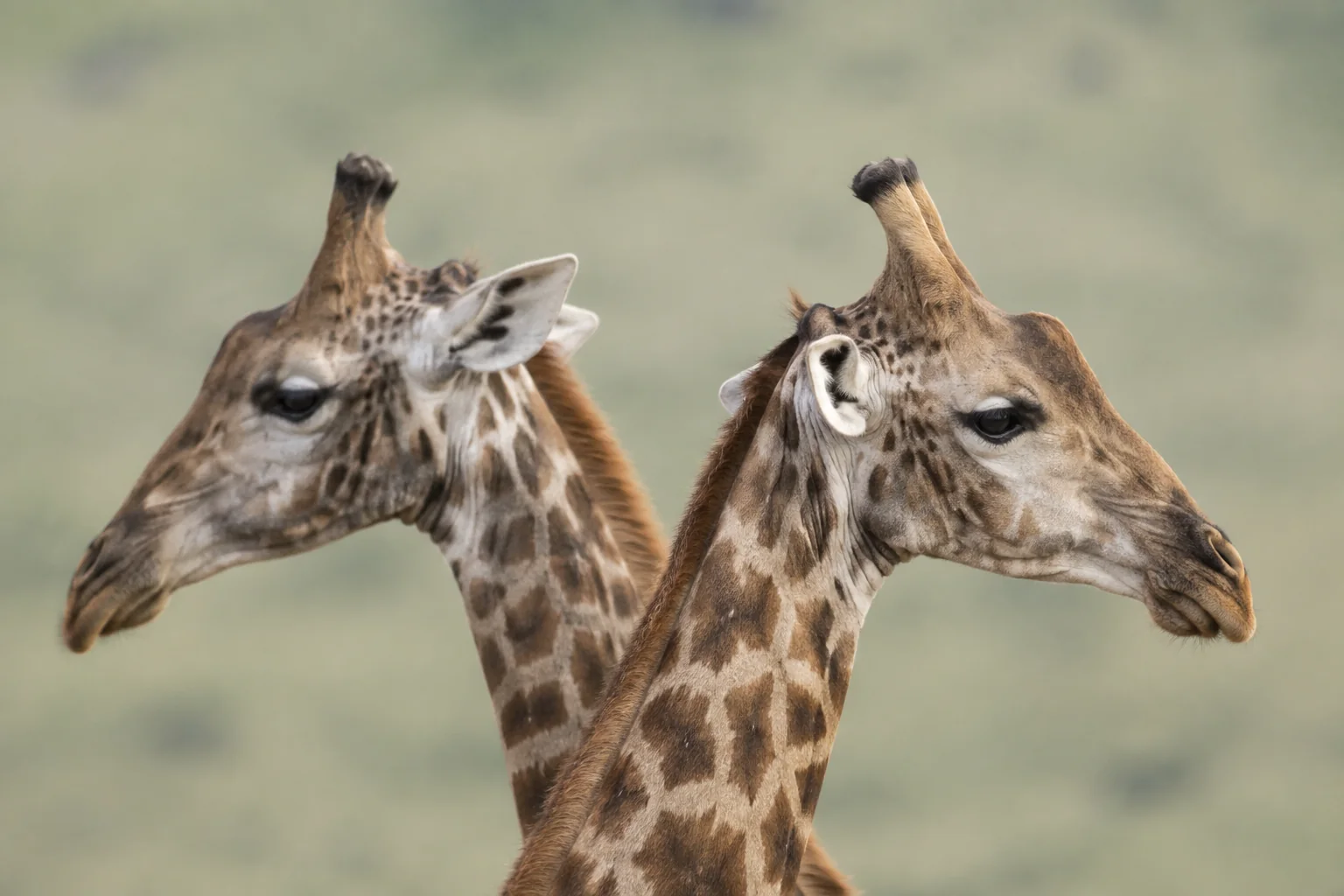
The two males had lived together since birth. For years their sparring was described as infrequent and gentle. Then the encounters became more frequent, more forceful and long enough to leave swelling and hair loss.
That history made the welfare problem at Knowsley Safari more complicated than simply deciding whether giraffes should spar. Neck swinging can be part of male social behaviour, but these particular interactions were injuring the animals. Keepers needed a way for the pair to live alongside each other safely.
Jessica J. Harley, Roann Tracey, Christina R. Stanley and Lindsay Banks documented what happened during the management response. An intervention directed at one bull was followed by reduced sparring in the recorded sessions. Months later, however, the other bull became increasingly aggressive toward him. The changing outcome is the most useful part of the report: behaviour belonged to the relationship, even when treatment was given to an individual.
A pair with a changing relationship
Both males were nine years old, separated in age by eight months, and similar in size. No females were housed on site. The report describes an escalation beginning in 2021 and substantial injuries during 2022.
Staff first changed the animals’ surroundings and routines. They closed the indoor house to visitors to provide a quieter area, divided pellet feeding into smaller, more frequent feeds, and offered browse and enrichment in multiple locations. These changes were intended to reduce disturbance and give the giraffes more opportunities to choose where and how to feed. According to the keepers’ observations, they did not resolve the aggressive interactions.
Following consultation with the veterinary surgeon and the European breeding programme, one bull received a vaccine directed against gonadotrophin-releasing hormone, usually shortened to GnRH. This hormone is part of the signalling chain that stimulates reproductive hormone production. Vaccination aims to interfere with that signal through an immune response.
The team initially selected the slightly older bull, whose darker appearance and strong smell suggested greater outward maturity. Both animals had initiated sparring, however. The choice was a management decision within a difficult case, rather than evidence that one animal alone caused the problem.
Measuring encounters over months
Observers conducted 103 sessions, each lasting fifteen minutes, focusing on the treated bull. In each minute they recorded whether particular behaviours occurred. A sparring score therefore counted minutes containing the behaviour, not individual blows or the exact amount of time spent fighting.
That distinction matters when reading the result. During the first vaccination phase, sparring occurred in an average of 5.92 of the fifteen sampled minutes. By the fourth phase, the mean was 0.14. The statistical comparison supported a difference between those two treatment phases.
It did not establish a clear statistical difference between the short pretreatment baseline and the final phase. Baseline observations came from November 2021, while the treatment observations began in June 2022. Staffing and seasonal husbandry interrupted the record. Those gaps, and the absence of a comparable untreated pair, limit how confidently the change can be attributed to vaccination alone.
Keepers also collected dung so the team could measure breakdown products of reproductive hormones. The treated bull’s concentrations remained low late in the treatment sequence, but both animals showed considerable variation and broadly similar overall concentrations. The hormone evidence did not supply a simple explanation for every change in behaviour.
The untreated partner changed too
About eight months after the first vaccination, the untreated male showed heightened aggression, resource guarding and dominance behaviours toward his companion. The treated animal sustained injuries and began avoiding him.
Staff separated the giraffes overnight so the injured bull could rest without continual attention. When management changes were insufficient, the second bull also began vaccination in March 2023.
At the time the report was written, the animals remained together during the day and apart at night. The authors described modest improvements, including less avoidance and occasional feeding together, with no observed sparring. That is the reported outcome of this pair’s combined management, rather than a prediction of what will happen in every bachelor group.
The authors suggest that treating both animals at the outset might have avoided the later difficulty. The case cannot establish that counterfactual. Their initial caution reflected concern that hormone suppression might persist after vaccination ceased, an important consideration for animals potentially needed for future breeding.
Welfare is more than a lower sparring score
The later reversal explains why continued observation mattered. A reduction in one individual’s sparring did not guarantee that both animals could feed, rest and move without being harassed. Injury, avoidance and access to quiet rest gave the team information that a single behaviour count could miss.
The report also drew on an existing giraffe behaviour inventory to define the actions observers recorded. Such definitions allow a keeper’s concern about a changing relationship to become a record that can be compared across time, while retaining the practical knowledge that first identified the problem.
A useful next step would compare similarly documented cases across institutions, including pairs managed through environmental changes alone. Repeated observations of both partners before and after an intervention would help distinguish effects on the treated animal from shifts in the relationship. Because serious aggression requires timely care, these comparisons would need to work around welfare decisions rather than delay them.
For this pair, the lesson is concrete: assessing an intervention required following both giraffes over months and adjusting their opportunities to rest and interact as the relationship changed.
Sources
- Jessica J. Harley, Roann Tracey, Christina R. Stanley and Lindsay Banks (2024). Management of intraspecific aggression in two bull giraffes (Giraffa camelopardalis ssp. rothschildi). Zoo Biology 43(4), 383–390. DOI and open full text: 10.1002/zoo.21843.