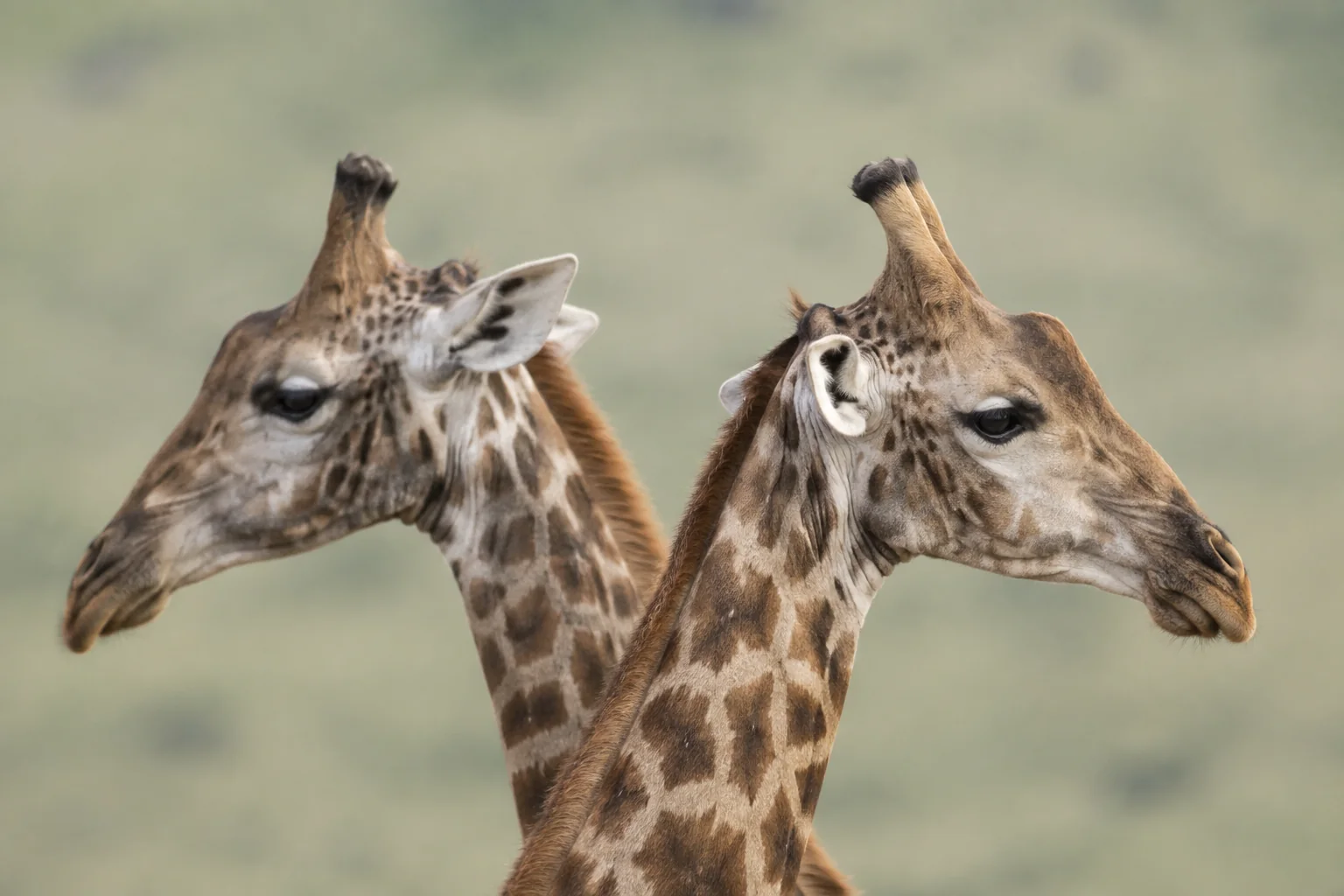
Two male giraffes can swing their necks at each other without entering a full fight. Such sparring looks like practice, but appearance leaves several questions open. Why choose one partner rather than another? Why face the same direction in one bout and opposite directions in the next? And does practice actually produce a better fighter?
Jessica Granweiler, Jack Thorley and Shay Rotics put numbers to those questions in a 2021 study. The males they followed tended to spar with similarly sized partners. Each sparring animal also favoured a particular side, creating an unexpectedly simple explanation for the pair's arrangement.
Counting exchanges, rather than every blow
The study followed giraffes on a fenced South African reserve over seven months, from November 2016 to May 2017. Eleven males old enough to participate in ritualized sparring were included. Researchers identified them from their coats, assigned broad maturity classes using appearance and ranked them by relative shoulder height.
Size rank was an ordering from largest to smallest, not a measurement of how many centimetres separated two animals. Age and body size were closely related in this population, so an association with size could not be cleanly separated from one with age.
Observers followed groups containing at least two eligible males during morning hours. Over approximately 226 hours, they recorded 118 bouts. A bout required a reciprocal exchange: one male swinging while the other did not respond was an unsuccessful initiation, not a sparring encounter in this dataset. The team noted the participants, their positions and any interruption by a third male.
This definition also avoided treating every neck swing as a contest with a winner. No recorded sparring bout escalated into a fight. The behaviour could therefore be studied as an interaction in its own right, without assuming that every ending established dominance.
A partner close to your own size
Young adult males sparred more often than mature adults and subadults considered together. The largest, dominant male was never observed sparring. That pattern is consistent with the idea that developing males have more to learn from these exchanges, but it is not direct evidence of learning.
The partner comparison required an additional safeguard. In an ordered list of eleven animals, many more pairs are separated by one or two ranks than by ten. Similar size could appear common simply because there are more such combinations.
The researchers therefore randomized the recipient of each bout among males available in the group, while retaining the actual initiator. Real partners were closer in size than those randomized comparisons predicted. Nearly three-quarters of bouts involved animals separated by three size ranks or fewer.
Among the 95 bouts with detailed timing and blow counts, closely matched partners also exchanged blows more rapidly and finished sooner. Larger mismatches were associated with longer, less intense encounters. The findings concern frequency and duration of swinging, not measured impact forces or injuries.
One possibility is that closely matched males gain useful information about their abilities while avoiding the costs of an escalated fight. A more vigorous exchange might also become tiring sooner. Neither energy expenditure nor later combat performance was measured, so those explanations remain alternatives to test.
Which side belongs beside the partner?
The clearest individual pattern concerned laterality: repeatedly using one side of the body. Six sparring males favoured their right side and four favoured their left. Most were exceptionally consistent; the few departures occurred when mature males sparred with the youngest subadult.
These preferences determined the arrangement of a pair. When both favoured the same side, they faced opposite directions, head to tail. When they favoured different sides, they faced the same direction, head to head. The posture followed from how each animal positioned its preferred side beside its partner.
Head-to-tail bouts were more intense. Earlier interpretations had given that orientation a possible sexual meaning, but the individual side preferences supplied another explanation for why it occurred. The study did not establish that one side was stronger, that the preference was inherited, or that giraffes as a species are predominantly right-sided. Ten individuals can show pronounced personal consistency without demonstrating a population-wide handedness.
The male who interrupted
Twenty-seven interventions occurred during the 118 bouts. The dominant male made about 44% of them, despite never taking part in sparring himself. Mature males sometimes placed themselves between the participants and brought an exchange to an end.
That invites an intriguing interpretation: an established male might interrupt younger rivals before they settle relationships that could eventually threaten his position. The study discusses this possibility, but it did not measure the intervening male's intent or show that an interruption changed future rank. An interruption is an observed action; maintaining dominance is a proposed consequence.
A separate captive-giraffe study demonstrates how those consequences could be investigated differently. By recording repeated wins and losses at feeding encounters, it identified ordered dominance relationships and largely stable positions among adult females in one herd. Those were direct records of yielding, rather than sparring scores.
The comparison keeps two kinds of evidence separate. Sparring may help shape relationships, but a pattern of practice partners is not itself a dominance table. Following young males over years would be needed to connect sparring experience with later fighting success or reproductive outcomes.
The side preferences already change how the behaviour can be read. What appears to be an arbitrary arrangement of two long necks can reflect two consistent individual choices. Their longer-term benefit remains a question for the next generation of observations.
Sources
- Jessica Granweiler, Jack Thorley and Shay Rotics (2021). “Sparring dynamics and individual laterality in male South African giraffes.” Ethology. Full paper.
- Edita Horová, Karolína Brandlová and Markéta Gloneková (2015). “The first description of dominance hierarchy in captive giraffe: not loose and egalitarian, but clear and linear.” PLOS ONE 10(5), e0124570. Full paper.