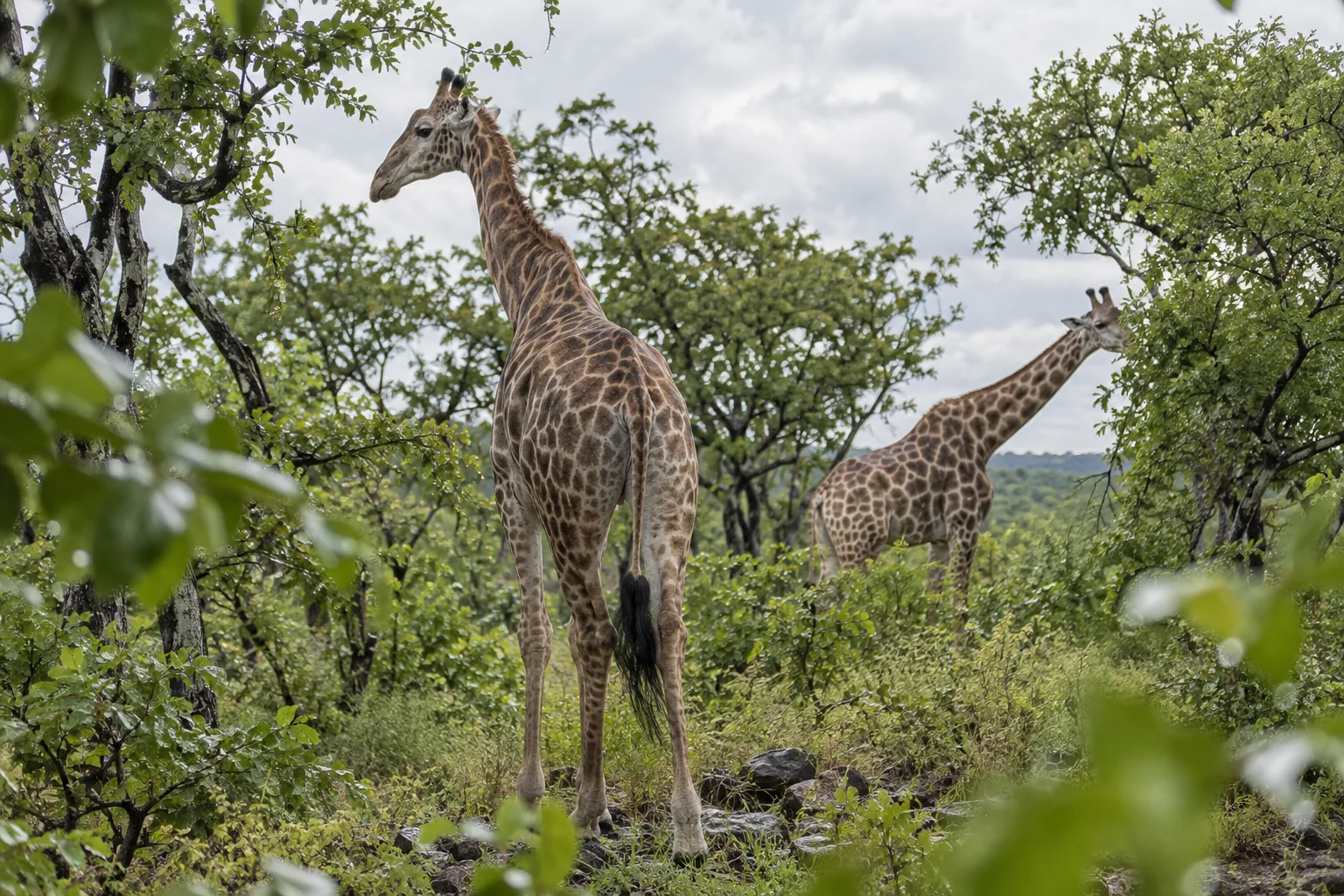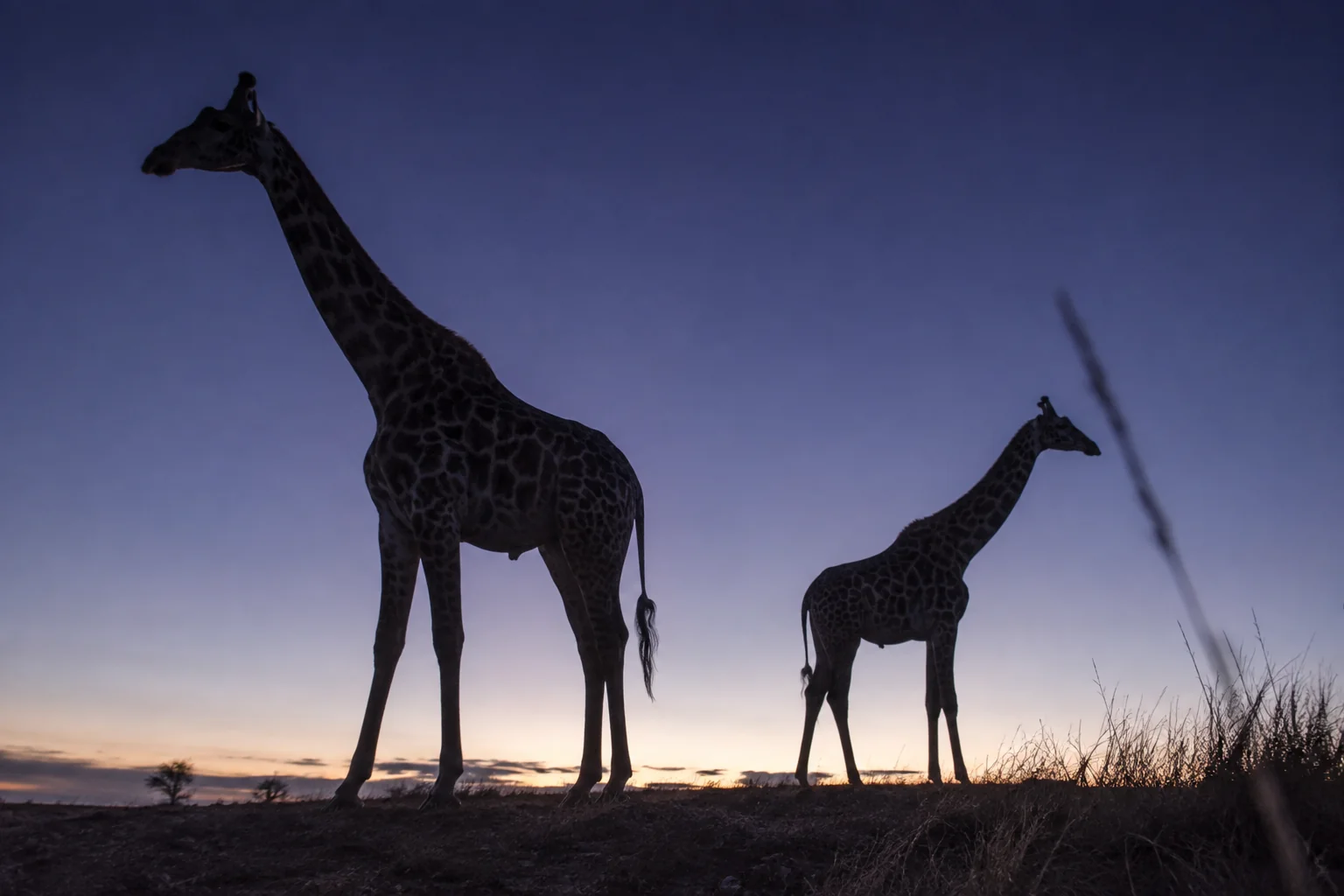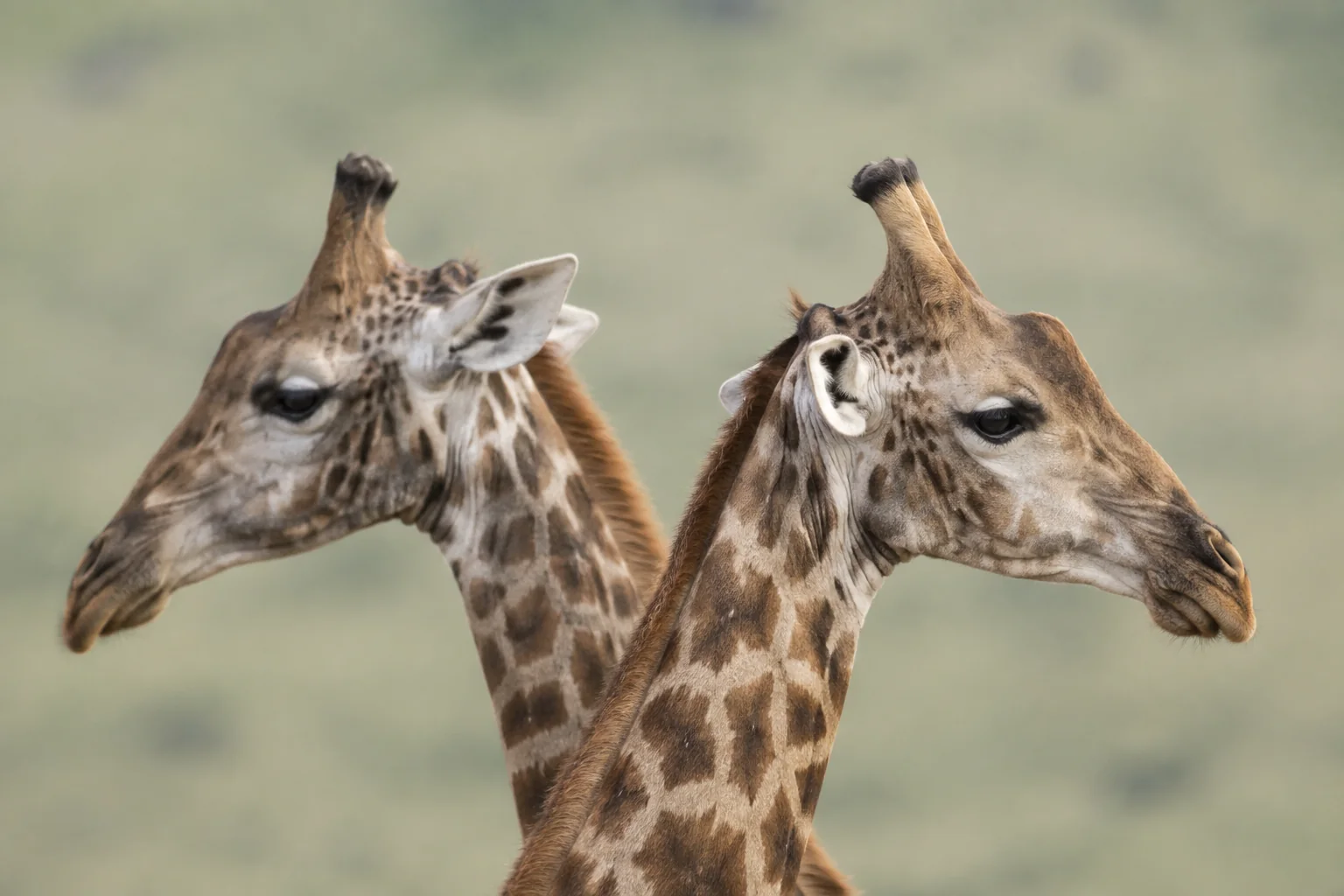
A giraffe approaches food and another moves away. On its own, the incident says little: the departing animal might simply have finished eating. Repeated across identified pairs, with a clear threat and a submissive response, such moments can reveal who yields to whom.
Edita Horová, Karolína Brandlová and Markéta Gloneková used this approach in a 2015 study of captive giraffes. Their records showed ordered dominance relationships at feeding encounters, including a largely stable ranking among adult females. A social system with changing associations need not be a system without rank.
Why a feeding place changes the question
In a zoo, food is not distributed exactly as it is across woodland. The studied herds had forage available freely, but preferred concentrated foods, fruit and vegetables arrived at particular feeding times. These created occasions when several animals could want the same resource.
Space also limited the option of simply leaving the group. Under such conditions, a consistent pattern of yielding could reduce the need to settle every encounter anew. That was the researchers' explanation for why hierarchy might become especially visible in captivity; they did not experimentally change feeding distribution to prove it caused the hierarchy.
Observations took place at three Czech zoos. Four initial herds were studied, then two Prague herds were combined and the joined herd followed in three successive years. The resulting seven entries in the analysis are therefore herd observation periods, not seven independent populations. Some represent the same animals under later conditions.
Over 240 hours, observers recorded 1,353 agonistic encounters with identifiable winners and losers. They included obvious head strikes as well as threats, pushes and chases. To count, the recipient had to show a clear submissive reaction, avoid the winner and not return to the conflict. The table was built around accepted losses rather than every instance of two giraffes approaching one another.
Turning pairwise outcomes into an order
Imagine that one giraffe repeatedly displaces a second, and the second displaces a third. A linear hierarchy is more plausible if the first also dominates the third. If outcomes instead form a circle, a single ladder represents the relationships poorly.
The researchers arranged their win–loss tables to minimize contradictions and measured how close the result came to a linear order. The analysis allowed for pairs whose relationship remained unknown or tied. This matters because failing to see a confrontation between two animals does not establish that they are equals.
Five of the seven herd-period comparisons showed statistically significant linearity. Two smaller initial herds had near-linear patterns that did not reach that threshold. Only the final combined-herd period exceeded the study's stated criterion for a strongly linear hierarchy. Thus the paper's broad title should not be read as seven perfectly ordered groups.
The results nevertheless establish something substantial: consistent asymmetry could be recovered from the small encounters of captive giraffes. Dramatic fighting was not required to detect it.
Age, residence and the limits of an explanation
Older animals generally held higher positions. Adults dominated younger giraffes, while subadults tended to dominate juveniles. The numerical rank used in the paper places the top animal at one, so a lower rank number represents a higher social position.
Age is not a mechanism by itself. Before adulthood it is closely linked to size; experience and familiarity may also accumulate with age. The study did not measure body mass or the other physical traits needed to separate all these possibilities.
Length of residence in the herd was associated with female rank, but residence and age were correlated. There were too few adult newcomers to establish a clean advantage of arriving first. A long-established female could rank highly because of experience, age, size or several of these together.
Sex did not have a statistically detectable effect in the fitted model. That is different from showing that sex never matters. The herds generally contained only one adult male, limiting the comparison, and the adult male usually occupied the highest position. The authors themselves treated the absent statistical effect cautiously.
A nearly unchanged female order
The clearest view through time came from five adult females in the combined Prague herd. Their relative order was almost unchanged across three consecutive years. Two neighbours in the ranking exchanged positions in the final year; the others retained their places.
This is evidence of stability within that herd. It cannot establish that female ranks stay fixed for life, remain unchanged after every transfer, or behave identically in wild populations. Its strength lies in following identified animals, rather than assuming that a group appearing calm on one day has no contested relationships.
Another study of wild giraffe associations adds a useful distinction. After adjusting for age, sex and gregariousness, it detected partner preferences during foraging but not during resting or travel. That study measured who associated, whereas the zoo study measured who yielded.
Together they show why a social network and a dominance ranking answer different questions. Two giraffes may feed together often, yet one may reliably give way at a particular resource. A preferred companion is not necessarily an equal competitor, and shared group membership does not reveal the outcome of a feeding encounter.
For husbandry, the practical implication is to observe access, not merely availability. Providing enough food to a group does not demonstrate that every member can reach preferred items with the same ease. The study did not measure nutritional harm or test a new feeding arrangement, but it supplied a way to identify relationships that such decisions should take into account.
Sources
- Edita Horová, Karolína Brandlová and Markéta Gloneková (2015). “The first description of dominance hierarchy in captive giraffe: not loose and egalitarian, but clear and linear.” PLOS ONE 10(5), e0124570. Full paper.
- Zoe Muller, Mauricio Cantor, Innes C. Cuthill and Stephen Harris (2018). “Giraffe social preferences are context dependent.” Animal Behaviour 146, 37–49. Paper. Corrigendum.