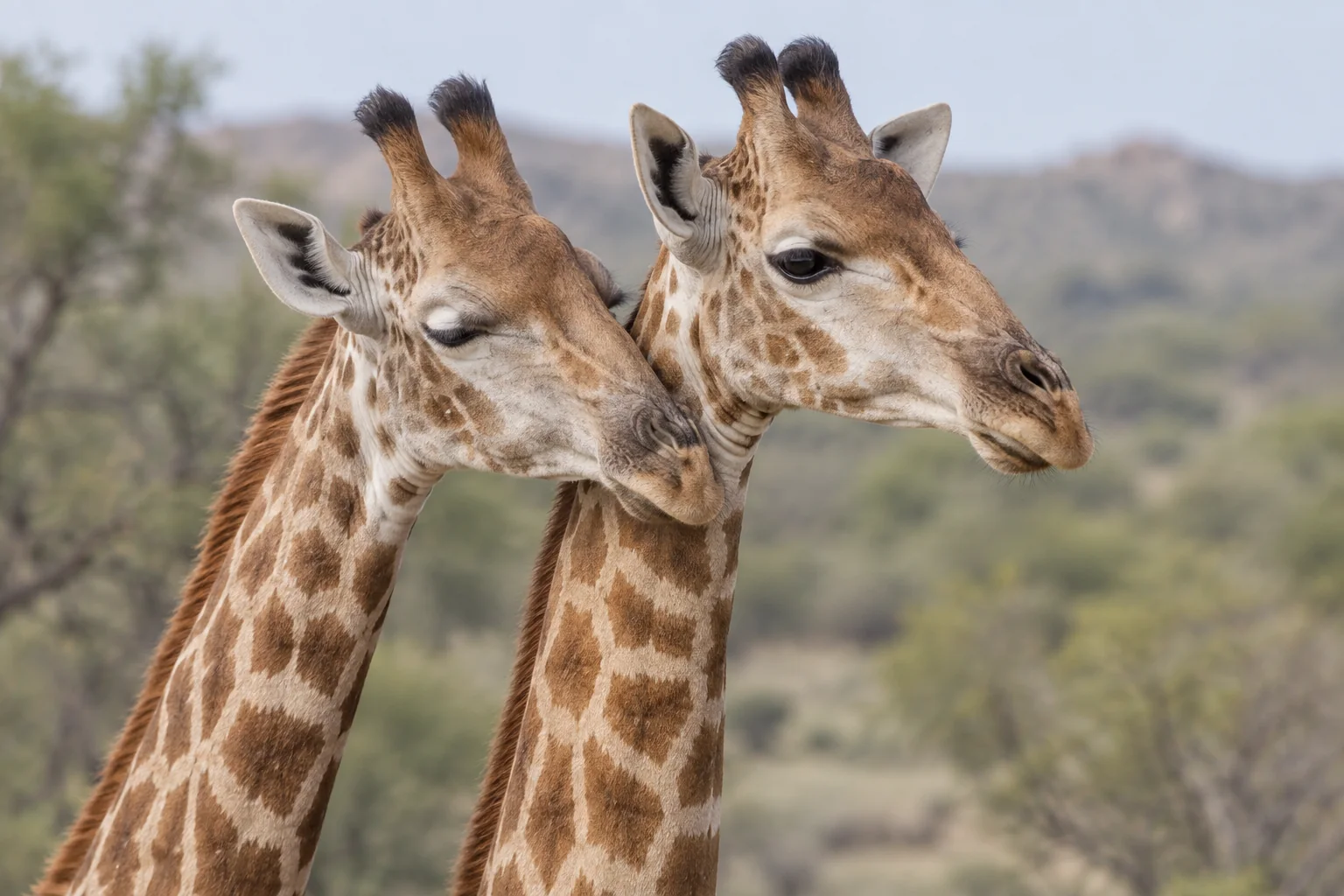
Two giraffes repeatedly seen together may prefer one another. They may also have similar feeding needs, use the same part of a landscape or both tend to join large groups. A photograph of the pair cannot distinguish those explanations, and a long list of photographs does not automatically solve the problem.
Zoe Muller, Mauricio Cantor, Innes C. Cuthill and Stephen Harris addressed it by asking what the giraffes were doing together. Their 2018 study found that evidence of individual partner preferences survived statistical adjustment during foraging, but not during travel or rest. The activity attached to an observation changed what the apparent relationship meant.
An expectation turned around
The researchers initially expected weaker associations while foraging. Food can be a source of competition, whereas joining others during travel or rest might provide protection. If those benefits shaped partner choice, particular companions might matter less at a meal than at other times.
They studied two enclosed giraffe populations in Kenya, each for nine months spanning comparable seasons in successive years. The sites differed in lion presence and tourist activity, so the team described them as having lower or higher disturbance. With only two sites, they could not separate the effects of predators from those of people or other population differences.
Photographs identified individual giraffes, and each group observation lasted 30 minutes. The researchers retained only records in which they were confident they had identified every group member. They classified the group's main activity as foraging, travelling or resting; observations in which that category changed were excluded.
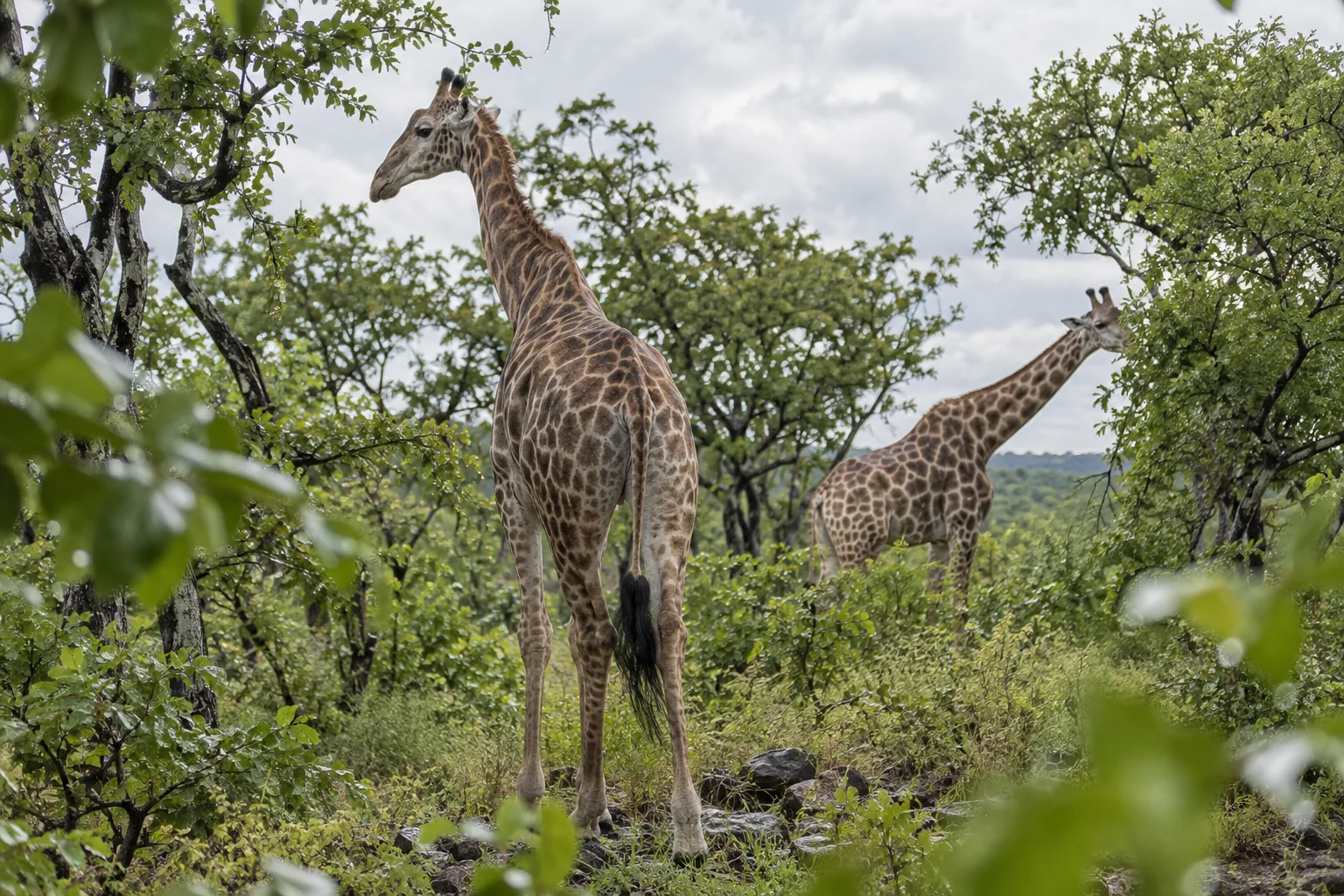
Foraging included browsing and rumination, as well as movements between feeding trees. Travel meant directed movement between places. Rest excluded browsing and rumination. These definitions matter: the result is about the study's broad foraging category, not only the moments when an animal removes a leaf.
Looking beyond a shared group
The first measure asked how often two animals were seen together relative to how often they were seen separately. Such an association index is useful, but it can be elevated for reasons other than a preference for a particular individual.
The researchers therefore modelled influences from age, sex and gregariousness, the tendency to occur in larger or smaller groups. They then examined the associations left unexplained by the relevant influences. A pair repeatedly together more often than that model predicted became a candidate for individual preference.
This adjustment is not a direct reading of an animal's motives. Unmeasured factors could still bring two giraffes together. Its value is that several obvious alternative explanations no longer carry the entire conclusion.
The test also needed a realistic chance comparison. The team repeatedly shuffled individuals among groups within daily sampling periods and recalculated the adjusted measures. They asked whether real relationships varied more than these rearranged data predicted, with unusually strong and weak affiliations indicating preferences and avoidance.
There were 77 identified giraffes at one site and 89 at the other. The behavioural comparison was restricted to animals observed in all three categories: 55 and 45, respectively. It would therefore overstate the analysis to imply that every identified giraffe supplied equally complete evidence for every activity.
Foraging retained the clearest individual pattern
The simpler association measure suggested preferences across all activities. After adjustment, however, only foraging showed clear evidence of individual preferences in both populations. Resting and travelling did not pass the same test.
The study's comparison figure makes that distinction more informative than a picture of connected individuals alone. Some pairs can have large adjusted scores even in a context where the overall pattern is not distinguishable from chance. Drawing a line between two animals is not itself proof that the network contains more preference than the sampling process would generate.
The result ran against the original prediction. Foraging was the context in which particular partners appeared to matter most. One possible explanation is that compatible companions make feeding easier: animals may share needs or reduce the interruptions associated with unsuitable neighbours. The study did not measure improved food intake, shared vigilance or information transfer, so it could not choose among those benefits.
Habitat complexity produced a different result. Adjusted preferences persisted across the study's open and more wooded settings. Habitat still influenced network details, but it did not remove the main evidence of affiliation as separating activity categories did.
Food can organize more than friendship
A 2015 captive study recorded another kind of relationship at food: who displaced whom. Repeated feeding encounters revealed dominance patterns in zoo herds, with older animals generally holding higher rank.
The two studies do not show that wild giraffes choose foraging companions because of dominance. They used different populations and different measurements. The comparison instead helps explain why food is a social setting worth examining closely. Sharing feeding space can involve both attraction to companions and unequal access to resources; counting animals together does not tell us which process is operating.
The field study also stops short of proving giraffes have no preferred companions while resting or moving. Smaller samples, unmeasured conditions and the definitions used can affect what a test detects. Its conclusion is that the adjusted evidence was strongest and statistically supported during foraging in these two populations.
A more precise account of a relationship now becomes possible: these individuals repeatedly associate while foraging, beyond the grouping expected from the measured similarities between them. That is more informative than calling every frequent association a friendship, and it offers a clearer next question—what does feeding beside this particular companion allow a giraffe to do?
Sources
- Zoe Muller, Mauricio Cantor, Innes C. Cuthill and Stephen Harris (2018). “Giraffe social preferences are context dependent.” Animal Behaviour 146, 37–49. Paper.
- Zoe Muller, Mauricio Cantor, Innes C. Cuthill and Stephen Harris (2019). Corrigendum to “Giraffe social preferences are context dependent.” Animal Behaviour 150, 175. Correction.
- Edita Horová, Karolína Brandlová and Markéta Gloneková (2015). “The first description of dominance hierarchy in captive giraffe: not loose and egalitarian, but clear and linear.” PLOS ONE 10(5), e0124570. Full paper.