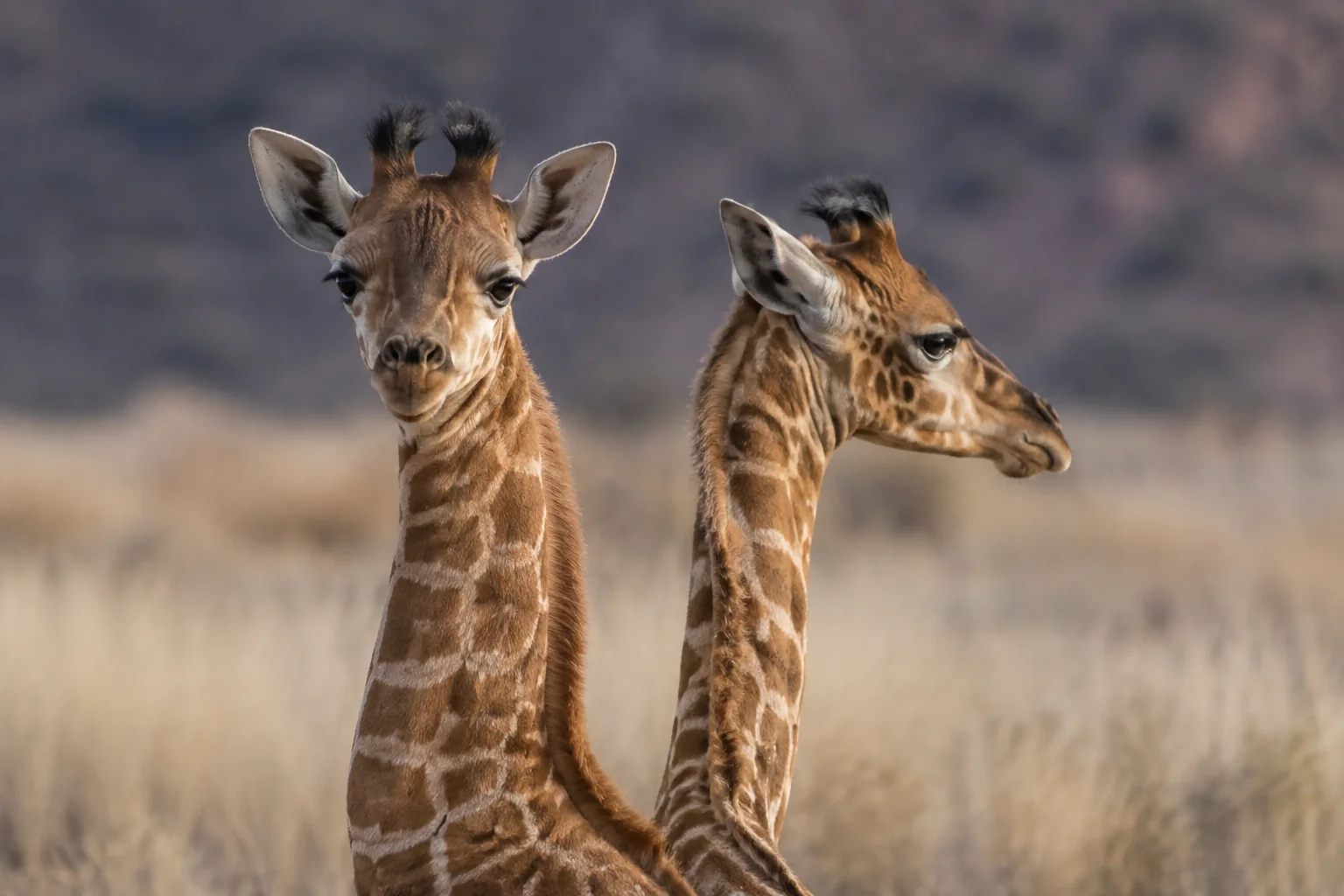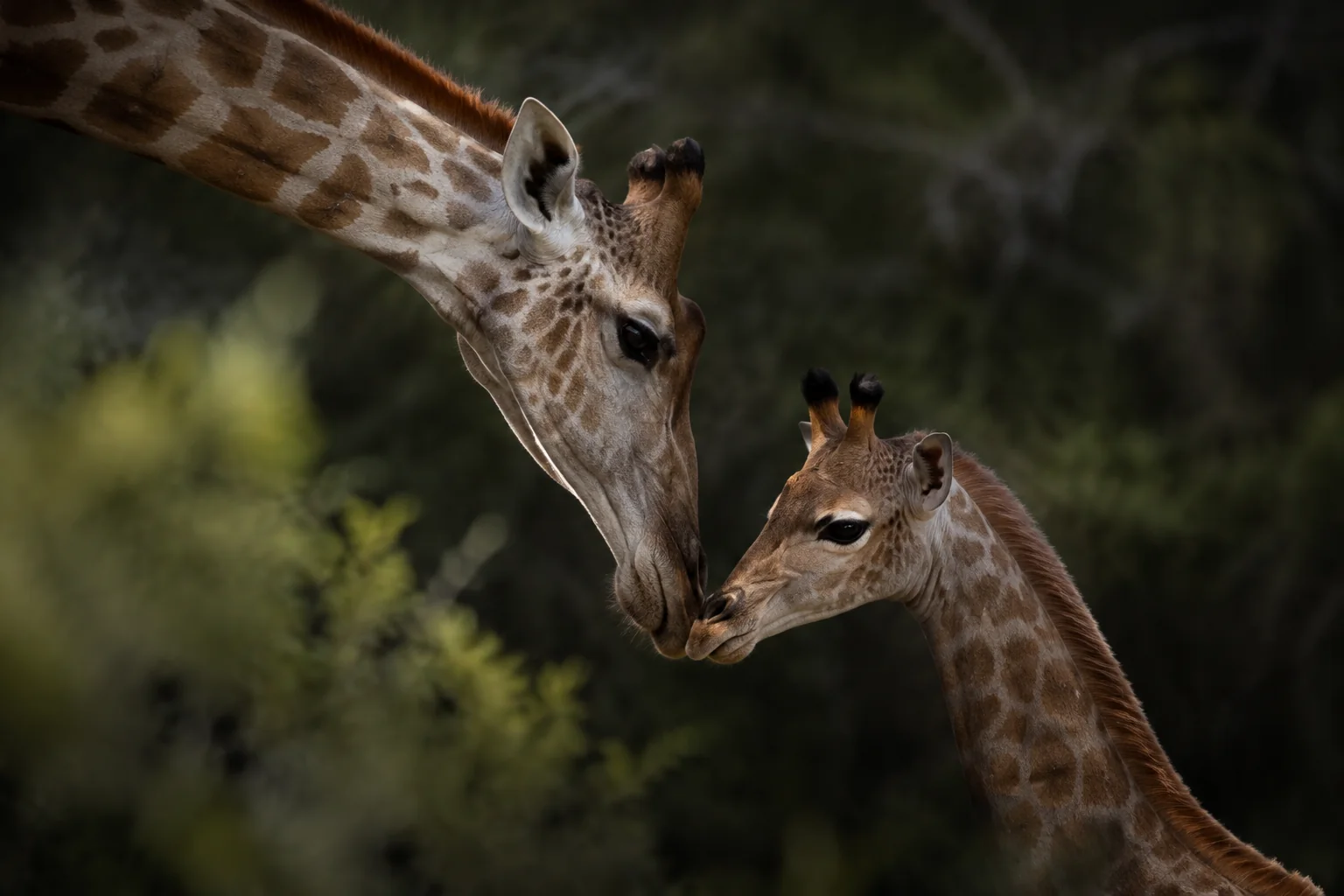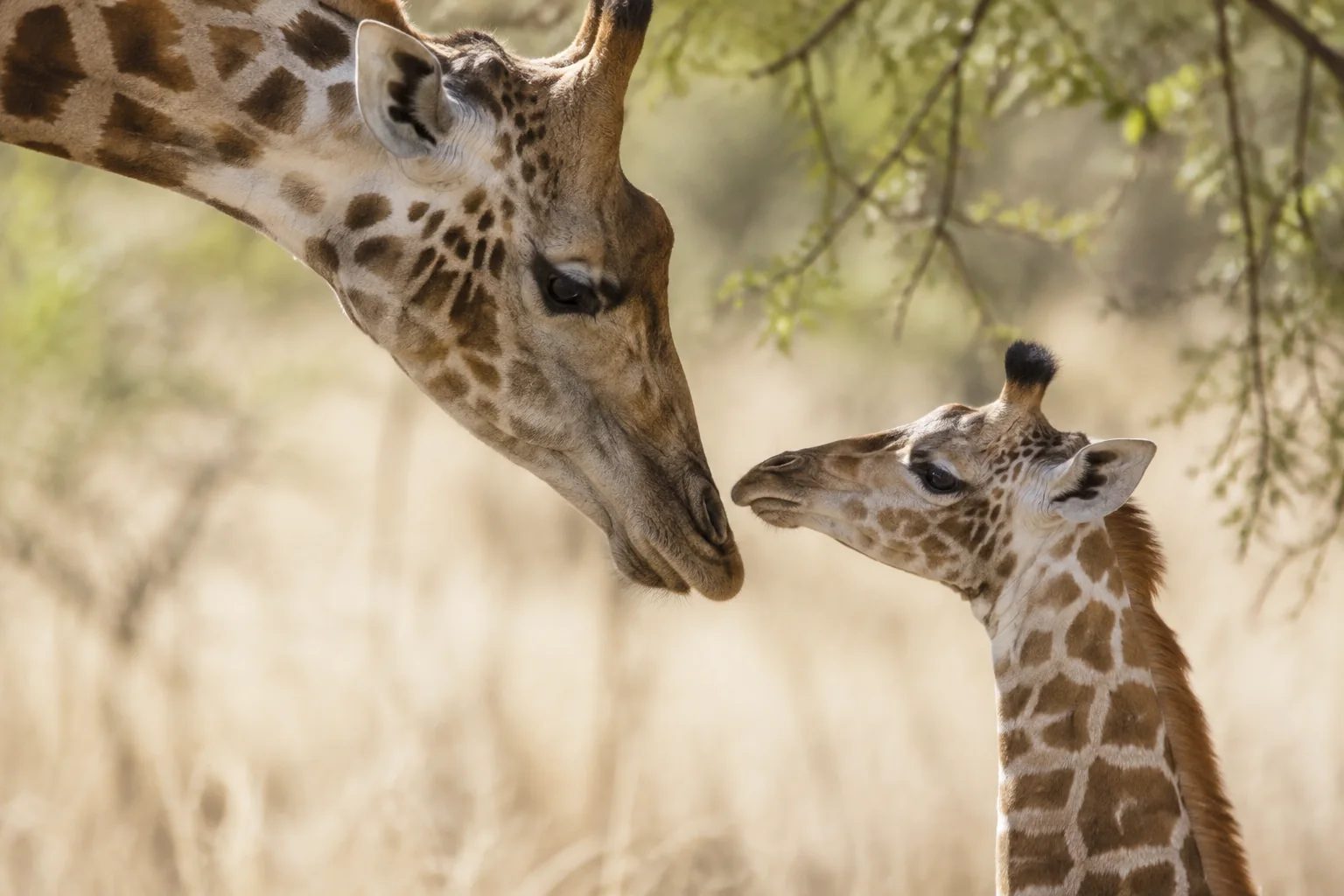
A calf does not enter giraffe society independently. It follows its mother, depends on her milk and encounters other animals in her company. If she repeatedly associates with a particular female, her calf may repeatedly meet that female’s calf as well. This offers a simple route by which the social lives of one generation could help organise those of the next.
Lenka Malyjurkova and colleagues explored that possibility in a study of giraffes in Bandia reserve, Senegal. Their 2014 paper examined a population descended from South African giraffes introduced into the fenced reserve. It asked whether the animals showed social preferences in their new setting—and whether relationships between mothers corresponded to relationships involving their offspring.
Turning repeated sightings into relationships
The researchers observed 28 individually recognisable giraffes over 34 days between January and March 2013. Photographs of coat patterns helped them identify the same animals again. Observing nursing helped establish which calves belonged to which mothers.
Rather than treating every sighting of two giraffes together as evidence of a special bond, the team compared how often each pair appeared together with how often either animal was seen without the other. The resulting association measure ranged from zero, for animals never recorded together, to one, for animals always together when either was observed.
That comparison matters. Two commonly seen giraffes have more chances to appear in the same group than two rarely seen ones. A useful measure needs to put joint sightings in the context of opportunities to observe them.
The study recorded 88 groups containing at least two giraffes, alongside 56 sightings of solitary individuals. The group records provided a picture of changing membership rather than a single fixed herd. Within that movement between groups, some pairs still appeared together much more consistently than others.
Three preferred pairs among seven mothers
Mother–calf pairs had the strongest average associations, as expected for young animals still dependent on their mothers. More revealing was the variation among the seven adult females. Of the 21 possible female pairs, three exceeded the researchers’ chosen threshold for a strong association.
Each of those pairs involved different females, giving six females one particularly strong partner apiece. The remaining female had a strong association with her own calf but no adult female partner above that threshold.
The paper describes these preferred partners as friends. Here the word has a specific observational meaning: females repeatedly found in the same group at a relatively high rate. It does not reveal their emotional experience, and the threshold was a research choice rather than a natural boundary separating friendship from its absence.
The small number of females also matters. A pattern of three pairs in this reserve does not establish that giraffe females everywhere have exactly one preferred companion.
The pattern extends to calves
Adult females associated most strongly with their own calves. But the next comparison was informative: a female was also more closely associated with her preferred partner’s calf than with calves of other females.
The average association measure was about 0.41 for a preferred companion’s calf, compared with 0.18 for other females’ calves. These numbers describe repeated group membership, not the fraction of a day spent nursing or guarding an animal. They show that the mother's strongest adult relationship fitted into a wider social cluster.
Calf–calf associations followed the same pattern. Pairs of calves were more closely associated when their mothers were more closely associated. The study’s plot makes that relationship visible: stronger maternal associations generally went with stronger associations between the young.
A straightforward explanation is shared opportunity. Calves following mothers who often gather together will meet repeatedly. Another possibility is that the calves’ own preferences help keep those family units together. The observations cannot determine the direction of influence, but they show why calf relationships should be interpreted alongside those of their mothers.
An introduced population, with an unknown family history
Bandia offered a useful setting for observing identifiable animals, but it also set limits on the conclusion. The giraffes occupied a fenced reserve outside the native range of the South African population from which the founders came. The study cannot be treated as an assessment of restoring Senegal’s historically native giraffes.
Nor did the researchers know the genetic relationships among the adult females. Preferred partners could have been relatives, and relatedness could contribute to associations involving their calves. Without records from before the original translocation, the team could not establish whether particular bonds survived a move or developed afterwards.
The practical insight is narrower and useful: a managed giraffe population can contain relationships spanning mothers and calves, even when a group count makes the animals appear interchangeable. Considering only a mother–calf pair could miss other repeatedly associated animals in their social surroundings.
Our guide to giraffe social structure explains why frequently changing groups can coexist with persistent preferences. Bandia adds a specific mechanism worth investigating: mothers and calves may participate in linked sets of associations.
Following the same calves after they become independent would reveal whether those early companions remain important. Genetic sampling could help separate inherited family relationships from familiarity acquired by repeatedly growing up together. For now, Malyjurkova and colleagues show that a calf’s social setting is more intelligible when the mother’s companions remain in the picture.
Sources
Lenka Malyjurkova, Marketa Hejzlarova, Pavla Junkova Vymyslicka and Karolina Brandlova (2014). Social Preferences of Translocated Giraffes (Giraffa camelopardalis giraffa) in Senegal: Evidence for Friendship among Females? Agricultura Tropica et Subtropica 47(1), 5–13. DOI; open full paper.