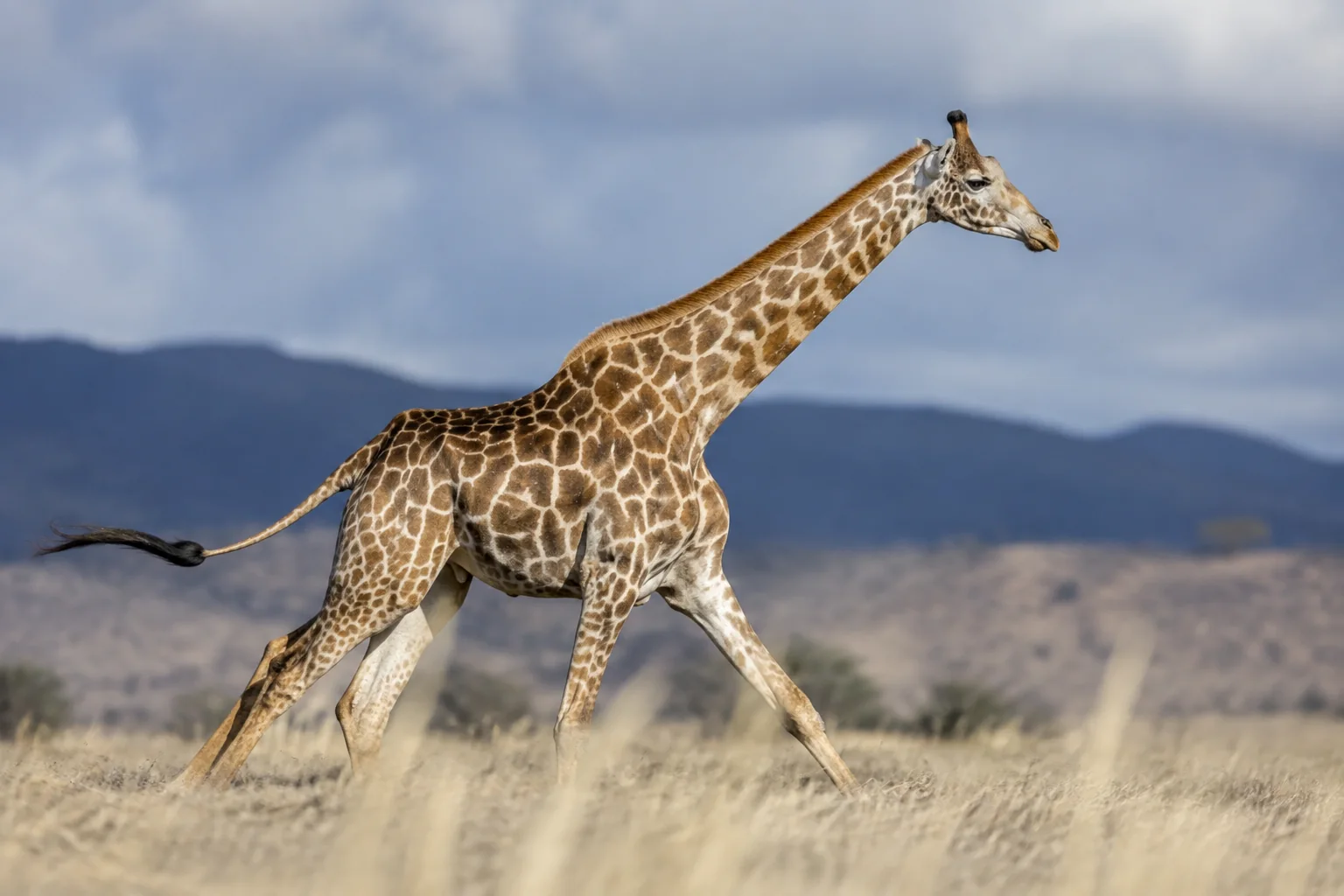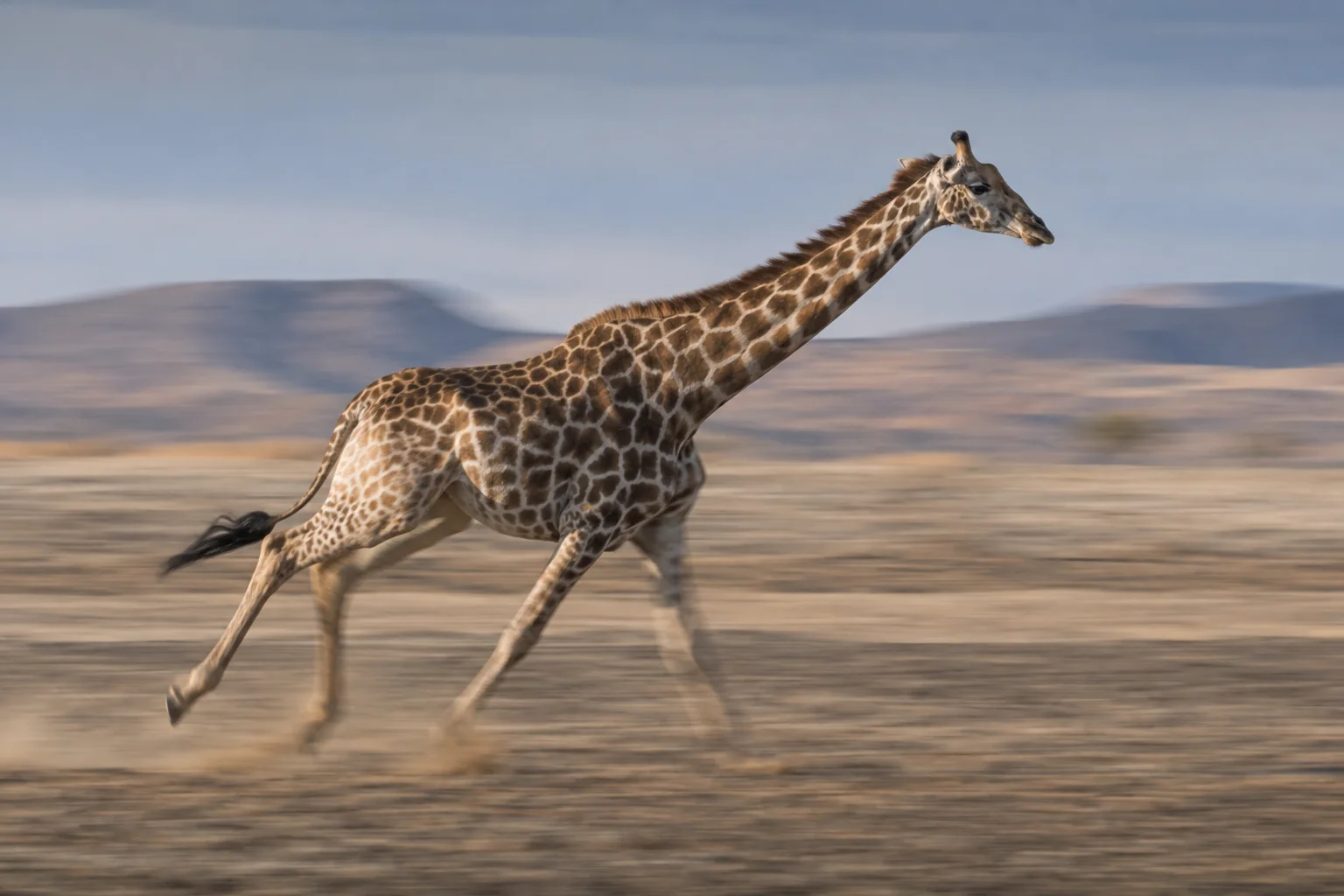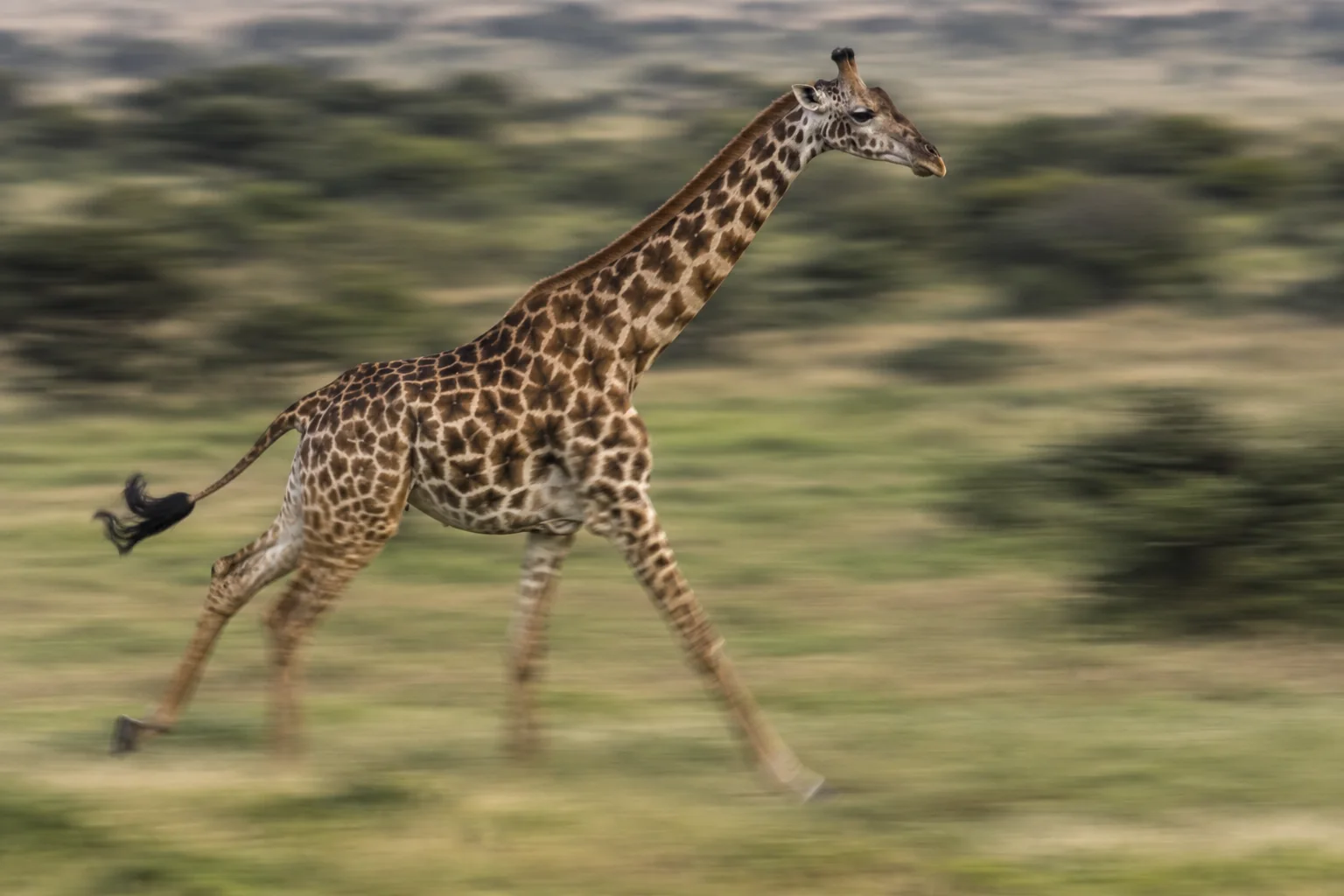
When a foot lands unexpectedly, an animal cannot correct its movement instantly. Information must travel from the leg to the nervous system, an instruction must travel back, and muscle must turn that instruction into force. A giraffe has unusually long distances over which this exchange must occur.
One possible solution would be exceptionally fast nerves. Another would be a greater reliance on anticipating the next step before a disturbance arrives. A 2013 study led by Heather L. More and Shawn M. O’Connor tested the first possibility by measuring nerve conduction and muscle responses in giraffes, then examining the fibres inside their sciatic nerves.
The researchers found no extraordinary increase in signal speed that erased the cost of long legs. Muscle activation and force development added further delays. Their work explains a constraint on movement control, rather than demonstrating that giraffes are clumsy or measuring how often they stumble. Read the focal paper.
Measuring travel time without timing the whole response
The study involved eight male giraffes, with different measurements available from subsets of four. Procedures took place under anaesthesia during a programme that combined several physiological investigations. This gave researchers access to nerves and muscles, while also limiting what could be inferred about an awake animal responding naturally.
To measure motor nerve speed, they stimulated the sciatic nerve at two positions and recorded electrical activity in a hindlimb muscle, the medial gastrocnemius. A signal sent from the more distant position took longer to arrive. Dividing the extra distance by the extra time isolated the conduction speed along that short nerve segment.
This comparison is more informative than timing a single stimulus until muscle activity begins. A single measurement includes delays at the nerve–muscle junction and within the muscle. Subtracting the two response times largely removes the stages shared by both routes.
Across four giraffes, the measured speed averaged 50.4 metres per second, with considerable variation between animals. That is fast on a human walking scale, but it does not make the journey through a long leg instantaneous.
Using an estimated 2.3-metre route from the foot to the spinal cord, the authors calculated a one-way delay of about 46 milliseconds. This was an estimate using motor conduction speed as a proxy for sensory speed, not a direct recording from a foot receptor. A limited sensory recording in one animal gave a similar speed, but attempts to obtain those reflex measurements were mostly unsuccessful under anaesthesia.
A comparison that changes what “fast” means
More and colleagues had previously combined new recordings from shrews and an elephant with published measurements across 11 mammal species. Despite enormous differences in body size, maximum nerve conduction speed increased only slightly. Their new measurements were approximately 42 metres per second in shrews and 70 in the elephant.
That comparison explains why a giraffe signal travelling at roughly 50 metres per second is not a special solution to being tall. A small animal can use a similar speed over a much shorter route. The relevant quantity for feedback is journey time, which depends on distance as well as speed. Read the comparative experiment.
The earlier paper later received a correction to its estimates of delay relative to time spent with a foot on the ground. The correction did not change the measured conduction speeds or the conclusion that larger animals experience longer absolute delays. It is another reason to keep direct electrical measurements distinct from a model that combines them with movement timing. Read the correction.
The muscle has its own timetable
An electrical command reaching muscle is only one stage of a response. The researchers directly stimulated the giraffe’s medial gastrocnemius and used an inserted force sensor to record the resulting twitch.
On average, force began to rise about 13.4 milliseconds after stimulation. This interval includes the electrical and molecular processes that activate contraction. From the onset of force to its peak took another 45.9 milliseconds.
These are different events. The muscle had already begun responding before it reached peak force. Calling the sum a delay before “any response” would wrongly erase that early force production.
The distinction also affects the paper’s reconstruction of a simple reflex. Combining measured conduction and muscle delays with estimates for sensing and signal transfer, the authors obtained approximately 100 milliseconds from a hypothetical tendon stimulus to peak force. The resulting timeline was a model assembled from component evidence. It was not a directly observed 100-millisecond recovery from a trip, and it did not describe every muscle or every type of reaction.
The calculation nevertheless identifies where much of the waiting occurs. Signal travel and the rise toward peak muscle force occupied most of the modelled interval. Making one tiny transfer stage faster would leave those larger contributions in place.
Why not make every nerve fibre thicker?
For insulated nerve fibres, greater diameter generally allows faster conduction. But a nerve must also carry many separate fibres, serving different sensory inputs and groups of muscle fibres. Increasing their number can support more detailed sensing and finer control. Increasing their thickness consumes space that could otherwise accommodate additional fibres.
The researchers examined sections from four sciatic nerves with electron microscopy. Rather than count every fibre throughout each enormous nerve, they sampled seven internal bundles per nerve, measured 15,559 fibres in total, and extrapolated from their density and the total bundle area.
The resulting estimate was about 107,000 myelinated fibres per sciatic nerve. The size distribution had two prominent groups of thinner and thicker fibres, rather than consisting entirely of exceptionally wide, fast conductors.
Fibre counts provided an anatomical indicator of how densely tissue could be served. They were not a behavioural test of how finely a giraffe can distinguish touches or control force. Sensory organisation, muscle architecture and processing in the nervous system also matter. The paper’s conclusion is that the giraffe did not escape the space constraints shared by other large mammals.
There was uncertainty even in the electrical estimate. The stimulation may have recruited only part of the nerve, and fibre diameters suggested that the fastest fibres could conduct faster than the measured average. Such a revision would shorten the calculated travel time. It would still fall far short of the speed needed to give a giraffe the same absolute delay as a small mammal over its much shorter limbs.
A limit on feedback, and a question about compensation
The measurements give a physical reason why waiting for complete feedback can be costly during rapid movement. By the time information arrives and muscle force changes, the body has already moved on. Shorter reflex pathways and predictions about the next movement could help manage that delay.
Those compensatory strategies remain interpretations to test in giraffes. The experiment measured nerve and muscle properties under controlled conditions; it did not compare prediction in trained animals or record corrections during running.
Its contribution is to make the problem measurable. Height changes the distance information must travel, while muscle contributes an additional timetable of its own. Understanding giraffe movement therefore requires both the mechanics of long limbs and the time needed to control them.
Sources
Heather L. More, Shawn M. O’Connor, Emil Brøndum, Tobias Wang, Mads F. Bertelsen, Carsten Grøndahl, Karin Kastberg, Arne Hørlyck, Jonas Funder and J. Maxwell Donelan (2013). “Sensorimotor responsiveness and resolution in the giraffe.” Journal of Experimental Biology 216: 1003–1011. Full paper.
Heather L. More, John R. Hutchinson, David F. Collins, Douglas J. Weber, Steven K. H. Aung and J. Maxwell Donelan (2010). “Scaling of sensorimotor control in terrestrial mammals.” Proceedings of the Royal Society B 277: 3563–3568. Full paper. The same authors published a 2014 correction, 281: 20141911.