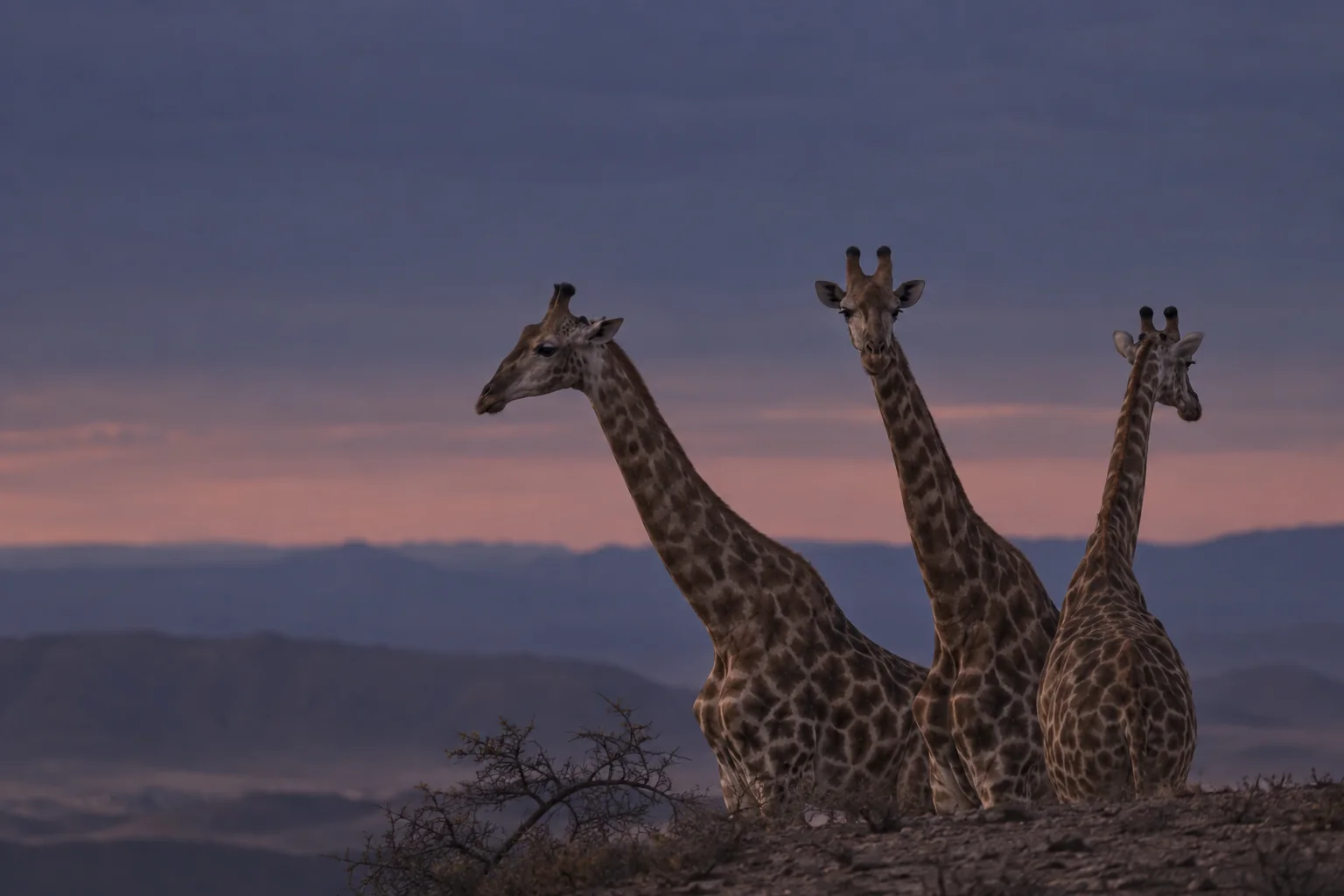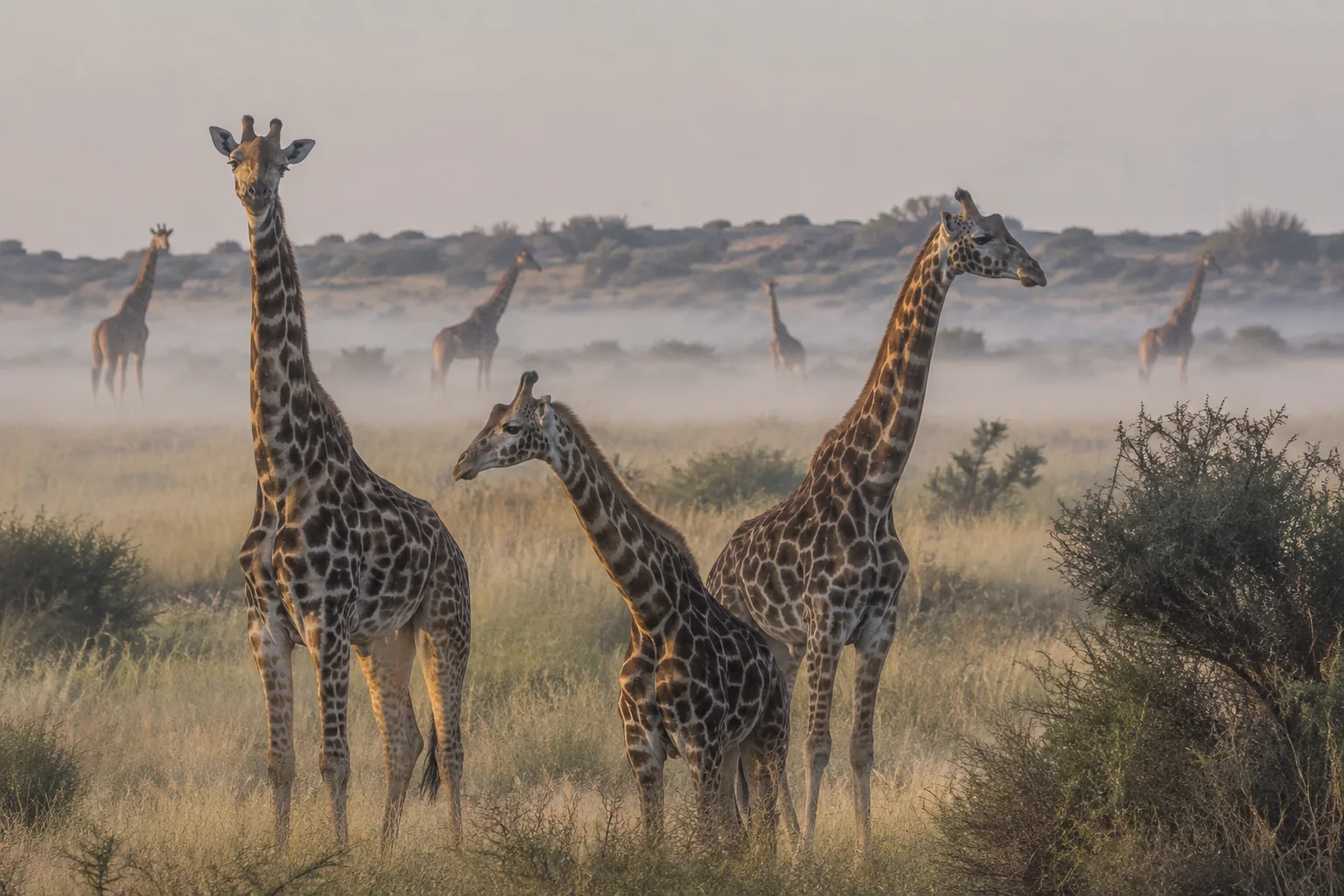
An empty zoo offers a comparison that is usually difficult to obtain. Animals still receive care, but the steady presence of visitors disappears. During the COVID-19 closure, researchers at Oregon Zoo could examine what happened when that absence lasted for months and then ended.
Laurel B. Fink and colleagues followed two male giraffes and two male cheetahs through the change, publishing their study in 2021. For the giraffes, the clearest lesson was about attribution. Behaviour and hormone measurements changed over the study, but the strongest differences did not neatly match the opening or closing of the gates.
Two transitions instead of one long comparison
Oregon Zoo closed in March 2020 and reopened in July, initially with a limit of half its usual visitor capacity. The researchers divided the observations into four periods: open before closure, early closure, late closure and reopening.
That division let them ask two related questions. What changed when visitors first disappeared? What changed when visitors returned after a prolonged absence? Comparing early closure directly with reopening would span both visitor exposure and several months of other change.
The giraffe subjects were a nine-year-old reticulated male and a five-year-old Masai male. A young female joined the group during the closure but was not one of the focal animals. Her arrival was part of the social setting through which the two males moved.
Existing welfare monitoring provided some observations from before the closure. Researchers and care staff then continued behavioural recording and collected dung samples around the transitions. The earlier observations were less frequent, which limited the balance of the comparison.
Two windows onto the animals
The behavioural observations described feeding, movement, vigilance, interactions with the environment and other activities. These were recorded as proportions of observations. If an animal spends more observations watching its surroundings, fewer observations are available for other behaviours, so changes in different categories are partly linked.
Dung supplied a second kind of evidence. Metabolites of glucocorticoid hormones reflect activity in the body's adrenal stress-response system over a preceding period. They can be collected without a blood draw, although the signal takes time to pass through the animal.
A higher value is not a direct measurement of distress. Physiological arousal can accompany different events, and the biological meaning depends on what else is happening. The study combined these measures precisely because neither a posture nor a hormone result supplies a complete welfare assessment alone.
The significant differences crossed the calendar
For the giraffes, the study found no statistically clear hormone change within either immediate visitor transition. A difference appeared between early closure and reopening, separated by several months. That wider comparison does not isolate the effect of visitors returning.
The behavioural findings had a similar structure. Both giraffes were less vigilant in reopening observations than in early-closure observations. For one male, vigilance had already declined by late closure, while the zoo was still shut. That pattern is difficult to explain as a simple response to visitors being present or absent.
One giraffe also interacted more with environmental features later in the study and spent fewer observations stationary. Again, the significant comparisons generally crossed the wider periods, rather than showing an abrupt change at a visitor transition.
The researchers discuss several possible explanations. Giraffes might have adjusted to a quieter setting. A lone staff member could become more conspicuous when the usual flow of people disappears. Attention toward a viewing area might also relate to previous food expectations. These are plausible interpretations, not behaviours whose motivations the study independently established.
A female arrived, and spring became summer
Between closure and reopening, the two males gained a new social companion. Temperature, vegetation and housing routines also changed. The research team tried to choose sampling periods that reduced the influence of major events, but could not hold the animals' lives still for four months.
Those changes help explain why this case cannot establish that visitors are harmless, harmful or enriching to giraffes as a whole. It involved two males at one institution, an unusual closure and a reopening with reduced capacity. A small or individual response could also remain undetected.
The cheetahs supplied a useful within-study contrast. One spent more time out of view after reopening, a behavioural change more closely aligned with that transition. Their medical histories also affected interpretation of hormone results. Different species and individuals therefore did not provide interchangeable responses to the same public-access schedule.
Another event, another set of conditions
A study of a Christmas evening event at Knowsley Safari likewise found no clear change in the recorded evening behaviour of two giraffes on event nights. Those giraffes were indoors under their normal winter routine and had recently received hay. That setting differs from the prolonged Oregon closure and from direct visitor feeding.
The connection is not that both studies prove visitors have no effect. Both show why the surrounding conditions belong beside the result. The kind of contact, access to shelter, timing of food and the individual animals determine what comparison has actually been made.
Future work could follow more giraffes through planned changes in visitor access while recording social introductions, housing and season. Repeated observations of the same individuals would help distinguish a short adjustment from a persistent change. Including animals with different histories would test how far the Oregon pattern extends.
The closure provided an unusual absence of visitors; the monitoring programme supplied the history needed to interpret it. Fink and colleagues show why welfare research gains precision when an event is placed within the animal's life rather than treated as the only thing that changed.
Sources
Laurel B. Fink, Candace D. Scarlata, Becca VanBeek, Todd E. Bodner and Nadja C. Wielebnowski (2021). Applying Behavioral and Physiological Measures to Assess the Relative Impact of the Prolonged COVID-19 Pandemic Closure on Two Mammal Species at the Oregon Zoo: Cheetah (A. jubatus) and Giraffe (G. c. reticulata and G. c. tippelskirchii). Animals 11, 3526. DOI: 10.3390/ani11123526. Read the full paper.
Ellen Williams, Tom Fulwell, Naomi Davies Walsh, Jessica J. Harley and Bridget Johnson (2023). The Impacts of Evening Events in Zoos: A Christmas Event at Knowsley Safari. Journal of Zoological and Botanical Gardens 4, 21–38. Full paper.