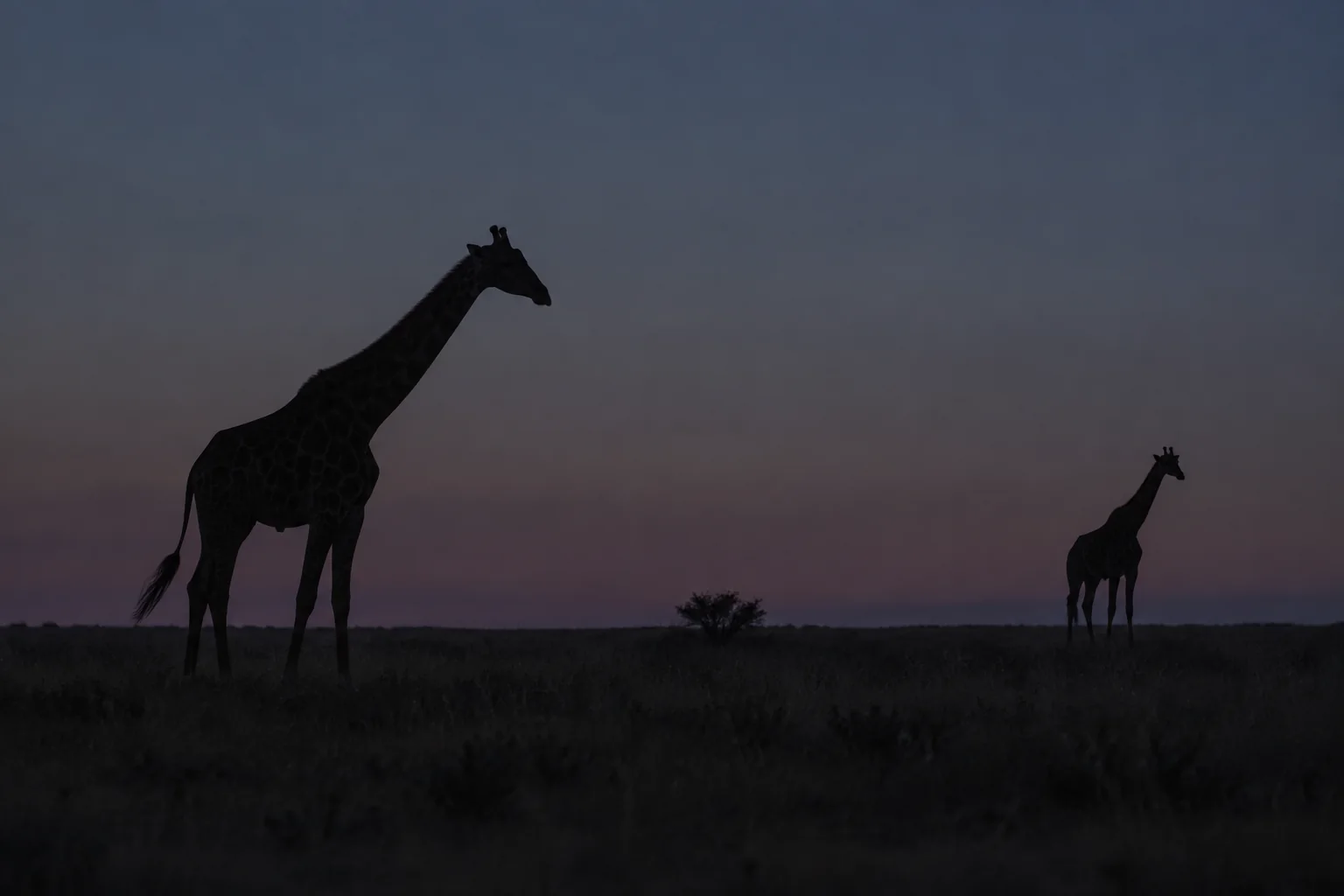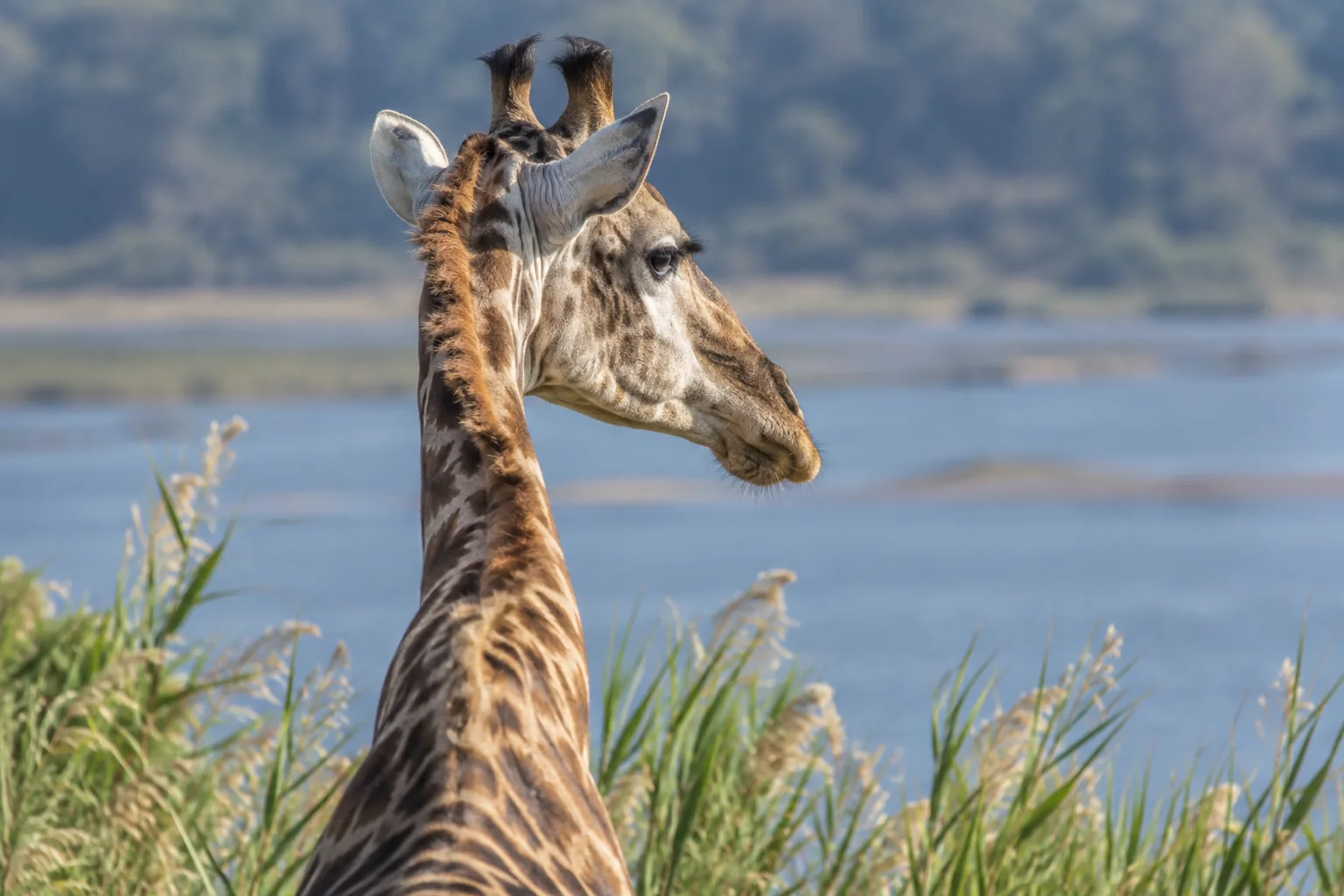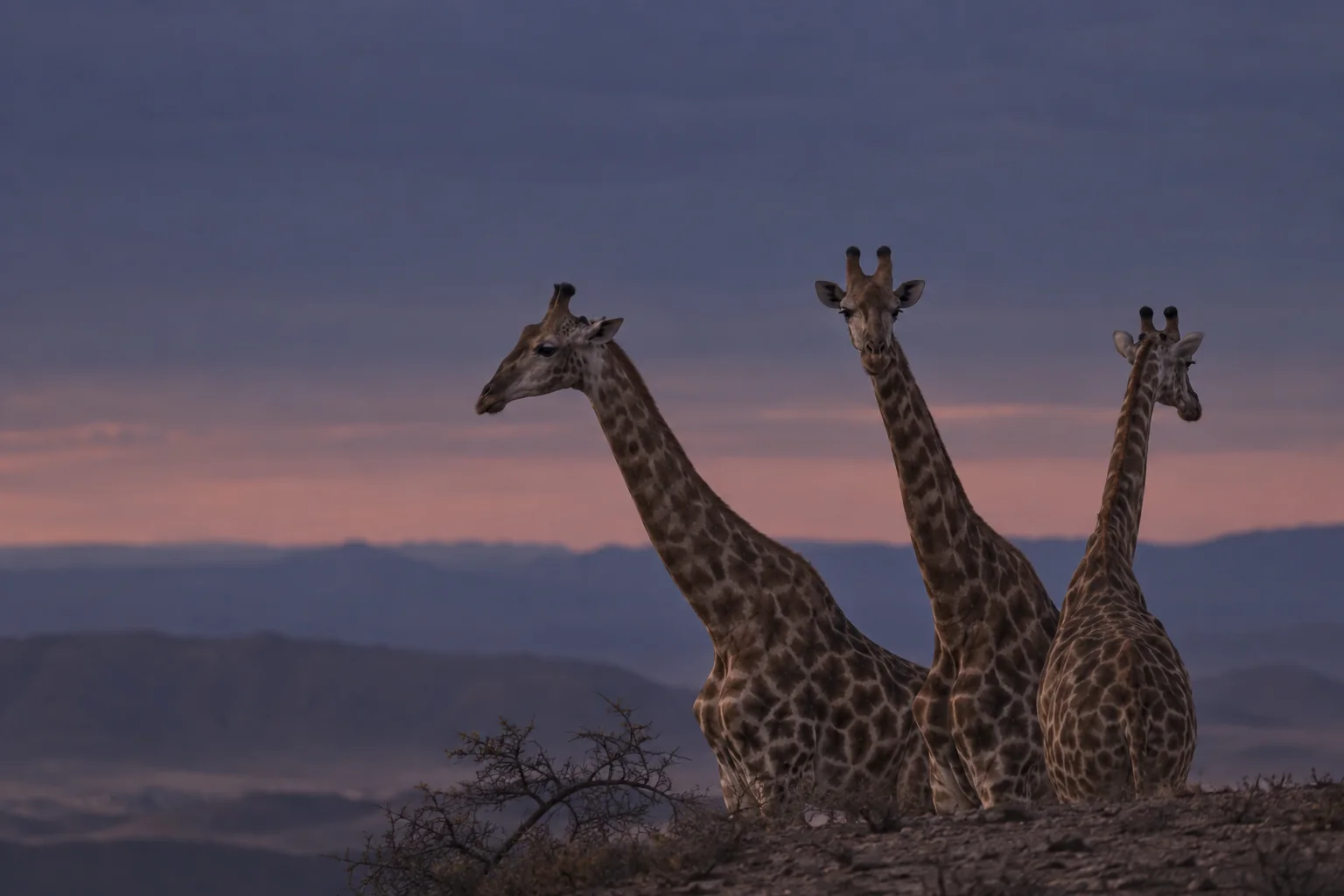
A light trail may transform an evening for visitors while reaching zoo animals in very different ways. An animal outside near the route sees and hears a different event from one inside a building, following an established feeding routine. Before asking whether the event changes behaviour, researchers need to establish which of those experiences they are measuring.
Ellen Williams and colleagues did this at Knowsley Safari during its Christmas event, reporting their findings in 2023. For two male giraffes, the recorded evening behaviour changed little between event and non-event nights. The animals were indoors, and feeding remained the dominant observed activity.
A camera inside the giraffe house
The study examined giraffes, capybaras, tapirs and vicuñas housed near the event route. The event brought additional people, music and lighting to the foot safari area later than usual.
Existing cameras allowed observations when researchers were absent. For the giraffes, two cameras covered the house. The males were brought indoors at about 15:30 as part of normal winter management; this routine applied on event and non-event days. Hay was provided shortly before the focal observations began.
That detail is central to the result. The experiment did not expose giraffes outdoors to an unfamiliar display and then test whether shutting them inside reduced its effects. It observed animals already sheltered under their usual seasonal routine.
The main comparison covered 16:00–20:00 on 21 days across the period before, during and after the 2021 event season. Each hour contributed a randomly timed five-minute observation period, with behaviour recorded at one-minute intervals. The researchers also examined a smaller selection of longer recordings to compare the hours before and after the event window.
A manageable sample of the evening
The team wanted a method a zoo could use without analysing every second of footage. Short, repeated samples can describe common activities such as feeding and rumination, while spreading observation across the evening.
The trade-off is that a brief, rare startle can occur between samples. The study is consequently stronger as a description of the recorded activity pattern than as proof that no short disturbance ever occurred.
The two giraffes' observations were pooled rather than assigned to individually identified animals. This made a group comparison possible, but could conceal a response concentrated in one male. Two animals also provide only a small representation of giraffes in managed care.
Feeding continued through the event window
During the main four-hour window, the most frequently recorded activity was eating on both kinds of evening. The analyses found no clear event-versus-non-event difference in feeding, rumination, movement, vigilance or abnormal repetitive behaviour. Vigilance and repetitive behaviour were uncommon in the samples.
The extended observations showed that activity varied with time of day. Resting became more evident later in the evening. Those daily changes should not be confused with effects caused by the event: a difference between afternoon and late night can occur whether a light trail is running or not.
The authors interpret the giraffes' limited changes in the context of routine management. Indoor housing likely reduced exposure, and the recent hay delivery gave the animals an established feeding activity. The study did not measure the sound reaching their ears or the light levels inside the house, so the degree of shelter was not quantified.
A quiet behavioural result can still be useful. It provides observations of how these giraffes behaved under a real event schedule and a particular management arrangement, rather than assuming that an event must have either a dramatic effect or none at all.
The same event reached other animals differently
The other species had access to outdoor areas. Capybaras were recorded inside more often on event evenings, while tapirs showed a small increase in vigilance. The vicuñas were usually outside the cameras' view, limiting conclusions about their behaviour.
These contrasts reveal why the phrase out of sight needs a location attached. In this study, cameras were inside buildings. An animal disappearing from view could have moved outdoors closer to the event, rather than retreating from it. The giraffes, already indoors during the focal window, did not have that same choice.
The findings therefore describe several different experiences of one event, shaped by enclosure access and observation coverage. They cannot be pooled into one welfare verdict for all the animals.
Follow the animal beyond the event
A study at Oregon Zoo examined another change in public access: prolonged closure and reopening in 2020. In its two male giraffes, the strongest behavioural and hormone differences generally spanned the wider seasonal and social changes, rather than the immediate transitions in visitor attendance.
The comparison reinforces the importance of timing. An animal may respond during an event, recover afterwards or change behaviour the following day. A measurement confined to event hours cannot capture every one of those possibilities. The Oregon study also demonstrates why changes in group membership and husbandry must be recorded alongside visitor exposure.
Williams and colleagues recommend longer observation covering the full day, better information on noise and space use, and complementary physiological measures. Individual identification would also help reveal whether one giraffe responds while another continues its normal routine.
The study's most useful result is specific: these two giraffes maintained a broadly similar observed evening pattern while housed indoors during a winter light event. Keeping that setting attached to the finding makes it informative for comparing future events and management conditions, without treating a quiet night as a universal guarantee.
Sources
Ellen Williams, Tom Fulwell, Naomi Davies Walsh, Jessica J. Harley and Bridget Johnson (2023). The Impacts of Evening Events in Zoos: A Christmas Event at Knowsley Safari. Journal of Zoological and Botanical Gardens 4, 21–38. DOI: 10.3390/jzbg4010003. Read the full paper.
Laurel B. Fink, Candace D. Scarlata, Becca VanBeek, Todd E. Bodner and Nadja C. Wielebnowski (2021). Applying Behavioral and Physiological Measures to Assess the Relative Impact of the Prolonged COVID-19 Pandemic Closure on Two Mammal Species at the Oregon Zoo: Cheetah (A. jubatus) and Giraffe (G. c. reticulata and G. c. tippelskirchii). Animals 11, 3526. Full study.