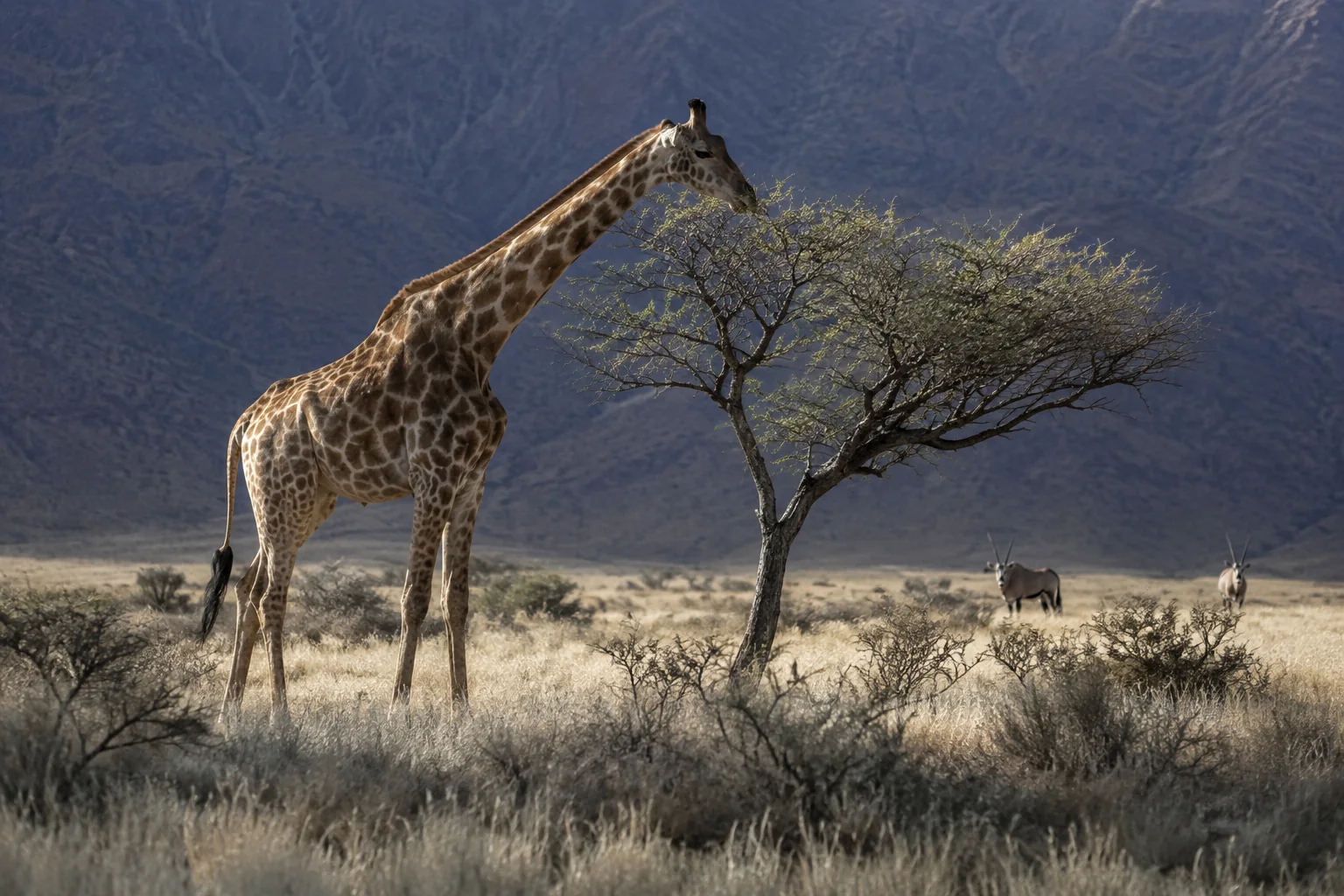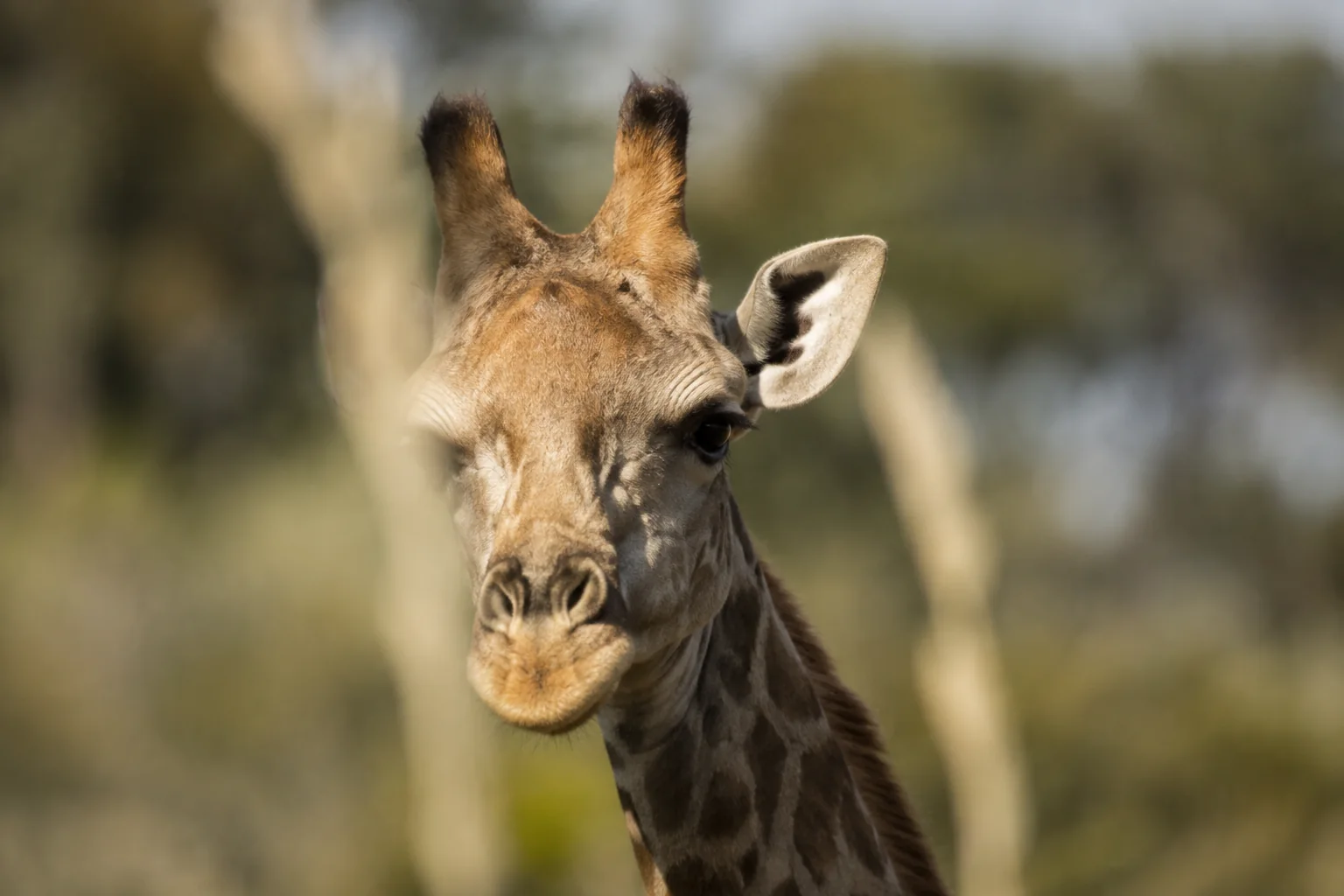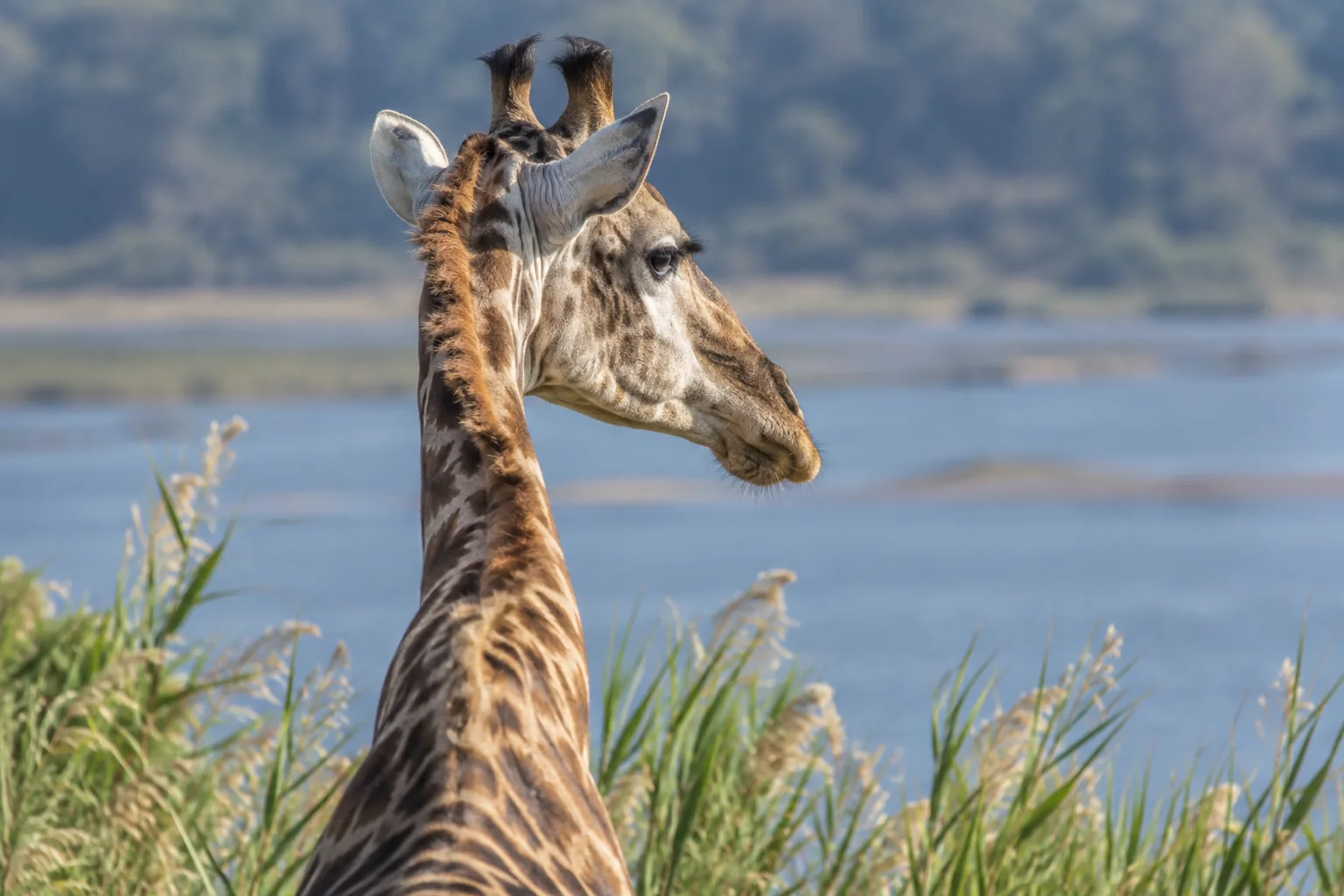
When a giraffe accepts food from a visitor, the encounter is easy to see. The animal’s experience is harder to establish. Does approaching show that the activity is rewarding? What happens to a giraffe that chooses not to join? And could an apparently quiet session still contain risks that a few minutes of observation would miss?
Simona Normando and colleagues used a visitor-feeding programme at an Italian zoo to examine those questions within a broader welfare assessment. They followed four male giraffes, including the two that did not participate, and compared seven interaction episodes with seven control episodes. The pilot detected no behavioural changes that clearly indicated an adverse effect around the sessions. The 2018 paper also showed why that result should be interpreted within the particular programme and the limits of the observations.
A design in which participation was optional
Visitors approached the giraffes from the other side of a fence, accompanied by a keeper. The animals could lower their heads to accept offered food, remain elsewhere in the day exhibit, or move away. Their ordinary food supply continued; the food offered during encounters was additional.
Two giraffes, Sam and Frantisek, routinely came forward. Baridi and Karega did not. That difference was not treated as a reason to leave the non-participants out of the study. A programme could affect animals that remain nearby through changes in group behaviour, resource access or disturbance, even if they never take food from a visitor.
The enclosure also mattered. Visitors could not follow a giraffe that withdrew, and the animals retained access to their day space. This created an observable opportunity to decline an encounter. It did not, on its own, explain why one animal joined and another stayed away.
The study took place in August and September 2017. Researchers filmed behaviour before, during and after the feeding encounters. Control episodes were filmed at comparable times when no session took place because there had been no bookings, with environmental conditions matched as closely as possible.
Those controls allowed comparisons within the same individuals. They were not randomly assigned cancellations, however. Visitor demand determined whether sessions happened, and finding comparable controls was difficult during busy periods.
The expected feeding change appeared; other changes did not
During the encounters, the two participants spent more time ingesting food than during control periods. This included the offered food and showed that visitor feeding added to ingestion during the sampled sessions.
The researchers found no other significant behavioural differences during the sessions, and no significant differences in the pre- or post-session comparisons. The two non-participants likewise showed no detected behavioural difference between interaction and control episodes.
Recorded use of the enclosure’s broad zones did not differ significantly between conditions. No escape attempts, aggressive behaviour, contact avoidance or other abnormal behaviour were recorded during the sampled observations. Licking occurred, but did not change significantly with the encounters.
These observations support a limited conclusion: this pilot did not detect the specified warning signs around these particular sessions. They do not establish that every potentially relevant response was absent. Four animals and seven episodes provide a narrow sample, and the recording windows could miss changes occurring later in the day.
The study also recognised that behaviour must be interpreted. Standing still, for instance, need not have the same meaning in every context. A behavioural category becomes more useful when connected with the animal’s circumstances and other evidence, rather than assigned a fixed emotional meaning.
Why the animals that stayed away matter
The two non-participants create an important unresolved question. Perhaps they valued the additional food less than the participants, or found close human contact less appealing. Alternatively, social relationships might have made approaching the same feeding location less attractive or less accessible.
The study did not experimentally separate those explanations. The lack of clear aggression or changes in the non-participants’ behaviour provided no positive evidence of social exclusion during the observations, but it could not prove why the animals stayed away.
Likewise, approaching for palatable food does not establish that every component of an encounter is pleasant. It shows that the animal took an available option under those conditions. The ability to decline is relevant evidence about control; the value of the experience still requires assessment.
This distinction prevents two opposite shortcuts: assuming that every giraffe close to visitors is distressed, or assuming that every giraffe accepting food enjoys the entire interaction. The study’s individual records offer a more useful basis for interpretation.
Behaviour was part of a broader assessment
The team also assessed possible consequences of inappropriate approach or handling, physical injury, and infection. Their method combined observations with structured judgments about exposure and severity. The resulting scores indicated low risk within the pilot, while highlighting hand hygiene and visitor instructions as areas for improvement.
Those scores were not measured probabilities of future harm. Some inputs depended on expert judgment and precaution because a short study cannot establish the frequency of rare events. No infection transmission was demonstrated, and the paper did not test whether a particular hygiene change reduced disease.
Although the proposed assessment framework included physiology, the pilot did not collect hormone measurements alongside the behaviour. That gap matters. A later closure-and-reopening study combined behavioural observations with faecal glucocorticoid metabolites in two zoo giraffes and found a complicated pattern across closure, season and social changes. It illustrates the value—and interpretive difficulty—of adding another measure, rather than supplying physiological confirmation for these Italian animals.
Evaluate the programme that actually occurs
The pilot’s contribution is not a blanket endorsement of giraffe feeding encounters. It is a demonstration that evaluation should include the individual participants, the animals that abstain, the available choices and the setting around the activity.
Within that setting, the observed encounters produced more ingestion in the participants without detected adverse behavioural changes. The remaining questions concern longer timescales, individual motivations and evidence beyond behaviour. Treating those questions as part of the result makes the study more useful for assessing a real programme than a simple verdict that visitor contact is always good or always bad.
Sources
- Simona Normando, Ilaria Pollastri, Daniela Florio, Linda Ferrante, Elisabetta Macchi, Valentina Isaja and Barbara de Mori (2018). “Assessing Animal Welfare in Animal-Visitor Interactions in Zoos and Other Facilities. A Pilot Study Involving Giraffes.” Animals 8, 153. Full paper.
- Laurel B. Fink, Candace D. Scarlata, Becca VanBeek, Todd E. Bodner and Nadja C. Wielebnowski (2021). “Applying Behavioral and Physiological Measures to Assess the Relative Impact of the Prolonged COVID-19 Pandemic Closure on Two Mammal Species at the Oregon Zoo: Cheetah (A. jubatus) and Giraffe (G. c. reticulata and G. c. tippelskirchii).” Animals 11, 3526. Related study.