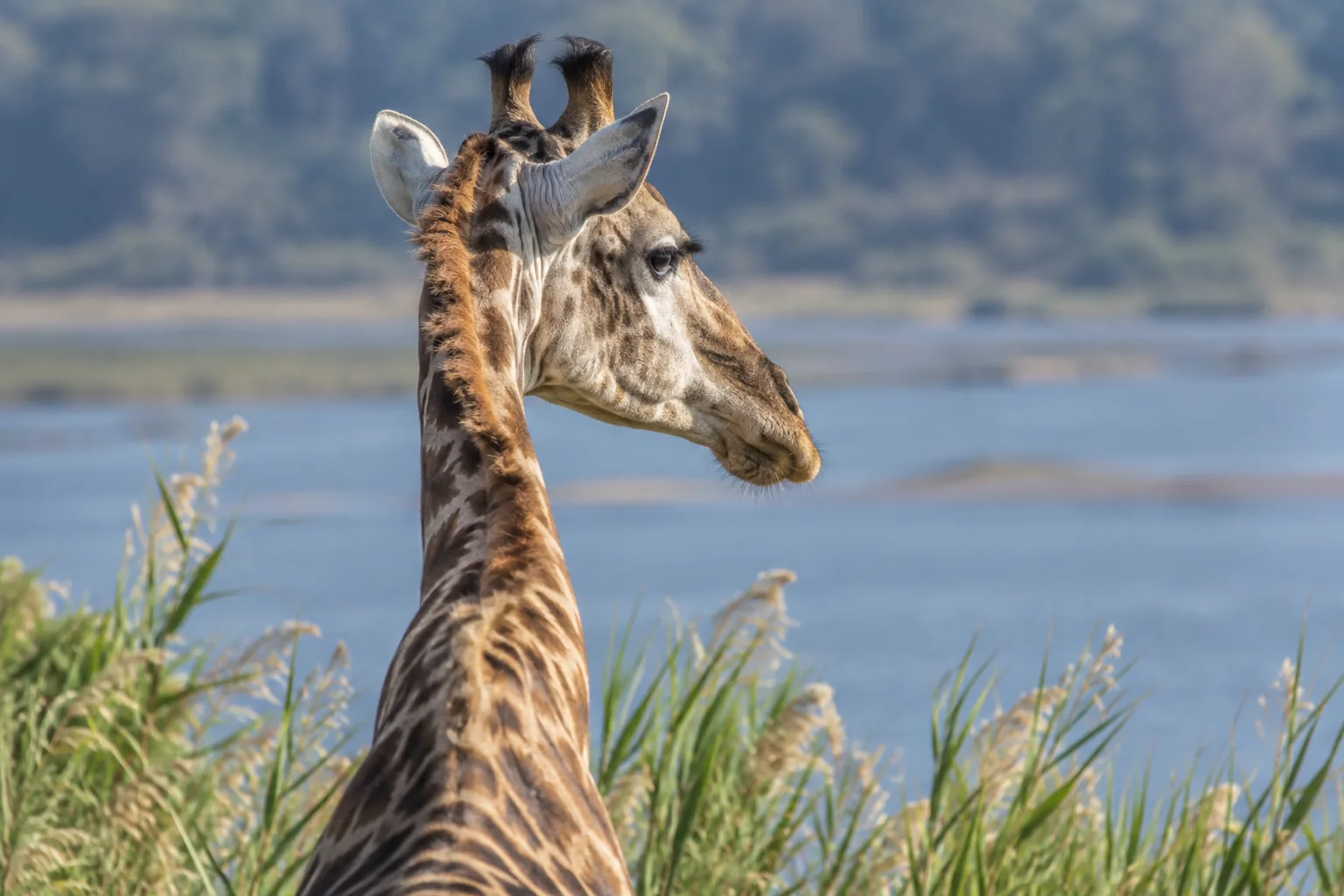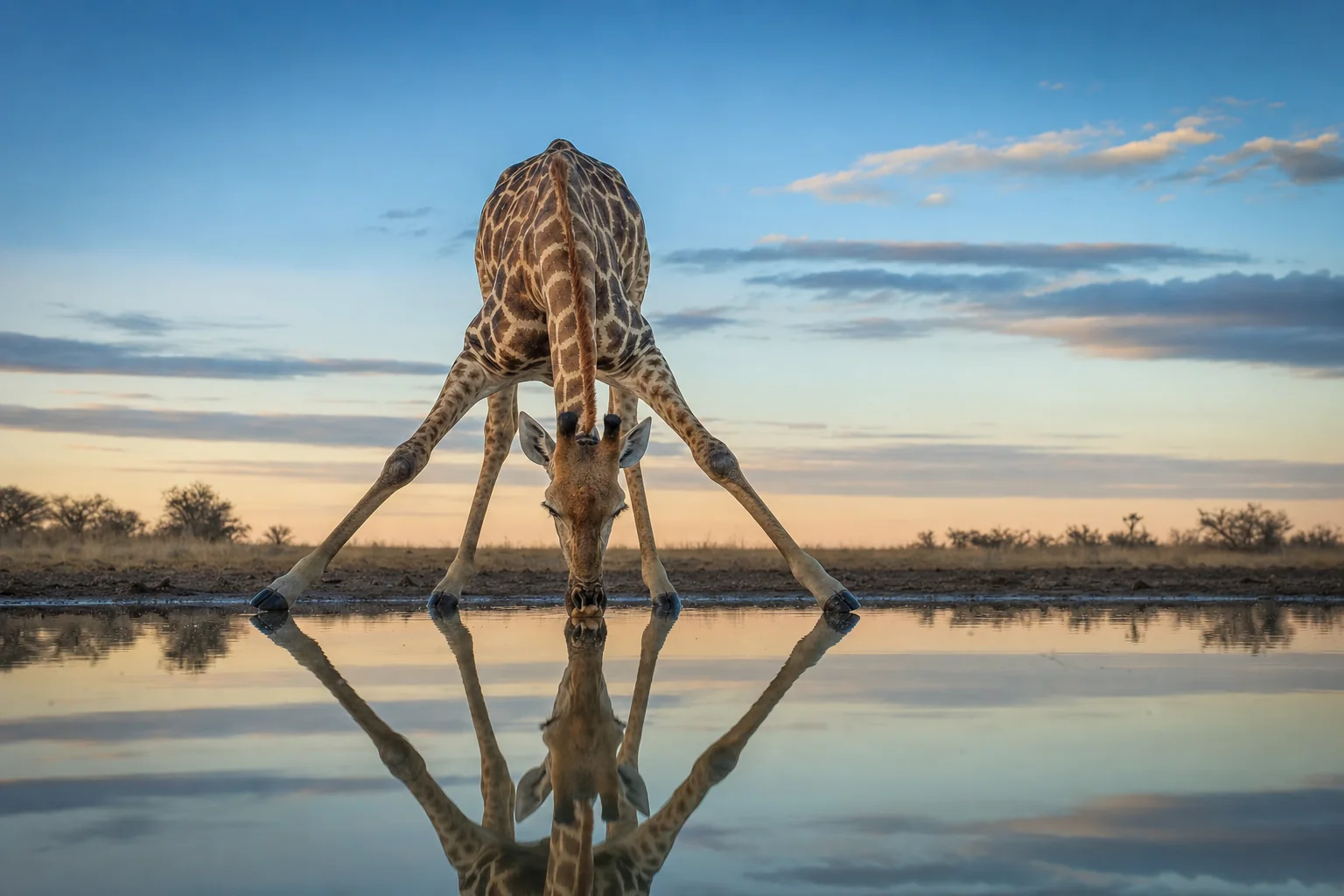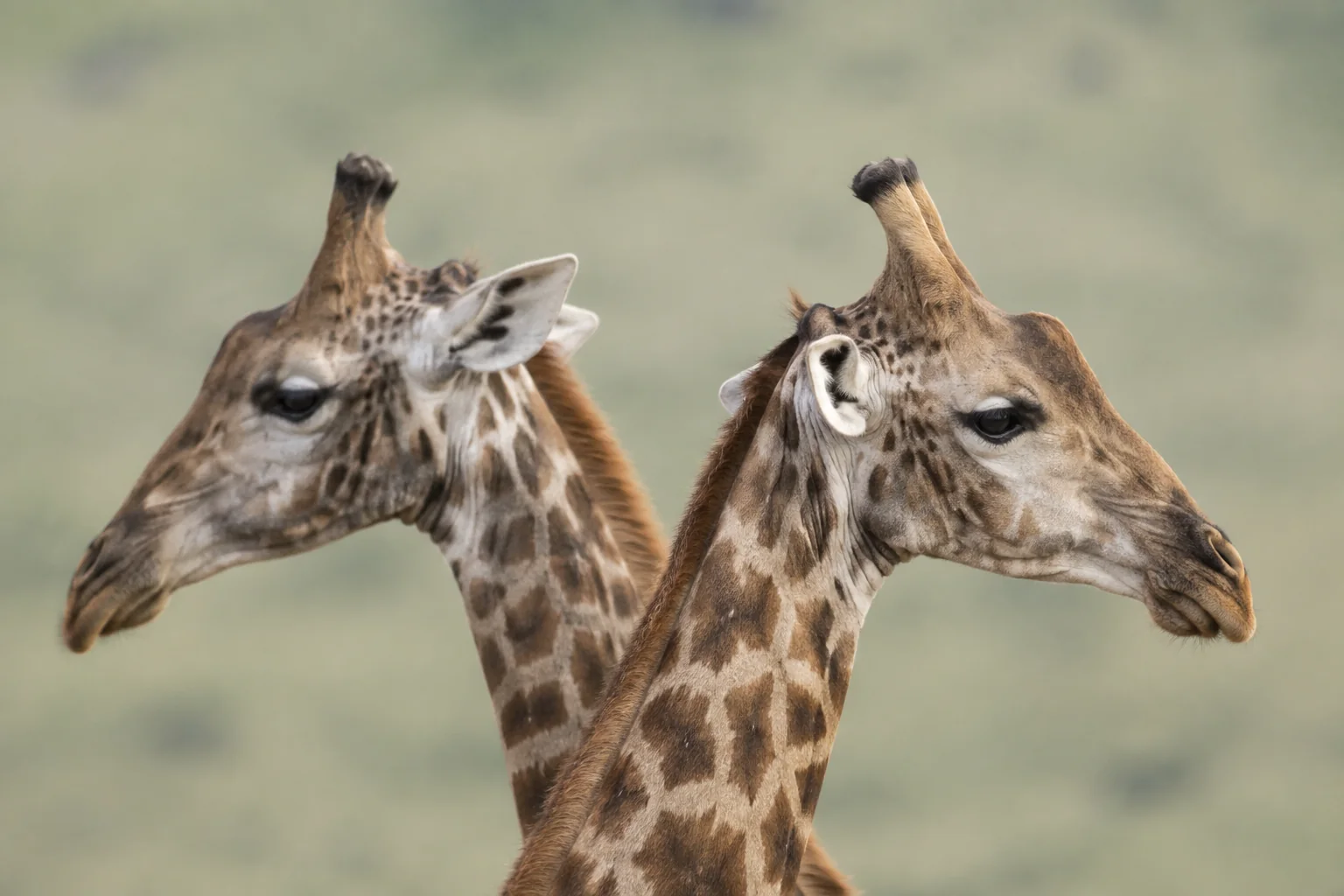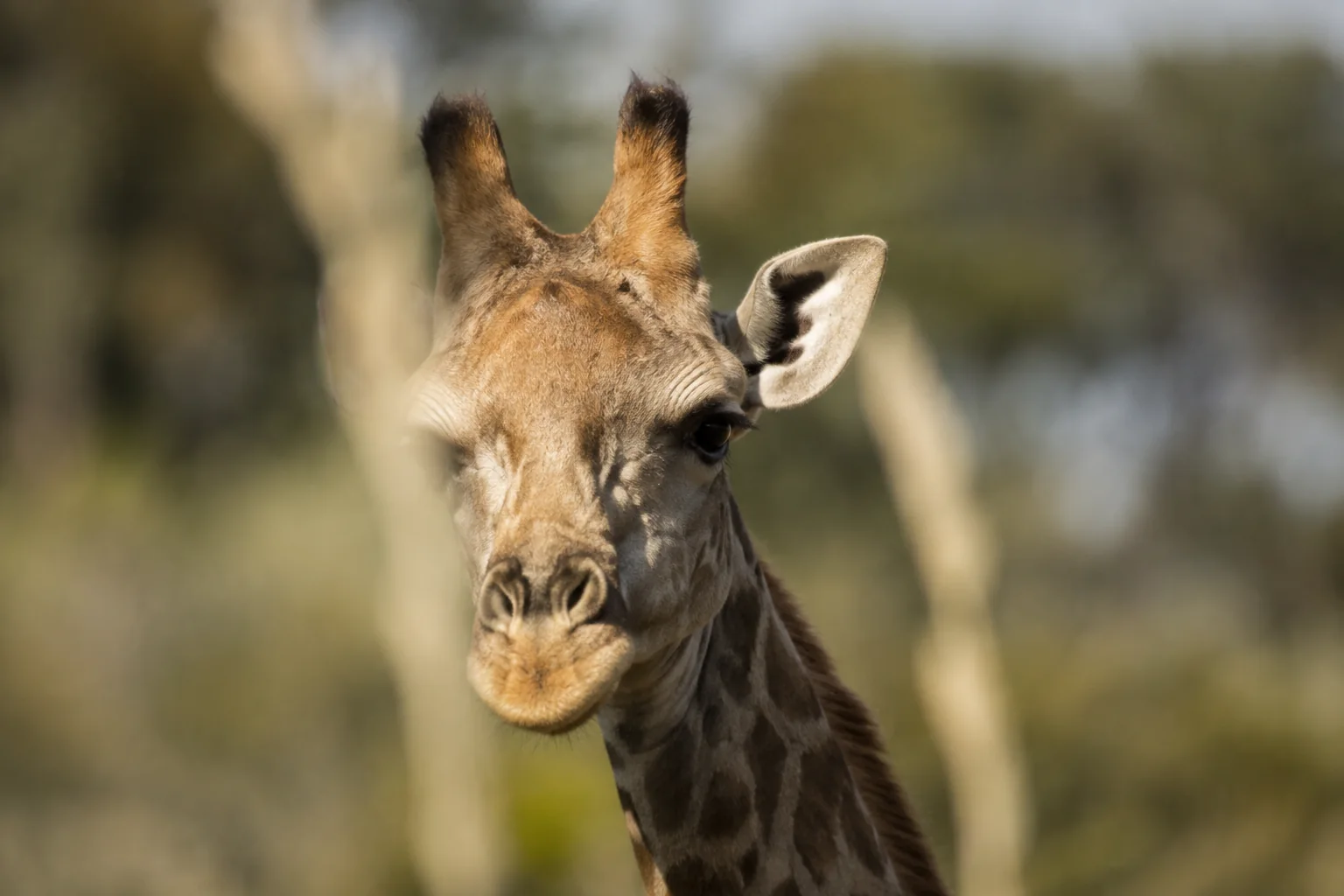
Approaching a person does not have just one meaning. An animal can move toward food while remaining wary of the person holding it. Another may approach with an unhurried, confident posture. Recording both as an approach is useful for counting behaviour, but it loses information that could matter to the animal's care.
Freisha Patel, Françoise Wemelsfelder and Samantha J. Ward investigated this problem with three male giraffes at a UK zoo. Their 2019 paper asked whether observers could agree about the expressive quality of giraffe behaviour during routine interactions with keepers, and whether those assessments related to what the keepers were doing.
Watching how an action unfolds
The method, called qualitative behaviour assessment, evaluates the animal's style of moving and responding. Words such as calm, startled or inquisitive describe a pattern across posture, movement and attention. They are intended to complement measures such as how often an animal moves away, rather than replace them.
That approach presents an obvious challenge: different people may interpret the same animal differently. Before the method could help explain relationships, the researchers needed to know whether the assessments contained a shared signal.
They recorded nine hours of routine husbandry over nine days and selected 38 clips showing interactions. These included food provision, food used to encourage movement and approaches initiated by a giraffe. The animals remained under their usual management; the study did not arrange unpleasant interactions to test their consequences.
Eighteen observers with experience of animal behaviour, but not specifically giraffes, watched the clips. They first developed their own descriptive terms, then scored each clip using those terms. This allowed the researchers to ask whether different vocabularies nevertheless arranged the clips in a similar way.
Agreement without identical words
The observers did share a pattern beyond what the researchers' randomised comparison produced. One main dimension ran between behaviour described as calm or confident and behaviour described as anxious or startled. A second captured a different contrast, between impatient or inquisitive engagement and a calmer or distracted style.
The second contrast is useful because calmness and engagement are not opposites on a single good-to-bad scale. A giraffe can be relatively settled while showing little interest in an interaction, or highly attentive without necessarily appearing fearful. The assessment kept these aspects apart.
The study also found an individual difference along the engagement dimension: one giraffe was generally perceived as more impatient or inquisitive than another. The three did not differ clearly on the first, calm-to-anxious dimension across the full sample.
These are assessments of visible expression, not direct readings of an animal's internal emotional experience. Observer agreement establishes consistency in what people see; it is one step toward a useful measure, rather than proof that every descriptive word precisely identifies an emotion.
The keeper is part of the interaction
Alongside the giraffe assessments, the researchers scored keeper actions. Calm movements, quiet speech and provision of food contributed positively, while abrupt movements, loud speech and advancing into the animal's flight distance contributed negatively under the study's scoring system.
Clips with higher keeper-action scores tended to show giraffes assessed as more calm and confident, and more engaged. This is the main relationship the study detected: the character of human actions was associated with the character of the animal's response.
The direction of influence remains open. Keepers can change their actions because of what a giraffe is already doing, just as giraffes can respond to keepers. The clips were not random assignments of handling styles, and individual keepers' identities were pooled. The study therefore cannot say that one particular keeper caused an animal's anxiety or that a specified number of quiet interactions would resolve it.
Past experience also matters. A behaviour that is familiar to one giraffe may be unusual to another. Those histories were not reconstructed in this small study, so the authors treat them as possible explanations for variation, not known causes.
Human attention can influence other experiments
A comparative cognition study illustrates why attention to people is relevant beyond husbandry. Giraffes tended to choose a box that an experimenter shook, including when the shaken box was empty. A conspicuous human action could guide the choice even when it did not identify the food.
That experiment involved different animals and measured choices, not emotional expression. Its connection here is methodological: the human presenting food is part of the situation an animal is interpreting. A task or husbandry event cannot be understood only by describing the food and ignoring the interaction around it.
From a promising measure to better evidence
The authors propose extending the assessment to more animals and asking experienced giraffe keepers to evaluate the footage. Comparing their judgements with those of other observers would test whether the expressive dimensions remain useful when informed by daily knowledge of the species.
Following identified giraffe–keeper pairs over time would address another gap. If handling routines change, do the same giraffes show consistent changes in expression, avoidance and voluntary participation? Combining those observations would make the interpretation stronger than relying on a single descriptive score.
Patel and colleagues' contribution is a practical way to make subtle responses discussable and comparable. The study gives care teams a reason to observe the quality of an interaction as well as its frequency, while preserving the individual giraffe as the subject whose experience needs to be understood.
Sources
Freisha Patel, Françoise Wemelsfelder and Samantha J. Ward (2019). Using Qualitative Behaviour Assessment to Investigate Human-Animal Relationships in Zoo-Housed Giraffes (Giraffa camelopardalis). Animals 9, 381. DOI: 10.3390/ani9060381. Read the full paper.
Álvaro López Caicoya, Federica Amici, Conrad Ensenyat and Montserrat Colell (2021). Comparative cognition in three understudied ungulate species: European bison, forest buffalos and giraffes. Frontiers in Zoology 18, 30. Full study.