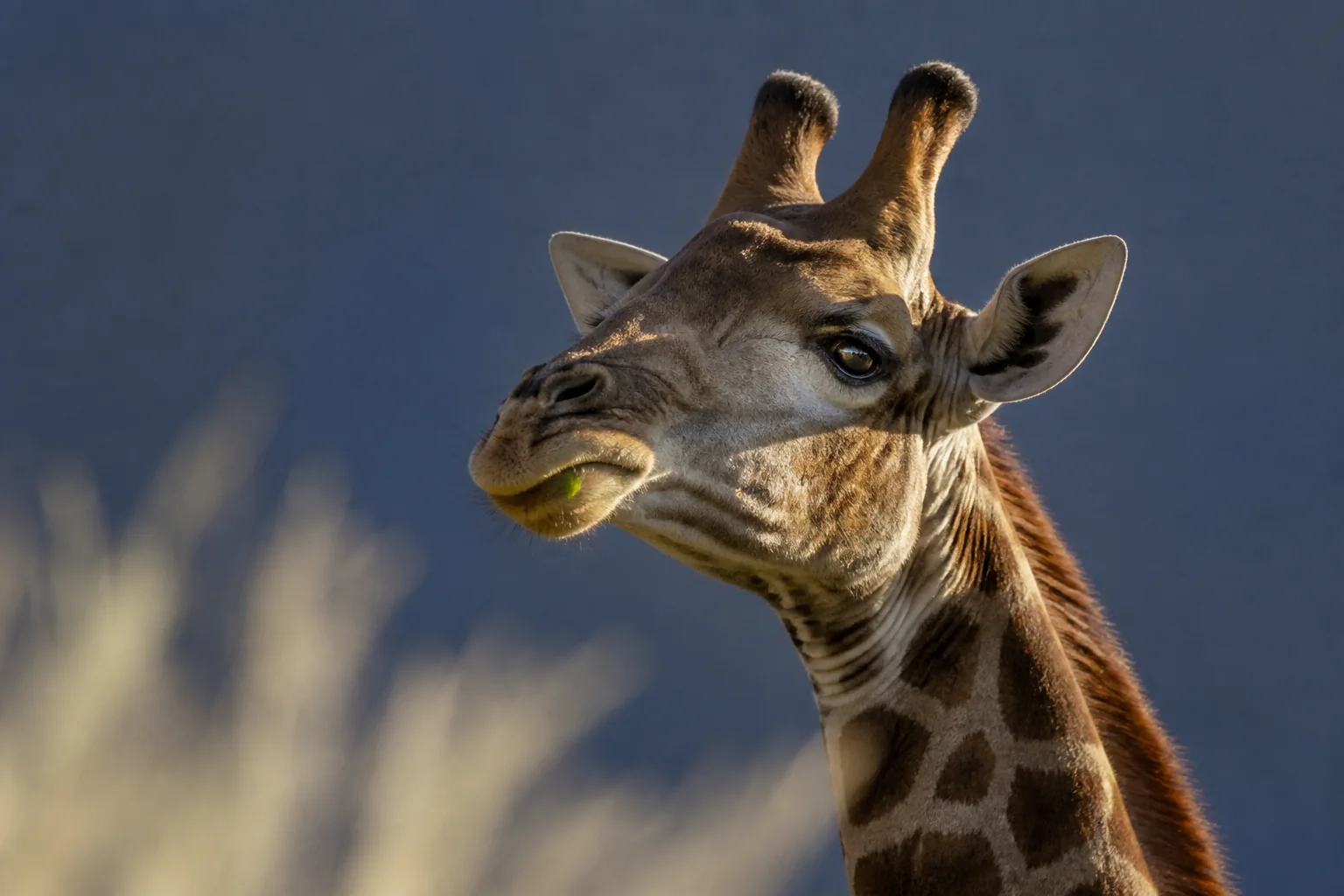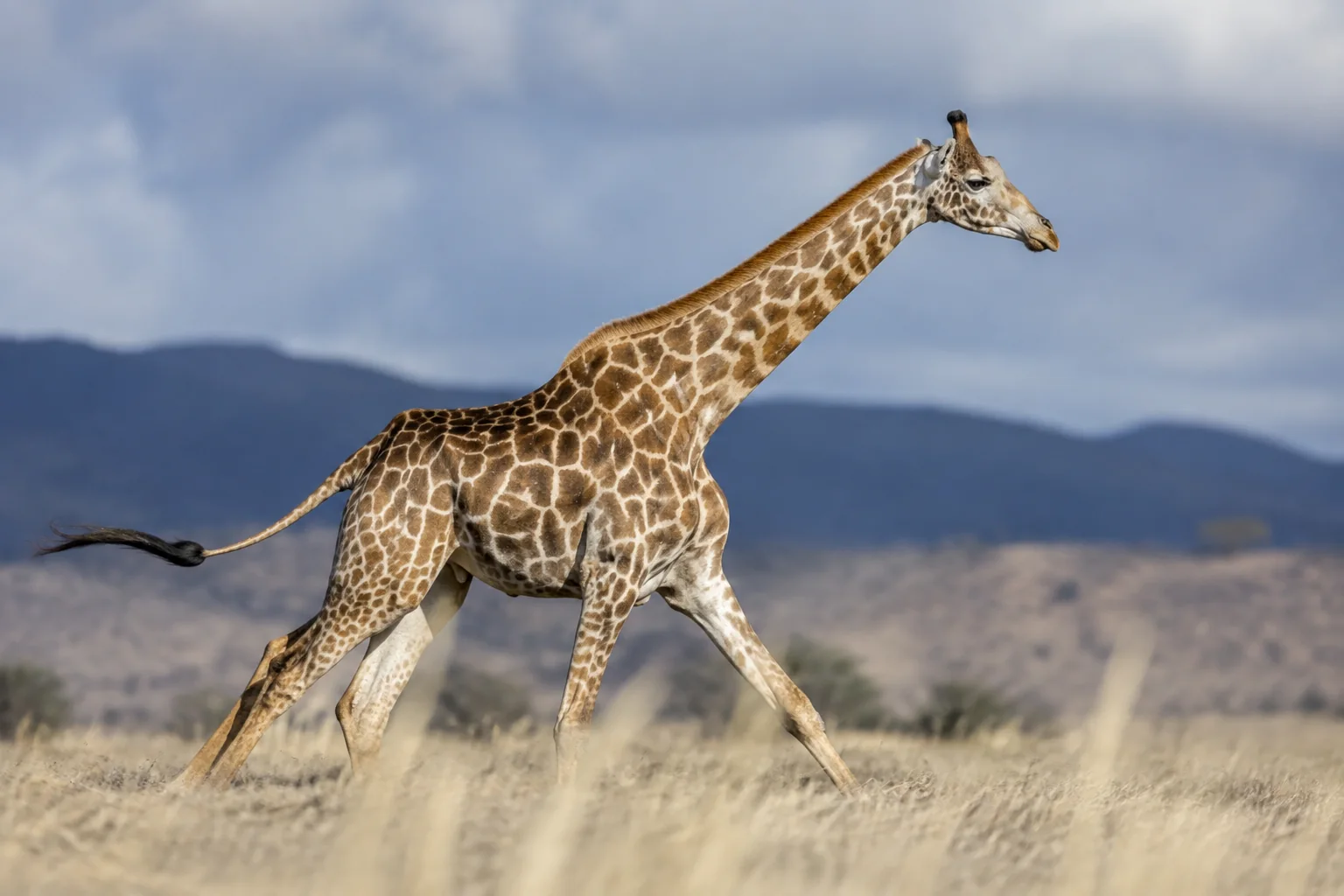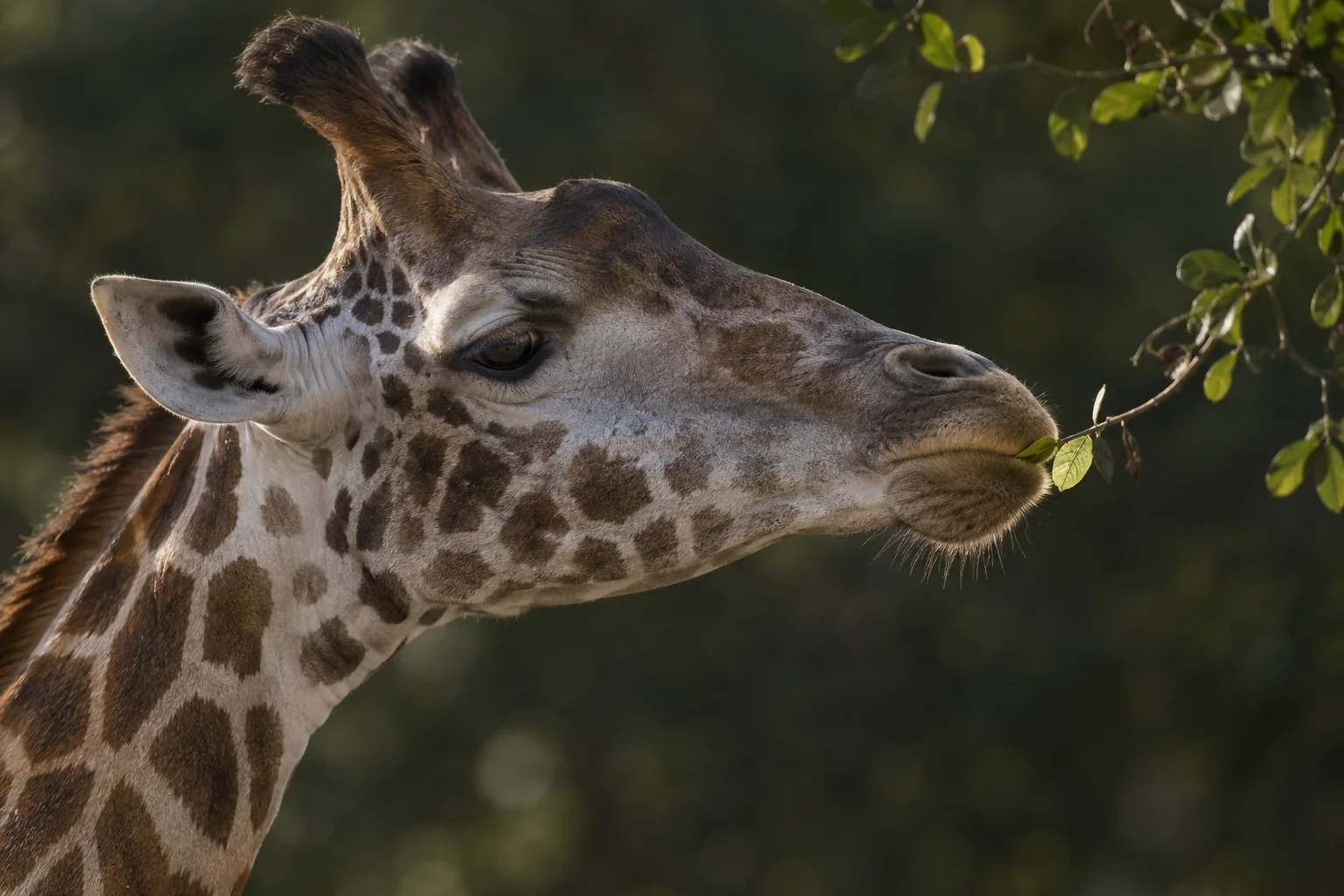
A walking giraffe changes its position across a video frame. A giraffe licking a tree may remain almost still. For an automated observer, that difference makes a small movement of the mouth harder to detect than the motion of the entire animal.
Haiming Gan and colleagues took that challenge seriously in a 2025 study of video-based behaviour detection. Their system combined information about the whole giraffe with a closer view around its mouth. In the study’s test footage, that approach improved recognition of licking compared with analysing the whole body alone.
The work is useful because a behaviour record begins with seeing the action reliably. Interpreting whether repeated licking reflects a welfare concern is a later task, requiring context and knowledge of the animal.
Teaching a system what to look for
The researchers recorded giraffes at Chimelong Safari Park in Guangzhou, China, from October 2024 to February 2025. Four camera viewpoints captured animals in the public exhibition area under sunny and overcast conditions. The population represented in the footage comprised 75 giraffes, aged from one to 22 years.
From about thirty hours of video, the team assembled 420 ten-second clips for behaviour detection, after excluding footage that was too blurred or insufficiently visible. They used 336 clips for training and 84 for testing. People supplied the reference labels against which the system would learn and be evaluated.
The four labels were specific: licking non-food objects, standing without the other listed activities, walking, and eating. The system was not asked to interpret the full range of giraffe social and maintenance behaviour.
Separate annotated images taught it to locate giraffes and their mouths. Tracking linked detections across video frames, helping maintain continuity when an animal moved. This short-term tracking did not establish a permanent identity for each giraffe across an extended welfare record.
Whole-body context and a smaller moving target
The system used two streams of visual information. One took a broader view of appearance and posture over time. The other sampled movement more densely, making it better suited to short changes.
For licking, the researchers tested what happened when the denser stream concentrated on a small region around the mouth while the broader stream retained the whole animal. This preserves context—where the giraffe is and how it is positioned—while directing more attention toward the movement that distinguishes licking from stillness.
That configuration gave an average-precision score of about 91.7 percent for licking, compared with about 88.4 percent for the whole-body configuration. Average precision summarises how well a detector balances finding labelled examples against making false detections as its confidence threshold changes. It is not simply the percentage of every second of video labelled correctly.
The methods describe an important condition of this comparison: mouth-focused input was applied to samples already labelled as licking, while the other labelled behaviours used whole-body input in both streams. That leaves unclear how the system would choose its input when presented with footage whose behaviour is not yet known. The reported scores describe this experimental setup; testing the complete sequence without known behaviour labels would be needed to establish performance on new, unlabelled footage.
Across all four behaviours, the reported mean average precision was about 94 percent. Eating and walking were recognised more successfully than licking. The useful result is therefore specific: adding attention to the mouth improved performance on the difficult category, but did not make all behaviours equally easy to recognise.
A tree can hide the decisive movement
The errors explain the remaining difficulty. In the study’s confusion matrix, licking was most often mistaken for standing. Example images show giraffes with their mouths hidden by tree trunks, branches or other obstructions.
When the mouth is concealed, the rest of the body may offer little evidence that licking is taking place. The same environmental feature being licked can block the camera’s view of the action. No amount of confidence in a predicted label restores a movement that the camera never captured.
The dataset was also drawn from one setting and screened for usable visibility. Its performance describes those test clips, not a demonstrated success rate in every zoo, enclosure or lighting condition. Testing new sites and less selected continuous footage would be necessary before treating the reported score as broadly transferable.
The authors identify another limit: their framework did not provide lasting assessments of particular individuals. Tracking a giraffe through a short sequence is different from knowing that the same animal repeatedly performed a behaviour over days.
Detecting licking is only the first question
Licking a non-food object is an observable action. Calling a pattern stereotypic additionally concerns its repetition, form and context. A detector trained to label licking cannot, on that label alone, diagnose poor welfare or explain why the animal did it.
That distinction connects this work to the earlier giraffe behavioural inventory. Clear definitions give both human and automated observers a shared target. They do not remove the need to interpret a behaviour in the animal’s wider routine.
The most promising use is assistance with observation: drawing attention to portions of video that deserve review, or helping build a longer activity record. The study did not test whether keepers using the system made better decisions or whether giraffe welfare improved as a result.
Future comparisons could test recordings from another institution without retraining first, revealing how dependent the detector is on familiar backgrounds and viewpoints. Linking records to reliably identified animals would then allow researchers to ask whether changes in licking accompany changes in feeding opportunities or other behaviour.
The technical result is a step toward observing subtle actions at greater scale. Its biological value will depend on combining that detection with the context a giraffe’s mouth alone cannot provide.
Sources
- Haiming Gan, Xiongwei Wu, Jianlu Chen, Jingling Wang, Yuxin Fang, Yuqing Xue, Tian Jiang, Huanzhen Chen, Peng Zhang, Guixin Dong and Yueju Xue (2025). SATSN: A Spatial-Adaptive Two-Stream Network for Automatic Detection of Giraffe Daily Behaviors. Animals 15(19), 2833. DOI: 10.3390/ani15192833. Open full text.
- Peter A. Seeber, Isabelle Ciofolo and André Ganswindt (2012). Behavioural inventory of the giraffe (Giraffa camelopardalis). BMC Research Notes 5, 650. DOI: 10.1186/1756-0500-5-650. Open full text.