A thick limb bone can make an extinct animal seem enormous. That impression becomes more compelling when the skull also carries imposing headgear. But robust proportions and great total mass are not the same thing. An animal might need unusually thick forelimbs because of how it carries its weight, rather than because every part of its body is correspondingly huge.
That was the problem Christopher Basu, Peter L. Falkingham and John R. Hutchinson tackled for Sivatherium giganteum. In a 2016 Biology Letters study, they reconstructed a skeleton digitally and compared ways of estimating its mass. The disagreement between methods became part of the biological finding.
A giraffid built to different proportions
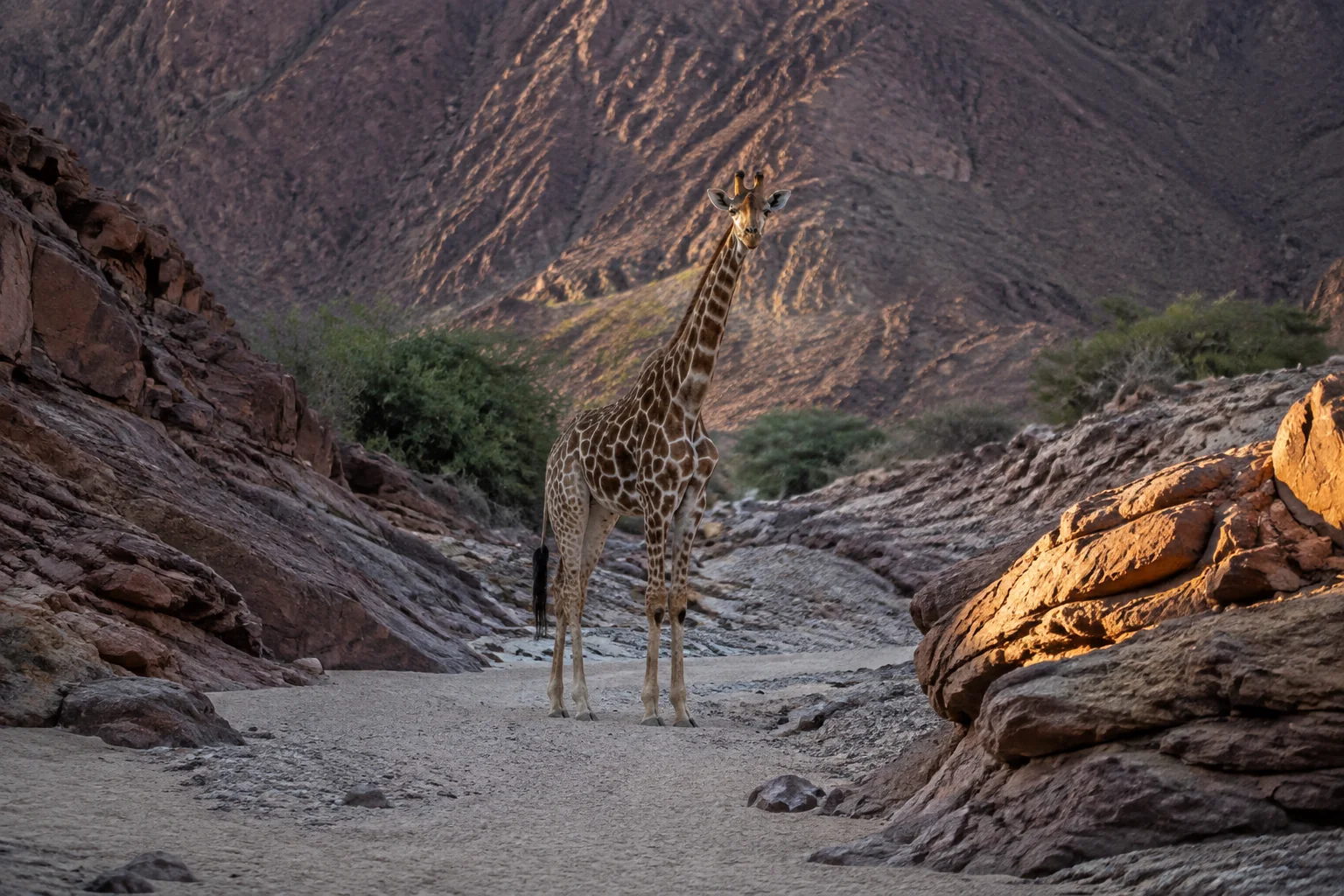
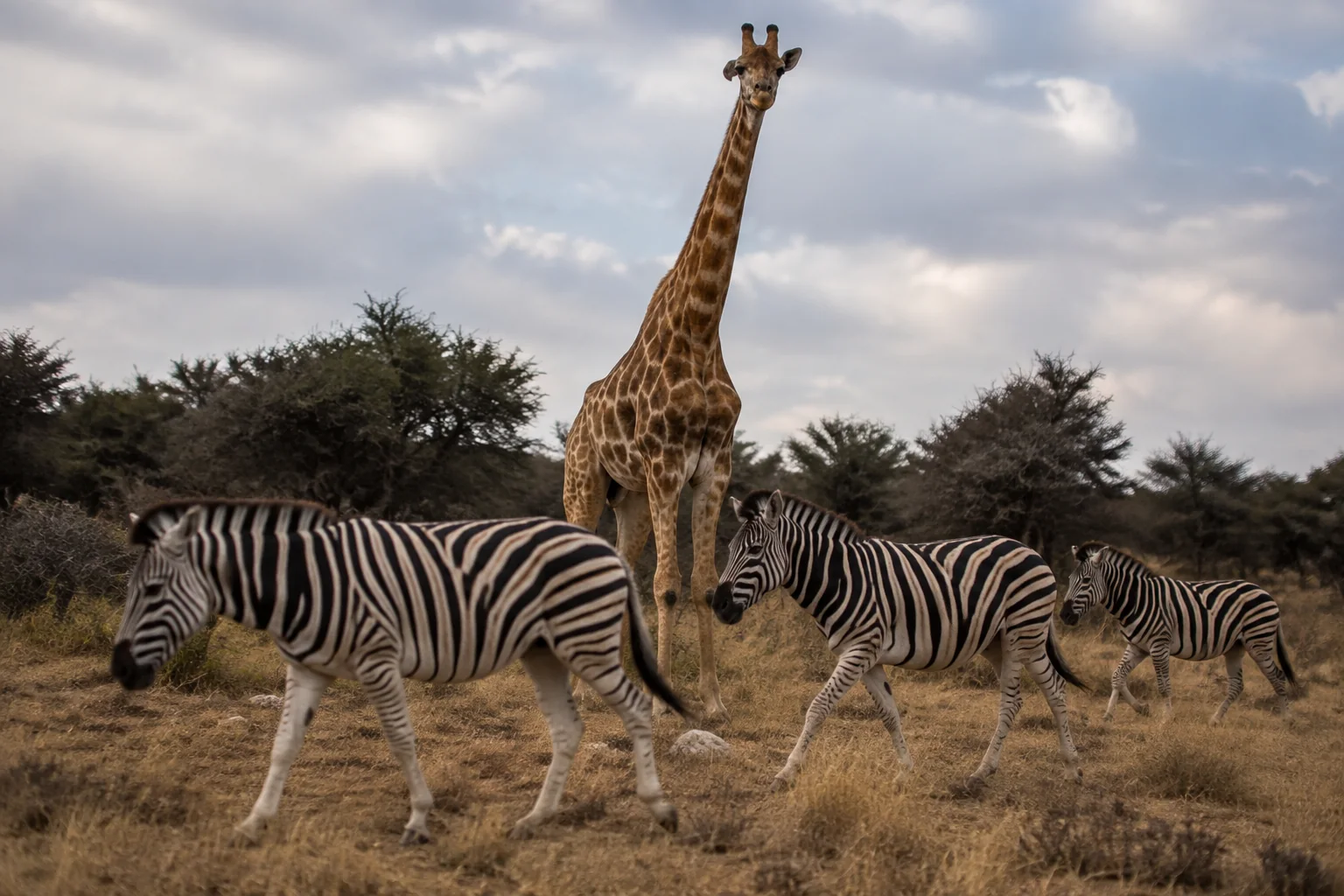
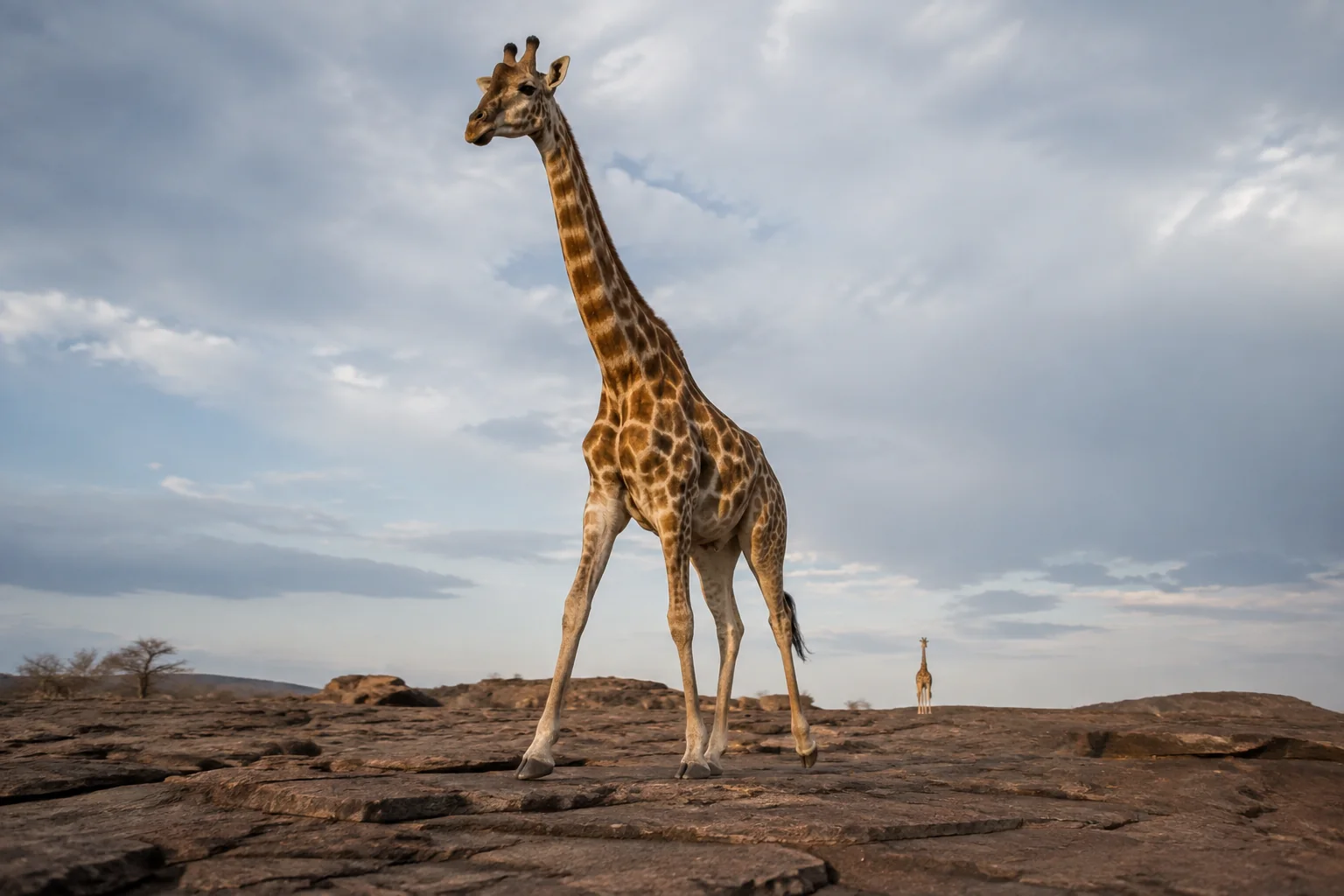
Sivatherium belonged to the giraffe family, but its short neck and thick, relatively short distal limbs made it look very different from a living giraffe. Historical descriptions had sometimes compared its size with that of an elephant.
Testing such a claim requires a way to turn bones into a plausible body mass. A common method uses a relationship measured in living animals—for example, between the circumference of an upper arm bone and body weight—and applies that relationship to the fossil.
The method works best when the extinct animal resembles the proportions represented in the comparison. A highly unusual skeleton can strain that assumption. Basu and colleagues therefore added an approach based on the volume implied by the whole body.
Twenty-six bones became a digital skeleton
The researchers photographed 26 fossil bones from the Natural History Museum in London and used the images to reconstruct their three-dimensional surfaces. They then arranged those digital bones in anatomical positions.
The collection represented at least three individuals, so the result was a composite reconstruction. Some adjacent bones differed in scale. A metatarsal was enlarged slightly, while a large distal femur fragment was reduced to fit the selected skeleton.
Several important parts were missing, including much of the torso, pelvis and complete femur. The team modelled those regions using living giraffe anatomy scaled to the available fossil dimensions, or relationships among bones in other mammals.
That does not make the reconstruction arbitrary. It makes the assumptions visible. The resulting model separates directly preserved anatomy from parts that had to be estimated, allowing the effect of those choices to be tested.
Wrapping the skeleton to estimate volume
The team divided the skeleton into functional segments and calculated a minimum enclosing shape around each. Adding those segment volumes produced a skeletal volume that could be related to mass using calibrations from living animals.
This “convex hull” approach is closer to tightly wrapping the extremities of the bones than to sculpting every muscle and fat deposit. The calibration accounts for the relationship between such a skeletal envelope and a complete animal.
Their preferred volumetric calculation yielded about 1,246 kilograms, with a 95% prediction interval from 857 to 1,812 kilograms. A second calculation from the same reconstructed volume gave a broadly similar result.
The upper-arm-bone method gave a much larger central estimate, about 3,053 kilograms. Its prediction interval was also wider and overlapped part of the volumetric range. The disagreement was substantial without being an absolute separation between two perfectly precise answers.
A thick forelimb may tell a different story
The authors considered the whole-body reconstruction more persuasive for their principal estimate. If the arm-bone calculation was too high, one explanation was that Sivatherium had an unusually robust humerus for its mass.
Other forelimb bones also supported that possibility: its metacarpal was comparatively short and thick. The researchers suggested that a centre of mass shifted towards the front, perhaps associated with heavy head appendages, could help explain the robust forequarters.
That remained a functional hypothesis. The study did not directly calculate the animal’s complete centre of mass, and its reconstruction did not include the large posterior head appendages of males. Nor did the selected composite represent the largest fossil individual in the collection.
Consequently, 1,246 kilograms should not be treated as a species maximum or a population average. It is the preferred estimate for a particular reconstructed adult body plan, with evidence that larger individuals existed.
Testing the parts that had to be filled in
The researchers altered the assumed torso and femur dimensions by 10% in either direction. Those smaller and larger models produced central volumetric estimates of about 1,041 and 1,533 kilograms. Their prediction intervals overlapped substantially.
The sensitivity check showed both that missing anatomy matters and that plausible changes did not restore the elephant-sized portrayal. A reconstruction is more informative when readers can see which assumptions move the result.
Research on Decennatherium rex later supplied an unusually complete example of another robust extinct giraffid with elaborate headgear. Such material helps place the relationship between skull ornamentation and body construction within the wider family, rather than assuming that all giraffids followed the proportions of modern giraffes and okapis.
Sivatherium remained a very large ruminant in the new account. What changed was the basis for saying how large. Reconstructing the whole skeleton turned a visual impression into a testable estimate and revealed why a spectacularly thick bone may tell researchers as much about proportion and support as about total weight.
Sources
Christopher Basu, Peter L. Falkingham, John R. Hutchinson (2016). The extinct, giant giraffid Sivatherium giganteum: skeletal reconstruction and body mass estimation. Biology Letters. DOI: 10.1098/rsbl.2015.0940. Read the full paper.