A thick skull can resist a blow, but it still has to pass the force into the rest of the body. If the joint immediately behind it bends too far, protecting the skull alone may accomplish little.
That problem gives an unusual fossil its scientific interest. Discokeryx xiezhi, described from early Miocene deposits in northern China, had a disk-shaped bony headgear and a reinforced connection between its skull and neck. Additional contact surfaces linked several of its neck bones. The configuration suggested an animal equipped for forceful collisions.
In a 2022 study led by Shi-Qi Wang, researchers tested that suggestion with computer models. Their most informative comparison was between the reconstructed fossil and a digitally altered version in which the extra supports had been removed. It asked what those structures contributed to the behaviour of the whole head-and-neck system under impact.
A skull supported from below
The principal specimen included a braincase and four following neck vertebrae found in articulation. Together they preserved more of the load-bearing connection than an isolated skull could reveal.
Beneath the braincase, the bone formed a broad platform. The first neck vertebra, called the atlas, had an unusually thick lower arch and matching contact surfaces. Farther along the neck, enlarged parts of successive vertebrae provided additional areas of contact.
These surfaces mattered because joints are potential points of movement. An extra bony contact can change when neighbouring bones meet, how far they turn and how a load travels between them. The researchers therefore treated the structures as a connected mechanical system, rather than merely describing each bone as robust.
The headgear itself also required interpretation. Its bony structure was preserved, while a covering of keratin—the material forming structures such as horns and hooves—was inferred from features of its surface. The covering used in the model was a reconstruction, not a preserved helmet that could be measured directly in life.
Removing a suspected reinforcement
The team used finite element analysis, a method that divides a reconstructed structure into small elements and calculates how they respond to an imposed load. Such a model needs both geometry and assumptions about material properties, movement and the applied impact.
One version retained the fossil's reinforced head-and-neck anatomy. In another, the researchers removed the expanded platform beneath the skull, part of the atlas and additional contacts between vertebrae. This altered version represented a less reinforced arrangement for comparison; it was not a discovered ancestor or a demonstrated earlier stage in the animal's evolution.
Under the simulated collision, the altered model bent excessively at the skull-atlas joint. The intact arrangement resisted that movement. This was direct evidence within the model that the unusual geometry changed the mechanical response.
The researchers then imposed a five-degree movement limit on the altered joint. This prevented the most extreme bending, but introduced another informative result: the bones experienced higher peaks of strain energy, the energy associated with their deformation. The peak for the atlas was at least five times that of the intact model.
The two comparisons answered related questions. Allowing the weakened arrangement to move revealed a large bending response; restricting that movement revealed a greater burden of deformation within the bones. The intact supports helped avoid both outcomes under the selected loading conditions.
That does not mean the team measured a fivefold reduction in real injury risk. Strain energy is a model output, and the experiment did not fracture living bone or observe injured animals. Its strength lies in connecting an anatomical difference with a predicted mechanical consequence.
Comparing the fossil with living head-butters
The study also modelled the skulls of a muskox, argali sheep and blue sheep. These provided alternative head shapes associated with impact-based combat in living mammals.
For that comparison, the researchers scaled the skulls to similar dimensions and applied the same body-mass and initial-speed assumptions. This helped expose differences associated with shape within the model, but it also removed natural differences in size and behaviour. Moreover, these comparisons used skull models, whereas the intact-versus-altered fossil experiment explicitly included the neck.
The fossil model showed lower peaks of cranial deformation energy than the comparison skulls under those settings. The simulated brain response also differed among models. These results strengthened the argument that the fossil's form was compatible with managing a head-on impact.
They did not establish a universal ranking of which animal could deliver or survive the hardest blow. The selected collision speed was an assumption informed by living-animal behaviour, not a speed recovered from the fossil. Bone and keratin were represented as uniform elastic materials, and the whole brain was approximated using one tissue type. Real animals contain more complicated materials and move their heads, muscles and bodies in ways the model cannot fully recover.
What does the fossil have to do with giraffes?
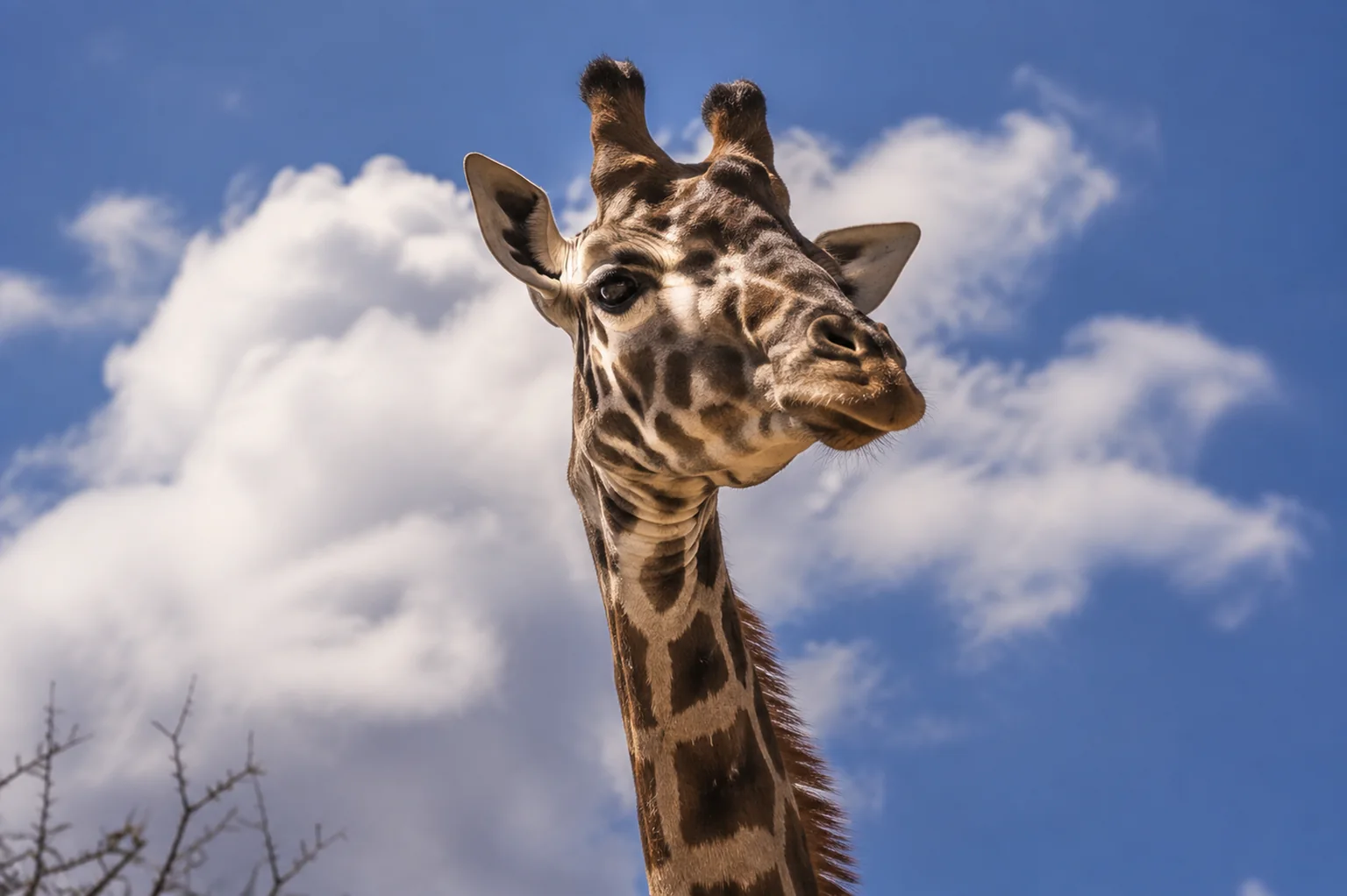
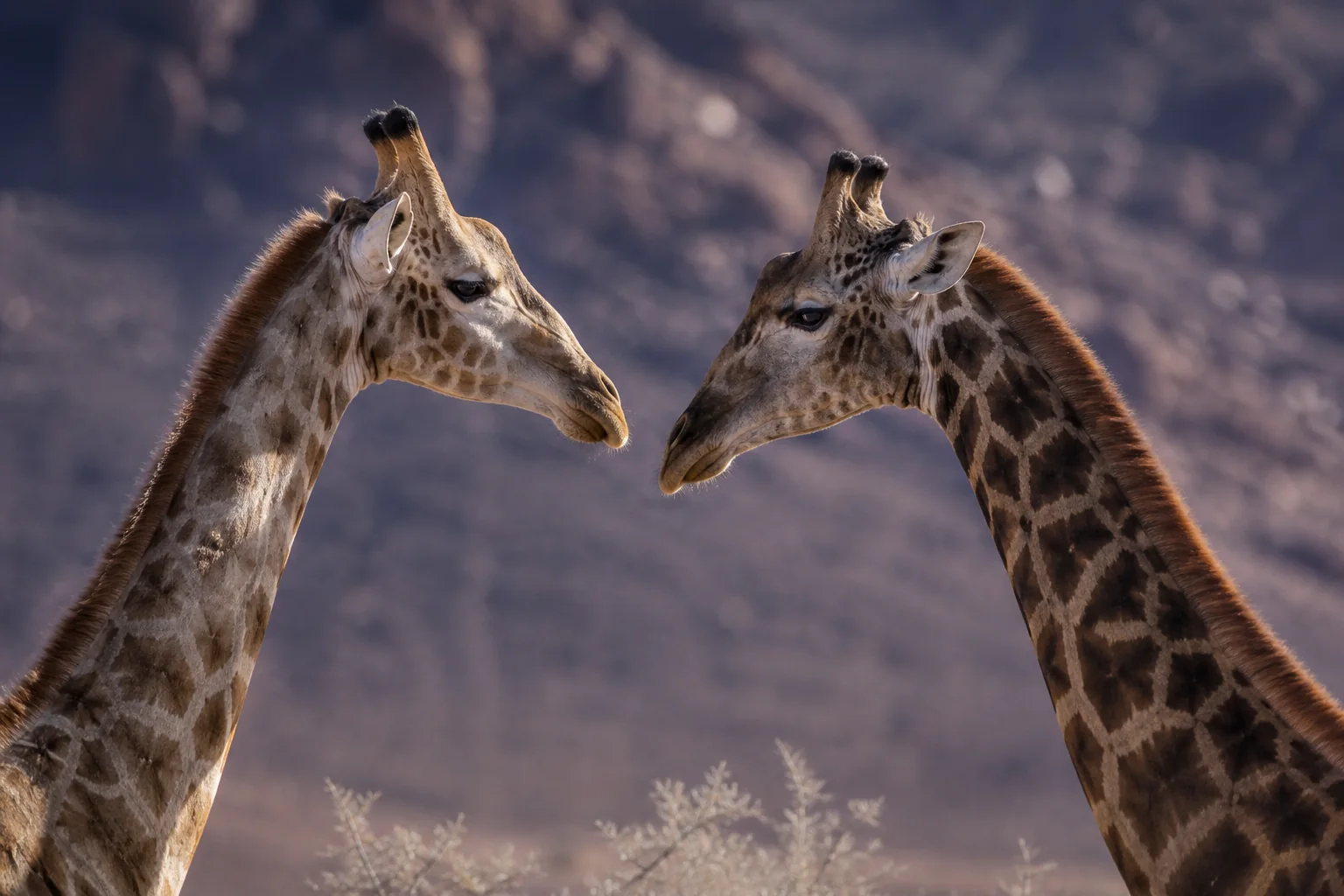
Wang and colleagues placed Discokeryx among giraffoids, a broader evolutionary group containing giraffes and their relatives. They proposed that different forms of competition could help explain the diversity of heads and necks in that group.
That classification became the subject of a 2023 technical comment by Sukuan Hou and colleagues. The critics questioned whether several skull features really diagnosed giraffoid ancestry. They also revised the coding of anatomical characters used to construct the evolutionary tree. Their reanalysis placed Discokeryx outside the giraffoid branch.
The original authors published a response defending the giraffoid assignment. The disagreement matters because the mechanical experiment and the evolutionary interpretation ask different questions. A model can show that particular joints resist a collision even while researchers disagree about the animal's relatives.
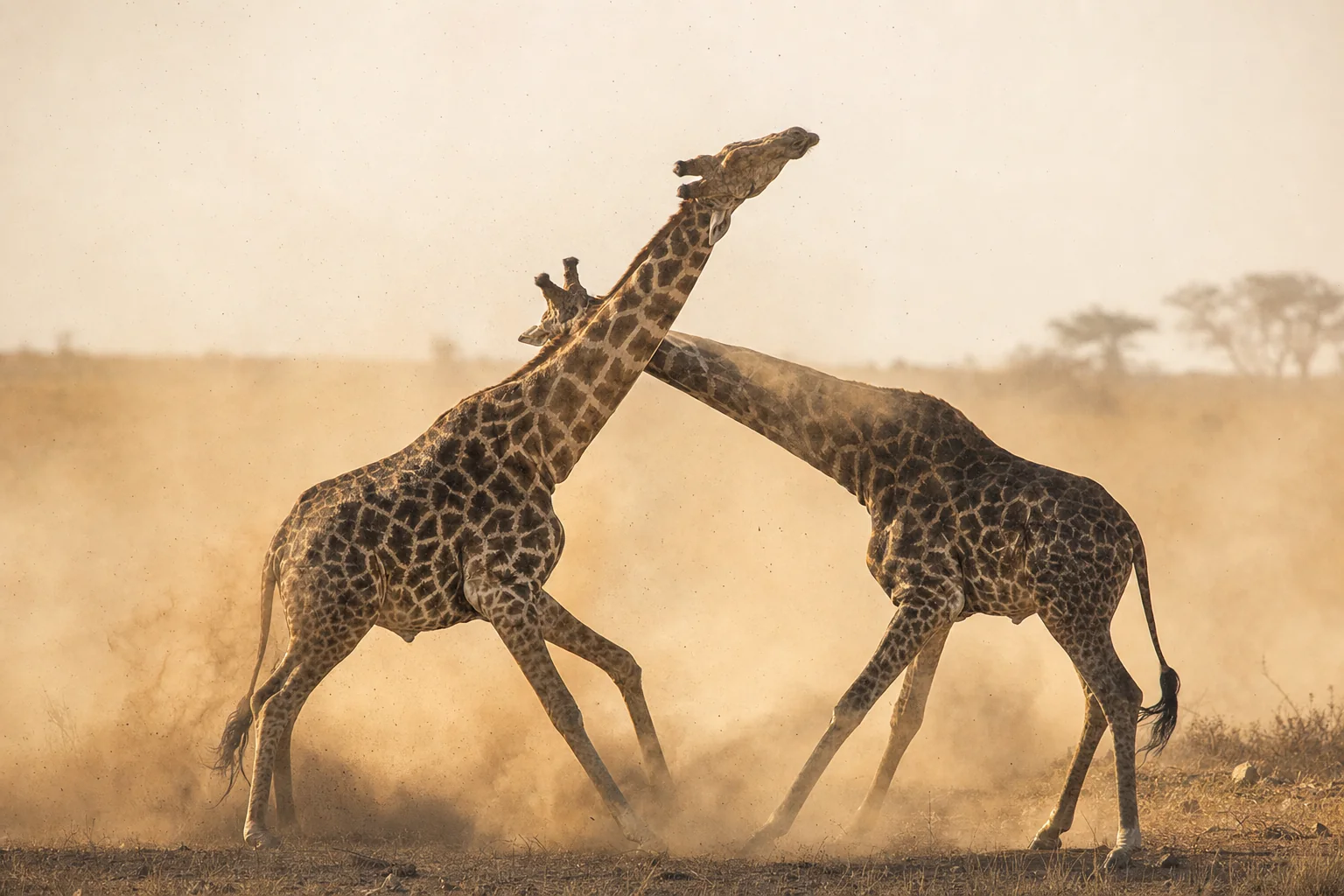
Moving from impact resistance to sexual selection requires another step. A structure suited to head-butting does not itself reveal who fought, how often they fought or how fighting affected reproductive success. Nor does a short, reinforced fossil neck demonstrate that the modern giraffe's neck became long for the same reason. Hou and colleagues also challenged the wider inference from headgear diversity to unusually intense sexual competition.
These distinctions preserve the study's strongest contribution. The fossil provides an unusually explicit example of how the shape of a skull-neck junction can be investigated experimentally, with a digital alteration testing what a particular feature does. Its role in a larger history of giraffe evolution depends on additional evidence about ancestry and the pressures shaping behaviour.
A mechanical explanation that can be tested further
The reconstructed supports were more than conspicuous ornaments. In the models, they changed the way the head and neck transmitted an impact, limiting bending and reducing deformation energy in important bones.
That result offers concrete directions for further work: vary the reconstructed soft tissues, contact conditions and impact assumptions, and ask whether the same anatomical advantage persists. Additional fossils could also clarify whether the reinforced arrangement belongs within the giraffoid radiation.
For now, the valuable lesson is the connection between form and a specific mechanical function. The study went beyond calling a fossil skull strong: it tested how a set of extra joints could make the whole head-and-neck system behave differently when struck.
Sources
Shi-Qi Wang, Jie Ye, Jin Meng, Chunxiao Li, Loïc Costeur, Bastien Mennecart, Chi Zhang, Ji Zhang, Manuela Aiglstorfer, Yang Wang, Yan Wu, Wen-Yu Wu and Tao Deng (2022). “Sexual selection promotes giraffoid head-neck evolution and ecological adaptation.” Science 376:eabl8316. Focal paper.
Sukuan Hou, Qinqin Shi, Michael J. Benton and Nikos Solounias (2023). “Comment on ‘Sexual selection promotes giraffoid head-neck evolution and ecological adaptation’.” Science 379:eadd9559. Anatomical and evolutionary critique.
Shi-Qi Wang, Jin Meng, Bastien Mennecart, Loïc Costeur, Jie Ye, Chunxiao Li, Chi Zhang, Ji Zhang, Manuela Aiglstorfer, Yang Wang, Yan Wu, Wen-Yu Wu and Tao Deng (2023). “Response to comment on ‘Sexual selection promotes giraffoid head-neck evolution and ecological adaptation’.” Science 379:eade3392. Authors’ response.