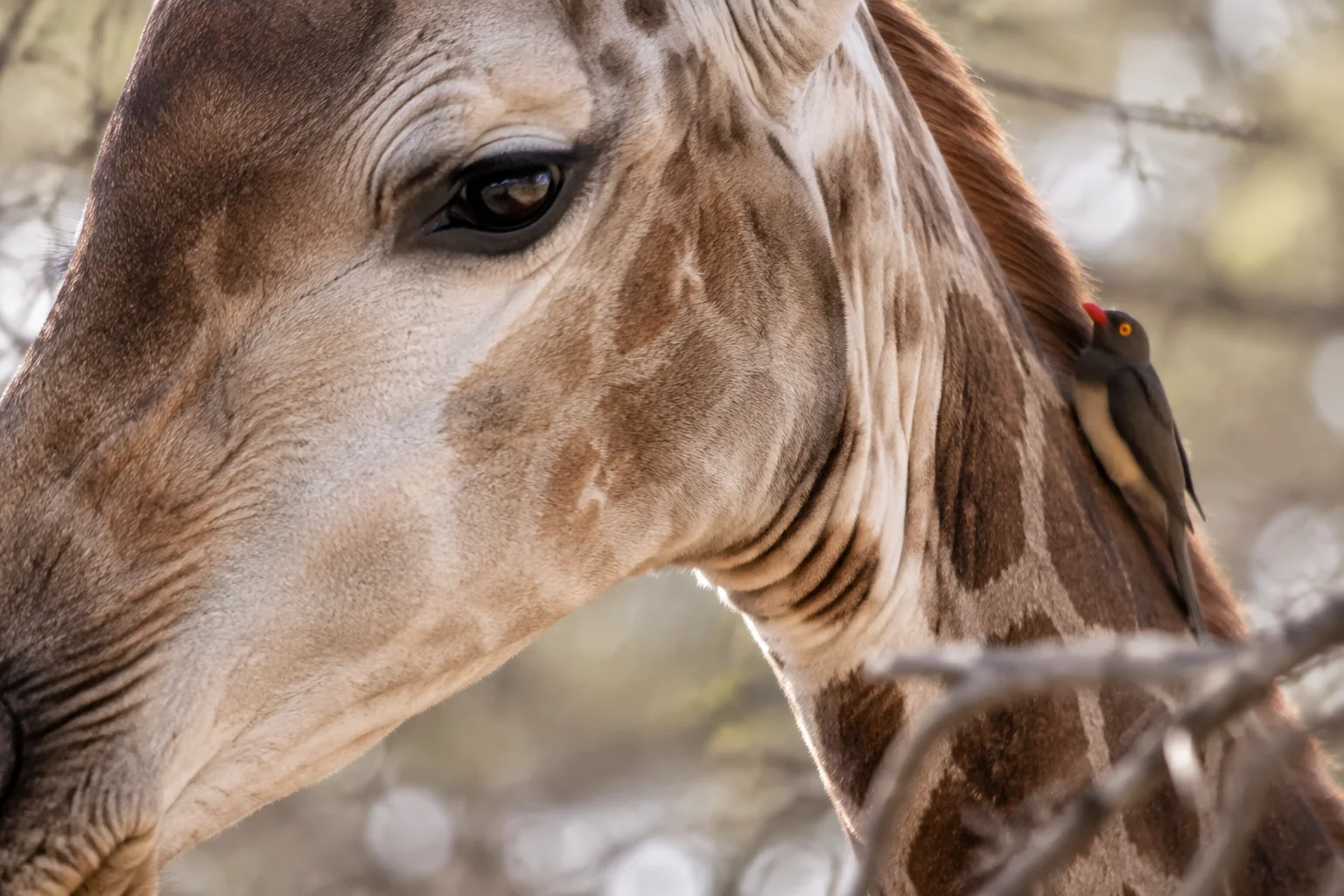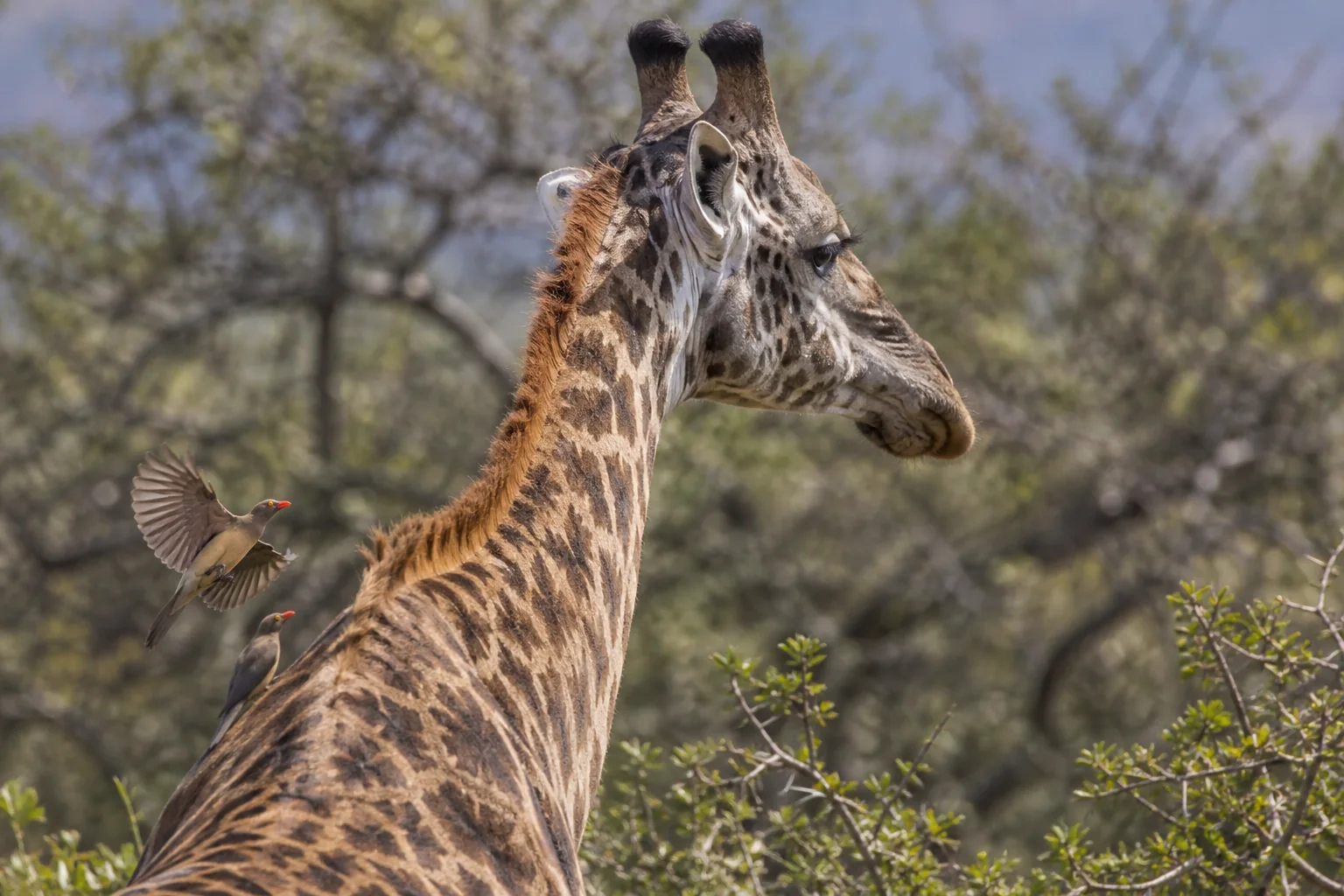
A daytime photograph can make the relationship between an oxpecker and a giraffe seem simple: the bird searches the mammal’s body for food. Darkness raises another question. Does the bird leave to sleep elsewhere, or can the same moving animal provide a roost?
Meredith S. Palmer and Craig Packer used Serengeti camera-trap images to investigate. Their 2018 paper documented yellow-billed oxpeckers using several large mammals at night, with giraffes appearing especially often in the recorded nighttime encounters.
Looking for birds in a mammal survey
The camera network had 225 cameras spread across a large area of central Serengeti National Park. Its purpose created an opportunity: unattended cameras photographed wildlife through hours when direct observation was difficult.
For this analysis, the researchers used images collected from July 2010 to December 2013. Online volunteers first classified wildlife through Snapshot Serengeti. Palmer then examined images flagged as containing birds, finding 137 that showed oxpeckers associated with mammal hosts.
The full survey contained hundreds of thousands of wildlife image sequences. The oxpecker evidence came from the much smaller set in which birds could actually be detected and examined. That distinction matters: a vast image collection can reveal a rare or overlooked behaviour without automatically providing an unbiased estimate of how frequently it occurs.
The team separated daytime from nighttime images using twilight times, identified oxpecker species where possible, and recorded the mammals carrying them.
Giraffes dominated the nighttime records
The researchers found 25 instances of birds roosting on large herbivores at night. Twenty involved giraffes, three involved eland and two involved buffalo. Every oxpecker that could be identified in these nighttime photographs was yellow-billed.
On giraffes, the birds commonly occupied the underside of the body and the spaces around the forelimbs. Recorded giraffes carried an average of 3.3 birds, with between one and seven visible. These photographs showed a different position from simply perching on an exposed back.
The pattern contrasted with the daytime records. Yellow-billed oxpeckers appeared far more often on buffalo during the day: 70 records, compared with 11 on eland and eight on giraffes. The large mammals most frequently photographed carrying feeding birds were therefore different from those most frequently photographed carrying roosting birds.
These are comparisons among recorded encounters. The cameras were not a controlled choice experiment offering birds equal numbers of each host, and they did not establish the movements of individually identified birds from one host to another.
Food and shelter can favour different hosts
The authors suggest that buffalo herds provide abundant daytime feeding opportunities, whereas the giraffe’s underside may offer sheltered places for the night. Its height and long legs could help create protected spaces for a roosting bird.
The photographs support the observation that birds used those spaces. They did not measure their temperature, wind exposure or safety. Warmth and protection are explanations to test, rather than benefits demonstrated by the study.
Staying aboard a mammal could also reduce the effort required to find a host the next morning. Again, the camera images cannot establish whether that advantage explains the behaviour. The achievement was to make its occurrence, position and host associations visible in a region where it had not previously been documented.
An association with more than one purpose
The study also recorded red-billed oxpeckers on giraffes and buffalo by day, but found no nighttime examples of that species roosting on those mammals. This is a difference within the dataset, not proof that red-billed birds never do so anywhere.
Following identifiable birds through dusk would help reveal whether they change host species to roost or simply remain on whichever mammal they were using. Comparing conditions beneath different hosts could test the shelter explanation. Such work is challenging precisely because the hosts move and the behaviour occurs after dark.
The observations broaden the question of giraffes’ ecological relationships. The same animal can provide a feeding surface by day and a resting place at night. Looking beyond daylight revealed an additional use of the giraffe that a daytime account would miss.
Sources
Meredith S. Palmer and Craig Packer. (2018). Giraffe bed and breakfast: Camera traps reveal Tanzanian yellow-billed oxpeckers roosting on their large mammalian hosts. African Journal of Ecology. DOI: 10.1111/aje.12505. Read the full paper.