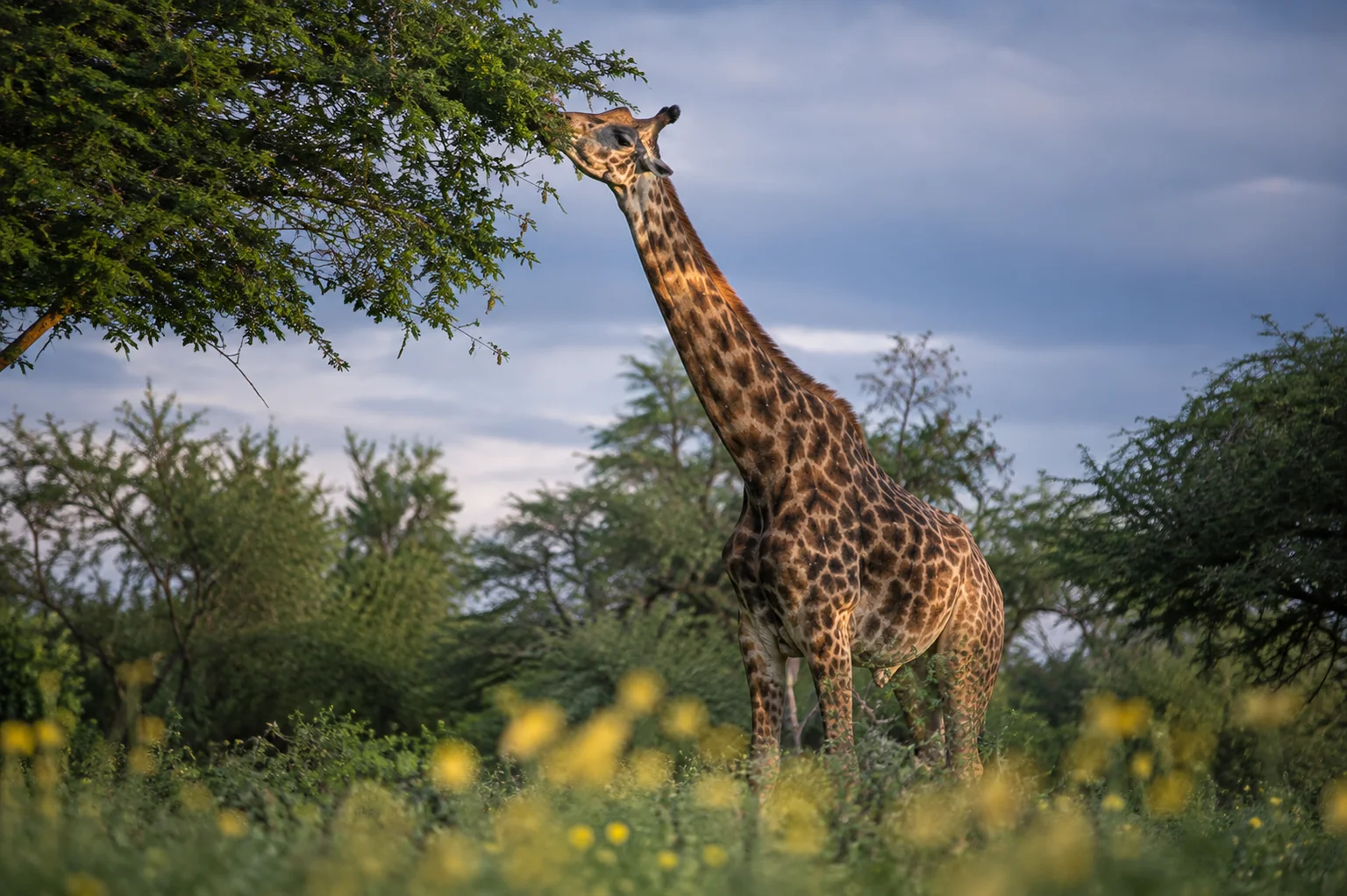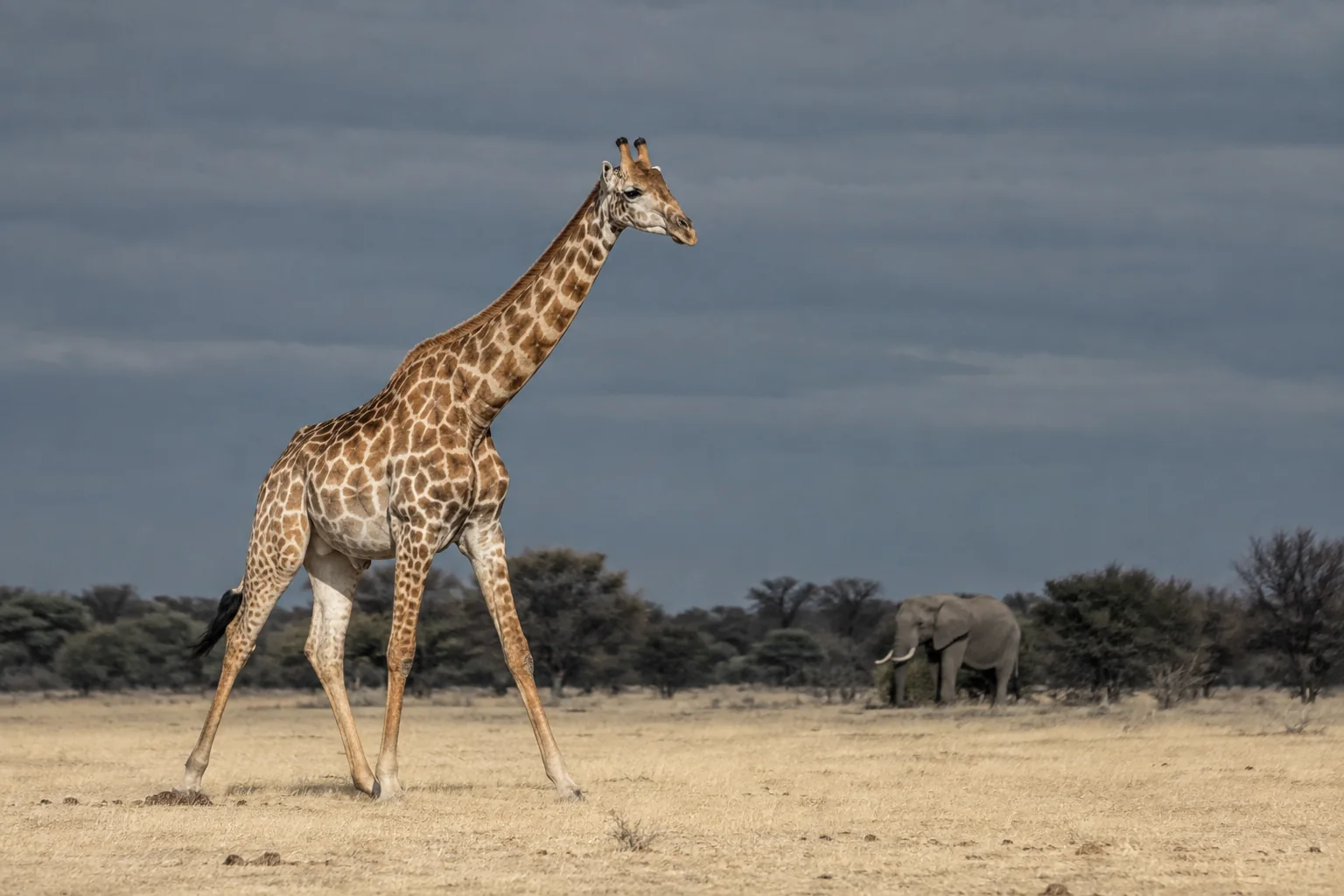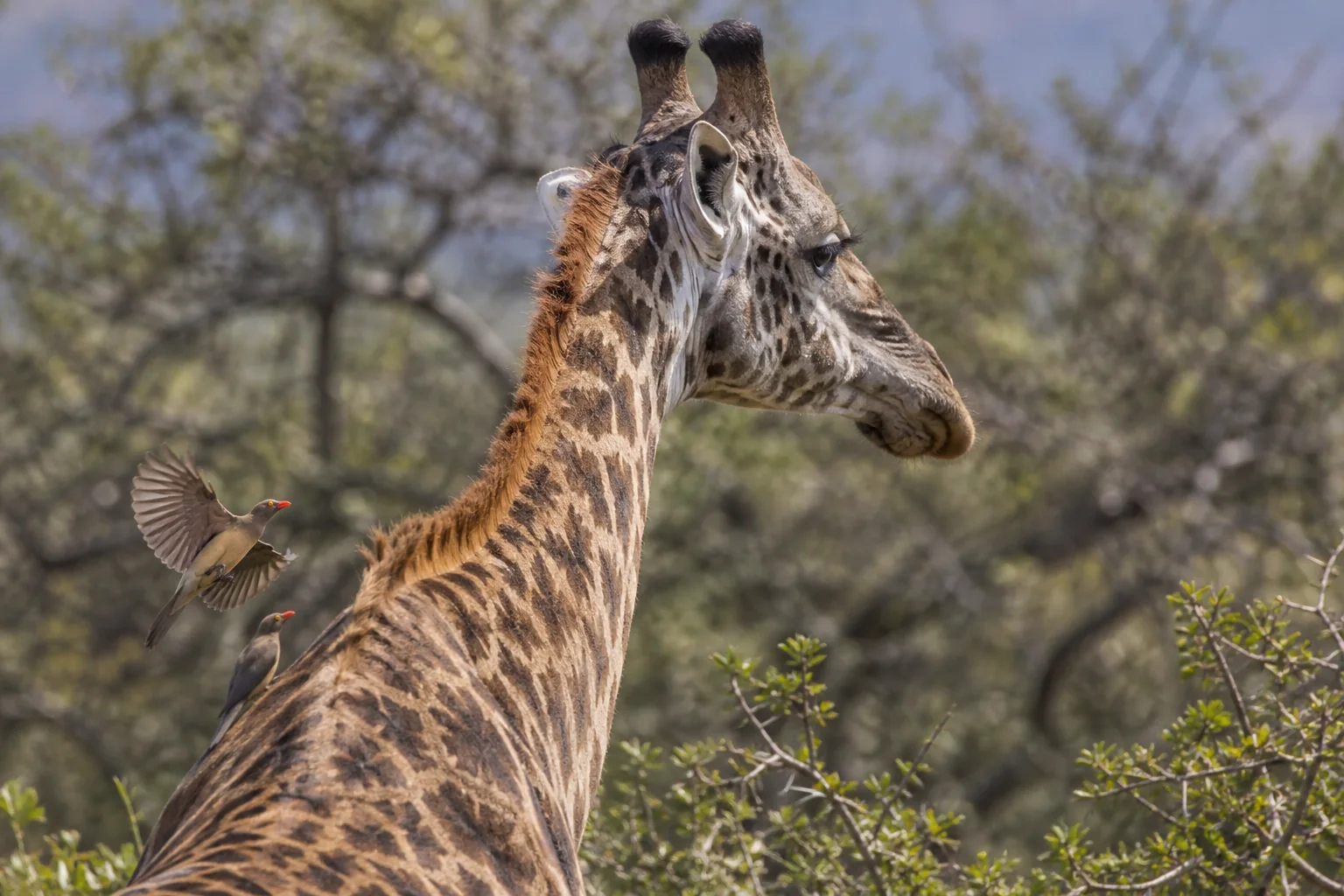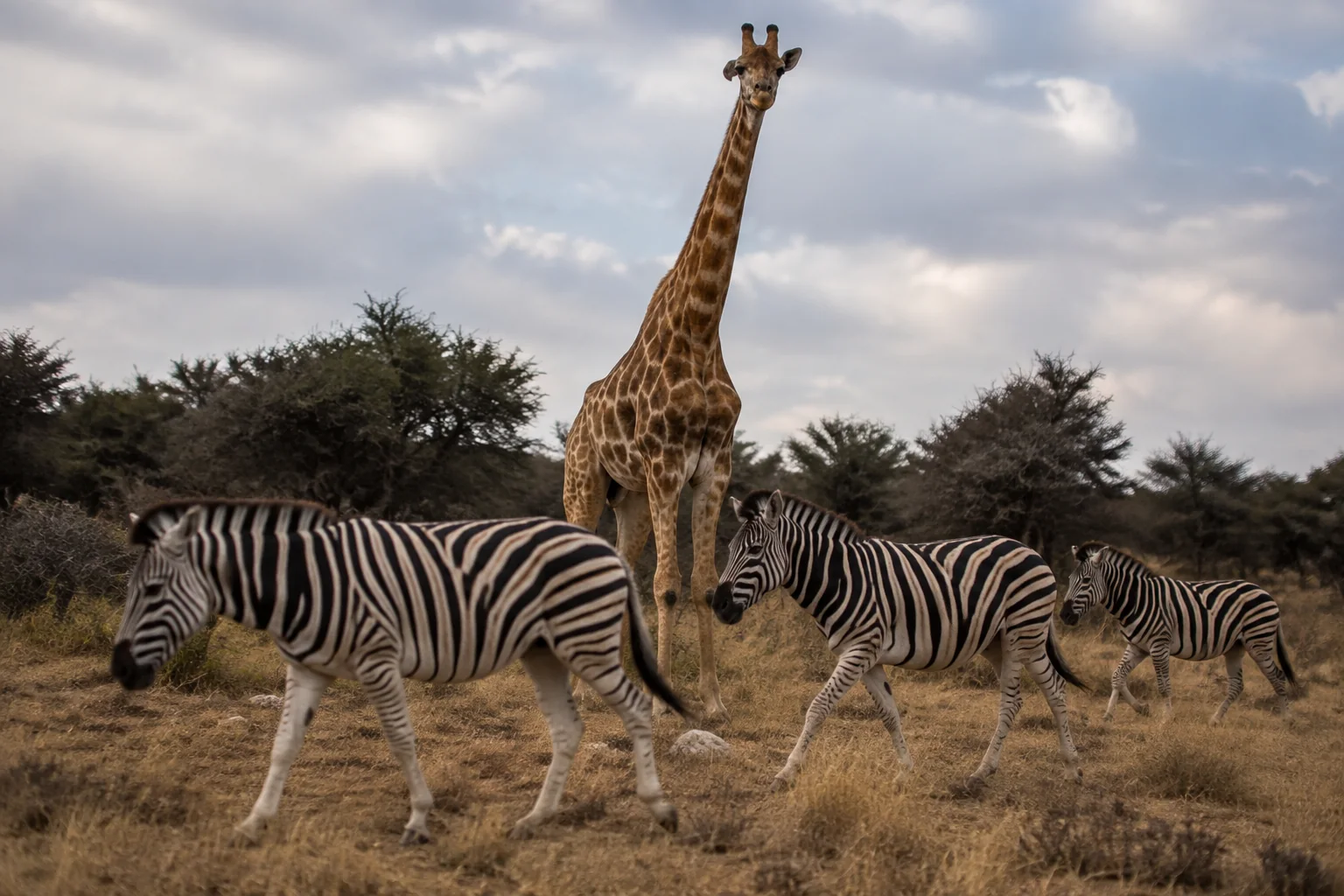
A giraffe strips a branch, and the story does not end with a meal. The tree may replace those shoots, lose flowers that would have become fruit, or respond differently under repeated browsing. Calling the animal a gardener makes that relationship sound simple. Understanding why giraffes matter means looking at what actually changes—and recognising that an animal does not have to improve every tree to deserve a future.
Why are giraffes important?
Giraffes participate in ecological relationships: they consume vegetation, interact with other animals and can move plant seeds. They are also part of the living diversity people study, encounter and choose to conserve. Ecological function, economic value and ethical importance are different arguments. None needs to borrow certainty from the others.
The evidence is more interesting than a universal claim that giraffes keep savannas in balance. Studies have documented contrasting plant responses, and an appealing pollination hypothesis was challenged by field measurements. Those differences tell us what to investigate when managing a real landscape.
Start with the giraffe diet guide for what browsing involves. The threats to giraffes guide addresses a separate question: what changes their prospects of survival? An animal's effect on plants and the threats it faces should not be confused.
Browsing changes trees, but not always in the same direction
Browsing removes plant material. Whether a plant compensates, changes its growth or suffers lasting damage depends on the plant and the circumstances. Calling this pruning can be useful shorthand, but it should not imply that giraffes are tending trees towards a gardener's preferred result.
Some shoots regrow after heavy browsing
In a 1990 study of Acacia regrowth, researchers monitored two tree species for a year and compared lightly and heavily browsed trees. Heavily browsed Acacia nigrescens compensated through regrowth: net annual shoot extension did not differ significantly between the browsing groups. Its foliage also differed in nutrients and condensed tannins, plant compounds relevant to feeding.
This was research on browsing ungulates, not an experiment isolating giraffes as the only cause. It supports a specific plant response under the studied conditions—not the claim that every giraffe bite makes a tree healthier, or that more browsing always means more biodiversity.
Other trees can be damaged
A 2001 study at Ithala Game Reserve, South Africa, examined an introduced giraffe population. Several Acacia species showed high mortality in areas heavily used by giraffes, while other species were less affected. Areas inaccessible to giraffes provided refuges for sensitive trees.
Different plants can respond differently within a landscape, and introducing giraffes into a place is not equivalent to conserving a population in its established habitat. The Ithala findings should not become a claim that giraffes damage every savanna, just as the regrowth study should not become a promise that they improve every tree.
For managers, the question is therefore not simply “more or fewer giraffes?” It is which animals and plants are present, where feeding is concentrated, and what changes monitoring actually detects.
Seed dispersal is real; a new tree is not guaranteed
When an animal consumes a pod and later deposits an intact seed elsewhere, it has changed the seed's location. That can matter because the new location may offer different conditions from the ground beneath the parent tree. But transport is one stage in a longer process.
Maxine Miller's 1996 South African seed-dispersal study compared the presence and absence of large herbivores and ostriches. Different animals contributed differently for different Acacia species. Giraffes dispersed the most A. nilotica seeds in that study, while impala dispersed the most A. tortilis seeds. There was no single best disperser for every tree.
To turn a dispersed seed into an established plant, further stages must succeed: the seed must remain viable, germinate and survive. A count of transported seeds cannot establish all those outcomes. Nor does it tell us that a giraffe is the only animal capable of moving those seeds.
“Seed disperser” is therefore a meaningful description. “Every giraffe plants a forest” is not. Keeping the stages separate makes the ecological contribution clearer without turning it into an invented planting rate or carbon benefit.
Are giraffes pollinators—or flower eaters?
A giraffe feeding among flowers might carry pollen, but carrying pollen is not automatically the same as providing effective pollination.
Du Toit's 1990 paper on giraffes and Acacia flowers proposed that giraffes could act as pollen vectors for Acacia nigrescens. The argument drew on the plant's flowering characteristics and its relationship with browsing giraffes. It was a hypothesis worth investigating, not a settled service to reproduce as fact.
Fleming and colleagues later examined flower consumption and fruit production in Kruger National Park. Their 2006 study found reduced fruit set at heights giraffes could reach. In the season studied, giraffes acted as flower predators rather than effective pollinators of those trees.
That result does not prove that a giraffe can never transport pollen. It does show why “giraffes pollinate acacias” is too broad. The plant, season and reproductive outcome matter. An animal visiting a flower, pollen being transferred and a plant producing fruit are related observations, not interchangeable ones.
Keystone, flagship and umbrella are different claims
These terms often appear beside conservation appeals, but they answer different questions. A large, recognisable animal can attract attention without automatically meeting every ecological definition.
What would each label require?
| Label | The claim being made | What the label alone cannot establish |
|---|---|---|
| Keystone species | Its ecological effect is unusually large relative to its abundance | That every giraffe population has the same effect |
| Flagship species | It can attract public attention or support | That attention produces a measurable conservation result |
| Umbrella species | Protecting its requirements also covers those of other species | That every neighbouring species benefits |
Power and colleagues' 1996 discussion of keystone species makes effect relative to abundance central to the concept. Being tall, familiar or involved in seed dispersal is not sufficient evidence by itself. A strong keystone claim needs a defined ecological response in a defined system.
The flagship and umbrella distinction is discussed in Andelman and Fagan's conservation-surrogate study. Its empirical comparisons used US biodiversity datasets, not giraffe landscapes. The concepts help frame the question here; its results are not a measurement of giraffe conservation effectiveness in Africa.
Likewise, “ecosystem engineer” should not be treated as a certificate of universal benefit. Ask what physical change is meant and which organisms it affects. Protecting habitat for giraffes may overlap with other conservation needs, but the overlap and outcomes need checking. An attractive animal is a starting point for planning, not a substitute for it.
Giraffes matter to people in more than one way
A visitor watching a giraffe, a child asking about its height and a researcher investigating circulation are engaging with the same animal for different reasons. There is no need to compress those experiences into one financial figure.
Tourism is not a universal price tag
A 2014 study at Shamwari Private Game Reserve, South Africa, investigated tourists' preferences for mammal species, including animals introduced beyond their natural range. Preferences varied; the research did not establish one universal hierarchy in which giraffes were always the main attraction.
Such a study can inform a particular tourism question. It cannot tell us how many jobs all giraffes support, how much one wild giraffe is worth, or whether benefits reach every nearby household. Revenue, employment and the distribution of costs are different outcomes and require their own evidence.
This also limits the argument for moving animals for tourism. Wanting to see a species does not establish that introducing it is ecologically appropriate. The tree-response examples above show why wildlife appeal and ecological consequences should be assessed separately.
Science and education provide other reasons to pay attention. Our giraffe heart guide explores how researchers investigate circulation under unusual gravitational demands. The height comparison lets readers explore a sourced size reference without mistaking the model for a measured animal.
These are opportunities to learn, not evidence that giraffe research has already produced a particular medical treatment or that every wildlife visit changes someone's behaviour. The kids guide offers a practical way to turn curiosity into careful questions.
The ethical case does not depend on a perfect service record
There is an ethical argument for protecting giraffes even when a particular ecological benefit is uncertain. One can value their continued existence, the lives of individual animals, and the possibility of future generations encountering them without requiring every feeding interaction to help a plant.
That is a statement about values, not a result from a tree experiment. Keeping the distinction visible strengthens the argument: discovering that giraffes eat flowers does not suddenly make their conservation worthless.
Responsibility also does not require claiming that every threat is human-made. People can address harmful activities while recognising natural predation, disease and environmental variation. The endangered-status guide explains extinction-risk categories; population estimates address abundance. Neither supplies a simple deadline or a guarantee of recovery.
Conservation decisions involve places, people and trade-offs. A credible proposal should explain the problem, the intended response, who is affected and how outcomes will be checked. “Giraffes matter” is a reason to take those questions seriously, not permission to skip them.
What to remember
Giraffes matter because they are living participants in ecological systems and in human experience. Their effects on trees and seeds can be studied; tourism benefits can be evaluated; ethical commitments can be explained. The strongest case for conservation does not pretend that those are all the same kind of evidence.
If a claim sounds universal, ask for the plant, place, process and outcome behind it. The research library provides a route into original papers and selected explanations. Real relationships are more useful than a slogan about perfect balance.
Frequently asked questions
Do giraffes help trees grow? Some browsing studies document compensatory regrowth. Other research records damage to sensitive trees. The answer depends on the plant and conditions, not just the identity of the browser.
Do giraffes spread seeds? Yes, seed dispersal has been documented for particular plants and places. Dispersal does not guarantee that a seed germinates or becomes an established tree.
Are giraffes important pollinators? Do not assume so. A Kruger study found flower predation and reduced fruit production in the season examined, despite an earlier pollination hypothesis.
Would every savanna collapse without giraffes? The studies discussed here do not establish that universal prediction. Losing giraffes would remove their presence and interactions; the ecological consequences require local evidence.
Must an animal be economically useful to deserve protection? That is an ethical question, not one a revenue estimate can settle. Conservation can be supported for reasons beyond financial returns.
Sources
Original studies and author-linked research are cited beside their claims. The regrowth, introduced-population, seed-dispersal and flowering studies describe particular contexts; none is a continent-wide ecosystem experiment. Conservation terminology and tourism research answer different questions. The ethical discussion is explicitly reasoning about values, not a reported scientific result.
Reviewed on 6 September 2026. Historical plant names are retained when identifying the studies.