An animal can carry pollen and still harm a flowering plant. The balance depends on whether the flowers it helps fertilise outweigh the flowers it destroys. For giraffes feeding on knobthorns, that balance had been difficult to establish: visiting flowers is easy to observe, but the eventual reproductive outcome arrives months later.
Patricia A. Fleming and colleagues followed that outcome in Kruger National Park. Their study compared flowering and fruiting at different tree heights, in places where giraffes could and could not feed. The result challenged the idea that flower-eating giraffes necessarily provide a useful pollination service.
A meal during a lean season
Knobthorns, called Acacia nigrescens in the paper, flower near the end of the dry season. Their flowering can be brief and concentrated, making flowers available when other browse is limited.
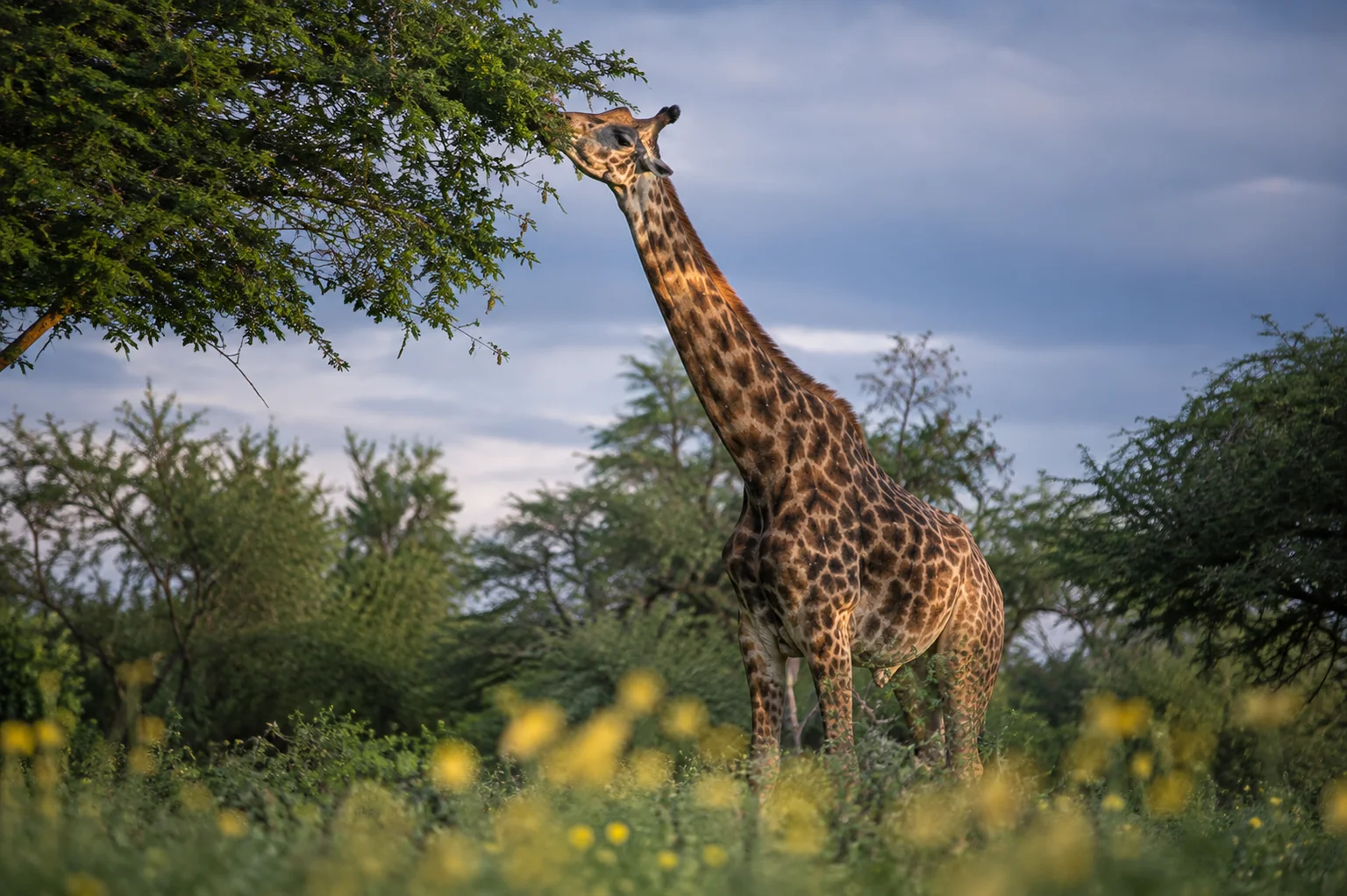
The team observed giraffes feeding during September 2003 and analysed flowers alongside leaves from knobthorn and other browse plants. Knobthorn flowers contained roughly half as much again in water and almost twice the crude protein of the tree’s leaves. They also contained less of the fibre fraction measured as acid detergent fibre.
Flowers were therefore a substantial food reward, rather than an incidental decoration eaten with leaves. They contained higher concentrations of condensed tannins than knobthorn leaves, but those compounds did not prevent heavy consumption.
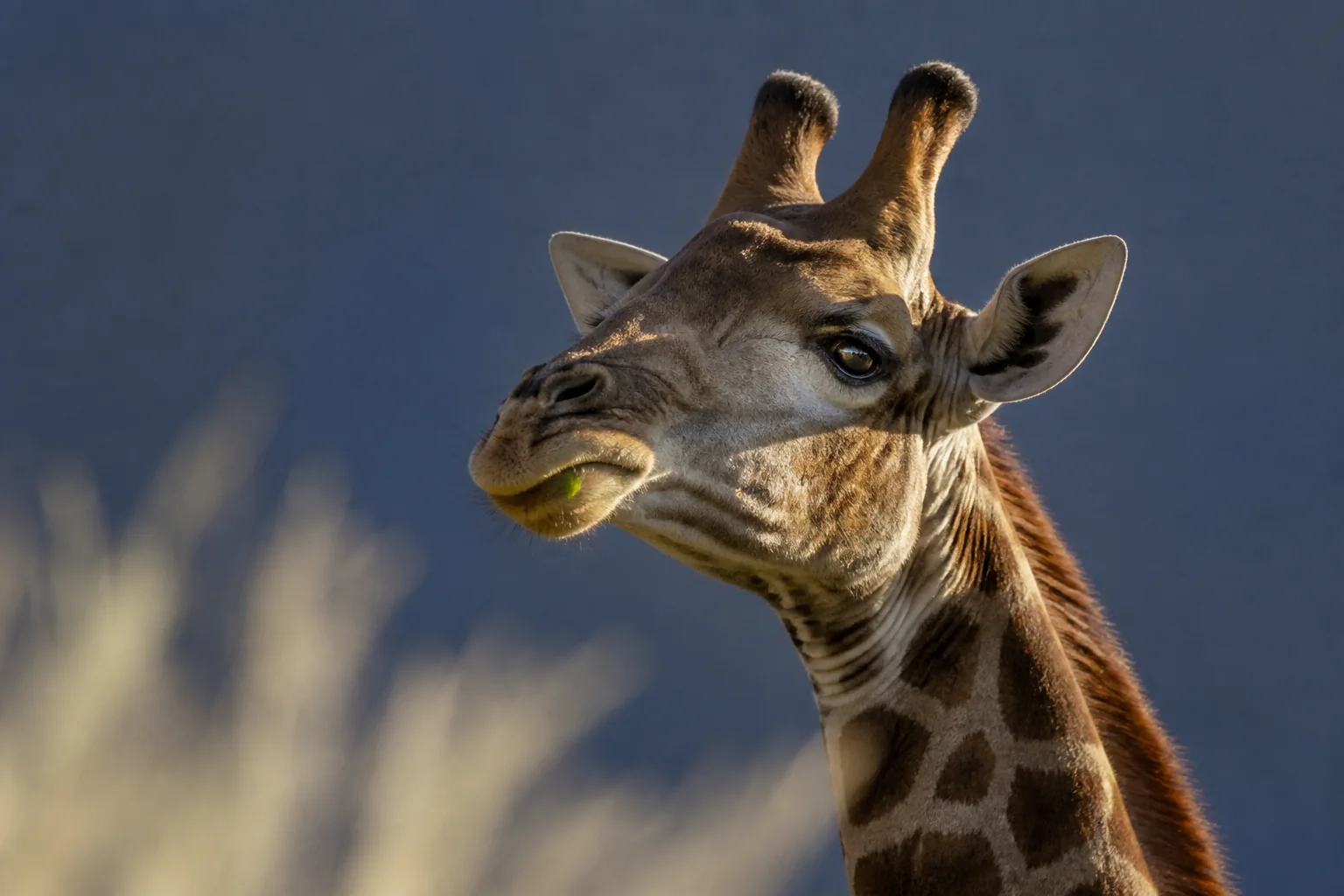
Giraffes sometimes carried florets on their faces and moved between flowering knobthorns. That established an opportunity for pollen transport. It did not establish successful pollination, still less a net benefit to the trees.
Following flowers into the next season
The researchers assessed 61 trees accessible to giraffes and 22 where giraffes were excluded, including trees in tourist camps. For each tree, they scored the relative abundance of leaves and flowers at different heights. The higher branches served as a useful comparison because giraffes could not reach them.
Months later, the team returned to examine pods. They could confidently relocate 42 original trees, allowing a direct comparison between flowering and later fruiting on the same individuals. Additional trees expanded the fruiting comparison.
This design joined two pieces of evidence often separated in casual observation: where an animal fed, and what remained when reproduction progressed. It also helped account for differences among trees by comparing reachable branches with the upper canopy of the same tree.
Fewer flowers, followed by fewer pods
Giraffe-accessible trees had fewer flowers and pods within feeding reach than trees protected from giraffes. The comparison remained informative after accounting for the abundance on the trees’ upper branches. Leaves did not show the same clear difference in this analysis.
One nuance matters. Among the trees followed through both seasons, the ratio of pods to flowers within browsing reach did not show a statistically clear additional reduction once the upper-canopy comparison was included. The evidence points particularly to the removal of flowers and a reduced absolute crop of pods. It does not show that every remaining flower became less likely to develop into a pod.
The team concluded that giraffes acted primarily as flower predators in the season studied. Successful fruiting above giraffe reach also showed that the trees could reproduce without giraffe visits to those branches.
The comparison has a boundary
This was a natural comparison, not a random assignment of identical trees to fenced and unfenced treatments. Trees inside camps could differ in water supply and exposure to other browsers. The authors discuss those possible differences, which constrain how precisely the results can be attributed to giraffes alone.
The finding also covers one flowering season. It does not establish that giraffes never transfer useful pollen or that the balance must be identical in years of unusually abundant flowering. The authors suggest that examining the parentage of seeds could reveal whether giraffes make a contribution to pollen movement that pod counts miss.
That is a concrete distinction within the wider question of giraffes’ ecological roles. Their interactions with plants need not all be beneficial to both partners. Here, flowers were valuable food for giraffes, while the tree paid a measurable reproductive cost where those meals were taken.
Sources
Patricia A. Fleming, Sally D. Hofmeyr, Sue W. Nicolson and Johan T. du Toit. (2006). Are giraffes pollinators or flower predators of Acacia nigrescens in Kruger National Park, South Africa?. Journal of Tropical Ecology, 22(3), 247–253. DOI: 10.1017/s0266467405003123. Read the full paper.