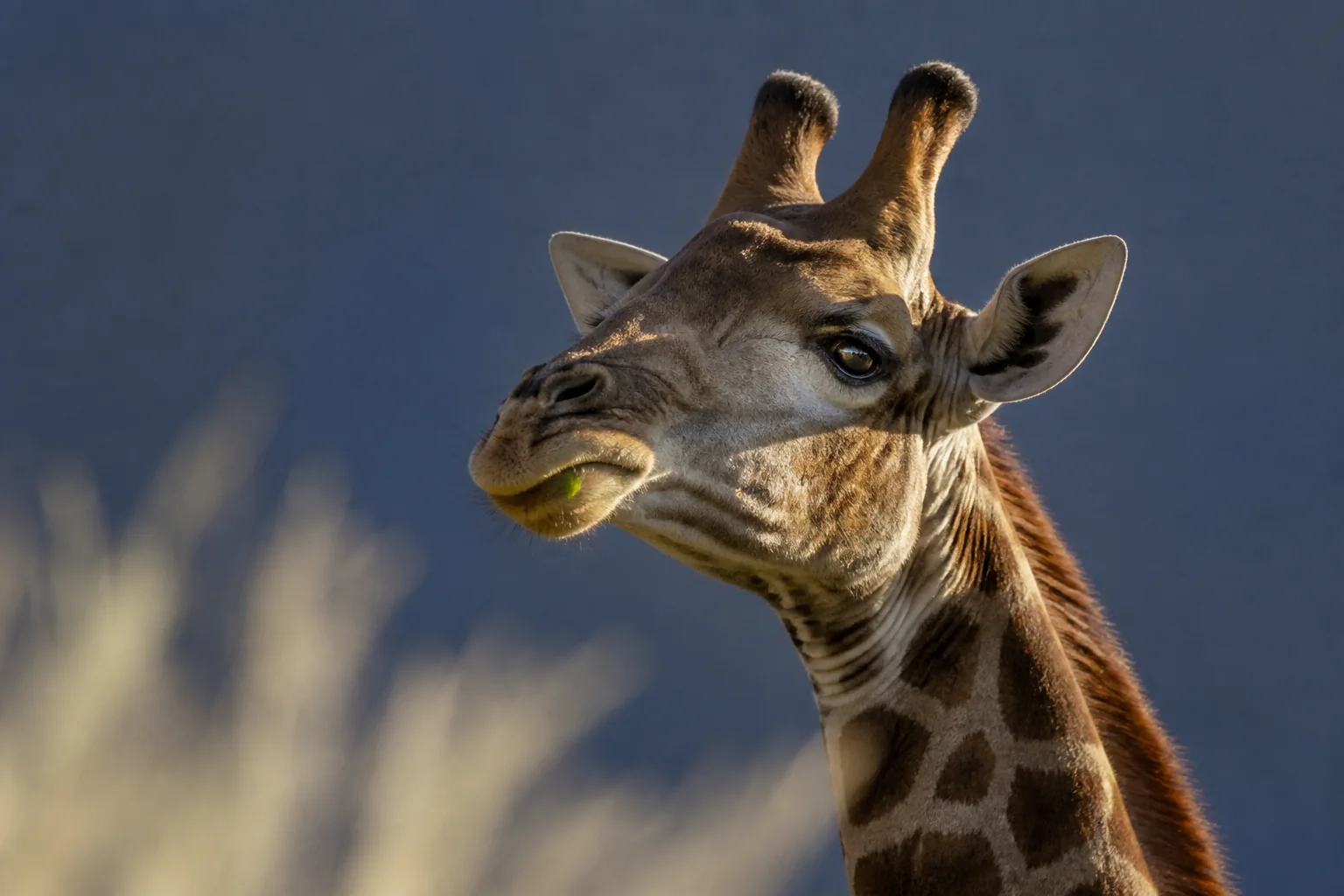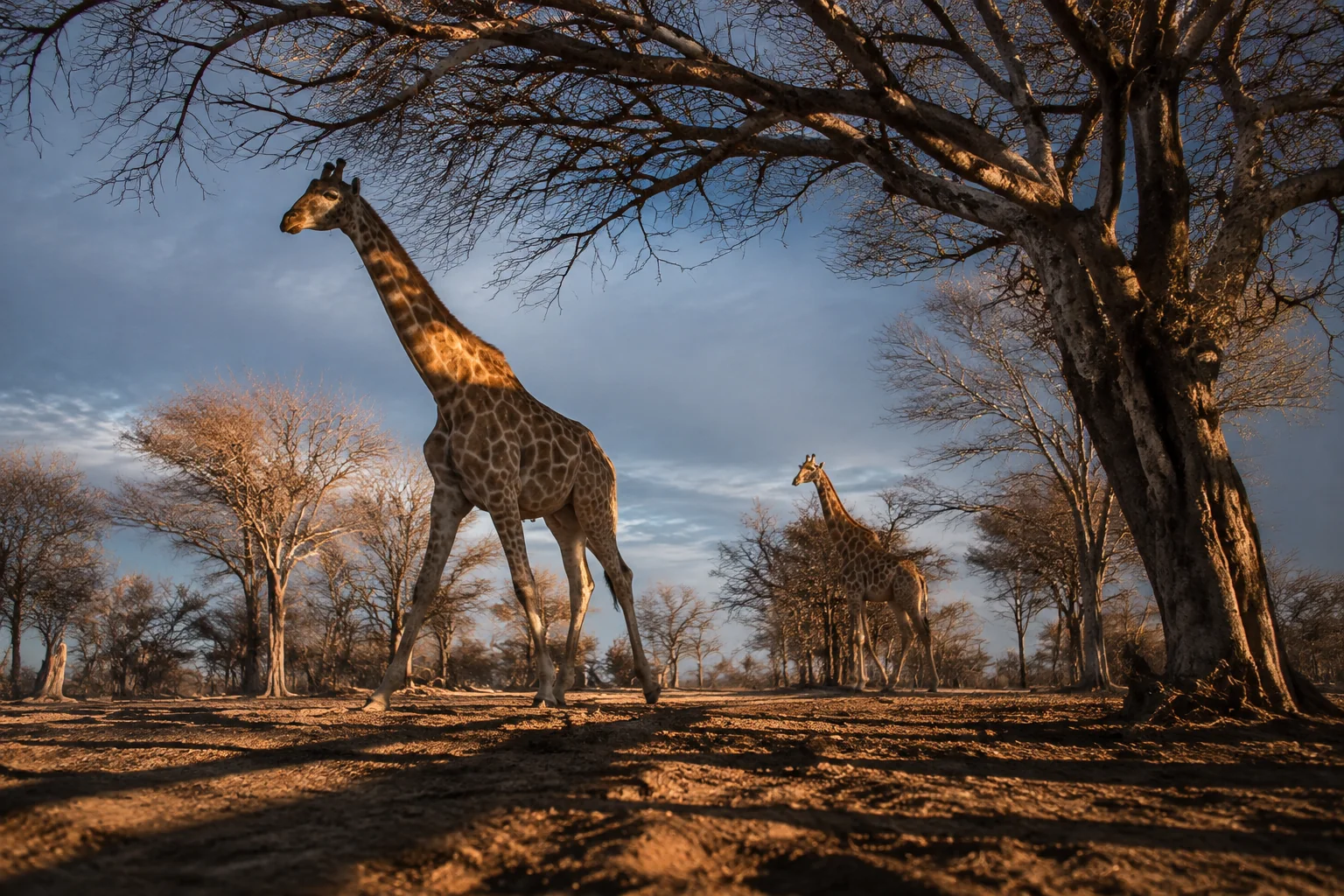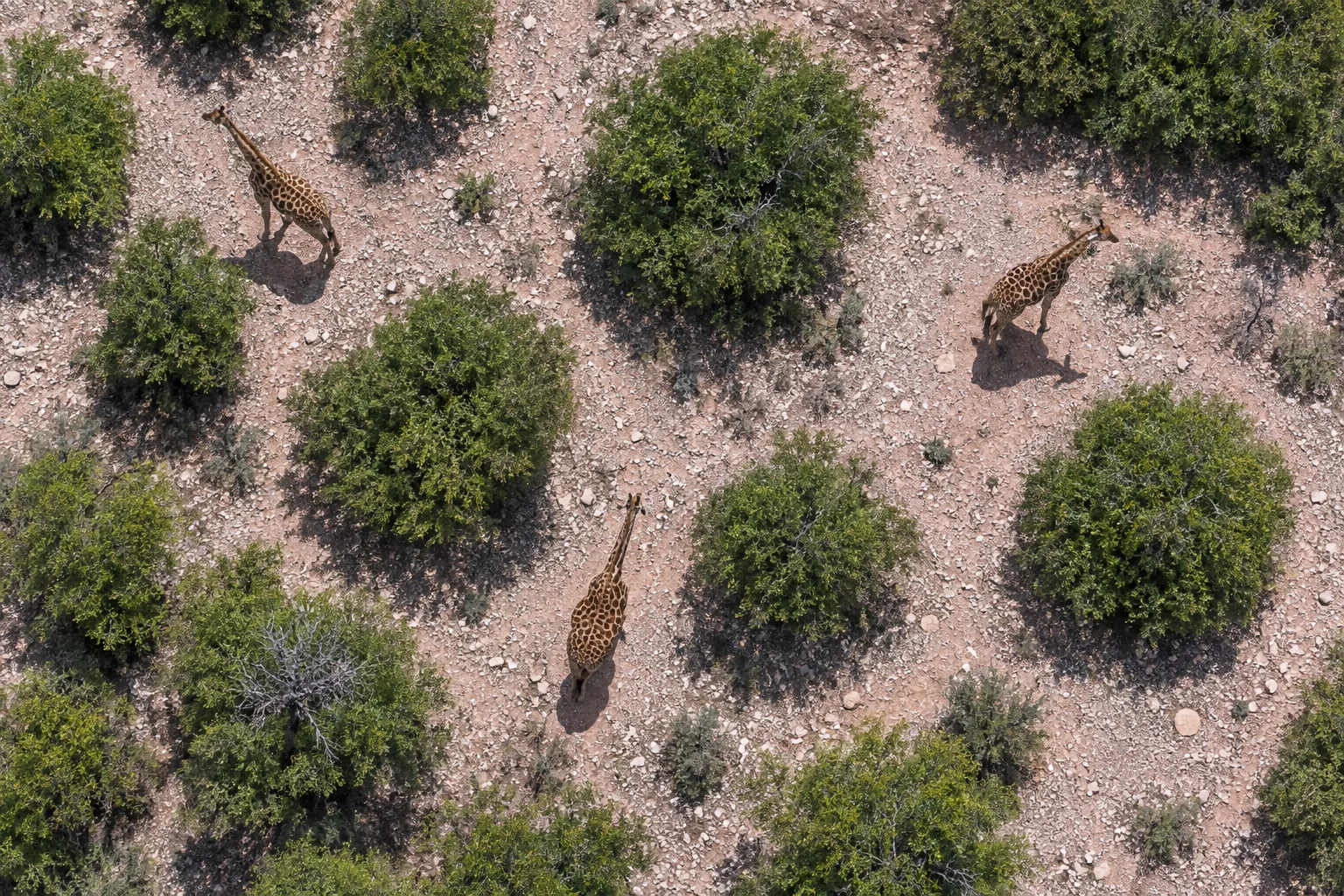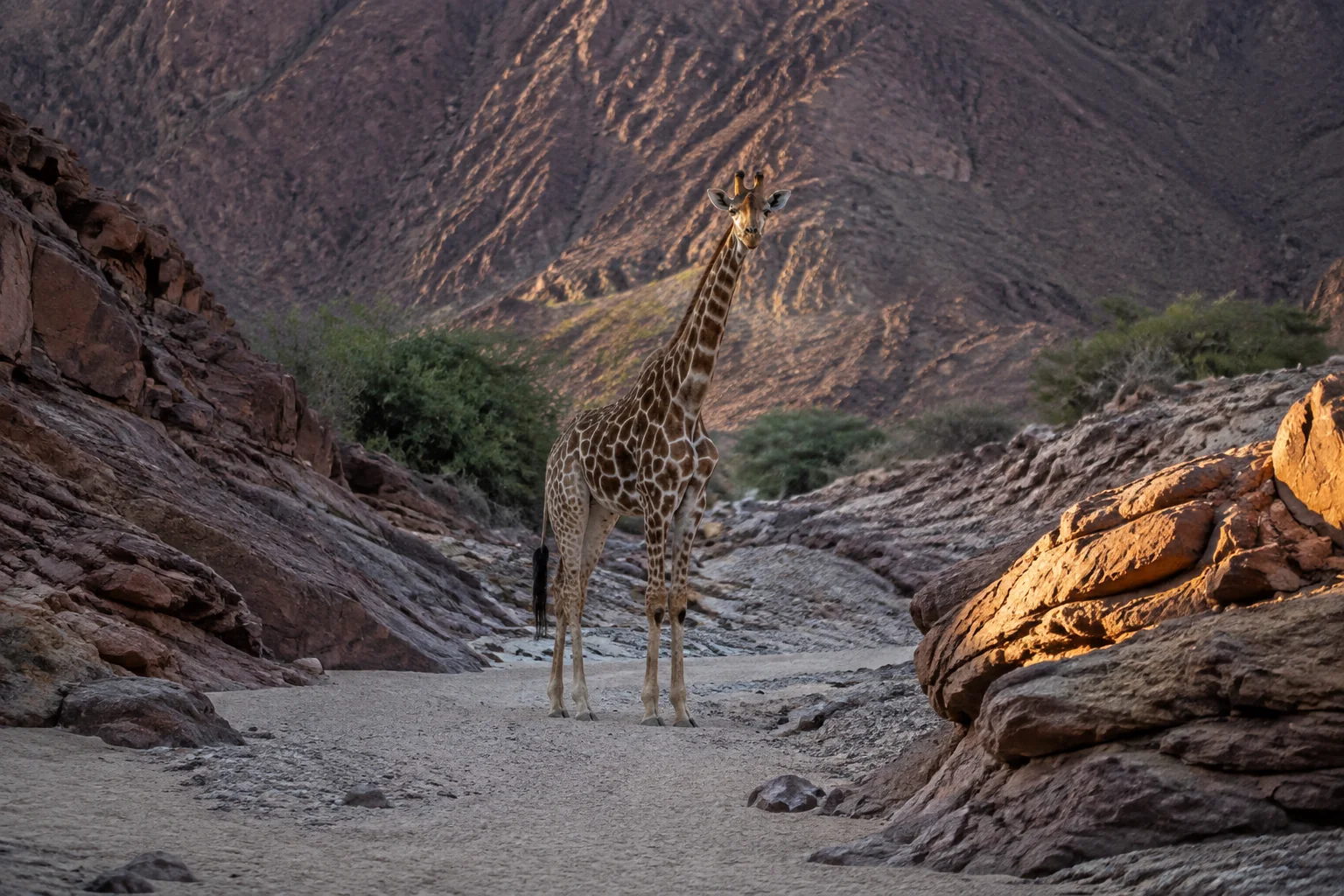
More trees do not necessarily mean more feeding giraffes. Within a small area of Kenya’s Mpala landscape, the steep slopes supported the densest and most diverse tree community but recorded relatively little giraffe activity. Nearby flatter ground received more visits and more browsing damage. The contrast suggests that terrain can shelter plants even when large herbivores remain free to move through the wider landscape.
Duncan Kimuyu and colleagues investigated that pattern by combining camera records with measurements of trees and browsing damage. Their study, published online in 2020 and in the 2021 volume of Biotropica, treats the savanna as a patchwork of differently accessible resources. It asks why plants a short distance apart can experience very different pressure from the same large animals.
The evidence supports steep slopes as possible refuges from heavy browsing. It does not prove that slope alone created the vegetation differences. The habitats also differed in soils and plant composition, and the researchers observed those differences rather than experimentally changing the terrain.
A small landscape with three distinct settings
The study covered a 120-hectare ForestGEO plot containing plateau, steep-slope and valley habitat. That compact setting made it possible to compare local variation within one landscape rather than contrast distant regions with entirely different animal communities.
The researchers placed 33 motion-triggered cameras across the plot and monitored them for twelve months. They counted photographic events separated by at least twenty minutes as independent detections, then divided those counts by the number of days each camera had worked. This adjustment mattered because an inactive camera should not make a habitat appear unused.
The resulting activity measure described how frequently cameras recorded elephants and giraffes. It did not estimate the number of unique animals living in each habitat. One giraffe could contribute multiple events, and detection frequency could reflect movement through a site as well as time spent feeding there.
To examine the plant side, the researchers used an existing tree census and surveyed browsing along eleven belt transects. They focused the damage comparison on Acacia mellifera, a woody species present in all three habitats. Studying the same plant across habitats avoided confusing every difference in damage with a difference in the identity of the plant being examined.
The team scored giraffe and elephant damage separately because the animals leave different signs. Giraffe browsing was assessed from truncated branch tips and browse lines above the reach of most smaller herbivores. Elephant damage included broken branches, stripped bark and toppled trees. Although both were represented by scores, those scores should not be treated as identical measurements of kilograms of vegetation eaten.
The slopes had fewer visits and less damage
The cameras produced 1,327 independent giraffe photographic events over the monitoring period. After accounting for camera operation, giraffe activity was estimated to be about forty times higher in the valley and twenty times higher on the plateau than on the steep slopes.
Those large ratios compare detection indices, not population densities. They are evidence of a striking difference in recorded use of the three habitats, rather than evidence that the valley held forty times as many individual giraffes. A low slope index also makes a relative comparison large even when the absolute number of additional detections is less dramatic.
The damage measurements gave the activity pattern a second, biologically relevant dimension. Giraffe browsing damage to the focal tree was estimated to be about five times higher in the valley and fourteen times higher on the plateau than on the slopes. Trees on steep ground therefore experienced less of the particular browsing pressure the study measured.
That combination is stronger evidence than either observation alone. Few photographs might result from animals moving outside camera views. Low damage alone might reflect unsuitable foliage or differences in tree form. Fewer detections together with lower damage makes reduced exposure to giraffe browsing a plausible part of the explanation.
The focal trees were also taller and had fewer stems on the slopes than on the plateau. Such differences are consistent with plants escaping repeated removal of accessible branch tips. But the study did not follow experimentally protected and exposed trees through their entire development, so it cannot assign every difference in shape to browsing.
The busiest habitat did not have the most damaged trees
Giraffe activity was highest in the valley, but damage to A. mellifera was highest on the plateau. That mismatch is one of the most informative findings in the study. It shows why an animal’s presence is not a complete measure of its effect on a particular plant.
In the valley, the focal species was more abundant and grew among other potentially palatable trees. On the plateau it was sparser, and much of the surrounding tree community consisted of a different acacia associated with defensive ants. The authors proposed that these neighbourhood differences could concentrate giraffe feeding on the relatively exposed, palatable focal trees on the plateau.
That is an explanation consistent with the vegetation and damage pattern, rather than a direct measurement of each giraffe’s choices among neighbouring trees. The researchers did not experimentally remove alternative foods or ant defences. They also could not exclude effects of soil on tree growth and foliage.
The pattern nevertheless makes an important distinction clear. A habitat can receive fewer recorded visits yet impose more damage on each tree of a particular species if food choices are concentrated. Counting animals and measuring their effects answer different ecological questions.
The relationship between activity and damage was not consistent across habitats either. Within the valley, greater giraffe activity was associated with greater browsing damage. Comparable relationships were not detected on the plateau or slopes. A single rule converting camera events into browsing pressure would therefore have missed the study’s central variation.
Dry conditions did not send giraffes up the slopes
The researchers predicted that animals might avoid difficult terrain when food was plentiful but use it more when dry conditions made resources scarce. That seasonal prediction was not supported.
Giraffe detections were higher during the wet season across the plot, and the reduction during dry conditions was broadly consistent among habitats. The animals did not show the predicted increase in slope use. The authors suggested that they might instead have moved to more favourable areas elsewhere in the landscape.
The cameras did not track those journeys, so dispersal elsewhere remains an interpretation of declining local detections. It would take individual movement records to establish where the animals went and which resources attracted them.
Giraffe browsing damage also did not differ significantly between wet and dry seasons. This is another reason to distinguish recorded presence from plant impact. Seasonal changes in the frequency of camera events did not translate into an equally clear seasonal difference in the focal plant’s damage score.
A refuge for plants is not automatically better giraffe habitat
The steep slopes had higher tree density, richness and diversity than the other habitats. Reduced exposure to large browsers could help preserve that vegetation, making slopes refuges for plants that are repeatedly cropped on easier ground.
But a refuge from giraffes is not the same thing as an especially valuable feeding area for giraffes. If terrain limits access, abundant vegetation can remain underused. The study therefore challenges the assumption that a map of tree cover alone reveals how much forage is functionally available to a large browser.
Soils, drainage and the history of plant growth could also contribute to the richer slope vegetation. The authors acknowledged those alternatives. The observed association does not establish that browsing was the sole cause of lower diversity elsewhere, or that constructing barriers would reproduce the ecological role of naturally varied terrain.
A separate study of cactus invasion and mammal habitat use reinforces the need to distinguish a landscape from the patches within it. In that study, giraffe site use during one season was negatively associated with cactus immediately around cameras but positively associated with cactus across the surrounding grid squares. It did not test slopes, and it cannot identify the mechanism behind the Mpala browsing result. Its useful connection is that broad habitat occurrence can conceal selective use of smaller patches. Our commentary on those camera comparisons examines the change in spatial scale.
The Mpala study makes a local ecological process visible: access to plants depends on where they grow, and plant damage depends on more than how often a large herbivore appears nearby. Conservation of a varied savanna therefore involves both the animals and the uneven landscape that shapes their effects. The slopes may give some trees a break from browsing while the giraffes continue to use more accessible parts of the same system.
Sources
Duncan M. Kimuyu, David Kenfack, Paul M. Musili and Robert O. Ang’ila (2021; published online 2020). “Fine-scale habitat heterogeneity influences browsing damage by elephant and giraffe.” Biotropica 53, 86–96. Primary paper. Author-uploaded full text.
Peter S. Stewart, Russell A. Hill, Ayub M. O. Oduor, Philip A. Stephens, Mark J. Whittingham and Wayne Dawson (2025). “Multi-Species Impacts of Invasive Opuntia Cacti on Mammal Habitat Use.” Ecology Letters 28, e70163. Primary paper.