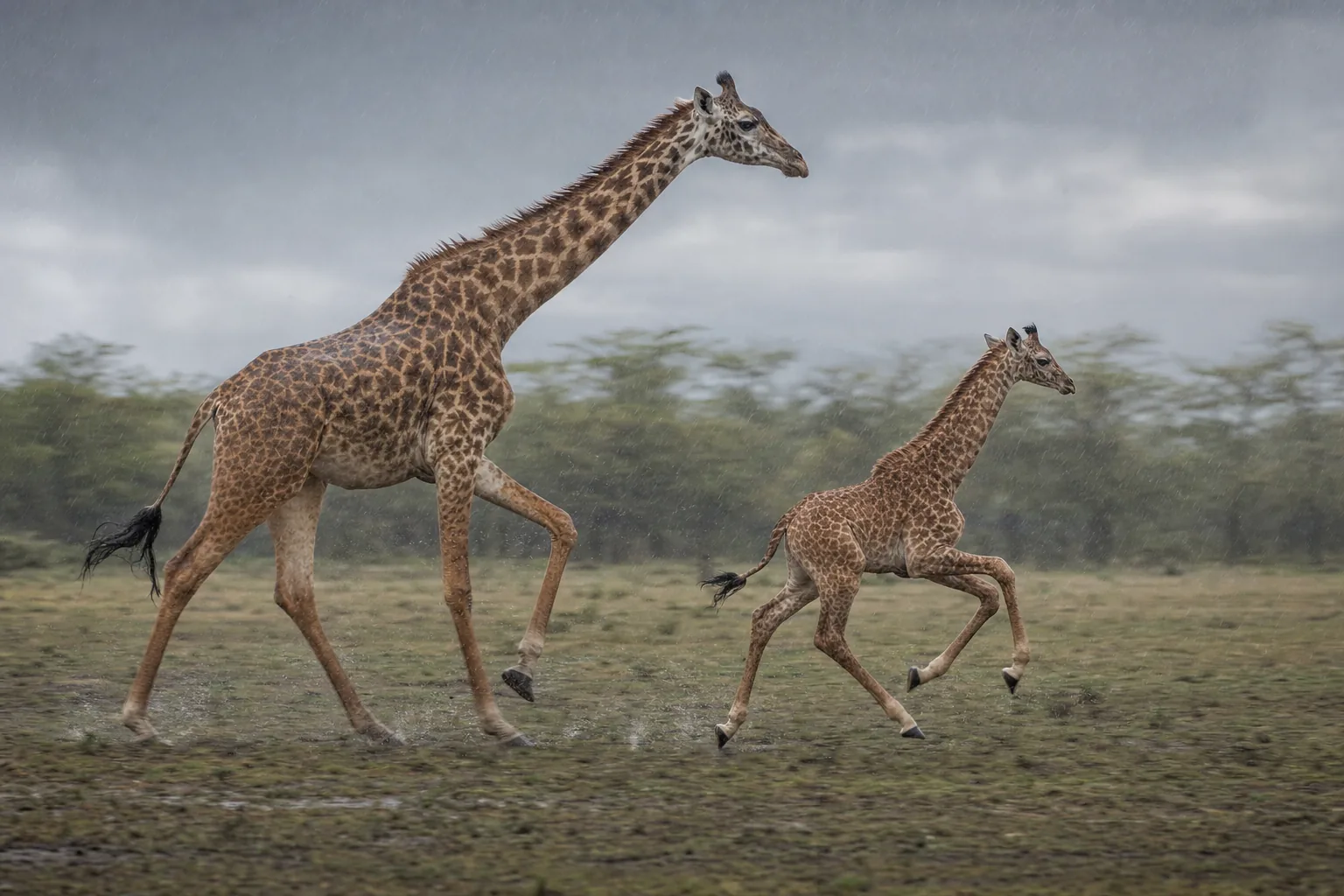
Picture an animal that can reach leaves above your head, has the same number of neck bones as you, and makes sounds researchers are still trying to understand. A giraffe is more surprising than its cartoon version. Learning the real details matters: giraffes face serious threats, and protecting an animal starts with understanding how it lives.
For teachers and families: Download the free giraffe worksheet and answer key (PDF, two A4 pages, 7 KB). It includes a short reading passage, four fact questions, an evidence-sorting activity, and a headline challenge. Suggested for ages 8–12 with adult guidance; no signup.
Three facts about a very tall body
Giraffes are the tallest living land animals. An adult male can reach about 5.5 metres, or 18 feet. That is an example of adult height, not a measurement every giraffe reaches. Females and calves are generally smaller.
A giraffe has seven neck bones, just like a human. The difference is mainly the length of the bones, not an enormous extra supply. Scientists call these bones cervical vertebrae. You can see real specimens in the University of Minnesota veterinary anatomy collection.
Those head bumps have a name: ossicones. They are bony structures covered with skin and hair. They are part of the giraffe’s anatomy, not little antennae. Explore how giraffe ossicones differ from horns and antlers.
The height and ossicone details come from San Diego Zoo’s animal account. For a closer comparison of adult and young animals, explore how tall a giraffe is. Notice whether a source is describing a typical animal, a large adult, or a record: those are different things.
Three facts about eating
A giraffe’s tongue can grip. A tongue around 46 centimetres long helps it gather food. The word prehensile means able to grasp: think of it as a useful tool for collecting leaves, not simply a very long tongue sticking out.
Giraffes are mainly browsers. They feed on tree and shrub material, including leaves, and can also eat flowers, fruits, and seed pods. “They only eat leaves” is too strict.
Giraffes chew cud. They are ruminants: swallowed food can return to the mouth for more chewing. Their stomach has four compartments, rather than four separate stomachs.
San Diego Zoo describes the gripping tongue; Animal Diversity Web explains the diet and digestive system. Our giraffe diet guide goes further into browsing. Food is also one reason a giraffe’s home needs more than empty space: the vegetation in a landscape matters.
A word worth questioning: sunscreen
You may read that a giraffe’s dark tongue is “natural sunscreen.” The zoo source describes protection from sunlight as a proposed explanation, not a fully settled conclusion. A careful fact sheet should preserve that difference.
It is fine for science to have unanswered questions. “Researchers think this may help” can be a better answer than a confident story that the evidence has not established. Learn more in the giraffe tongue explainer.
Three facts about calves and coats
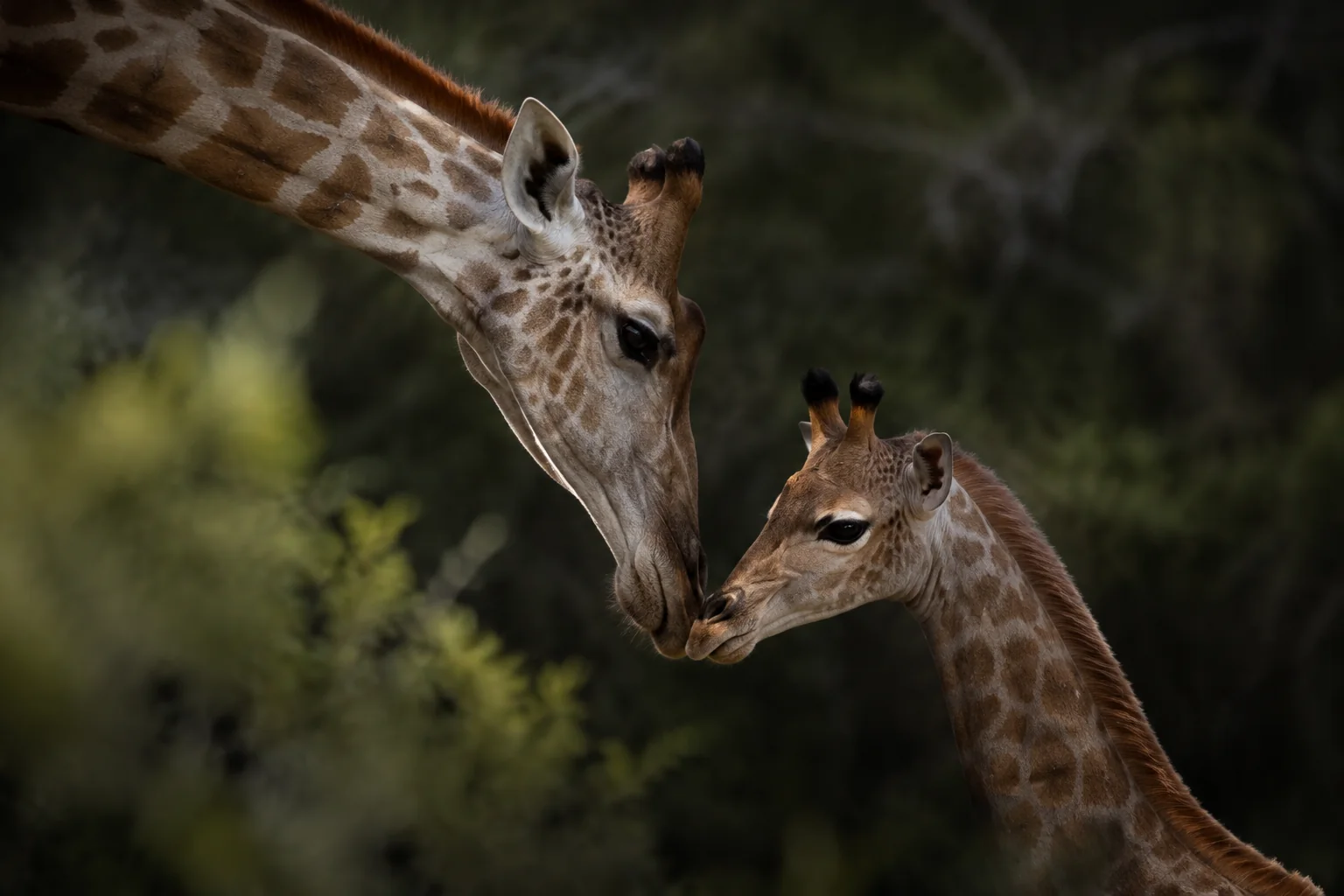
A baby giraffe is called a calf. A newborn is already about 1.8 metres, or six feet, tall. Its mother usually gives birth standing up. These basic birth details are described by San Diego Zoo.
Young giraffes drink their mother’s milk. Giraffes are mammals. A calf sampling vegetation does not mean it has immediately stopped nursing; growing into an adult diet is a process.
Coat patterns help researchers recognise individuals. Rather than treating every spotted animal as identical, researchers can compare photographs and follow particular giraffes over time.
The nursing detail is documented in Animal Diversity Web. For coat identification and inheritance, see the research described by Penn State in the next section. The baby giraffe guide explains more about early life.
A photograph is useful only when the comparison is reliable. A blurry image, a different side of the body, or an obstructed view can make identification difficult.
Three facts about patterns, homes, and relatives
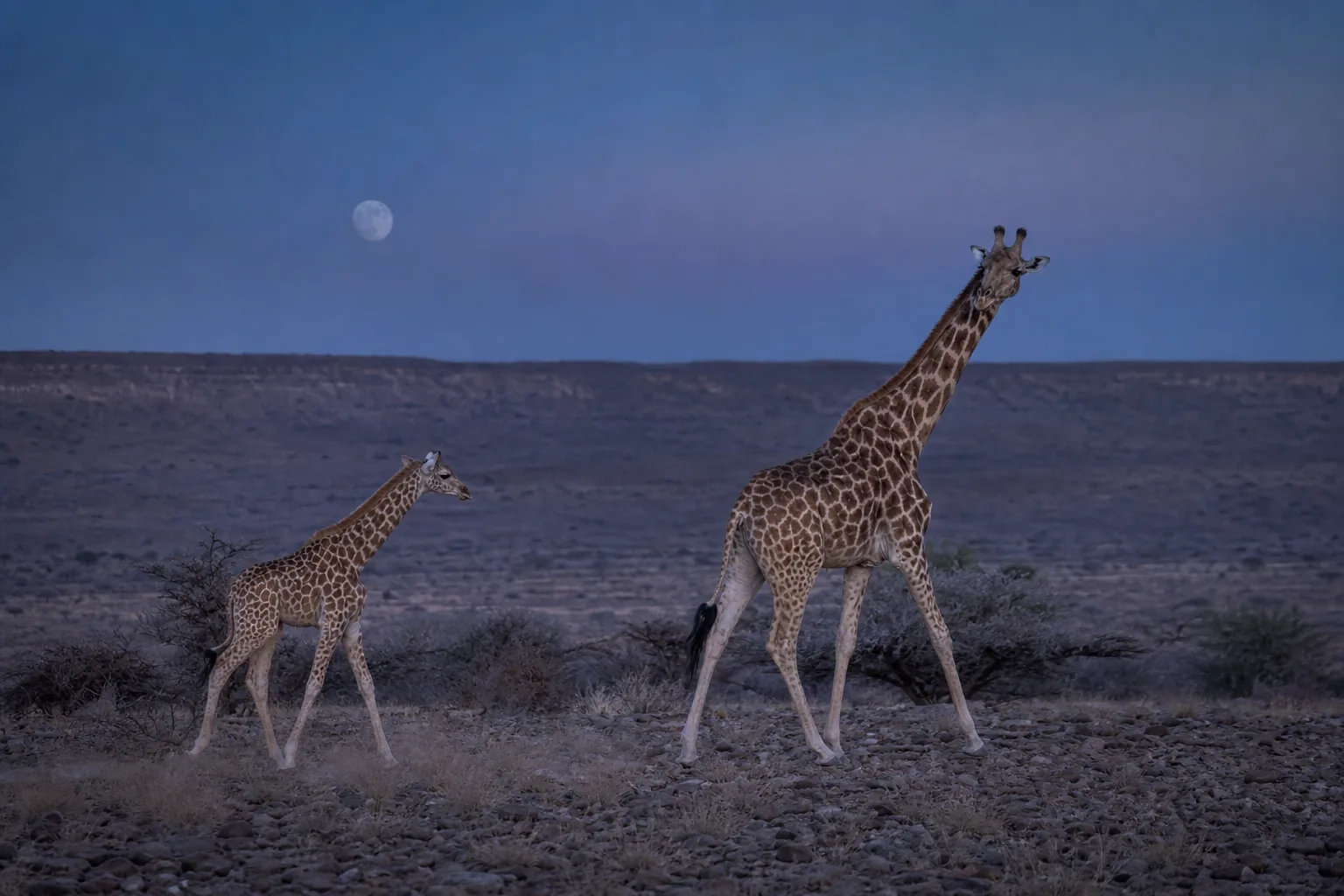
Some spot characteristics can run in families. A 2018 study of wild giraffes found evidence that aspects of spot shape were inherited from mothers. That does not mean a calf is a perfect photocopy of its mother. The researchers’ university account explains the finding.
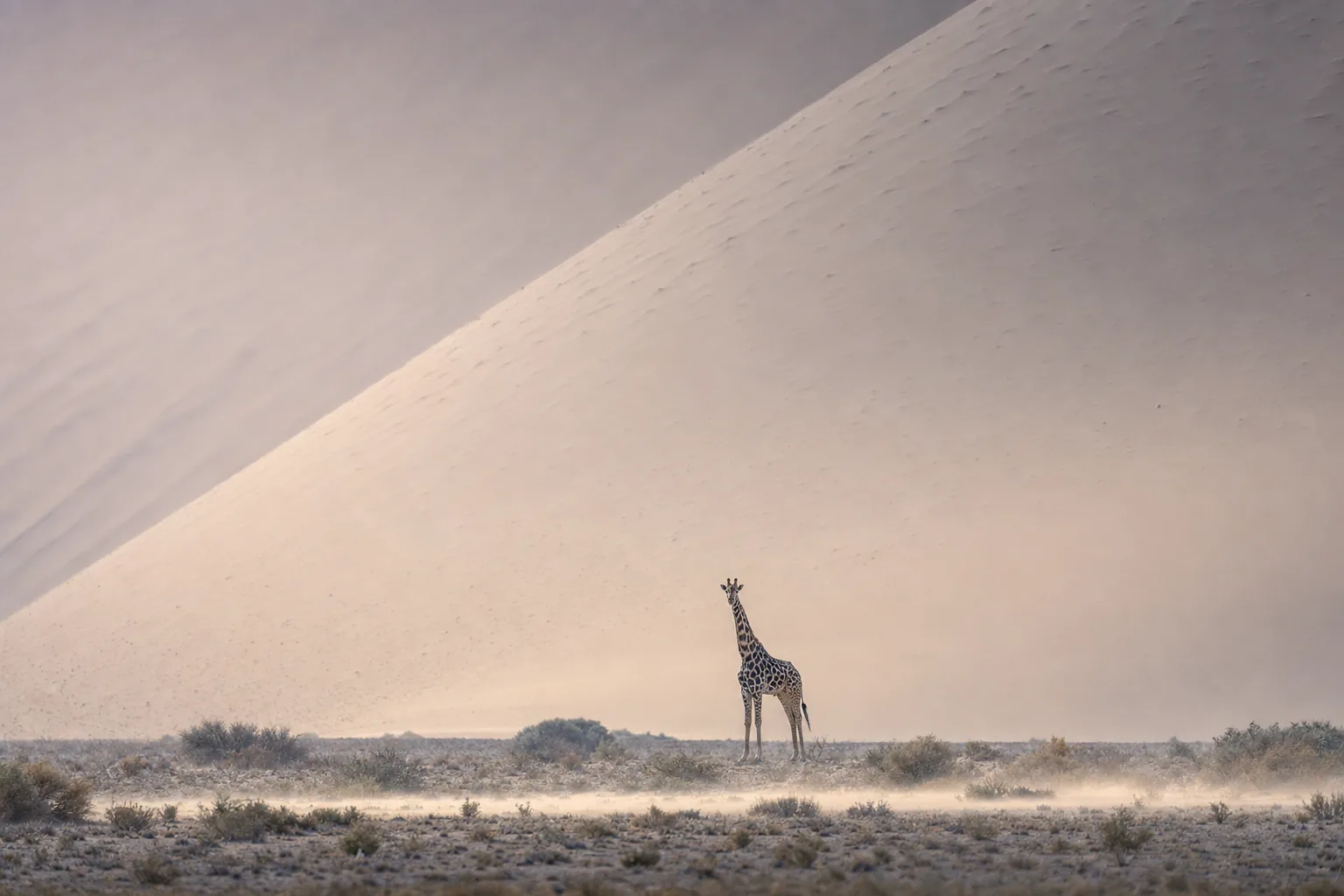
Wild giraffes are native to Africa. Their habitats include savannas and open woodlands. They do not live naturally on every continent where a zoo keeps them.
The okapi is a giraffe relative. Its striped legs can make it look zebra-like, but appearance alone is not a reliable family tree. The San Diego Zoo okapi account describes this forest-dwelling member of the giraffe family.
Animal Diversity Web provides the habitat background. Read our habitat and range guide to connect the animals with real landscapes rather than a single imagined “African plain.”
What does “inherited” mean?
An inherited characteristic is passed between generations through biology. It does not mean that everything about an animal is fixed in advance, or that closely related animals look exactly alike.
In the spot study, scientists measured particular features and compared mothers with calves. That is a much stronger approach than deciding that two animals “look related.” Our coat-pattern science guide explains the broader research question.
Three facts about sounds, sleep, and species
- Giraffes are not voiceless. Researchers studying giraffes at three European zoos recorded humming at night. The sound was real, but the study could not identify the calling individual or establish exactly what the hum meant. See the original humming study.
Press play on our real giraffe humming recording, then try describing the noise without guessing what the animal feels.
Giraffes do sleep, and “only a few minutes a day” is not a reliable universal rule. A zoo study reported about 4.6 hours of sleep over 24 hours for the animals included in its total, excluding the juvenile. Their sleep was broken into bouts. That is evidence about the studied animals, not a schedule for every wild giraffe. See the sleep study.
There are four recognised giraffe species. They are northern, reticulated, Masai, and southern giraffes. The IUCN announced this recognition in August 2025. Our four-species guide explains what changed.
These examples show why a good fact sheet sometimes needs a few extra words. “Giraffes hum” is interesting. “Researchers recorded nighttime humming in zoo giraffes, but its function is uncertain” tells you much more about what scientists actually know.
Are giraffes in danger?
Yes: giraffes face extinction risks, including habitat loss and illegal hunting. But the situation is not identical for every species or place. Some populations are doing better than others, and a larger total does not prove that every population is safe.
The IUCN’s historical assessment and later taxonomy announcement are listed in the sources below. Adults and older students can use our endangered-status guide to understand the difference between a species name, a population estimate, and an official risk assessment.
Children do not need a frightening extinction deadline to care. Useful actions include learning accurately, respecting wildlife-viewing rules, and sharing information with its source. Never approach, chase, or feed a wild giraffe to get a photograph. Ask an adult to help evaluate animal encounters before taking part.
A classroom activity and quick quiz
This activity is designed as a short reading-and-discussion exercise, not a formal assessment of learning. Use it with an adult or teacher who can adapt the vocabulary. You need paper, a pencil, and access to the fact list; no account or payment is required.
For an offline alternative, the printable worksheet above has its own reading notes and answer key. You may print and share that unchanged worksheet for classroom or home learning, with its source credit retained. This permission applies to the worksheet, not every linked publication or image.
Planning a visit in Poland? Our Warsaw Zoo giraffe guide adds a short observation activity and explains why older stories about named animals need a current-location check.
Part 1: sort the statements
Draw three columns labelled observation, explanation, and unanswered question. Try sorting these statements:
- Researchers recorded a humming sound.
- That hum might help giraffes communicate.
- Which animal made the hum, and what was happening?
- A museum specimen has seven neck vertebrae.
- A long neck contains more bones than a human neck.
The last statement is deliberately misleading. Do not force it into a column: cross it out and correct it. The task is to distinguish evidence from interpretation, not to make every sentence sound scientific.
Part 2: answer five questions
| Question | Your answer |
|---|---|
| What is a baby giraffe called? | |
| How many cervical vertebrae does a giraffe have? | |
| What does prehensile mean? | |
| Which living relative has zebra-like stripes on its legs? | |
| Does a zoo sleep study tell us exactly how long every wild giraffe sleeps? |
Answer key: calf; seven; able to grasp; okapi; no. For the final answer, explain that a study’s animals and conditions matter.
Part 3: improve a headline
Rewrite “Giraffes never sleep” so it fits the evidence above. Then rewrite “Scientists know what giraffes are saying.” A successful answer should keep the interesting discovery while removing certainty the study does not support.
Teachers can ask students to underline the changed words. Discuss how “never,” “always,” “all,” and “exactly” can turn an otherwise useful statement into an overclaim. This habit transfers well beyond giraffes.
What to remember
Giraffes are remarkable without invented facts. Their anatomy, feeding, family life, and behaviour offer real questions to investigate. Keep the difference between an observation and an explanation visible, and use dated sources for changing topics such as taxonomy and conservation.
Use the linked museum specimens, photographs in research, and study records when making scientific comparisons.
Frequently asked questions
Do giraffes have more neck bones than people? No. Both usually have seven; the giraffe’s neck vertebrae are much longer.
Is an okapi a zebra? No. Its striped legs do not make it a zebra. It belongs to the giraffe family.
Do all giraffes look the same? No. Coat patterns vary, and researchers can use those differences to help recognise individuals.
Can a fun fact be uncertain? Yes. A possible explanation can be interesting without being proven. Good science writing tells you which is which.
Sources
- San Diego Zoo Wildlife Alliance — Giraffe: height, ossicones, tongue, and birth details. Its very short sleep claim is not adopted here.
- Animal Diversity Web — Giraffe: feeding, nursing, and habitat background. The account’s older taxonomy is not used for our species count.
- Lee, Cavener and Bond — Seeing spots (2018), institutional research record: coat-pattern research and inheritance.
- IUCN — Four giraffe species officially recognised (2025).
- IUCN — Giraffe decline and extinction threats (2016).