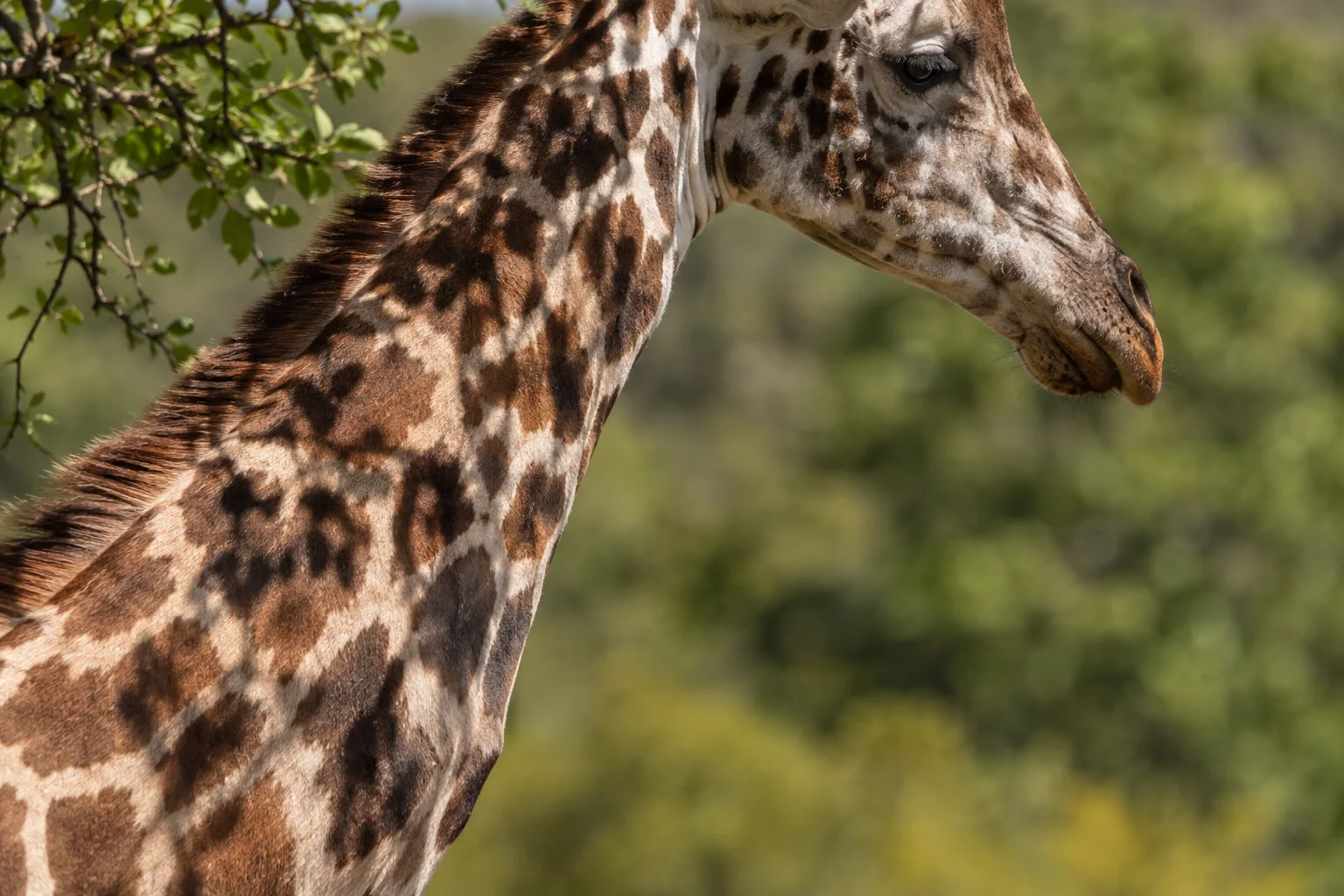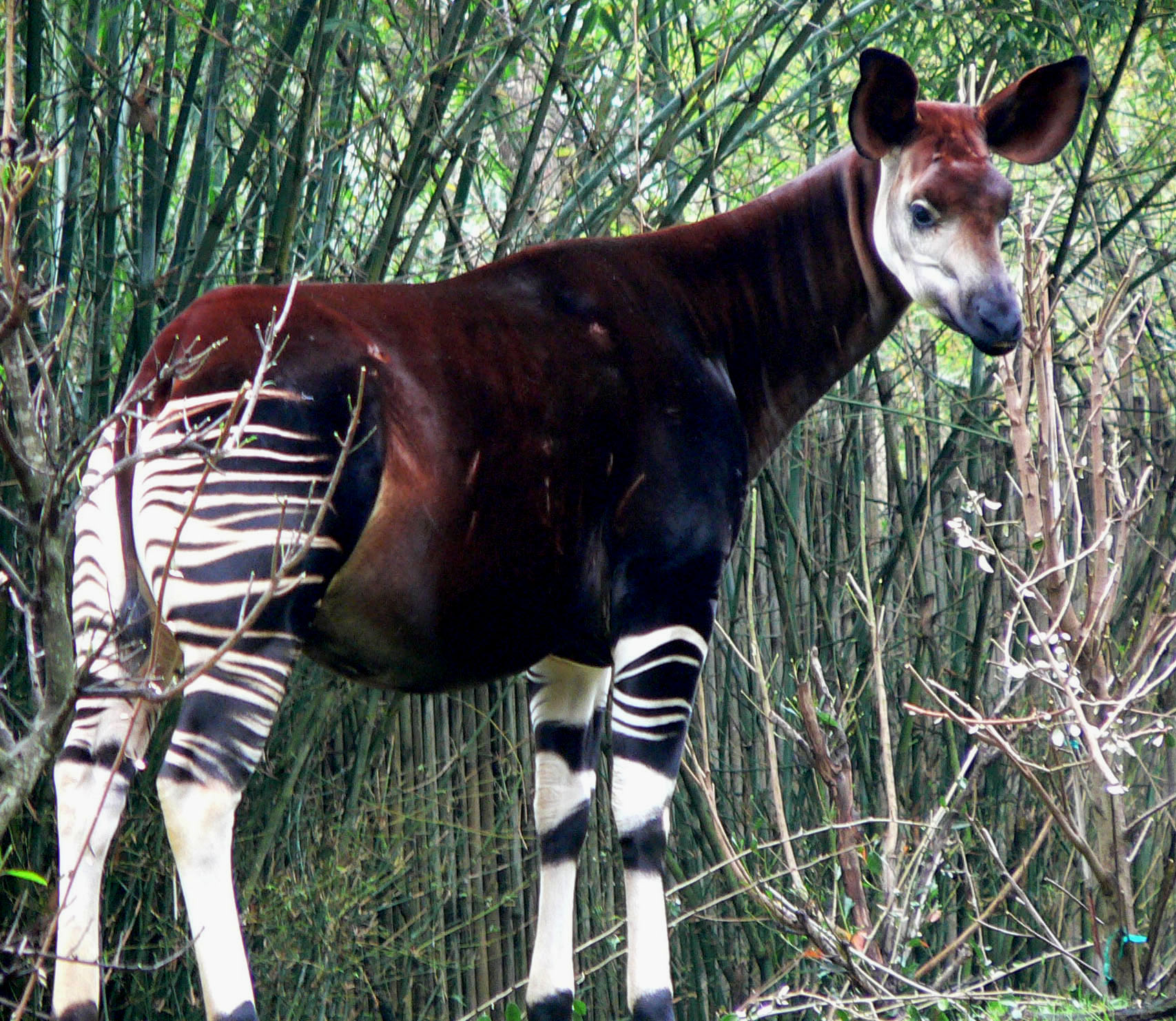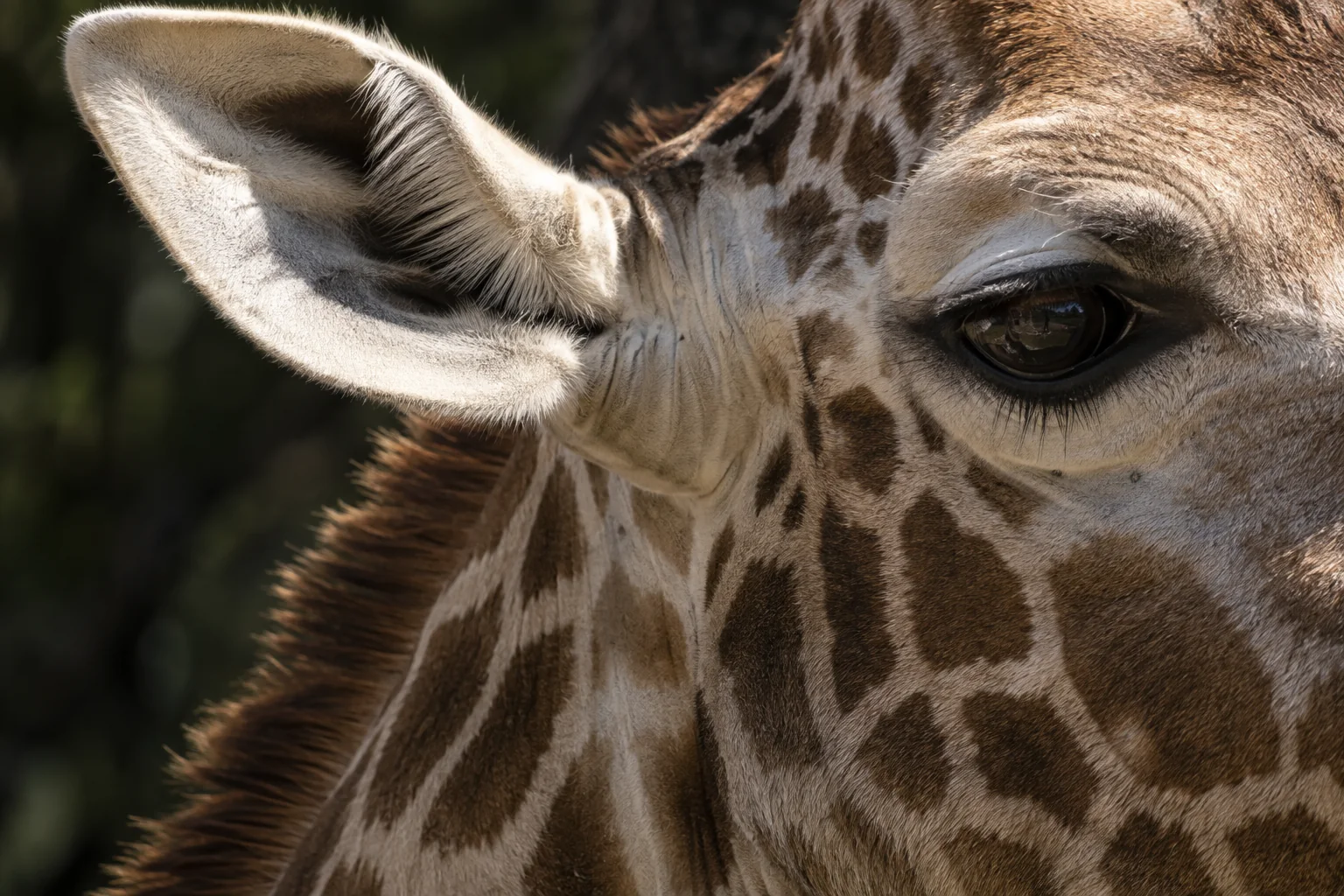
The okapi is the giraffe’s closest living relative, yet a comparison of their genomes shows strikingly different ways of arranging DNA into chromosomes. Some large stretches of the okapi genome line up more simply with cattle and sheep than with giraffes. How can a more distant relative look more similar in this respect?
A 2022 study led by Sven Winter helps answer that question. The team assembled a much more continuous okapi genome, then compared the positions of matching DNA blocks across several ruminants. The result illustrates an important distinction: sharing recent ancestry does not require two species to preserve the same chromosome layout. One lineage can undergo substantial rearrangement while another retains more of an older arrangement.
Why assembling a genome changes what can be asked
Sequencing does not usually deliver a complete chromosome in one piece. It produces many overlapping fragments that must be assembled. If the fragments are short, repeated DNA can make their correct positions difficult to determine: several places in the genome may look almost the same.
Earlier okapi genome assemblies contained many small continuous stretches joined into larger scaffolds. A scaffold can represent a useful estimate of order while still containing gaps whose sequence is unknown. Such assemblies support many questions about genes, but fragmentation makes it harder to follow long stretches of chromosome structure confidently.
Winter and colleagues used long-read sequencing of DNA from kidney tissue collected after the death of a male okapi at Antwerp Zoo. Shorter, more accurate reads then helped correct sequence errors. Existing chromosome-contact data supplied another kind of information: DNA regions that are physically close within cells are more likely to belong near one another in a chromosome.
The combination produced an assembly about 2.39 billion DNA letters long. The typical scale of uninterrupted sequence increased dramatically. Measured against an estimated genome size, half the sequence was now contained in continuous stretches at least about 53 million letters long, compared with tens of thousands in one earlier assembly. That statistic measures continuity; it does not mean every chromosome was complete or every base correct.
Following matching blocks across species
The investigators compared the new assembly with another okapi assembly and with genomes from giraffe, cattle and sheep. The relevant question was not whether each species had identical DNA. They looked for corresponding blocks and asked how those blocks were ordered and grouped.
The two okapi assemblies broadly matched, apart from a small number of inversions and unresolved scaffolds. The giraffe comparison was much more rearranged. An okapi scaffold generally had to be split among giraffe chromosomes or combined with other matching blocks to align with the giraffe’s 15 large chromosomes in a single chromosome set.
By contrast, many okapi scaffolds aligned more directly with cattle or sheep chromosome regions. Those species are more distant relatives, but apparently retain arrangements that are less reorganised relative to the okapi in these comparisons.
A useful way to understand this is to distinguish the text from its binding. Related genomes can retain recognisably corresponding DNA while the blocks become joined, separated or reversed. Changing the arrangement does not erase the ancestry of the underlying sequences.
The authors interpreted the giraffe pattern in the context of chromosome fusions already identified by earlier cytological and genomic research. The new sequence comparison displays the rearrangements in much finer detail, but it does not show that a particular fusion caused the giraffe’s long neck or high blood pressure. Those are separate biological questions requiring evidence about gene function and development.
A reference genome is still a reconstruction
The new assembly contained 28 particularly large scaffolds, more than the roughly 22–23 expected chromosomes in one set for an okapi. Some pieces could not be placed confidently. That prevented the authors from presenting every scaffold as a finished chromosome.
One complication was that the chromosome-contact information came from a different animal than the newly sequenced DNA. Okapi chromosome numbers can vary, so the two individuals might not have had precisely the same chromosome arrangement. The authors raised that as a possible explanation for difficulties in joining the remaining pieces, rather than demonstrating it as the cause.
This distinction matters when interpreting small differences between assemblies. A reversed block might reflect a biological rearrangement, an uncertain orientation during reconstruction, or some combination of the two. The broad giraffe comparison was striking, while the exact placement of every okapi fragment remained unfinished work.
What better sequence can and cannot say about conservation
A more continuous reference is valuable because future samples can be compared against it. DNA obtained from small or degraded samples can then be located more confidently, helping researchers distinguish inherited variation from reconstruction problems.
The study also estimated how often the two chromosome copies differed within each of two okapi individuals. The estimates were about 0.12% and 0.17%. These are measurements of variation within the sampled genomes, not a count of animals or a direct estimate of the species’ ability to survive.
The authors specifically warned that estimates from different studies can change substantially with analytical settings. A superficially higher value than in a giraffe study cannot automatically be read as evidence that okapi populations are genetically healthier. Two captive individuals also cannot describe every wild population. Broader sampling and additional measures of inbreeding and harmful variation would be needed for those questions.
The assembly’s central contribution is therefore more than a larger file of DNA. It makes chromosome history visible while exposing where inference remains uncertain. The giraffe and okapi remain close relatives; their contrasting chromosome arrangements show how much genome organisation can change after related lineages separate.
Sources
Sven Winter, Raphael T F Coimbra, Philippe Helsen, Axel Janke (2022). A Chromosome-Scale Genome Assembly of the Okapi (Okapia Johnstoni). Journal of Heredity. DOI: 10.1093/jhered/esac033. Read the full paper.