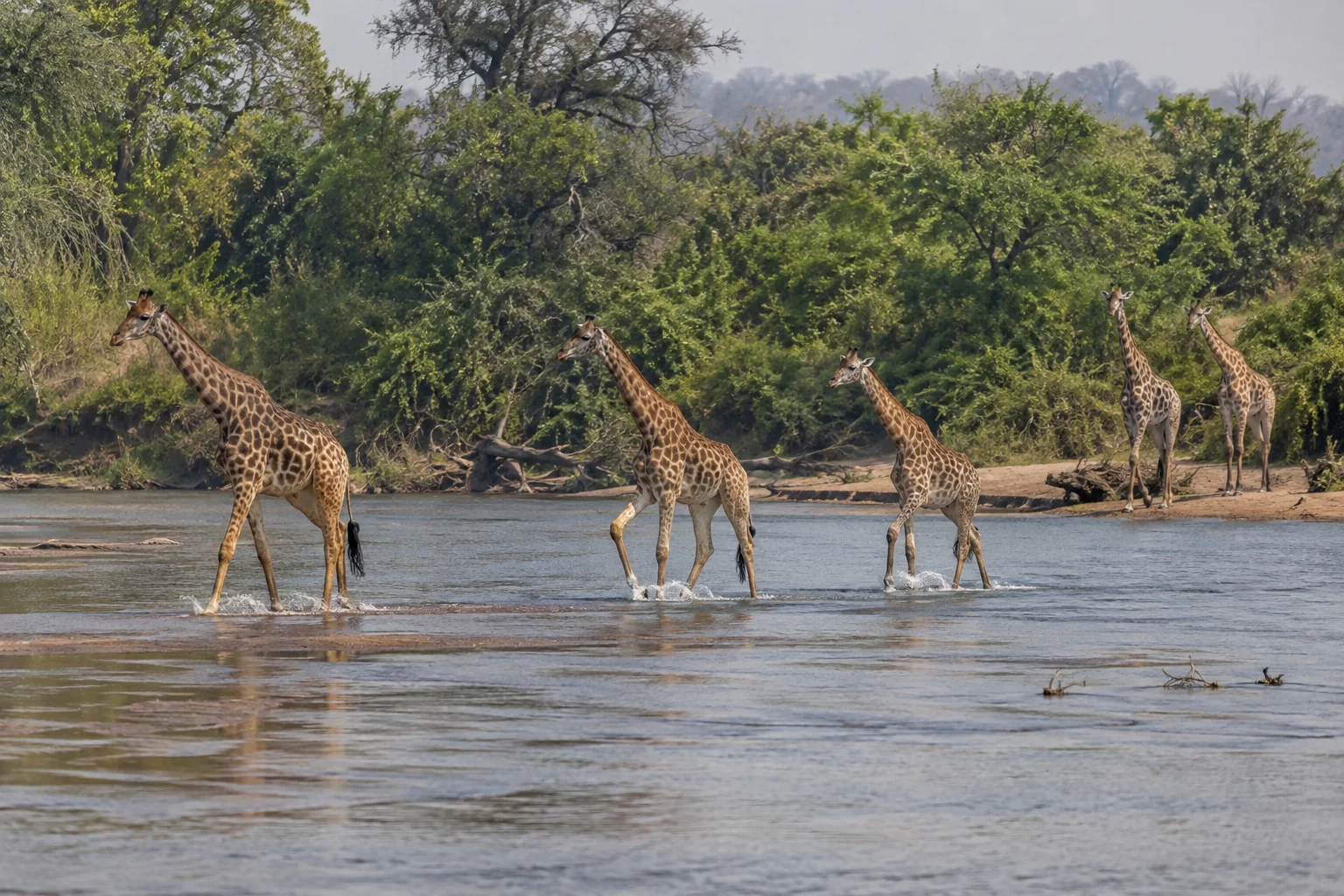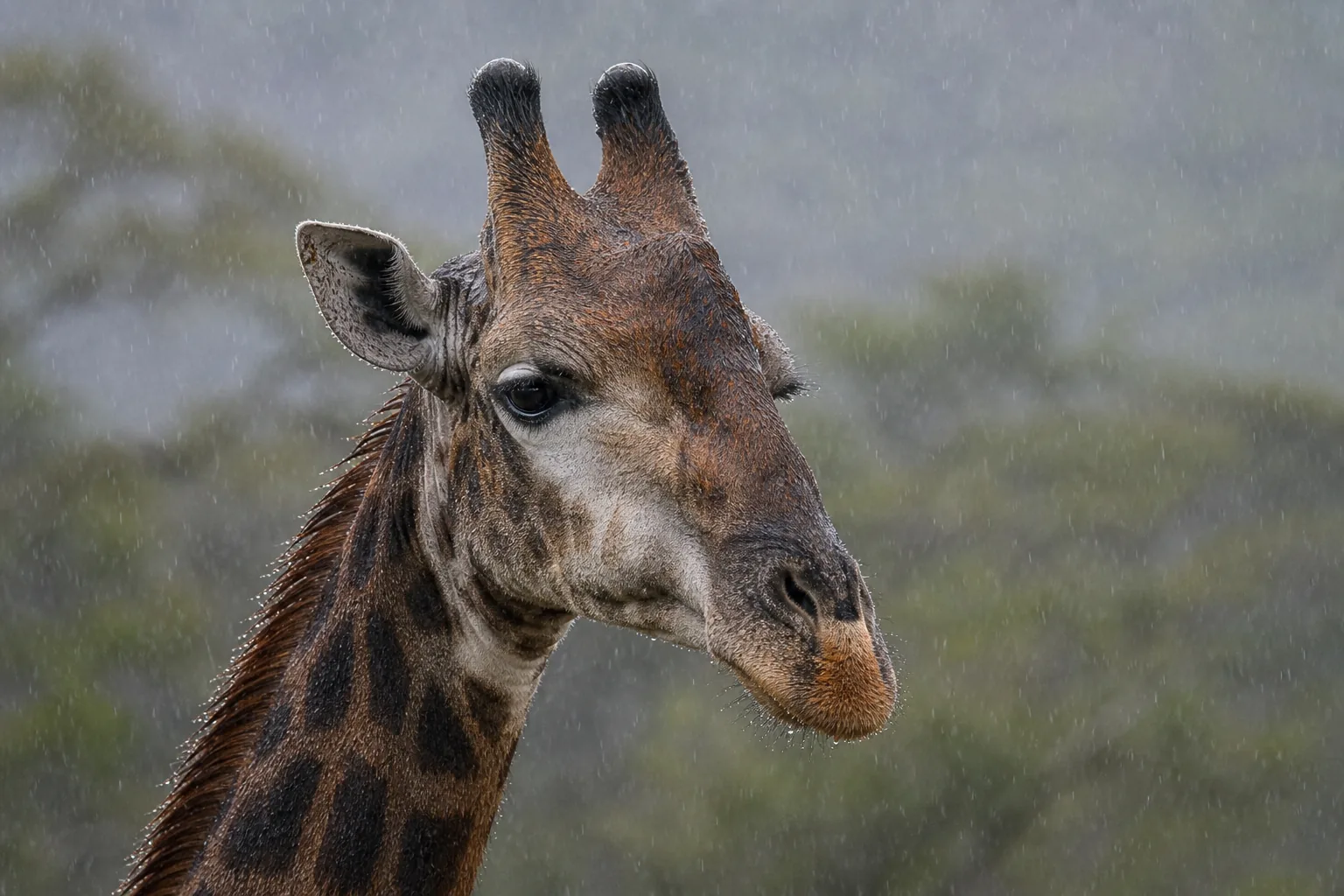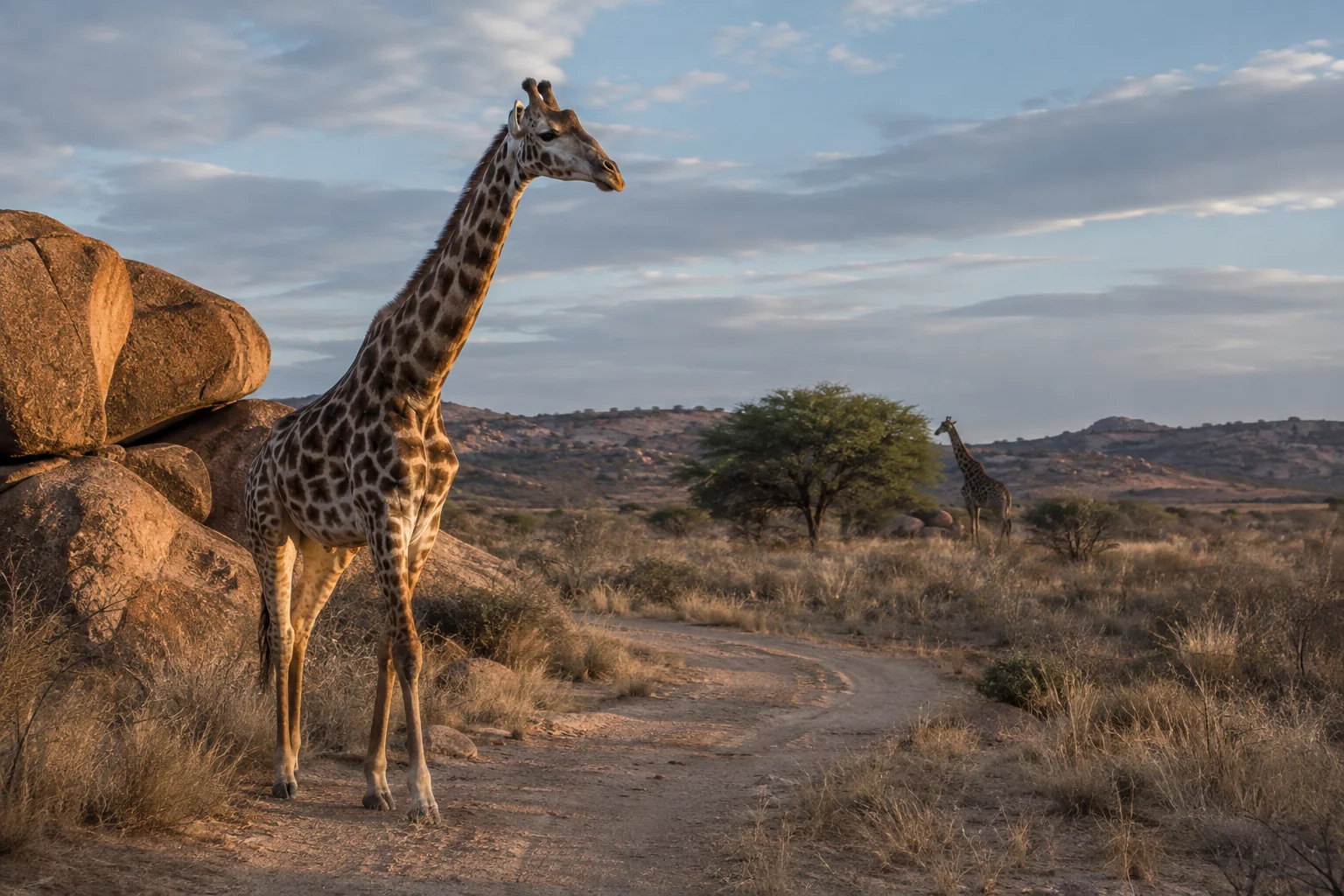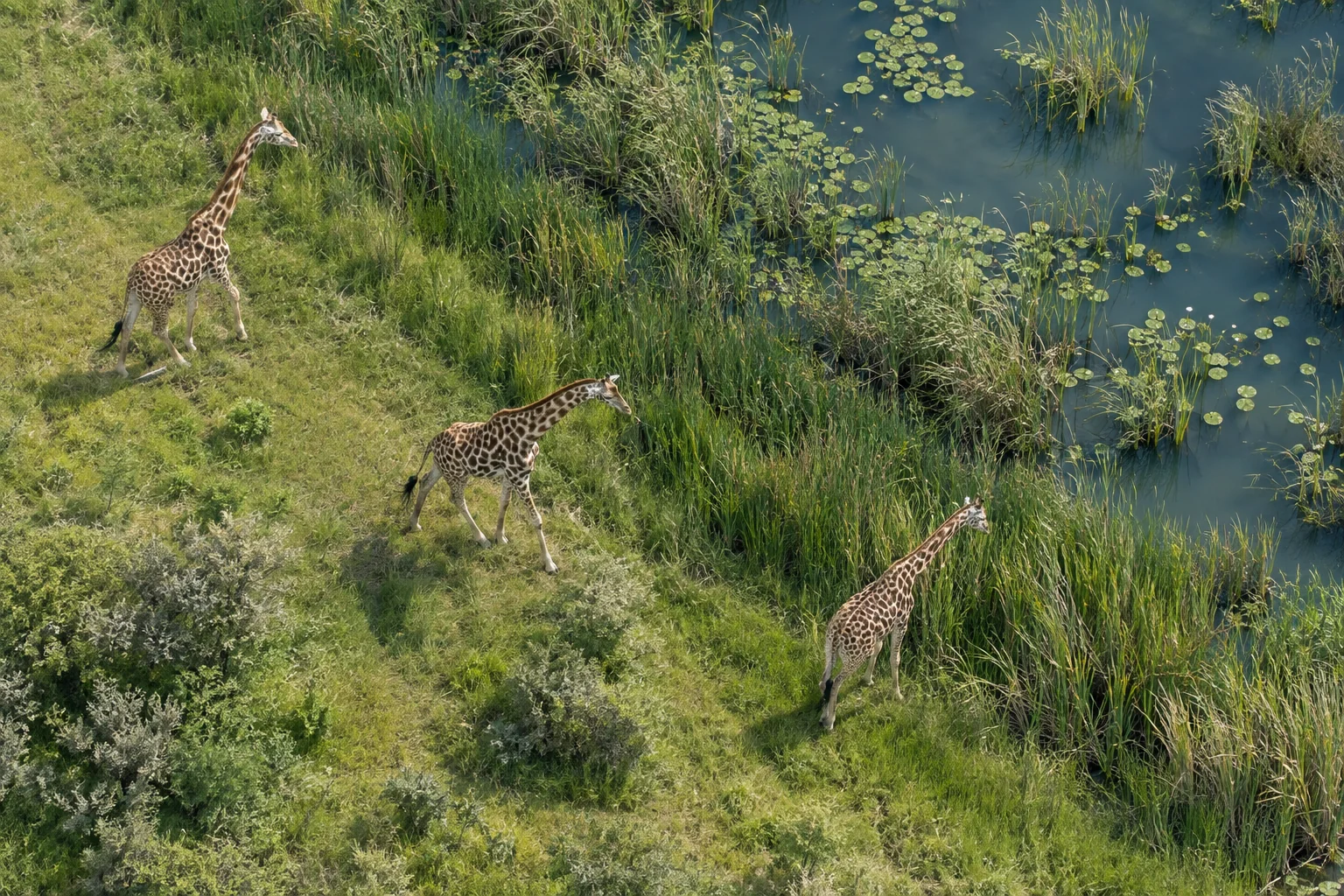
Forty-five giraffes living together and forty-five giraffes divided among separated groups do not face exactly the same future. The total is identical, but opportunities to meet, breed and occupy suitable habitat may differ. In a very small population, those differences can determine what a recovery effort needs to understand.
Mathias D’haen, Julian Fennessy, Jared A. Stabach and Karolína Brandlová investigated that problem in the Garamba complex of the Democratic Republic of the Congo. Their 2019 study combined an individual photographic record with GPS tracking to examine the remaining Kordofan giraffes as animals using a landscape, rather than only as a number in a census.
Recognising the individuals behind the total
Earlier aerial surveys documented a severe historical decline in Garamba’s giraffes. However, changing survey methods complicated comparisons among counts. The new work added a different kind of record: photographs that could distinguish animals by their coat patterns.
Field observations ran from September 2016 to August 2017 and were supplemented with existing photographs. The team recorded 608 individual observations in 175 groups. By matching identities, they established that these sightings represented 49 different giraffes.
Four young animals had not been seen in the final months, and their fate was uncertain. The researchers excluded them from the end-of-study estimate, reporting 45 giraffes in August 2017. The distinction matters. Missing animals were not confirmed deaths, and 49 identified over the study was not the final estimate.
Among the 45, adults predominated. There were 26 identified females and 14 males among the adults and subadults, with five juveniles whose sexes were not assigned. Eight births were recorded during the study, although three of those young animals were among the individuals subsequently missing.
These details connect the count to recovery. Births show reproduction, while the age structure and survival of young determine whether births add lasting members to the population. A female-biased population also has a different reproductive composition from the same total dominated by males.
Separate groups inside one protected landscape
The photographic and tracking records showed giraffes concentrated in a few parts of the Garamba complex. Most were in two larger groupings. Two much smaller areas each contained only three recorded females.
That observation raised a practical question. Could males reach those females often enough for breeding, or were the small groups becoming reproductively separated? The answer could not be read from the overall population total.
The study documented some journeys between areas. Several tracked giraffes made relatively rapid movements into another occupied area, spent a short time there, and returned. Such visits demonstrate that at least some animals were capable of linking areas that otherwise appeared separate.
Other connections were not observed. Here the evidence has to remain narrower than the most alarming interpretation. Surveys were irregular, only a few giraffes carried functioning devices, and animals could disappear from observation for substantial periods. An unrecorded journey is still possible.
The paper discusses isolation and its possible genetic consequences, but it did not test genetic exchange. A map of observations cannot establish whether two groups have stopped breeding with one another. It can identify where that question is especially consequential.
Six tracking records, two different maps of space
Eight giraffes were fitted with GPS head harnesses early in 2016. Device performance and lifespan varied, and six animals supplied the fuller records used for the main home-range comparison.
The researchers calculated areas in two ways. One described where recorded positions were concentrated. The other modelled movement through time, accounting for the fact that neighbouring tracking fixes belong to a connected journey and may be separated by irregular recording intervals.
The difference was substantial. Across the six animals, the average estimated area was about 269 square kilometres with the conventional kernel method and about 934 square kilometres with the movement-based method.
Those figures do not mean the giraffes suddenly began using three times as much land. They are different estimates from the same tracking records, built with different assumptions. One animal with unusual movements produced particularly divergent results. That is why the authors emphasised the value of considering how a range was estimated before comparing it with published ranges elsewhere.
It also explains why six animals cannot establish a firm sex difference. Four of the fuller tracking records were males and two were females. The reported comparisons did not find a statistically supported difference between them.
Plenty of vegetation is not automatically plentiful food
Garamba is relatively humid for giraffe country. The researchers initially expected its giraffes to need smaller ranges than giraffes in much drier environments, where feeding resources can be sparse.
Their estimates were relatively large compared with many previous studies. The authors suggested that usable browse might still be patchy, even in a visibly vegetated landscape. The distribution of preferred food plants could matter more than greenness alone.
That is an explanation to test, not a measured dietary finding from this study. The project did not systematically compare plant availability with feeding choices across the animals’ ranges.
A later pan-African analysis developed a broader comparison between giraffe space use, vegetation productivity and human influence. It found smaller ranges associated with greater productivity and larger ranges where resources varied more. Garamba contributed to the wider tracking context, so the studies should not be treated as independent replications with identical methods. Together they show why local food measurements and comparable range estimators are necessary before treating a large range as evidence of poor habitat.
Our Kordofan giraffe guide places this local study within the wider, fragmented distribution of the subspecies.
Recovery includes the possibility of meeting
The team worked with African Parks Network and the Institut Congolais pour la Conservation de la Nature, whose management and field access made this individual-based picture possible. Its useful contribution was to reveal that a small population’s distribution could create different needs within the same landscape.
Continued photographic monitoring could establish whether the small female groups receive occasional visitors, whether their members reproduce, and whether young survive to join later age classes. Repeated identities would help distinguish a temporary absence from persistent separation.
Combining those histories with broader habitat observations could also test whether movements follow particular food resources. This would require sustained coverage; a handful of visits during one season could miss the periods when animals have the strongest reason to travel.
The paper raises management intervention, including translocation, as a possible response to isolation. It does not demonstrate that any particular move would improve persistence. Understanding existing contact comes first, because an apparently separated group may already be linked by occasional journeys.
Garamba’s giraffes illustrate why counting and movement research belong together. A population total tells us how many animals were accounted for. Following individuals begins to reveal whether those animals still function as a connected population.
Sources
Mathias D’haen, Julian Fennessy, Jared A. Stabach and Karolína Brandlová (2019). Population structure and spatial ecology of Kordofan giraffe in Garamba National Park, Democratic Republic of Congo. Ecology and Evolution 9, 11395–11405. DOI · Lawful full paper.
Michael Butler Brown and colleagues (2023). Ranging behaviours across ecological and anthropogenic disturbance gradients: a pan-African perspective of giraffe (Giraffa spp.) space use. Proceedings of the Royal Society B 290, 20230912. Full paper.