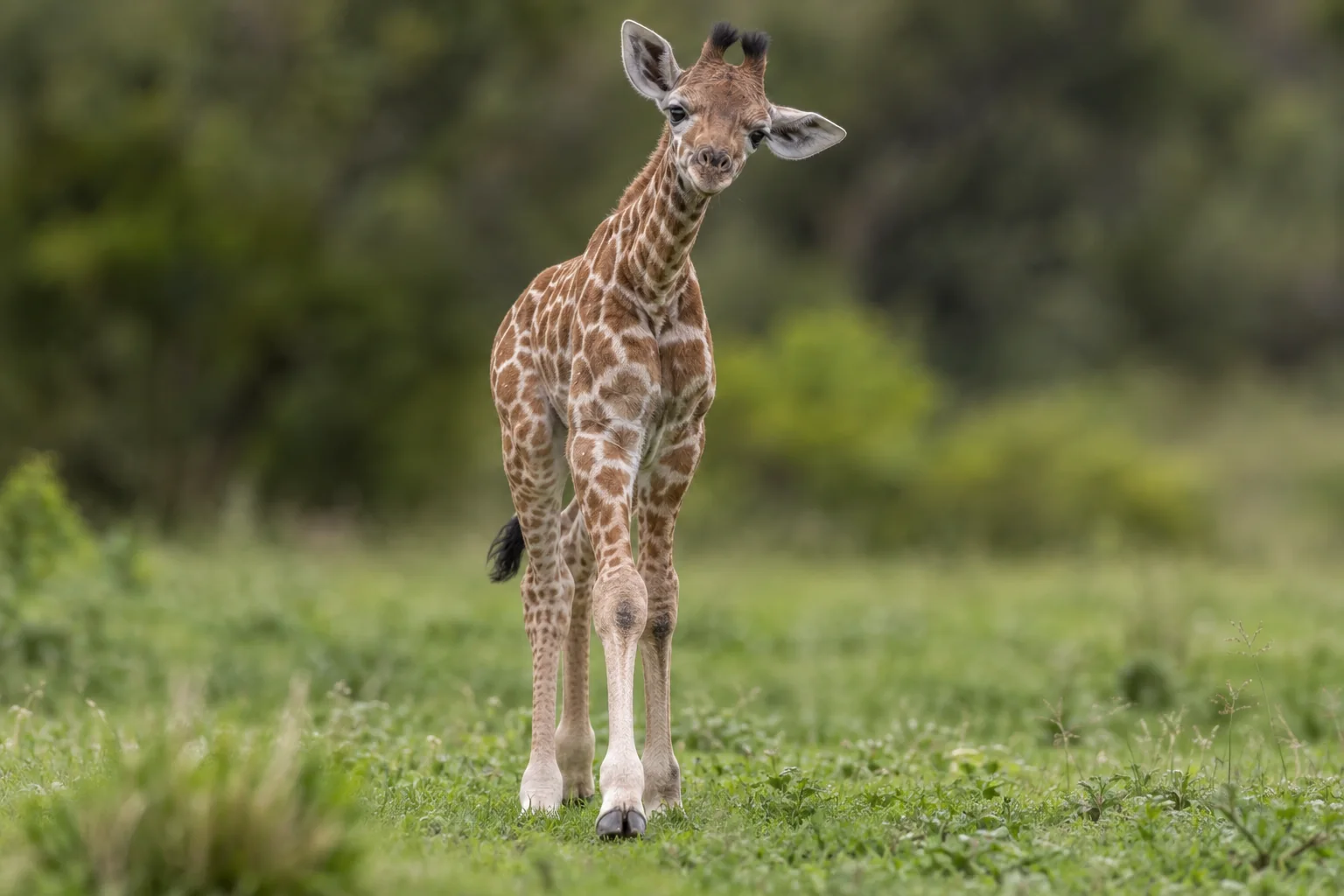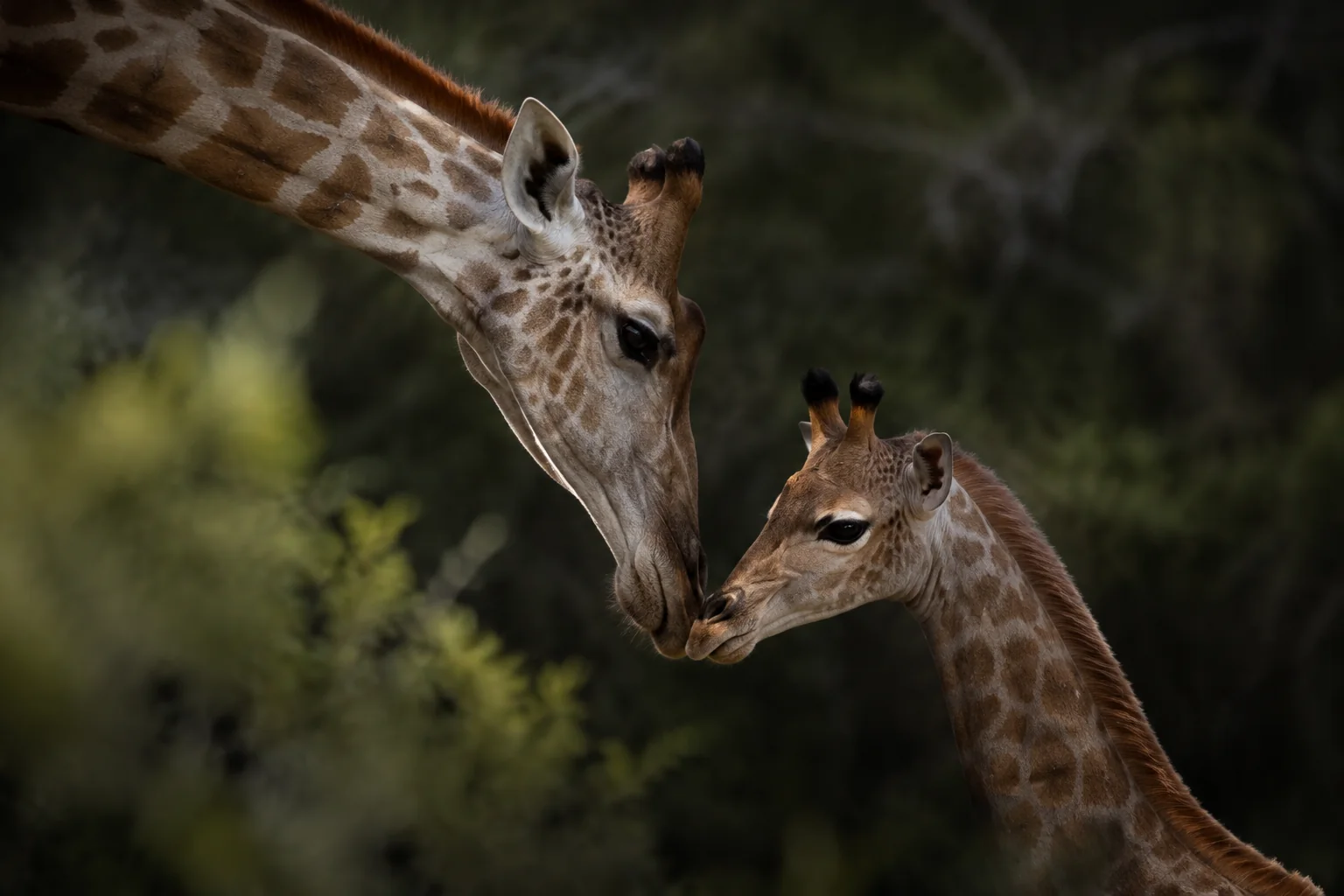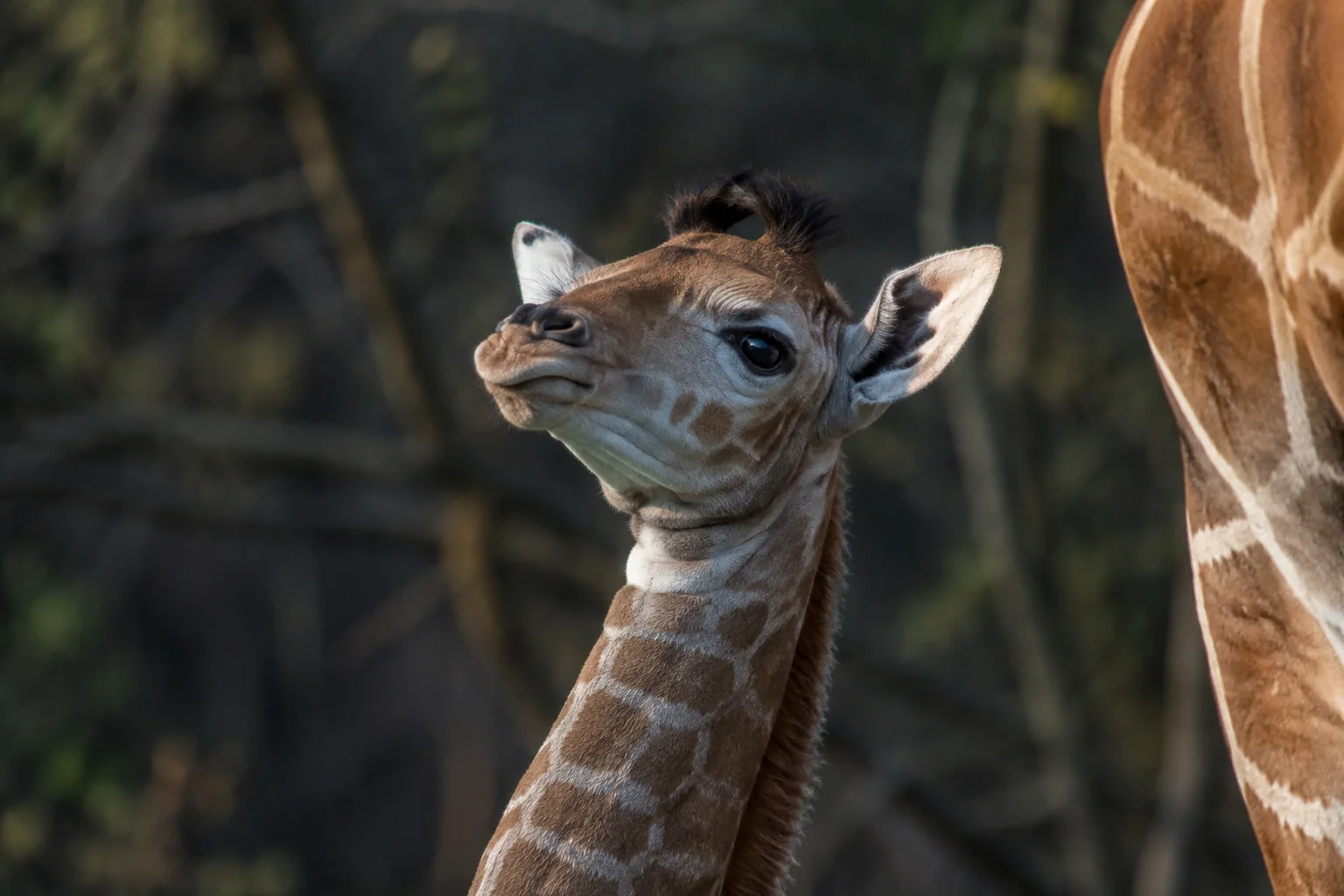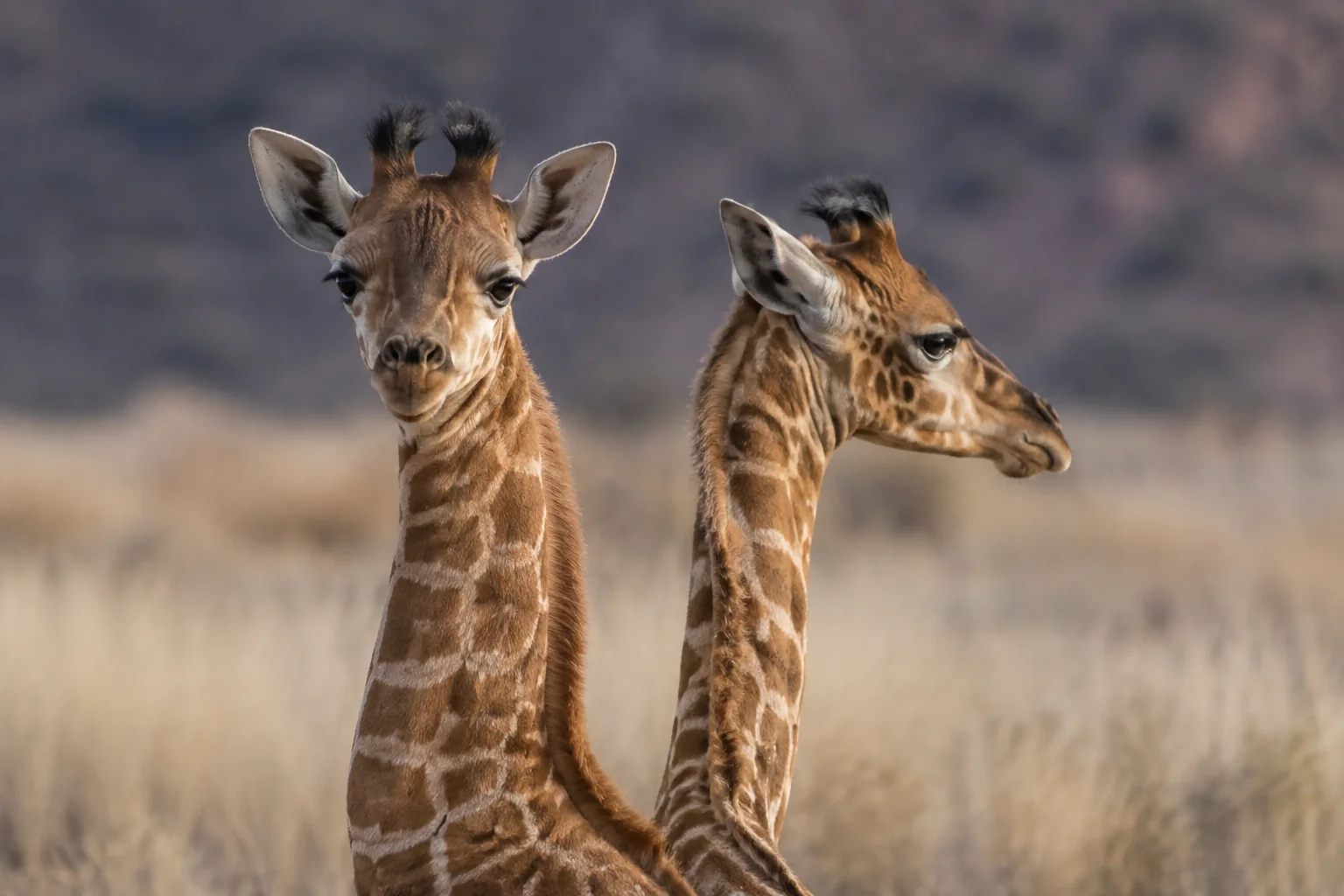
A landscape with livestock, homes and tourism developments can still contain important giraffe nursery habitat. On Kenya’s Siria Plateau, researchers repeatedly found young giraffes outside the neighbouring Mara Triangle reserve. Some females first photographed as calves were later photographed there as adults. The observations made community land part of the conservation story, rather than treating it only as the space around a protected area.
C. Dustin Becker and colleagues compared surveys from two plateau sites with samples from the Mara Triangle below. Their 2024 study found a higher proportion of young giraffes on the plateau and evidence that females returned to or remained within particular areas over years. These findings support attention to the places where giraffes give birth and raise calves, including land outside conventional reserve boundaries.
The explanation is less settled than the pattern. The authors emphasized differences in lion abundance, but the sites also differed in vegetation, human activity and survey methods. Their data do not isolate a single cause of calf success, and the study’s survival estimate should not be mistaken for the probability that a newborn survives its first year.
From a conspicuous nursery to a comparison
The project began with observations of many young giraffes at Oloirien Group Ranch, on the plateau, while surveys in the adjacent Mara Triangle found no newborns during the same initial sampling period. The researchers later incorporated observations from Oloisukut Conservancy, another plateau site.
The three areas were not interchangeable versions of the same habitat. The plateau sites contained woody savanna used by livestock, while the Mara Triangle sample came from a more open landscape. Lion abundance also differed, according to the records and local information used by the authors. These contrasts motivated the hypothesis that lower predation pressure could help make the group-ranch area useful for nurseries.
Between 2014 and 2022, the researchers combined ground counts with photographs used to identify individual giraffes. A coat-pattern record can show whether an animal has been seen before, whether a calf later reappears as an adult, and whether an individual is recorded in more than one study area. A count without identities cannot answer those questions reliably.
Survey timing and effort varied substantially. The group-ranch study initially used short annual surveys and later added monthly work. Oloisukut was sampled in 2019 and 2020, whereas the Mara Triangle comparison used surveys in 2014 and 2021. Some surveys were conducted on foot and others from vehicles. The resulting evidence spans nine calendar years, but it is not a balanced nine-year experiment with identical observation at all three sites.
That unevenness matters when interpreting differences in age composition. A young calf may be hard to detect, age is estimated from appearance, and a brief visit may not capture the same mixture of animals as repeated visits throughout a year.
More calves, with two different denominators
The researchers separated newborns under three months old from older calves under one year. They then calculated both calves per adult female and calves as a proportion of all giraffes observed.
These measures answer different questions. Ten calves among twenty adult females gives fifty calves per hundred adult females. It does not mean that half of all giraffes are calves, because males, older young animals and the calves themselves also belong in the population total. Neither ratio is automatically a birth rate or survival probability.
At Oloirien, the mean newborn-to-adult-female ratio was about eighteen per hundred. At Oloisukut it was about three per hundred. No newborns were recorded in the two Mara Triangle sampling years. That last observation describes the surveys; it does not establish that giraffes never gave birth there or that every newborn there died.
For all calves under one year, the combined plateau comparison averaged about sixty-two per hundred adult females, compared with about twelve in the Mara Triangle sample. The newborn difference between the two plateau sites was not mirrored by a statistically clear difference in their total under-one-year ratios. Older calves were relatively prominent at Oloisukut.
That distinction complicates an explanation based on one environmental difference alone. A site can have few newborns in its sample yet contain many older calves. Birth timing, survival, movement, nursery-site choice and observation can all contribute to the age composition that researchers encounter.
The study’s conservation value does not depend on pretending those processes were all resolved. It establishes that the sampled plateau habitat was repeatedly used by young giraffes and adult females, and that its age composition differed substantially from the sampled reserve below.
What the survival model actually estimated
Photographs from Oloirien supplied encounter histories for a separate survival analysis. For each identified giraffe, the researchers recorded whether it was photographed in each year. They used a model that estimates survival and the probability of seeing an animal again as different quantities.
That separation is essential. Failure to photograph a giraffe can occur because it died, moved away, or simply was not encountered. Three years lacked the necessary photographic sampling, so the model explicitly set recapture probability to zero for those years rather than treating the missing photographs as evidence of mortality.
The best-supported models estimated constant annual survival at about 0.86, while allowing recapture probability to vary. They did not support separate survival estimates for each age and sex class. The reported number therefore applies to the pooled model of identified giraffes, not specifically to newborn calves.
It is also an estimate of apparent survival. Permanent departure from the study population can be difficult to distinguish from death in this type of live-encounter analysis. A number such as 0.86 should not be converted into an exact percentage killed by predators, or compared directly with a newborn-only estimate from another study as though the denominators were identical.
These qualifications are consequential because the paper’s title and discussion emphasize calf survival. The strongest direct calf evidence comes from their presence, relative abundance and some individual histories. The formal survival model gives complementary information about the photographed population as a whole.
Photographs showed continuity as well as movement
Among thirteen females identified as calves in the earlier surveys at Oloirien, seven were later photographed as adults. That is concrete evidence that some young females survived, matured and continued using the area. It is not a complete cohort-survival estimate: the fate of a female not seen again was not necessarily known.
The study also recorded relatively little overlap between female identification catalogues at the two plateau sites. Only one female was recorded at both, compared with several shared male identities. This is consistent with limited recorded exchange among female groups, but the photography cannot establish complete isolation or separate genetic lineages.
The sites were sampled at different times and intensities, and an animal could move without being photographed in both places. Genetic exchange would require additional evidence about reproduction and ancestry. The useful finding is narrower: individual records revealed persistent use of particular areas and a small number of observed connections between them.
For conservation planning, that makes individual identity more informative than treating every female in the broader landscape as freely interchangeable. If many females repeatedly use a particular nursery area, habitat loss there may matter even while giraffes remain present elsewhere nearby. The study did not experimentally remove such habitat, so the magnitude of that consequence remains unmeasured.
Why the lion explanation remains a hypothesis
Lower lion abundance is a plausible reason for more newborns to be present at Oloirien. The authors interpreted their findings in that light and discussed how proximity to people, livestock practices and vegetation might also influence calf safety and resources.
But there was no predator-removal experiment and no standardized comparison that changed lion abundance while holding other conditions constant. Lion information came from sources with different coverage, including local reports. The giraffe surveys also did not assign causes of death to each missing calf.
Consequently, the evidence supports protecting habitat used by successful nurseries more directly than it supports a prescription to reduce predators. Conserving giraffes and conserving lions are both ecological goals; this study does not calculate the consequences of manipulating either population.
Age ratios themselves deserve similar restraint. A separate long-term comparison in Arusha National Park found a higher calf-to-adult-female ratio in its later survey even though the estimated giraffe population was much smaller than four decades earlier. That does not explain the Siria Plateau pattern, but it demonstrates why a favourable-looking ratio cannot replace a population history. Our Arusha commentary examines that contrast.
The nursery habitat is the conservation finding
The plateau study documented giraffes using land with substantial human activity, rather than a landscape insulated from it. The authors described increasing subdivision, fencing and development during the study period and argued for arrangements that maintain habitat while benefiting the people who live with wildlife. Those proposals were not tested interventions, and the study does not establish the present condition of every property.
Its evidence nevertheless gives those discussions a concrete biological basis. Community land contained repeated records of adult females, newborns and older calves. Some photographed calves reached adulthood there. The areas contributed a different demographic picture from the nearby reserve sample.
The next useful evidence would follow known calves more consistently across connected areas, distinguish departure from death, and measure vegetation and predator exposure alongside standardized survey effort. That would help determine why the nursery areas work and whether their contribution persists as land use changes.
For now, the study shifts attention to a place that a reserve-only view could overlook. Giraffe conservation depends partly on the habitat where the next generation is raised, and that habitat can lie within a working, inhabited landscape whose future requires the participation of its owners and residents.
Sources
C. Dustin Becker, Petra Elisabeth Campbell, Leslie Ann Kadane, Reuben Kilutori Nagut, David Limpaso Kinata and Henry C. Stevens (2024). “Giraffe productivity and calf survival in a savannah area outside an east African protected area: Implications for conservation.” African Journal of Ecology 62, e13265. Primary paper. Author-uploaded full text.
Derek E. Lee, George G. Lohay, James Madeli, Douglas R. Cavener and Monica L. Bond (2023). “Masai giraffe population change over 40 years in Arusha National Park.” African Journal of Ecology 61, 345–353. Primary paper.