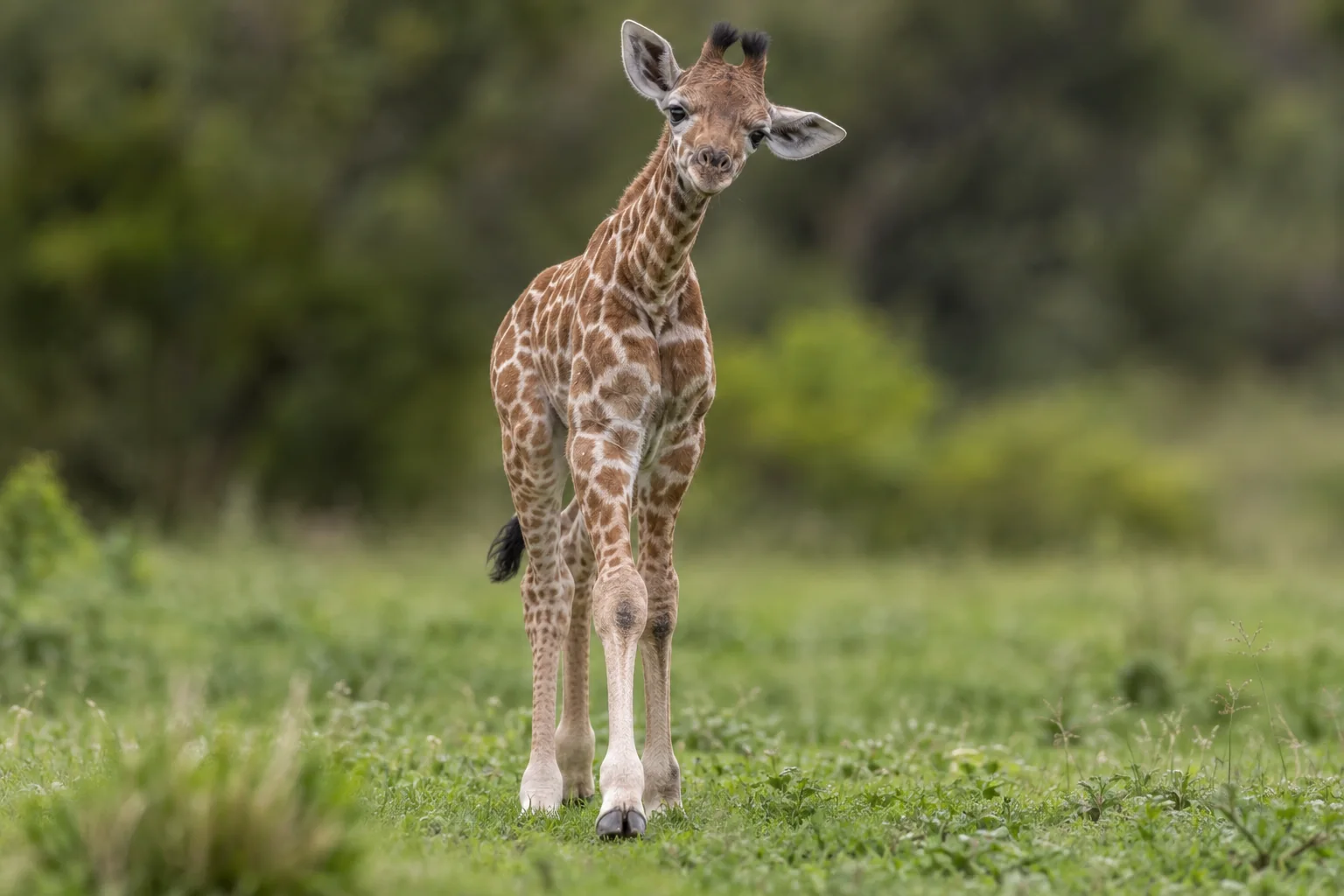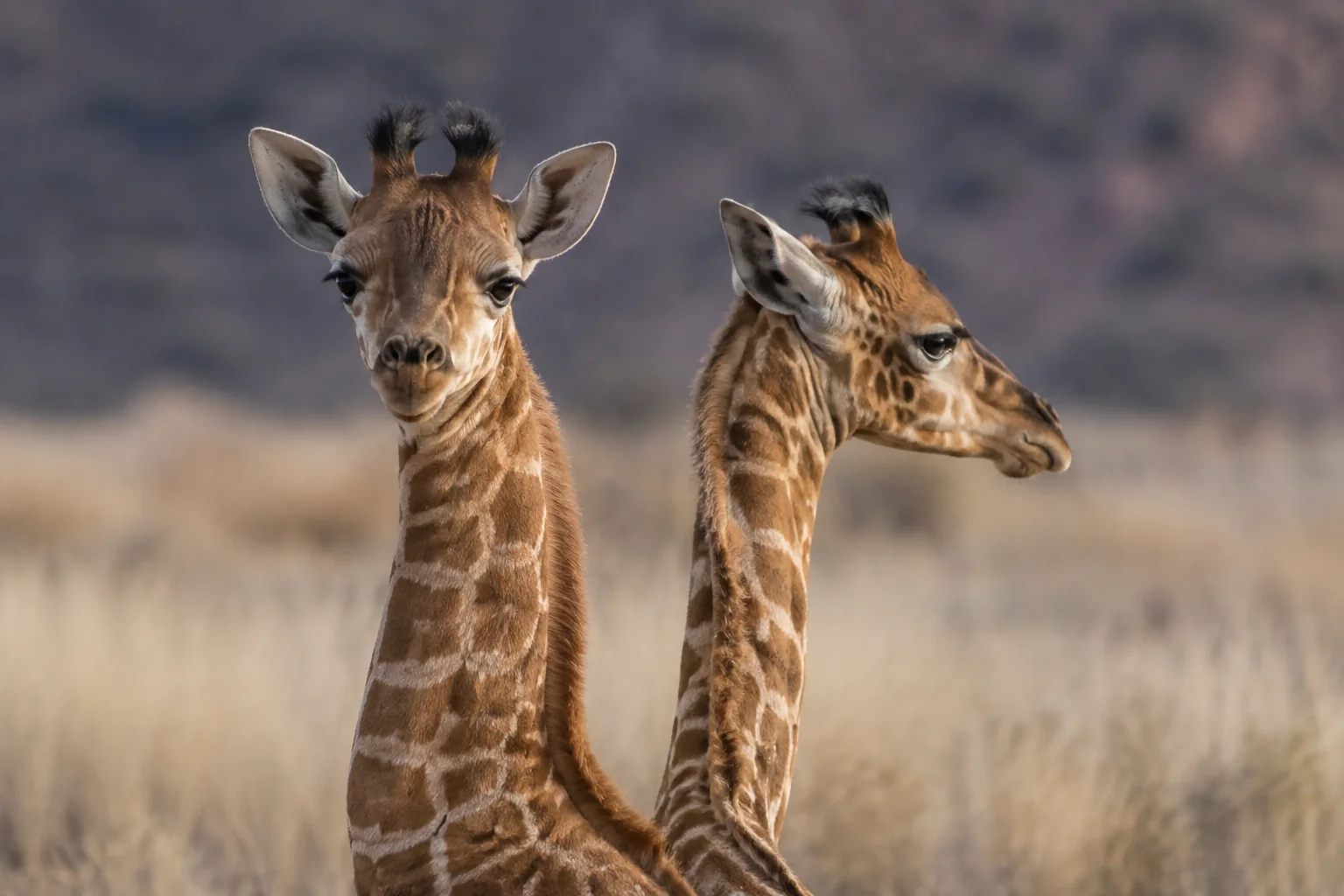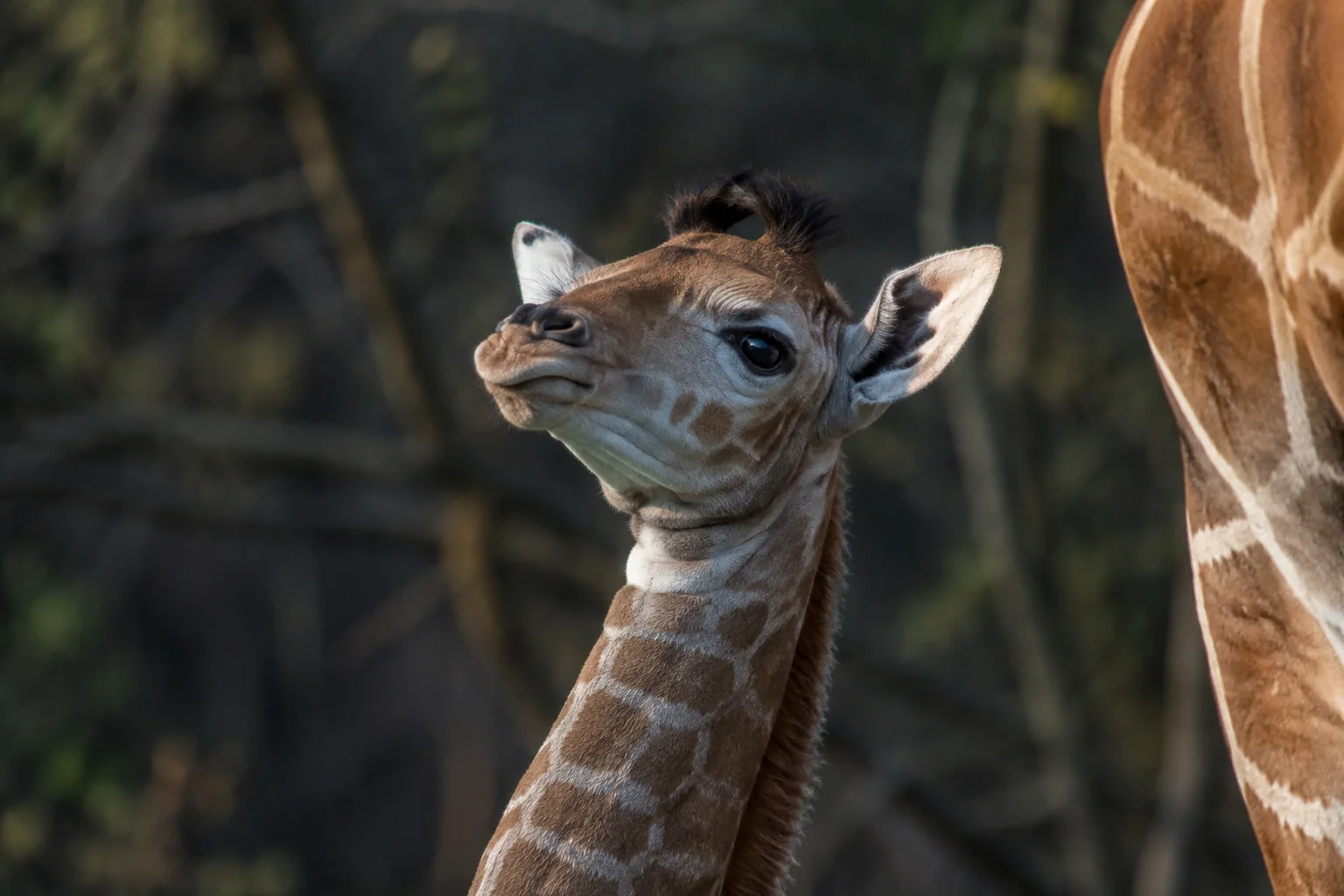
Giraffes eat leaves, while wildebeest and zebra chiefly graze. Their different diets might suggest that the fortunes of one have little to do with the others. A lion changes that relationship. Animals that do not compete strongly for food can still affect each other because a predator chooses among them.
Derek E. Lee, Bernard M. Kissui, Yustina A. Kiwango and Monica L. Bond explored this connection in Tanzania’s Tarangire ecosystem. Their 2016 study asked whether the seasonal presence of migratory grazers changed the survival prospects of giraffe calves. The answer pointed towards an indirect benefit from the migrating herds.
A predator connects different prey
When abundant prey arrive, two opposing outcomes are possible for another prey species. Predators may concentrate on the arriving animals and leave the alternative prey under less pressure. Over a longer period, the added food might instead support more predators and increase risks for other animals.
The first outcome is often called apparent mutualism. Here, it means that a prey species benefits indirectly from another through their shared predator. It does not imply deliberate cooperation, or establish that both species benefit.
Tarangire offers a natural way to investigate this. Large numbers of wildebeest and zebra move between seasonal ranges. Giraffe calves remain within the broader ecosystem as that shifting supply of prey changes the local balance between lions and potential meals.
Counting lions alone would miss part of the question. A given number of lions surrounded by abundant preferred prey may exert different pressure on calves than the same number when those herds are absent.
Following calves through a changing season
The team used photographs to identify giraffes in five connected areas with different management and wildlife conditions. Eighteen surveys between January 2012 and October 2014 covered the short rains, long rains and dry season repeatedly.
The analysis included 449 individually identified calves and observations associated with 860 adult females. Repeated sightings allowed the researchers to estimate the probability that a calf remained alive between one survey and the next, while accounting for imperfect detection.
This is more informative than comparing the number of calves seen on two visits. Some living animals will be missed, and animals may move temporarily outside the area where they can be observed. The statistical model tried to separate those processes from survival.
The researchers also assembled indices of local lion density and wildebeest-plus-zebra density. The lion information came from monitoring programmes with differing coverage, while grazers were recorded during road surveys. The authors explicitly treated these as measures of relative variation across places and seasons, rather than equally precise absolute censuses.
They compared three possible explanations for calf outcomes: lion density, primary-prey density, and their ratio. The ratio represented predation pressure, asking how many lions there were relative to the local supply of their main prey.
What happened after a calf was first seen?
The model using the predator-to-prey ratio best described variation in calf survival. Higher relative pressure was associated with lower survival over the four months after first observation.
Neither lion density nor grazer density alone provided the same explanatory support. This is the central result: the relationship between predator and prey was more informative than simply knowing that an area had many lions or many wildebeest.
For calf survival, the statistical support was modest rather than overwhelming. The constant model, which did not assign differences to any of those predictors, remained close to the leading model. The authors assessed the slope using an 85% confidence interval. The result is therefore best understood as evidence consistent with a shared-predator mechanism, with uncertainty about its strength.
In their Discussion, the researchers described calf survival as approximately 11% lower when migratory herds were locally absent than when they were present. That is a comparison reported from this study; it is not an eleven-percentage-point estimate of annual mortality for every giraffe population.
Newborns that disappear before the first photograph
The youngest calves pose a harder problem. If a calf dies before a survey, it never enters the photographic record. Researchers cannot estimate its survival simply by waiting to see it again.
Lee and colleagues approached this indirectly through the number of young calves detected relative to adult females, adjusting for detection and background calf mortality. They called the resulting measure apparent reproduction and used its variation as an indication of neonatal survival.
This measure had a stronger relationship with the predator-to-prey ratio than survival after first detection. The authors reported apparent reproduction about 37% lower in periods when migratory herds were absent.
However, interpreting that difference as newborn loss requires an assumption: the underlying rate at which females give birth does not vary enough to explain the pattern. The study did not directly measure pregnancy and calving rates at each site. It therefore provides indirect evidence about the earliest period of life, not an observed tally of calves killed by lions.
Separating those two parts of the investigation makes the result more useful. The team followed survival in calves they could identify, and inferred part of the earlier story from the distribution of young calves among females.
What the lions might be doing
The findings fit two closely related possibilities. Lions might switch towards more abundant wildebeest and zebra, or the sheer availability of prey might reduce the likelihood of any one giraffe calf being attacked.
The study did not observe enough hunts to distinguish those mechanisms or establish the cause of every calf death. Habitat and other differences among sites could also contribute. Its contribution is the repeated association between calf outcomes and the combined predator-prey measure.
The three-year window matters as well. An immediate reduction in pressure on calves can coexist with a different effect over decades if prey abundance eventually alters predator numbers. The authors specifically call for longer observation to understand that balance.
A separate demographic analysis of the same Tarangire research programme found that variation in adult female survival made the largest contribution to differences in population growth. The datasets overlapped, so these are complementary analyses, not independent confirmation. Together they show how adult protection and calf ecology can matter at different points in a giraffe’s life.
A migration can matter beyond the animals making it
The conservation implication concerns the wider food web. If migratory grazers decline or cannot reach a seasonal range, the consequences may extend to giraffes through changes in what lions encounter.
That is different from assuming that reducing predators would restore giraffes. The study did not test predator removal, and its proposed mechanism depends on the balance among species. Maintaining functioning migration routes and viable prey populations could preserve relationships that an isolated giraffe-only assessment would miss.
A stronger test would combine calf histories with detailed records of lion hunting and seasonal prey availability. Researchers could examine whether lions actually increase their use of giraffe calves when migratory herds leave. Sustained observation would be necessary because a few visible hunts are unlikely to represent the full diet.
Longer monitoring could also test whether the short-term benefit persists as grazer and lion populations change. The useful question is how the relationship behaves through time, not simply whether the association appears in another season.
The Tarangire result expands the picture of a calf’s surroundings. Its prospects can depend on animals feeding elsewhere in the landscape, because those animals change the choices available to a shared predator.
Sources
Derek E. Lee, Bernard M. Kissui, Yustina A. Kiwango and Monica L. Bond (2016). Migratory herds of wildebeests and zebras indirectly affect calf survival of giraffes. Ecology and Evolution 6, 8402–8411. DOI · Lawful full paper.
Derek E. Lee, Monica L. Bond, Bernard M. Kissui, Yustina A. Kiwango and Douglas T. Bolger (2016). Spatial variation in giraffe demography: a test of 2 paradigms. Journal of Mammalogy 97, 1015–1025. Full paper.