A giraffe walking away with a lion's claw marks has survived something a wildlife video may never show. That survivor matters as much as the spectacular kill: understanding what eats giraffes requires evidence of escapes, deaths and animals that simply disappear from view. Confusing those outcomes can turn a real danger into a false statistic—and point conservation attention at the wrong problem.
What animals eat giraffes?
Lions are the main natural predators of giraffes, including adults. The clearest research concerns lions, but a complete answer also needs to distinguish an adult from a young calf and a successful hunt from a carnivore feeding on an animal that was already dead.
The University of Michigan's Animal Diversity Web account also records leopards and hyenas as predators and identifies young, sick or elderly animals as more vulnerable targets. This is an older general account, not a current ranking of their contribution to giraffe deaths. Its historical taxonomy and conservation labels should not be used as today's status assessment.
Lists that put five predators side by side can imply equal importance where none has been established. Ask a more precise question: which predator, attacking which age class, in which population? Our giraffe facts guide provides the wider biological context; here the focus is on how predation is documented.
Can lions kill an adult giraffe?
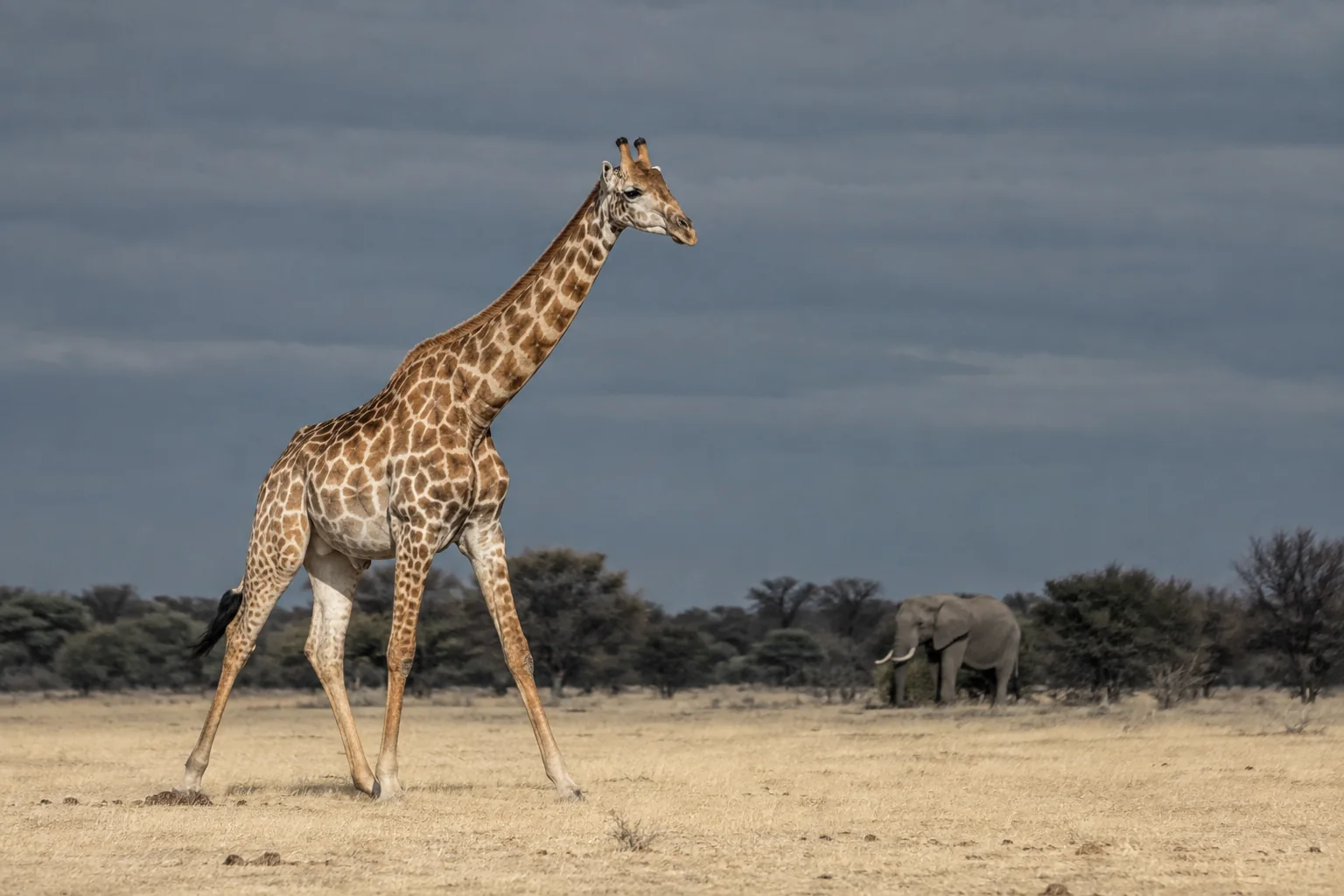
Yes. An adult's height and defensive ability do not make it invulnerable. But neither does the existence of adult kills tell us that giraffes are an easy meal or that every lion hunts them in the same way.
A useful perspective comes from Radloff and du Toit's 2004 analysis of more than 4,000 recorded kills over 13 years at Mala Mala in South Africa. The study compared several large carnivores and distinguished prey by species, sex and age. Larger predators could exploit a wider range of prey sizes; they did not simply specialise on the largest animals. These were local kill records, not a continent-wide attack-success survey.
A kill is not the same as a hunting attempt
Imagine watching ten encounters but seeing only the ending of one. You could accurately describe that ending without knowing the overall success rate. The same distinction matters when watching a short clip: the animal's condition, earlier pursuit and unsuccessful encounters elsewhere may all be missing.
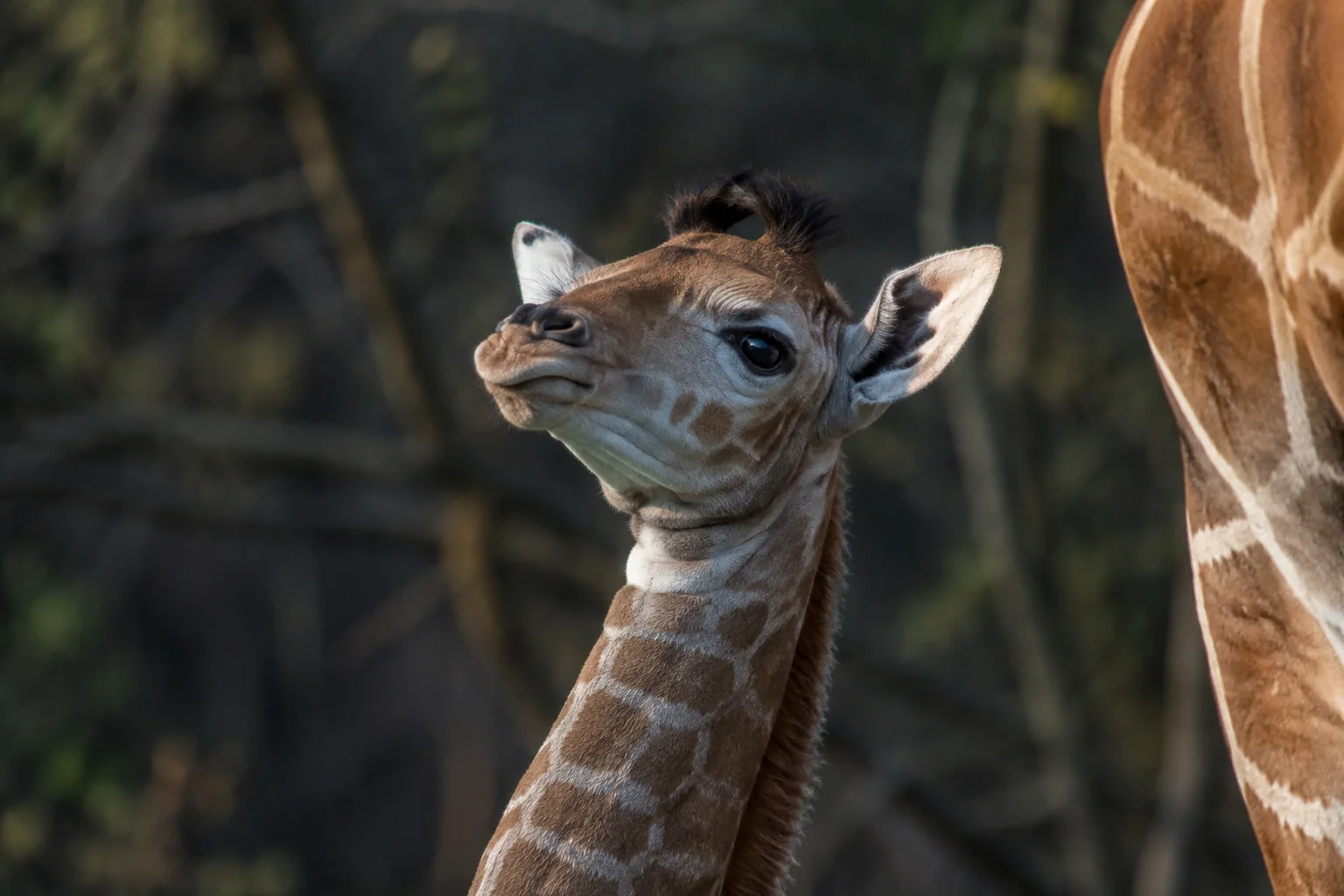
The size difference between calves and adults helps explain why age must be recorded, rather than treating every giraffe in a predator's diet as an equivalent target.
What claw marks reveal—and what they miss
Strauss and Packer's Serengeti study, published in 2013, examined 702 individually known Masai giraffes in three areas. Thirteen percent of animals older than one year had visible lion claw marks. Marks were most often on the hindquarters and flanks, providing evidence about survived attacks.
No marks were found on calves aged up to one year. The authors interpreted this as suggesting that calves rarely survived attacks. It is not evidence that every calf was attacked, nor a measurement of the percentage of all calves killed by lions.
The survivor problem
A scar survey starts with animals alive to be examined. It cannot directly count victims that died. Conversely, a giraffe without visible scars is not necessarily an animal that never encountered a lion. These are limits of the observation, not reasons to discard it.
Individual recognition is important here: repeated sightings of the same animal should not become repeated individuals in a dataset. The separate coat-pattern science guide explains how photographic identification is used and why image quality matters.
How do giraffes defend themselves?
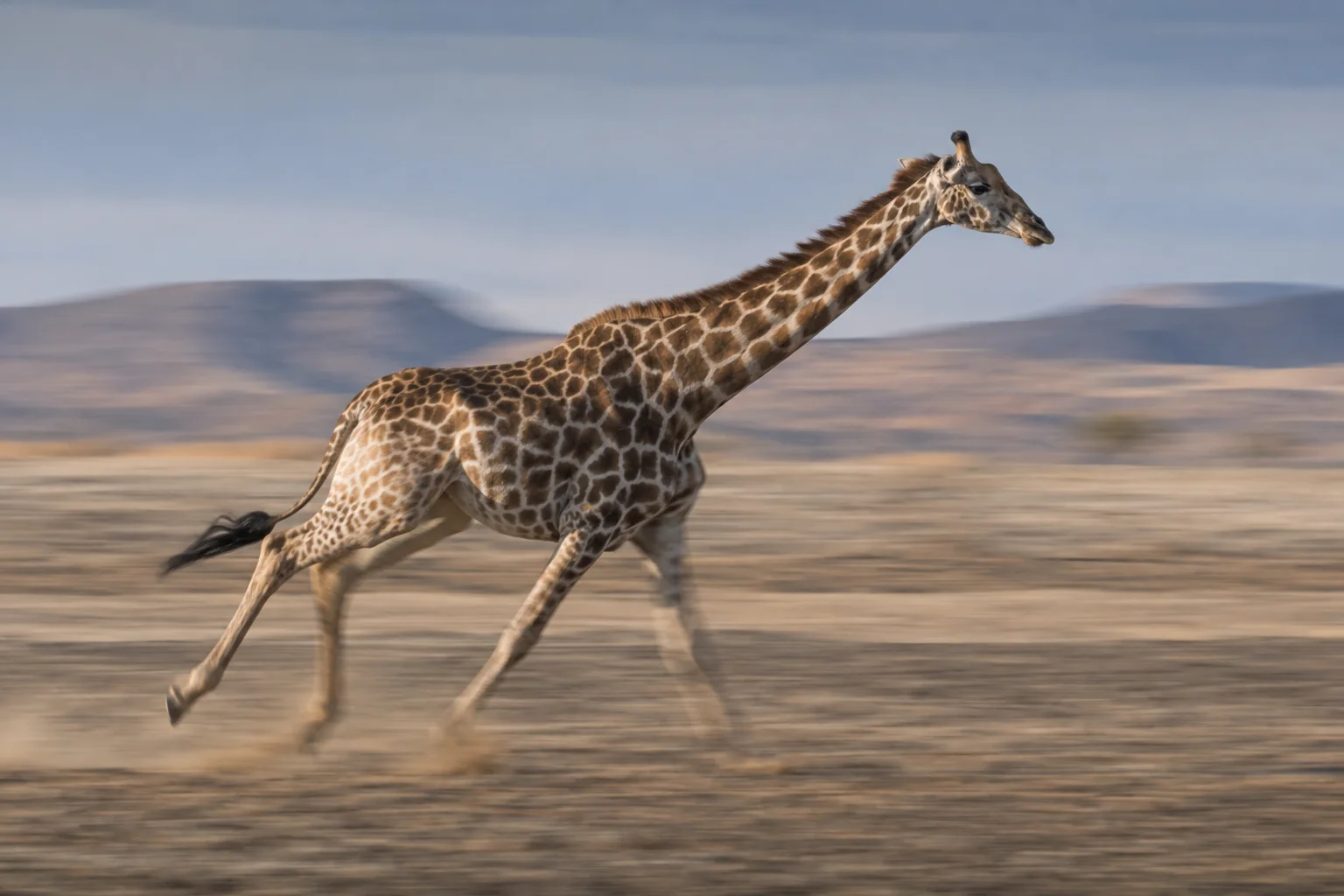
Giraffes can flee and kick. San Diego Zoo Wildlife Alliance describes their speed and powerful defensive kicks, as well as their exposed posture when bending down to drink. A large animal's ability to defend itself helps explain why a predator encounter need not end in death. Our running-speed guide separates measured strides from commonly repeated maximum speeds; neither number predicts the outcome of a chase.
That does not justify a precise kick-force figure or a promise that one blow will kill a lion. The studies discussed here do not measure a standard impact force, and the outcome of an encounter depends on more than the existence of a powerful hoof.
What about crocodiles at waterholes?
The zoo account identifies crocodiles as a possible danger when giraffes lower themselves to water. That is a reason to recognise risk at the water's edge, not to describe attacks as routine at every drinking site. A frequency claim would need a defined set of observations, locations and opportunities for attack.
Giraffes also obtain moisture through their food. The diet and drinking guide explains why that does not mean they never need surface water or that every drinking decision is controlled by predators.
Why calf survival changes with the wider food web
A giraffe calf's prospects can be connected to animals that do not eat giraffes at all. Lee and colleagues' 2016 Tarangire study investigated the relationship among lions, migratory wildebeests and zebras, and resident giraffe calves.
Higher local lion pressure relative to the abundance of the lions' primary prey was associated with lower neonatal and calf survival measures. The results supported the explanation that abundant migratory prey can reduce pressure on giraffe calves. The research team's accompanying account describes the conservation implications for migration routes.
This was evidence about a food-web relationship, not a direct observation of the cause of every missing calf's death. It also does not establish that every giraffe population responds identically. The important insight is that counting lions alone may miss a relevant change in the prey available to them.
Why there is no universal first-year predation percentage
A survival estimate needs an age interval, place and method. Survival from first detection is not automatically survival from birth. Death from any cause is not death from a predator. Permanent departure from a survey area can also complicate estimates of apparent survival.
Before repeating a percentage, look for those definitions. If the source reports only how many young animals were seen again, it cannot by itself identify every predator responsible—or establish that predation explains every loss.
Do giraffes form bigger groups to avoid lions?
Not as a universal rule. Muller, Cuthill and Harris's 2018 study used 591 group records from two adjacent enclosed Kenyan populations, one with lions and one without. Juvenile abundance helped explain the difference in average group sizes. Once juveniles were excluded, females with calves were in smaller groups than females without them; the analysis did not find evidence that predation risk explained grouping behaviour there.
That result is scoped to the comparison. It does not prove that predators never influence giraffe behaviour elsewhere. It does challenge a simple story in which every group is a defensive formation and every adult near a calf is an assigned guard.
The broader social-behaviour guide distinguishes temporary groups, repeated associations and relationships. A head count in one photograph cannot reveal all three.
How scientists separate fear, feeding and mortality
A predator can affect behaviour without making a kill. In a 2022 playback experiment in Greater Kruger, researchers compared ungulate responses to carnivore sounds and bird controls. The ungulates as a group showed stronger flight responses to lions than to wild dogs or cheetahs. Giraffes appeared in the video dataset, but the community-level result should not be rewritten as a precise giraffe-only risk ranking.
The experiment measured responses to sound—not successful attacks. Likewise, evidence of a carnivore eating giraffe tissue does not automatically establish how it obtained the meal.
| Evidence | What it can help establish | What it cannot establish alone |
|---|---|---|
| An observed attack with its outcome | What happened in that encounter | A typical success rate across a population |
| Claw marks on identified living animals | Evidence of survived attacks | The share of giraffes killed |
| Repeated photographic encounters | Survival estimates under the model's assumptions | The cause of every disappearance |
| Feeding remains or a carcass visit | Consumption or use of a carcass | Whether that visitor made the kill |
| A controlled sound playback | A behavioural response to a predator cue | Actual predation mortality |
This comparison is an original reading aid, not a new analysis of animal records. More source leads are organised in the predation and calf-survival evidence area.
Do natural predators threaten giraffe populations?
Natural predation is an ecological process, but “natural” does not mean incapable of affecting a population. Equally, a filmed lion kill cannot establish that lions are driving a regional decline. That requires demographic evidence and attention to other pressures.
Bond and colleagues' 2025 Serengeti study identified 1,520 giraffes across four subpopulations. Adult survival differed among them, with lower survival associated with declining subpopulations. Its retrospective analysis reinforced adult survival's importance. Those findings contradict the idea that calf survival must always be the single dominant driver.
Population growth reflects survival, reproduction and movement. Apparent survival, used in that study, combines remaining alive with not permanently leaving the study population. It is not a predator-specific death rate.
Conservation questions therefore need more than a predator list: which demographic rate is changing, which pressures plausibly explain it, and what evidence supports a proposed response? For the distinction between local pressures and extinction-risk assessment, see whether giraffes are endangered. A general explainer cannot justify a local predator-removal decision.
What to remember
Lions can kill giraffes, including adults. Defences make the contest uncertain, not harmless. A scar, a carcass, a missing calf and a startled animal each answer a different question. The strongest explanation keeps those questions separate and follows evidence from a named place rather than turning a dramatic encounter into a universal statistic.
Frequently asked questions
What is a giraffe's main predator?
The lion is the main natural predator identified in giraffe research. Other carnivores can threaten vulnerable giraffes, but a list of possible predators is not a ranking of local mortality.
How dangerous is a giraffe's defensive kick?
A giraffe's defensive kick can be dangerous. That does not make a fatal result inevitable, and this guide does not assign an unverified force measurement or frequency to fatal kicks.
Do most baby giraffes get eaten?
There is no single defensible percentage for all populations. Calf-survival estimates differ in age window and location, and losses cannot automatically be attributed to predators.
Does a hyena beside a giraffe carcass prove it killed it?
No. Feeding and killing are different events. Establishing the cause of death needs additional evidence, such as an observed attack or a careful investigation of the carcass and surrounding signs.
Sources
Source-checked on 6 September 2026. Research and authority links appear beside the claims they support; the migration news link is an account supplied by the study's authors, not independent confirmation. Older general animal accounts are used only for scoped biological context, not current conservation status. The comparisons and explanation are The Last Giraffe's editorial synthesis, not original field research.