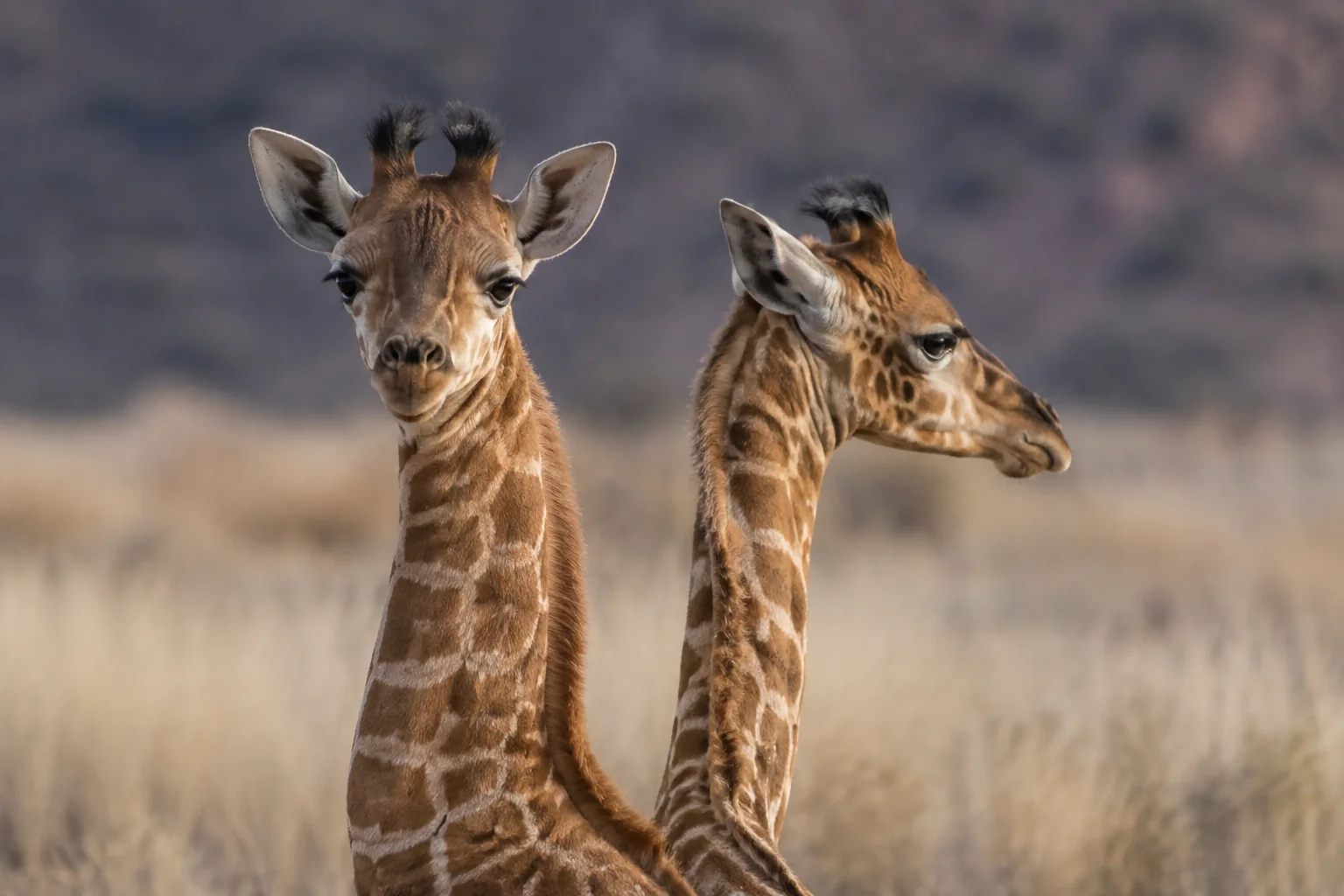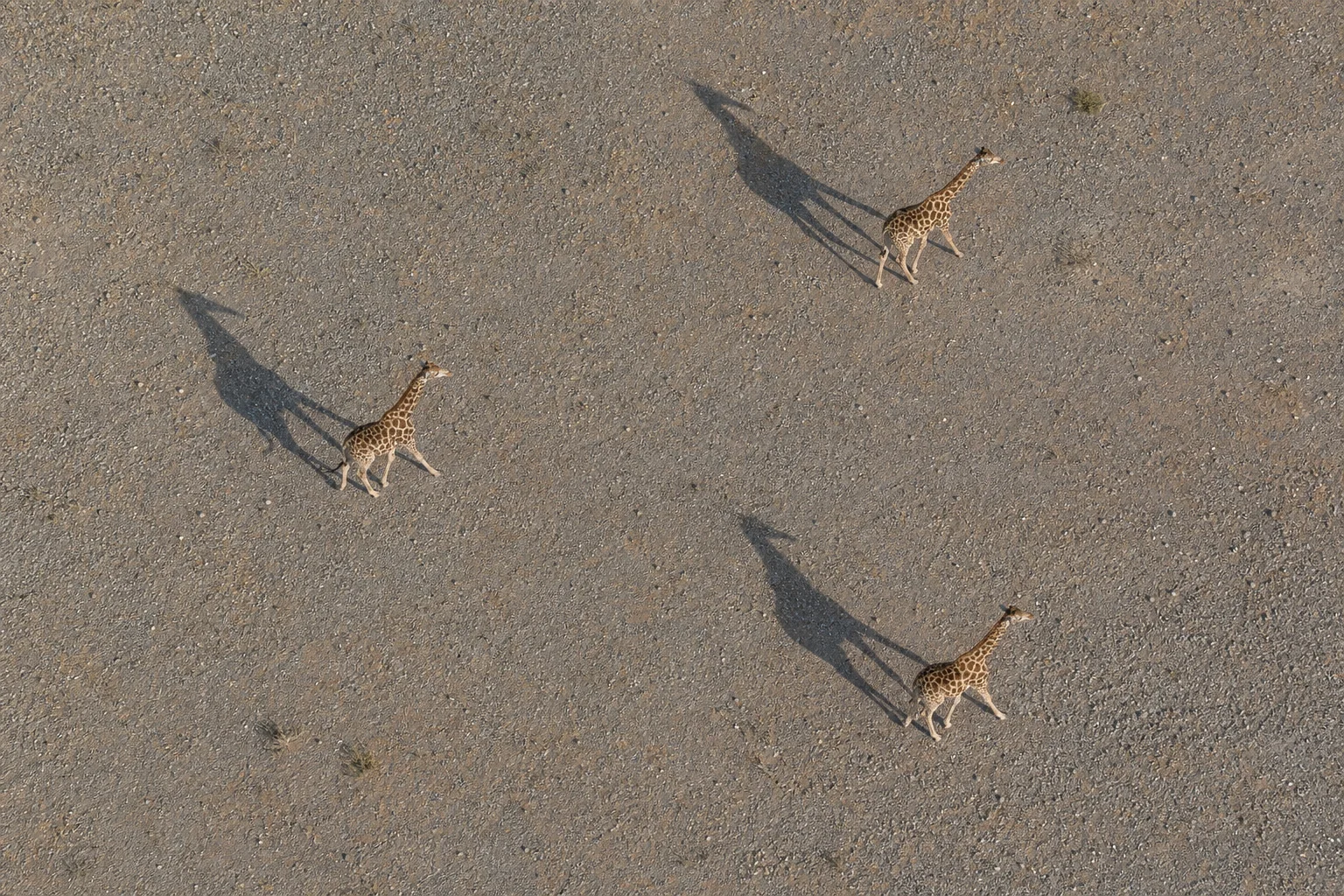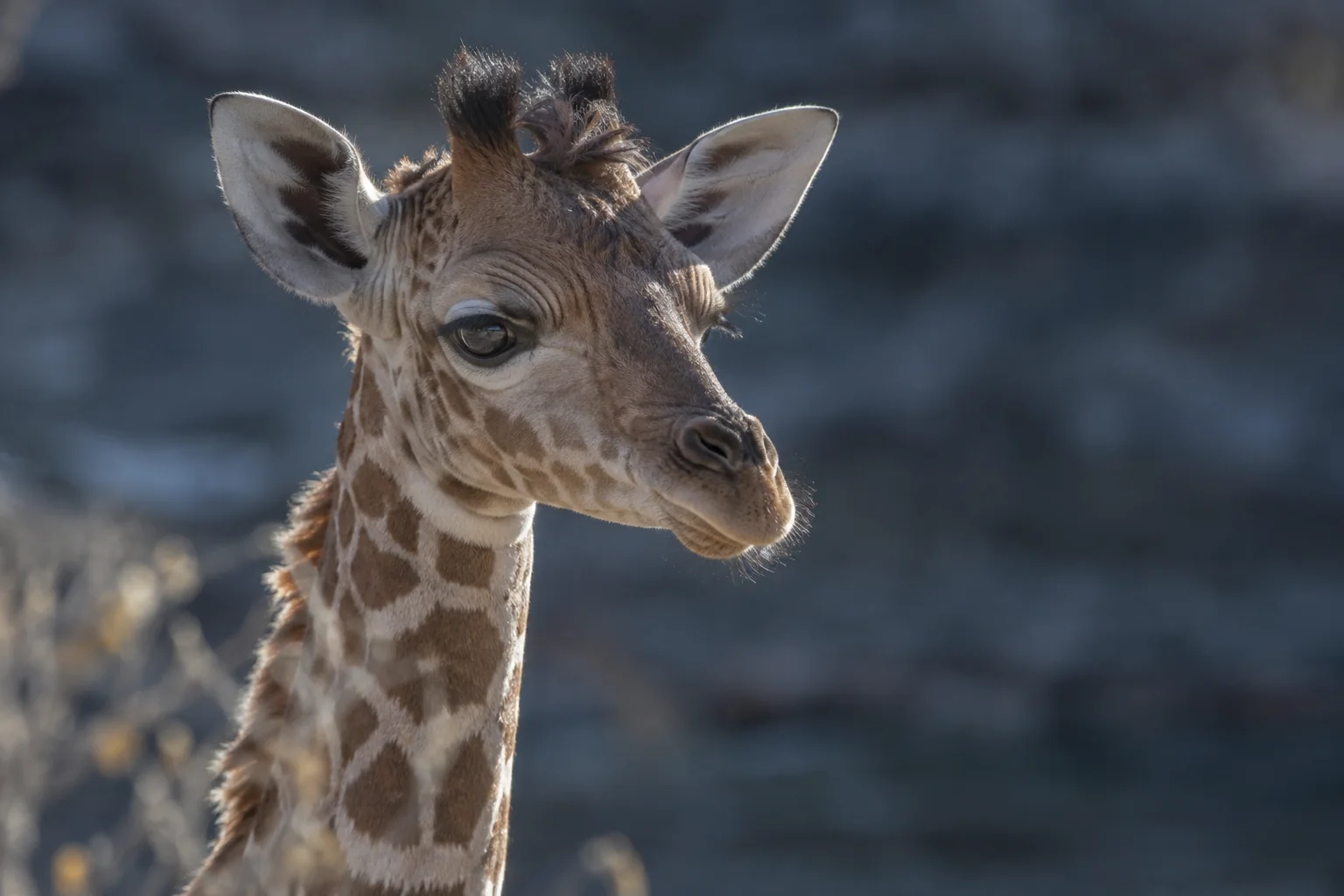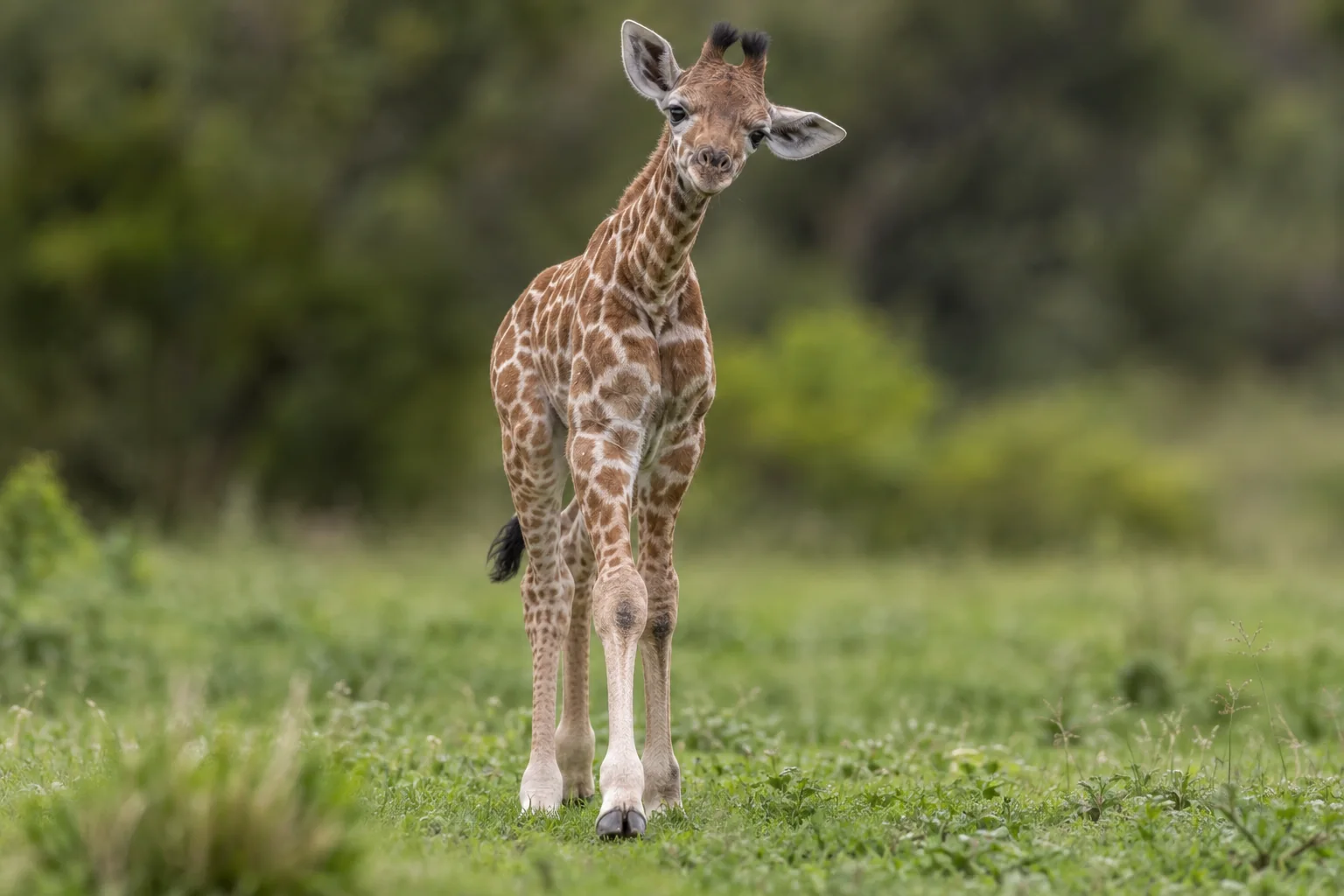
The larger giraffe population was not necessarily the more reassuring one.
During separate nine-month studies of two neighbouring protected areas in Kenya, researcher Zoe Muller identified 77 giraffes at Soysambu Conservancy and 89 at Lake Nakuru National Park. Yet juveniles made up about a third of the Soysambu catalogue and only 6% of the Lake Nakuru catalogue.
That imbalance was the central warning in Muller's 2018 paper on population structure and management. A population can contain many living adults while producing or retaining too few young animals to replace them. The study exposed a substantial difference in age structure, while leaving the cause of that difference unresolved.
Why a total leaves part of the population story untold
A head count treats every giraffe as one animal. Demographically, their roles differ.
Adults can contribute offspring now. Young animals represent some of the potential breeding population of the future. If few calves are born, or if few survive their early lives, an adult-heavy population may maintain a respectable total for a time before the consequences become obvious.
Age structure can therefore provide an early reason to investigate. It is not itself a complete population forecast. A temporary lull in births, recent movements or differences in detection can also alter the proportions seen.
Muller studied two fenced sites in Kenya's Great Rift Valley to ask how giraffe population structure differed under contrasting management conditions. Their proximity and broadly similar environment made the comparison informative. Their different histories and survey years prevented it from becoming a controlled experiment.
Learning every giraffe in each site
The research depended on identifying animals individually.
Muller surveyed Soysambu from May 2010 to January 2011, then Lake Nakuru from May 2011 to January 2012. Each study lasted nine continuous months. Regular vehicle searches covered the available study blocks, and giraffes were photographed for recognition from their coat patterns.
The catalogue used photographs of both sides of the body. Matching the two sides required seeing them during the same encounter, avoiding the risk of assigning opposite flanks to two different identities.
At both sites, the researcher stopped encountering previously unknown older animals after the initial catalogue-building period. Subsequent new identities were juveniles entering the records. Repeated searches produced roughly similar observation effort at the two sites, with individuals encountered about 16 times on average.
This repeated familiarity strengthened the age-structure comparison. The result did not come from briefly looking at one unusually adult-heavy group and assuming it represented the whole population.
The totals were nevertheless catalogues assembled across nine months. They could include animals born or dying during that period. They should not be described as simultaneous counts on a single survey date.
A much smaller juvenile share
The study classified juveniles as under one year old, subadults as one to less than four years old, and adults as at least four years old. Older large males were also distinguished within the adult population.
At Soysambu, the 77 identified giraffes included 26 juveniles and 22 subadults. At Lake Nakuru, the 89 identified animals included five juveniles and 14 subadults.
The remaining giraffes were adults: 29 at Soysambu and 70 at Lake Nakuru. Thus, the difference extended beyond the youngest category. Lake Nakuru's catalogue was much more heavily weighted towards adult animals.
The paper's age-distribution figure makes this visible. Its stacked bars include a separate category for large bulls, which must be combined with other adults when interpreting the total adult share. Those bulls are not an additional population outside the 77 and 89 animals.
Sex composition among animals old enough to be sexed was similar between sites. The most conspicuous contrast was the proportion of young animals, rather than a markedly different balance of males and females.
It was large enough to merit concern about recruitment: the process through which younger animals survive and enter later stages of the population.
Predation was a hypothesis, not an experimental result
The sites differed in several respects. Lake Nakuru contained a substantial lion population, whereas Soysambu did not contain resident lions during the study. They also differed in aspects of management and human activity.
Muller proposed that predation could help explain Lake Nakuru's shortage of juveniles. Calves are more vulnerable than adults, so a difference in predator pressure is a biologically plausible mechanism.
But the study did not follow every birth to determine survival or record the cause of every calf death. It compared the ages of animals encountered at two sites.
Those observations cannot distinguish cleanly between fewer births and higher mortality after birth. Nor can they isolate lion presence from every other difference between the places. The sites were studied in consecutive years, so annual environmental conditions could also matter.
Food availability, maternal condition and other sources of mortality could contribute to age structure. The study did not measure all of these alternatives closely enough to eliminate them.
The paper discussed management responses involving predators. Its evidence should not be interpreted as a predator-control trial or as a demonstration that removing lions would produce a specified improvement in giraffe recruitment.
The strongest supported statement is that two contrasting management settings contained substantially different age structures. The proposed cause requires more direct evidence.
A connected study follows survival itself
A 2016 study in Tanzania's Tarangire ecosystem approached calf survival through repeated photographic encounter histories. It examined how giraffe calf survival varied with lions and the seasonal presence of migrating wildebeest and zebra.
That analysis associated calf survival with the balance between predators and alternative prey. It supported the possibility that migratory grazers can indirectly influence pressure on giraffe calves.
It also demonstrates why predator abundance alone is incomplete. A lion population's effect on giraffe calves may depend on the availability of other prey, their movements and the surrounding ecological conditions.
The Tanzanian result does not prove the cause of the Kenyan age-structure difference. It supplies a complementary primary study with a different measurement: estimated survival over repeated encounters, rather than proportions in an age catalogue.
Together, the papers suggest what a follow-up at Lake Nakuru would need to resolve. Researchers would have to record births, repeatedly identify calves, estimate missed observations and investigate mortality alongside local conditions.
What a fenced comparison can and cannot show
Fences made the study populations relatively bounded, helping the researcher catalogue their members. They also placed the results in a particular management setting.
A fenced population may have limited scope for natural dispersal or for changes in the balance between herbivores and predators. Its age structure can reflect that local system rather than a general rule applying to giraffes throughout Africa.
The survey period was also short relative to a giraffe's life. An adult-heavy composition observed over nine months is a warning to examine a trajectory, not a direct estimate of how the population will change over the next decade.
Repeated age assessments could establish whether the juvenile shortage persisted. Monitoring known calves would show whether birth rates or early survival were responsible. Following those calves into adulthood would reveal whether the population was successfully replacing its breeders.
Those measurements would convert a cross-sectional concern into evidence about the process driving it.
Looking beyond the largest number
Muller's comparison makes a practical point without requiring its proposed explanation to be settled.
The Lake Nakuru catalogue contained more giraffes than the Soysambu catalogue. It also contained far fewer juveniles and a smaller subadult proportion. Reporting only the totals would have hidden the clearest demographic difference between them.
The next useful question was therefore not simply how many giraffes each site held. It was whether enough young animals were entering and surviving through the population to sustain that total.
Age structure supplied the warning. Continued individual monitoring would be needed to explain it.
Sources
Zoe Muller (2018). Population structure of giraffes is affected by management in the Great Rift Valley, Kenya. PLOS ONE, 13(1), e0189678.
Derek E. Lee, Bernard M. Kissui, Yustina A. Kiwango and Monica L. Bond (2016). Migratory herds of wildebeests and zebras indirectly affect calf survival of giraffes. Ecology and Evolution, 6, 8402–8411.