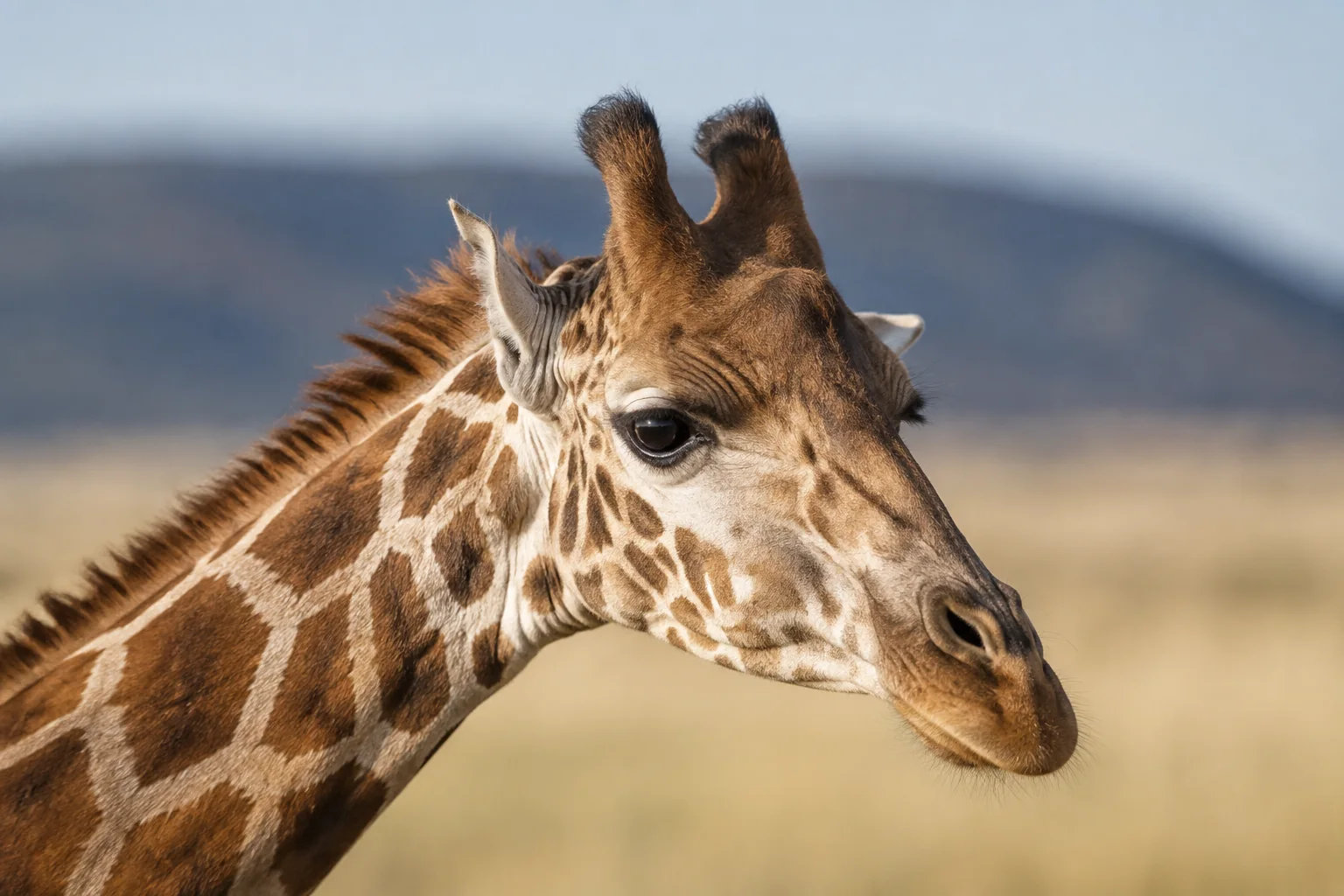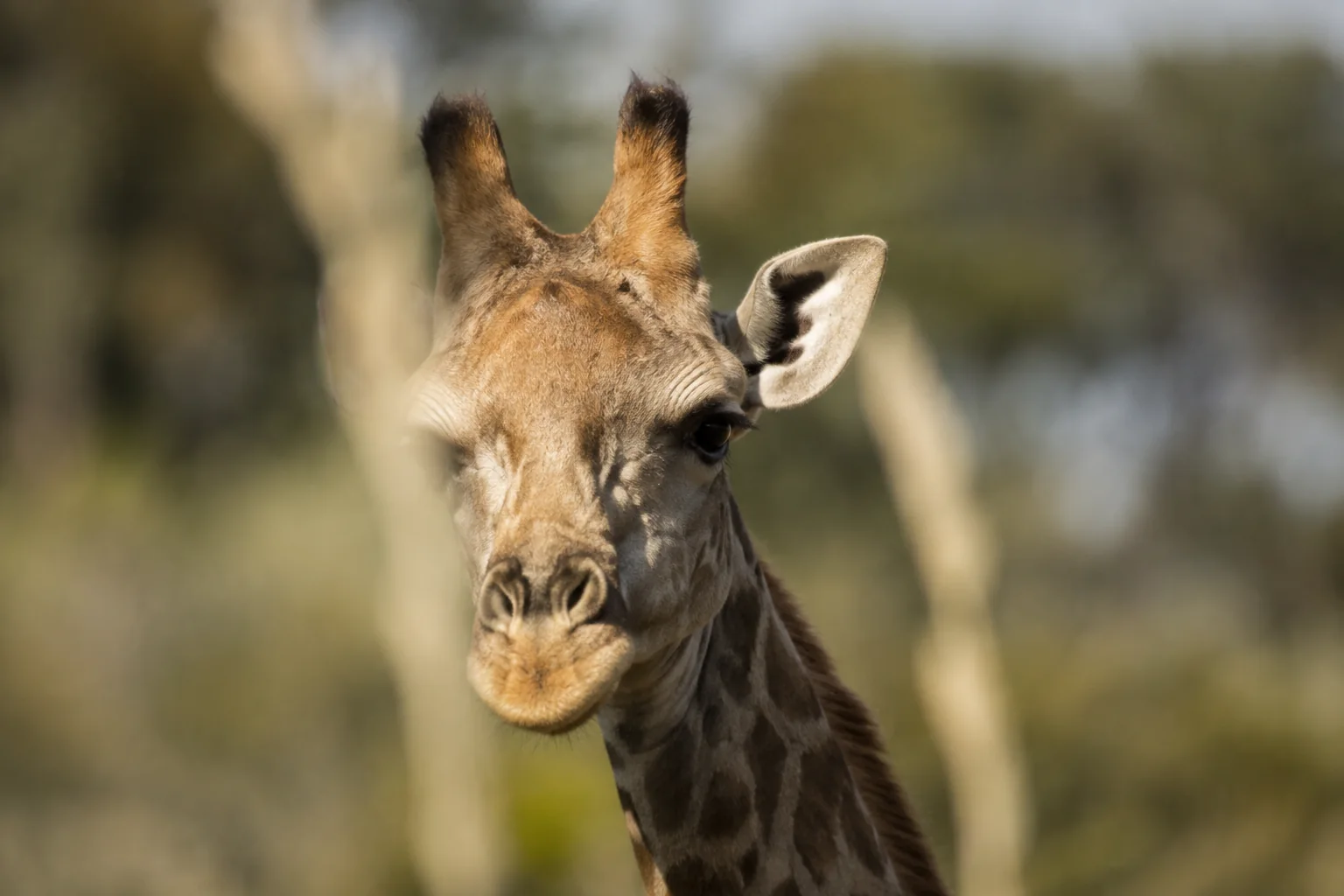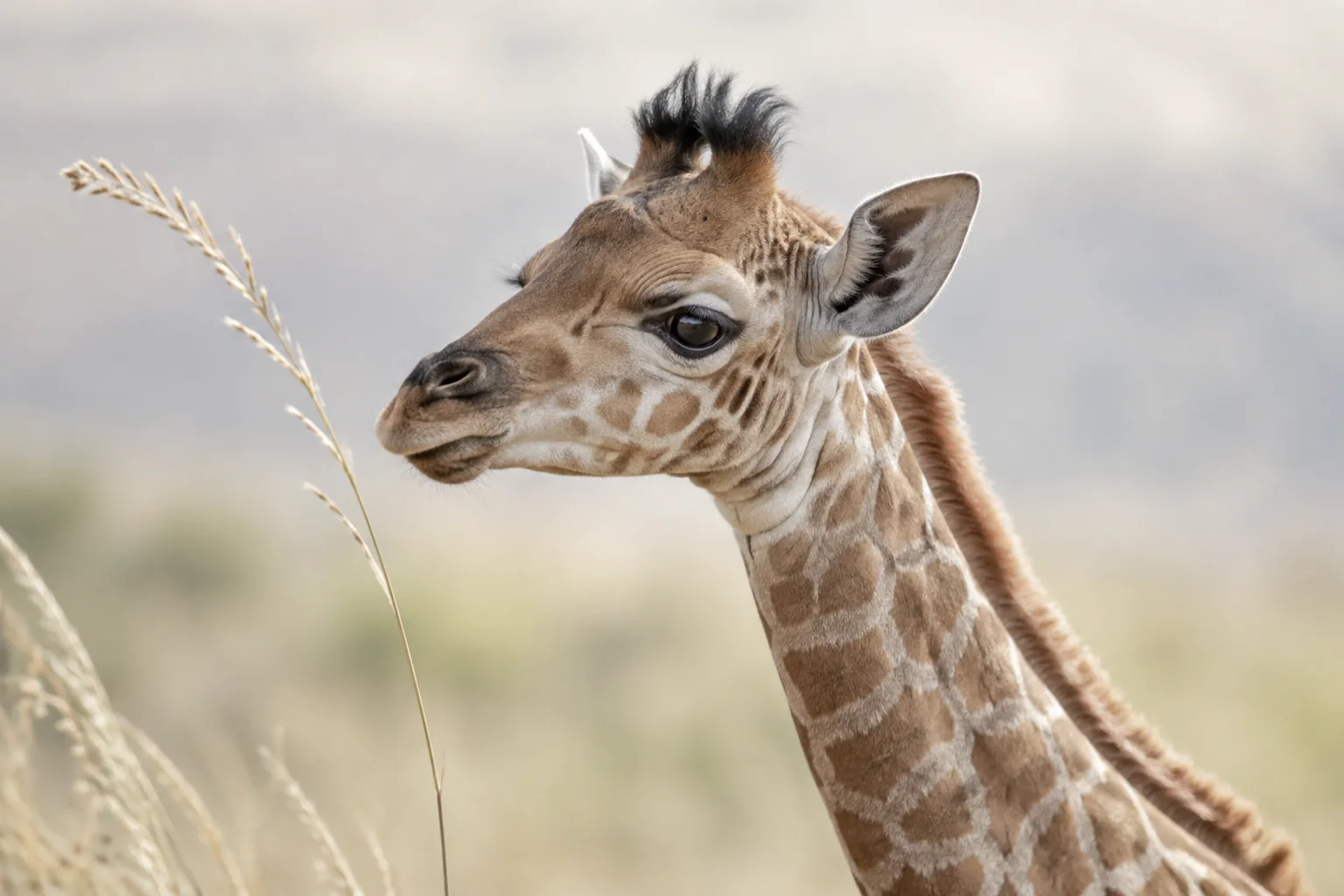
A new smell can make a familiar place worth investigating. For zoo giraffes, that possibility offers a different kind of enrichment from another food container: a change in the sensory environment, with no new meal required. But which smell interests a giraffe, and does investigating it produce a useful change in daily life?
Caitlin Fay and Lance Miller tested both questions at San Diego Zoo Safari Park. Five giraffes encountered pairs of six scents in an individual preference test. A separate group experiment then examined behaviour and space use when scents were introduced into the main exhibit. Their 2015 study found individual differences in investigation and a change in enclosure use, while leaving the wider welfare benefit uncertain.
Letting the individual reveal its interest
The first experiment used rose, ginger, vanilla, orange, mint and banana scents. Two containers were attached to a fence, with perforated lids allowing odour to escape while preventing access to the liquid. A giraffe could approach either container and investigate it.
Each animal encountered every possible pair of the six scents across 15 short trials. The design balanced the left and right positions, so a tendency to approach one side would not consistently favour a particular smell. The researchers also checked for an overall side bias and did not detect one.
Testing giraffes individually reduced another source of ambiguity. In a group, the animal standing near a scent might be the one allowed access by its companions, rather than the one most interested in the smell. Individual trials made the observed choice easier to interpret.
The researchers recorded both the number of approaches and the time spent investigating. Their definition included close sniffing or similar nasal investigation, as well as licking the container. Thus “preference” meant relatively greater engagement under these test conditions. The experiment did not ask how hard a giraffe would work for a scent, whether it would choose that scent over another valued activity, or whether the smell improved its emotional state.
Rose attracted the greatest average investigation time across the five animals. Individual responses, however, varied substantially. The group average could identify an interesting candidate to test, but it could not supply a universal favourite for every giraffe.
Moving the question into the exhibit
The second experiment observed eleven giraffes sharing a mixed-species exhibit. Researchers collected four weeks of baseline observations, followed by a period when diluted scents were sprayed into part of the exhibit on alternating observation days. On the intervening observation days, they sprayed distilled water in the same way.
The water condition was important. Spraying involves a person approaching and doing something in a particular location. Without a control for that procedure, a later change in giraffe behaviour could be attributed to the odour even if the spraying routine itself was responsible.
The team recorded behavioural states at short intervals and divided the exhibit into zones to examine where animals spent their time. Normal feeding and other enrichment continued. The question was whether adding a sensory cue changed the use of an already familiar environment.
During the scent condition, giraffes spent more time in the zone nearest scent application than during baseline. That is evidence that the location of the scent treatment was associated with a change in space use.
Yet the behavioural results were narrower than a simple “scents made giraffes more active” conclusion. Standing and resting decreased relative to baseline in both the scent condition and the water control. The study did not establish that this reduction was caused specifically by the odour.
Measured exploration, locomotion, play and social behaviour did not differ significantly among conditions. Nor did the recorded abnormal-behaviour category. Greater use of the scented area may indicate interest, but the direct exploration measure did not confirm a corresponding increase. The experiment therefore leaves a distinction between moving toward an area and demonstrating more exploratory behaviour there.
Attraction is one piece of a welfare assessment
The authors proposed that scents could offer novelty and influence exhibit use. That is a reasonable possibility to pursue. Their results do not establish a treatment for abnormal behaviour, a lasting improvement in welfare, or a preferred schedule of scent delivery.
The baseline period always came first. Changes over time could therefore contribute to differences between baseline and the later conditions. The study was also short, and it took place within one exhibit and one management routine. The effect of an unfamiliar smell might weaken as it becomes familiar, while individual responses could change with social context.
A later giraffe keeper-interaction study illustrates a complementary approach. Observers assessed the expressive qualities of behaviour in video clips from three giraffes, detecting differences among animals and associations with keeper behaviour. That study did not evaluate scent enrichment, but it addressed a separate part of the assessment problem: how an animal behaves can add information beyond where it stands or how often it approaches.
Neither kind of measure is a direct readout of happiness. Taken together as approaches, they show why a useful enrichment evaluation should connect engagement, behavioural expression and the individual’s broader routine, rather than equate attraction alone with benefit.
A starting point for individual testing
The scent experiment’s strongest practical lesson is the value of asking the animal. The paired trials exposed differences that would have disappeared in a herd average. The exhibit trial then showed that a candidate stimulus must be tested again in the environment where it will actually be used.
That second step can produce a more complicated answer. Giraffes used space differently, but most measured behaviours did not change, and the water control also affected standing and resting. Those details help identify what another experiment should resolve rather than making the first experiment useless.
An enrichment item is a proposal about what an animal might find worthwhile. Fay and Miller made that proposal testable for smells in giraffes. The results support continued investigation of sensory variety, with the animal’s individual response and the choice of comparison kept in view.
Sources
- Caitlin Fay and Lance J. Miller (2015). “Utilizing Scents as Environmental Enrichment: Preference Assessment and Application with Rothschild Giraffe.” Animal Behavior and Cognition 2(3), 285–291. Full paper.
- Freisha Patel, Françoise Wemelsfelder and Samantha J. Ward (2019). “Using Qualitative Behaviour Assessment to Investigate Human-Animal Relationships in Zoo-Housed Giraffes (Giraffa camelopardalis).” Animals 9, 381. Related study.