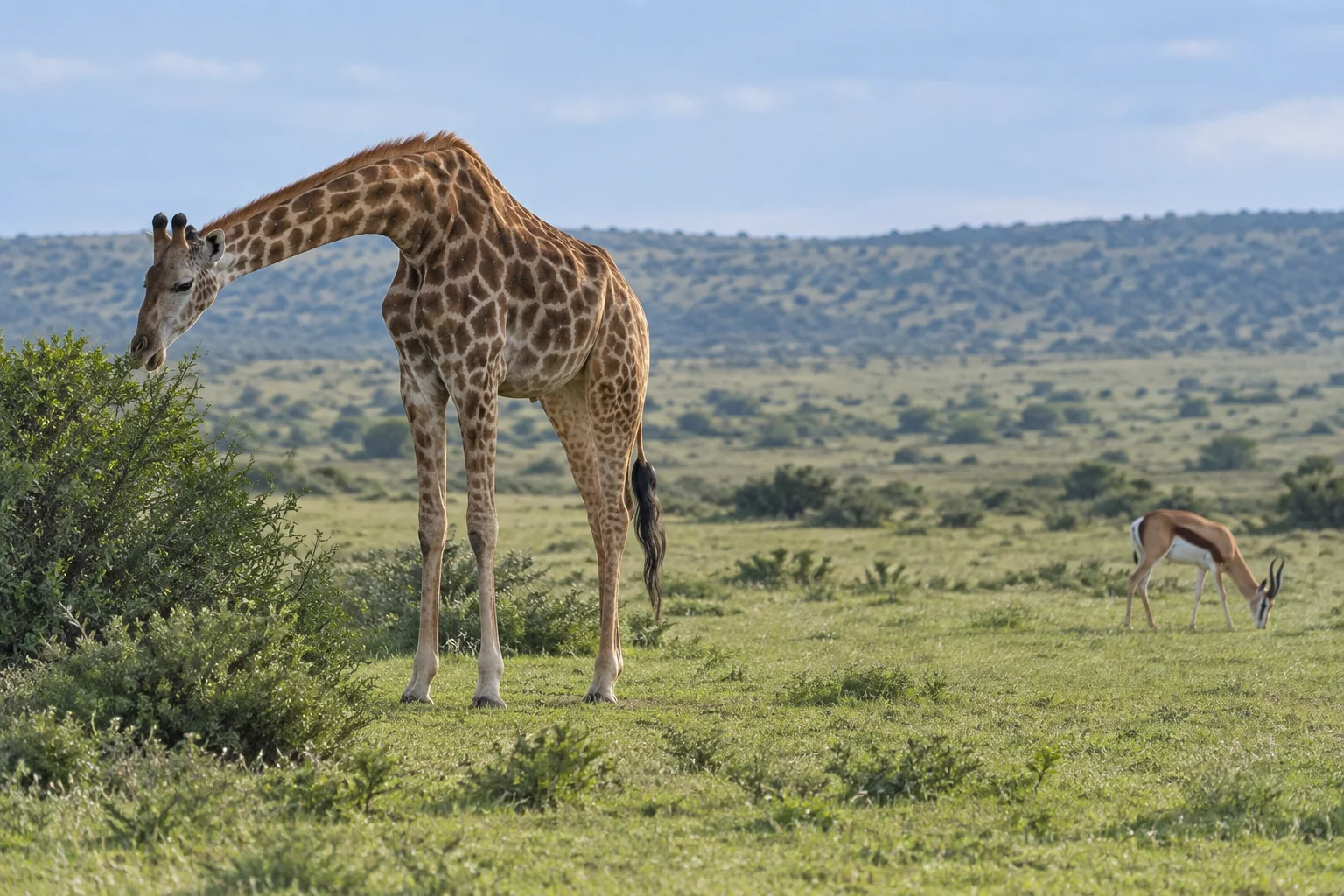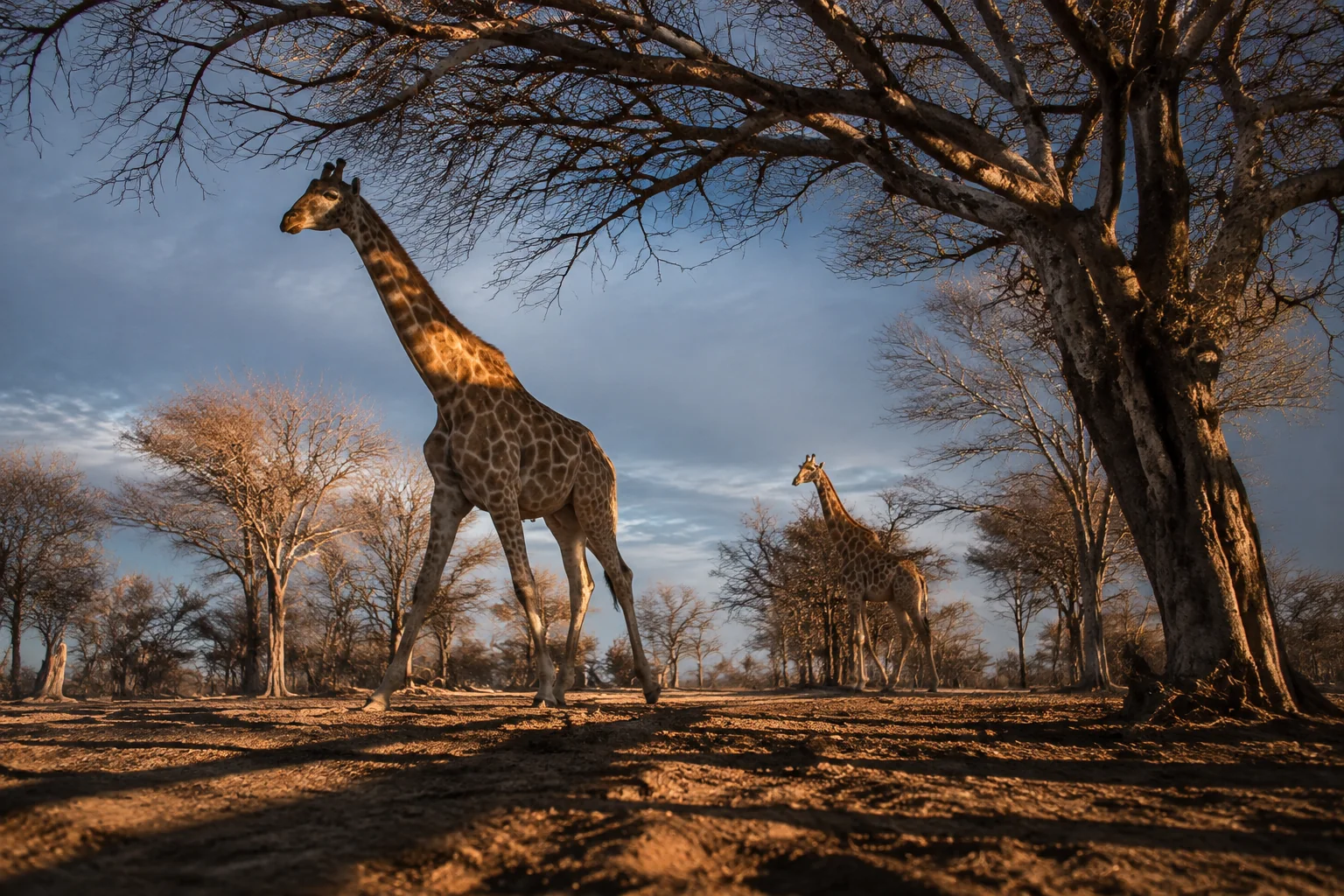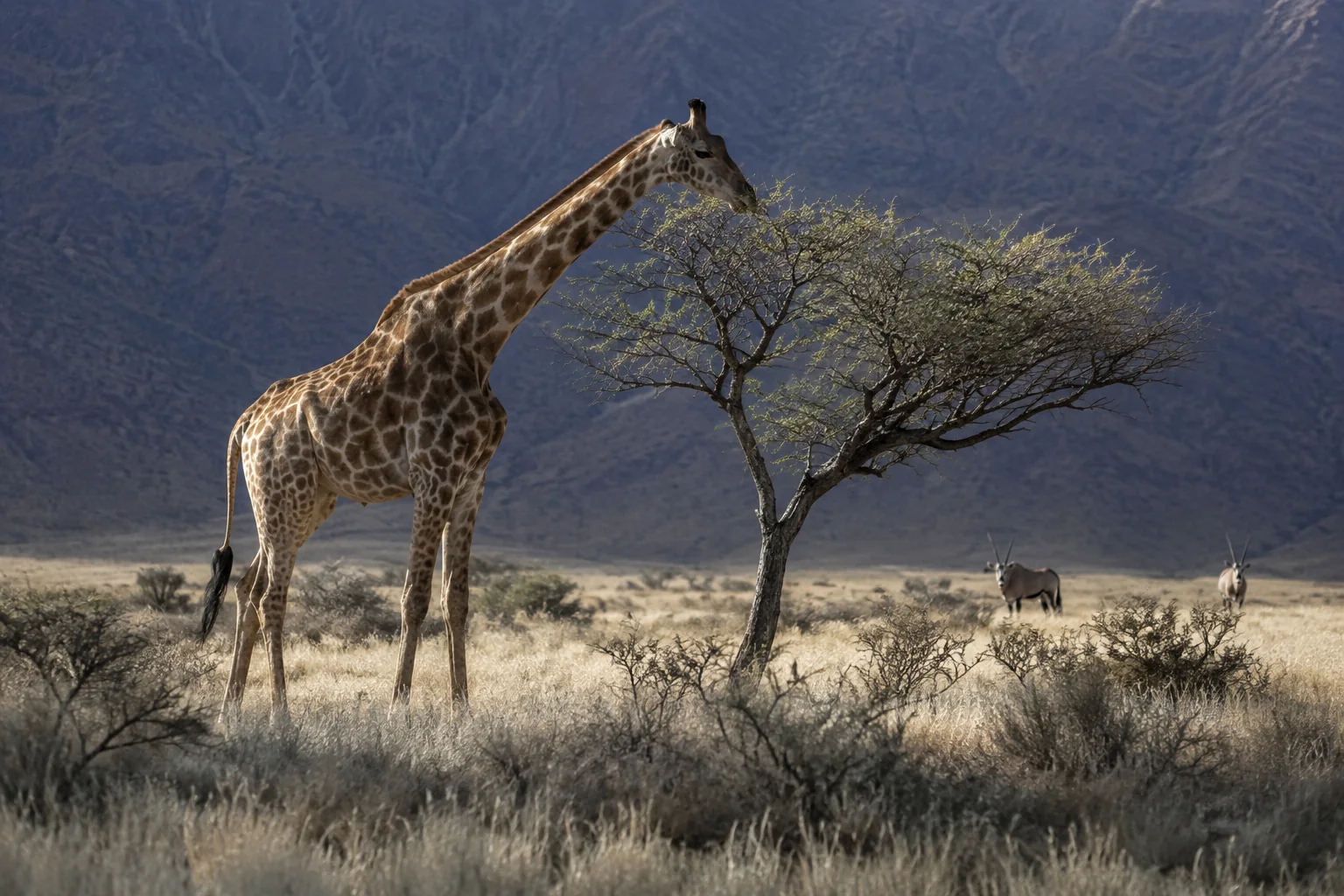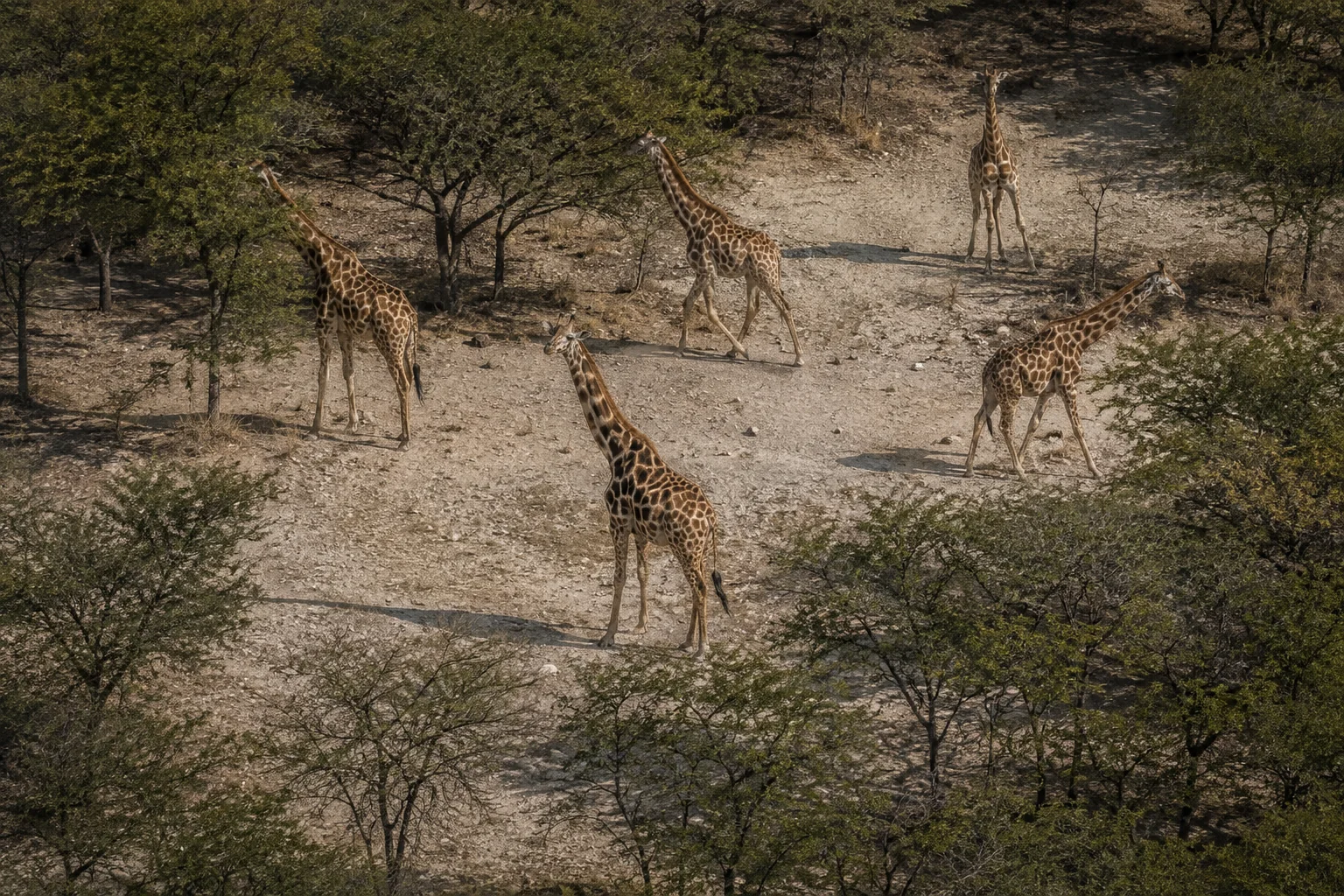
A camera can photograph both giraffes and livestock in the same patch of savanna while missing an important part of their relationship. If one arrives hours after the other leaves, the location is shared, but the encounter is being avoided. A map alone cannot reveal that distinction.
Nicole Egna and colleagues investigated it using six years of camera records from Loisaba Conservancy in Kenya. Their 2026 study found extensive overlap in where giraffes and livestock appeared. Looking at the order of photographs then revealed a different pattern: a giraffe detection soon after livestock was much less common than a quick repeat giraffe detection without intervening livestock.
The result makes coexistence a question of timing as well as space. It also shows why seeing both animals in a place does not demonstrate that livestock are harmless, beneficial or excluding wildlife entirely.
From photographs to patterns of use
The team analysed records from 2016–2021. After removing very short sampling sessions, the dataset covered 77 camera sites and 10,791 camera-days. It contained 1,682 giraffe image events and 2,150 livestock events, using time buffers to reduce repeated counting of closely spaced photographs.
Those events were not counts of individual animals. Giraffes could not be identified separately, and one animal could trigger a camera more than once. The researchers asked both whether a site recorded giraffes during a sampling session and how frequently it recorded them, accounting for differences in camera operating time.
The paper calls the second measure relative abundance, but explains it as intensity of use. More photographs can reflect more animals, more time spent near a camera or changes in movement and detection. They cannot establish population growth by themselves. That distinction is central to interpreting giraffe surveys.
The shared landscape was real
Giraffes appeared at 66 sites and livestock at 74, with both recorded at 62. Sites with more livestock activity were also more likely to record giraffes and generally produced higher giraffe photo rates after the model accounted for other measured features.
That positive association does not mean livestock attracted or helped giraffes. Both could be responding to useful habitat in the same locations. Trees and surrounding grass can supply different resources to different animals within a single camera’s view.
Habitat added further structure. Giraffes were more likely to occur in the mapped escarpment habitat than in wooded grassland. Photo rates increased farther from the conservancy boundary and at sites with greater slope. These were comparatively gentle slopes, so the finding should not be imagined as giraffes retreating into steep mountain refuges.
Together, the results describe where cameras encountered giraffes within this particular mixed-use conservancy. They do not isolate livestock as the cause of every difference between sites.
The clock changed the interpretation
The animals’ overall daily activity schedules overlapped strongly. They were not simply dividing the entire day into separate giraffe and livestock shifts. The more revealing comparison examined what happened after livestock passed a particular camera.
For the short-term analysis, the researchers restricted observations to livestock events followed by a giraffe detection within 48 hours. Within that subset, the estimated probability of the next giraffe event occurring within 12 hours was 6.4%. Their comparison intervals, which contained successive giraffe events without intervening livestock, gave a 56% probability of another giraffe event within 12 hours.
The difference supports an association between recent livestock presence and delayed giraffe use. The 48-hour restriction matters: those percentages do not describe every livestock visit, including visits followed by a much longer absence. Nor does a later giraffe photograph establish that the same individual returned.
This was an observational sequence, not an experiment assigning livestock to otherwise identical sites. Herding people, livestock movements and local conditions could all contribute. The study cannot separate avoidance of animals from avoidance of people or determine the cost of a delay to feeding and survival.
What the cameras could still miss
Wildwatch Kenya volunteers classified the photographs. The authors cite an earlier assessment of that programme showing that giraffes were sometimes missed, particularly when distant animals appeared in images that looked empty. Our account of camera-trap classification errors examines that earlier study; it is a measurement caution from the same programme, not independent confirmation of this ecological result.
Longer-term patterns also require restraint. Giraffe photo rates differed among years, while short-term satellite greenness did not clearly explain their occurrence. Greenness combines vegetation signals and need not measure the quality of woody browse. The study’s tentative association with unusual annual greenness cannot establish how climate changed giraffe survival.
A stronger next step would combine individually identified giraffes, livestock movements and observations of herders. Researchers could then ask whether delays involve detours, lost feeding time or simple scheduling around a temporary disturbance. For management, the present lesson is narrower but useful: retaining shared habitat is necessary, while the timing and intensity of access may determine how usable that habitat remains.
Sources
Nicole Egna, Shifra Z. Goldenberg, Jared Stabach, Mathias W. Tobler, Symon Masiaine and Jenna Stacy-Dawes. (2026). Environmental and Anthropogenic Drivers of Giraffe Occurrence and Relative Abundance in a Mixed-Use Savannah. African Journal of Ecology, 64, e70171. DOI: 10.1111/aje.70171. Read the full paper.