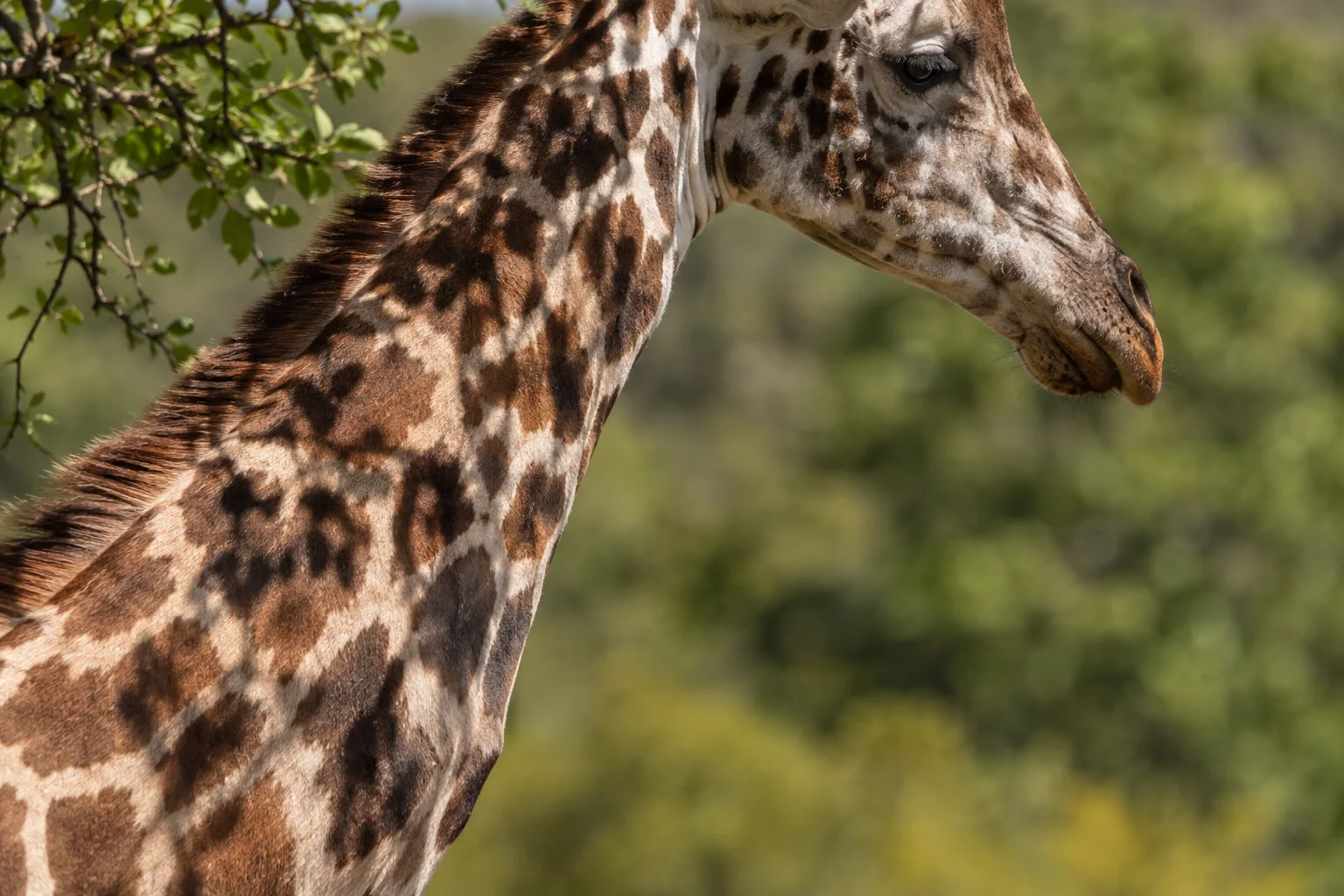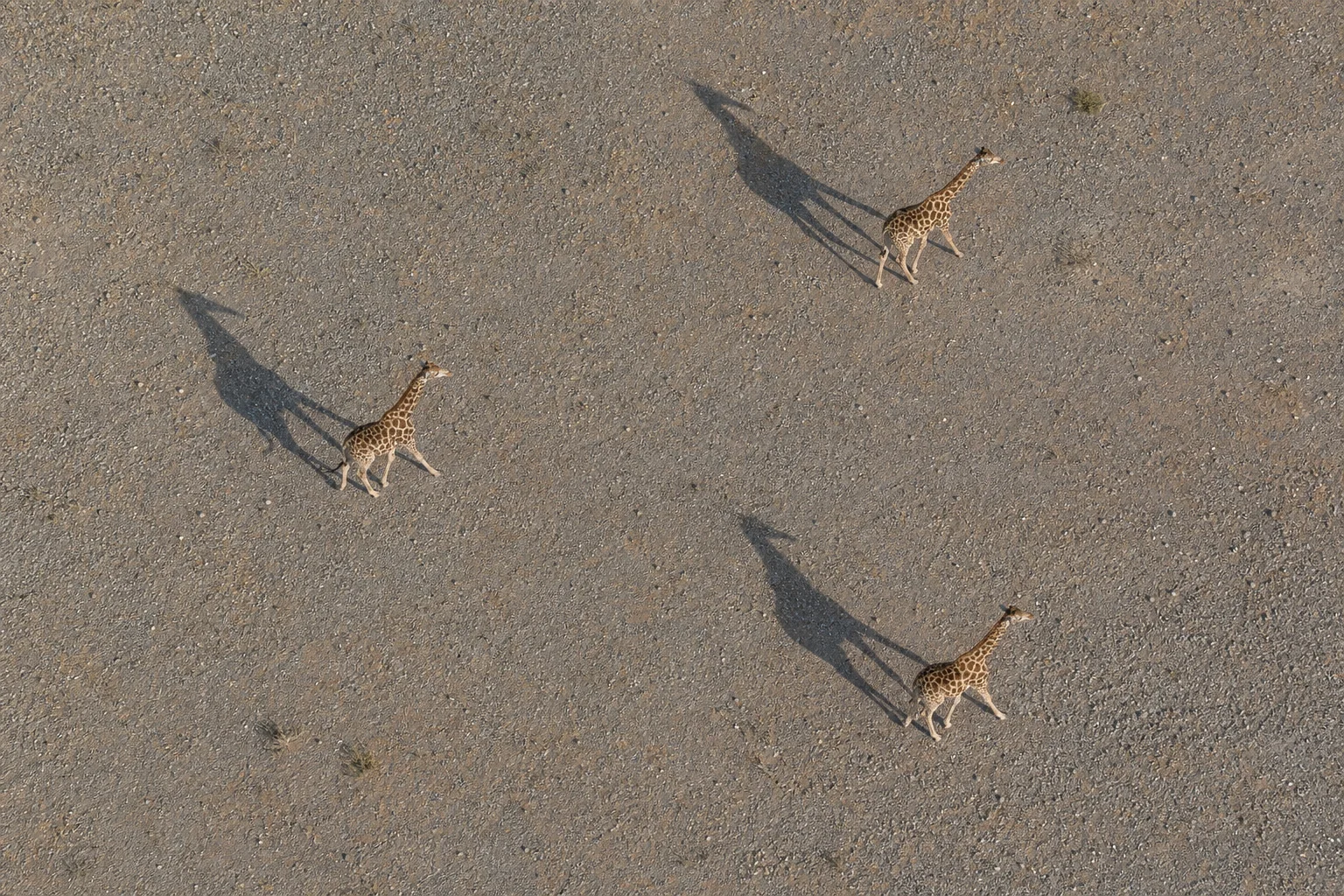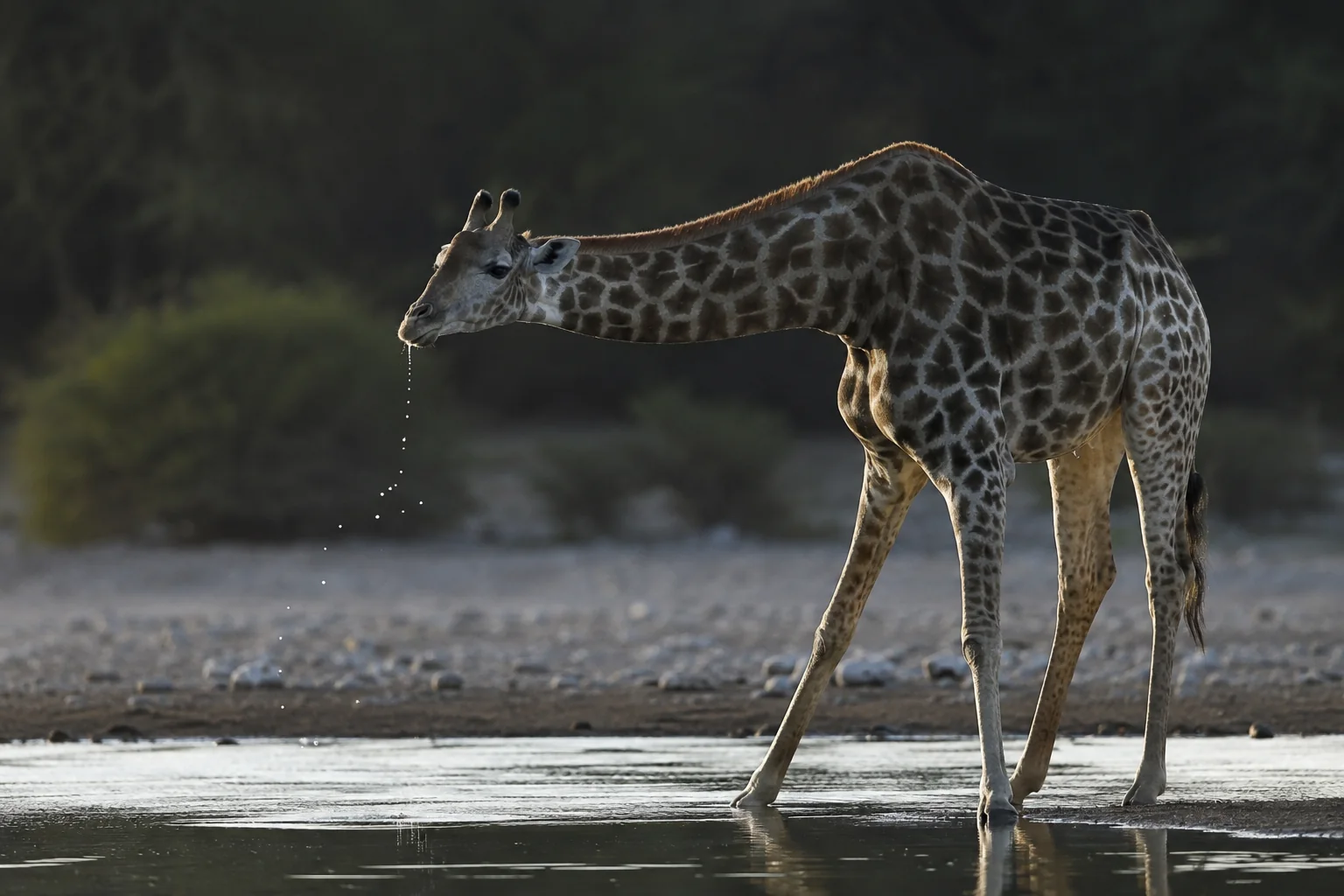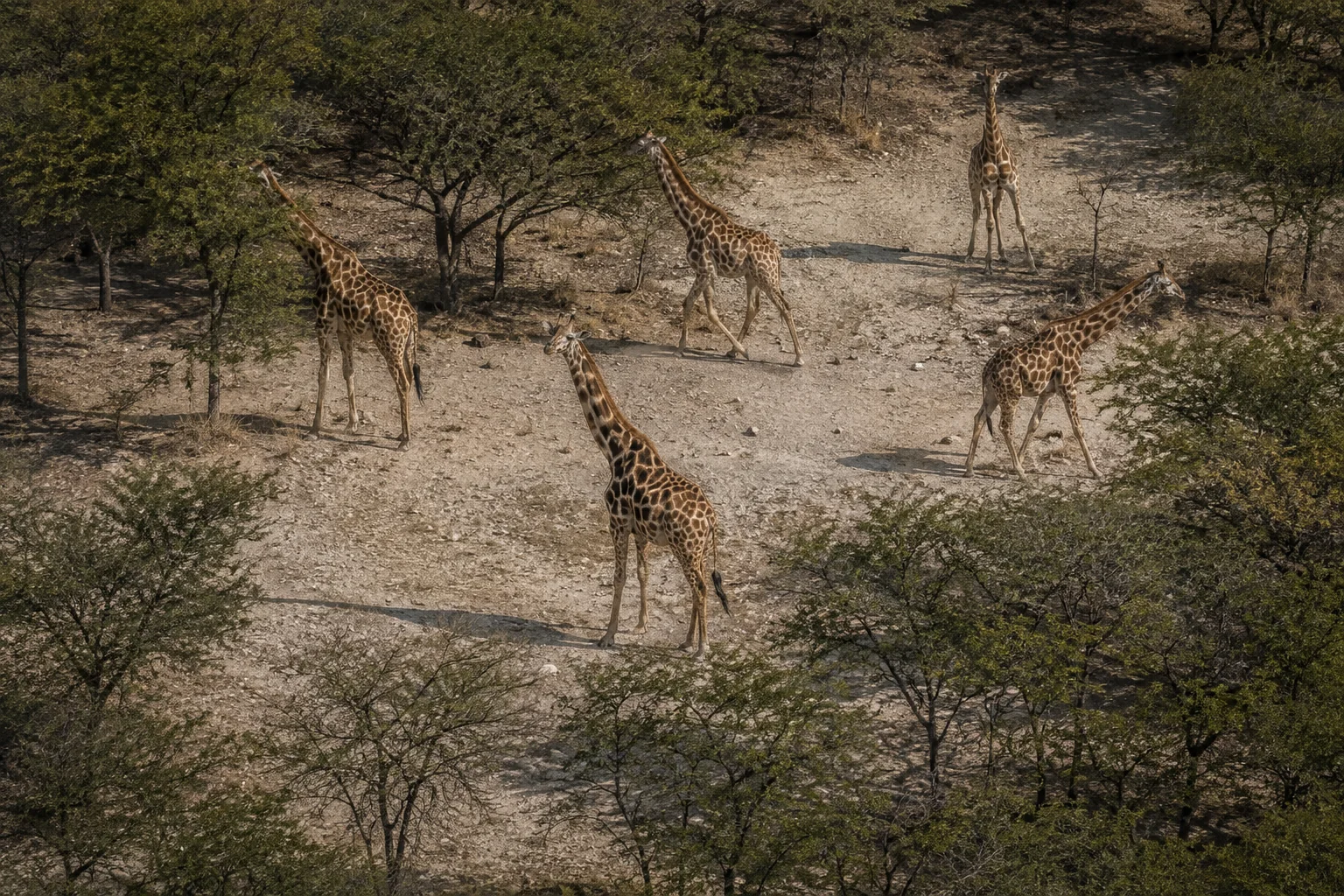
A camera can record a giraffe without the photograph becoming evidence that a giraffe was there. Someone still has to notice the animal. If it stands far behind the foreground vegetation, or only a small part of its body enters the frame, a viewer may decide that the photograph is empty.
That apparently mundane decision changes the data available to ecologists. Nicole Egna and colleagues investigated it in a 2020 comparison of three citizen-science camera projects. Their study asked why volunteers classified some collections more accurately than others, and uncovered a problem that better species-identification guides alone would struggle to solve.
The animal must be seen before it can be named
Wildwatch Kenya used motion-triggered cameras in Loisaba and Namunyak conservancies to study reticulated giraffes and their ecological surroundings. Volunteers on the Zooniverse platform examined the images and selected the wildlife they could see. Multiple people viewed each photograph, and their most frequent answer became the combined classification.
Combining answers can reduce individual mistakes. It cannot guarantee success when many people miss the same small shape in the background. A photograph with one vote for giraffe and nine votes for empty becomes an empty record, even if the lone observer was correct.
The researchers compared those combined answers with expert classifications. They also used results from Snapshot Serengeti in Tanzania and AmazonCam Tambopata in Peru. These projects shared the broad approach of asking online volunteers to identify wildlife, but differed in habitat, camera settings and image presentation.
The Kenyan analysis included 24,039 photographs containing one type of animal. The Amazonian comparison used 2,598 terrestrial wildlife images; the Serengeti accuracy estimate came from an earlier expert assessment of 3,829 images. These were checks of selected image collections, not estimates of how many animals occupied the landscapes.
Most Kenyan mistakes were empty answers
Volunteer consensus matched the expert answer for 83.4% of the Kenyan images, compared with 93.5% for AmazonCam and 97.9% for Snapshot Serengeti. The revealing difference lay inside the errors.
In Kenya, 3,586 photographs containing wildlife had been classified as empty. Only 403 were assigned the wrong species. Missing the animal therefore accounted for nearly nine out of ten errors in the main Kenyan comparison.
To examine that failure more closely, the team assembled another set of images in which at least one volunteer had reported one of six frequently photographed animals: giraffe, zebra, elephant, gazelle, impala or dik-dik. An expert confirmed that 12,197 images actually contained one of those animals. Across every species, an erroneous empty answer was more common than a wrong species name.
This second collection deliberately recovered images that the consensus process could discard. Its lower overall accuracy should not be read as a second estimate from a random sample of the entire project. It helped expose a particular weakness: a correct minority observation can disappear when answers are combined.
A distant shape and a moving sequence tell different stories
The two Kenyan locations helped explain what viewers were missing. Loisaba’s more open landscape allowed animals to appear far behind the camera’s immediate surroundings. Distance accounted for 42% of its erroneous empty classifications in the detailed review. At Namunyak, partial views were the dominant problem, accounting for 61%.
Wildwatch Kenya showed volunteers a single photograph from each camera trigger. The other projects generally offered three-picture sequences. Movement between frames can reveal a small animal that is difficult to distinguish in one image; a partly visible body may move fully into view in the next.
The experts also benefited from reviewing Kenyan photographs in sequence, whereas volunteers encountered them in random order. The comparison therefore concerned the information available to viewers as well as their experience. A person shown less context can miss something that becomes evident across successive pictures.
Egna and colleagues recommended using three consecutive images per trigger and trying sensitivity settings under the conditions of the intended survey. High sensitivity can produce many triggers from heat or moving vegetation. A resulting photograph may include a distant animal, yet make that animal unusually difficult to notice.
Better detection begins before the photographs are sorted
These projects were not a controlled experiment that changed only one camera setting. Habitat, camera equipment and classification arrangements differed together. The comparison supports plausible improvements; it does not assign a precise causal benefit to three-picture bursts in every environment.
There is also a trade-off. Reducing camera sensitivity may avoid unwanted triggers while failing to record some small or fast-moving animals. The authors could not quantify that loss here. A useful field comparison would measure both the animals cameras record and the animals viewers subsequently recognise.
The practical lesson extends to giraffe population surveys. Data quality depends on the whole path from an animal passing a camera to a usable record. More volunteers can help process a large collection, but the photographs must give them a fair chance to see the animal. This study located a substantial loss of information between those two steps—and identified changes that could be tested at the camera itself.
Sources
Nicole Egna, David O'Connor, Jenna Stacy‐Dawes, Mathias W Tobler, Nicholas Pilfold, Kristin Neilson, Brooke Simmons, Elizabeth Oneita Davis, Mark Bowler, Julian Fennessy, Jenny Anne Glikman, Lexson Larpei, Jesus Lekalgitele, Ruth Lekupanai, Johnson Lekushan, Lekuran Lemingani, Joseph Lemirgishan, Daniel Lenaipa, Jonathan Lenyakopiro, Ranis Lenalakiti Lesipiti, Masenge Lororua, Arthur Muneza, Sebastian Rabhayo, Symon Masiaine Ole Ranah, Kirstie Ruppert, Megan Owen. (2020). Camera settings and biome influence the accuracy of citizen science approaches to camera trap image classification. Ecology and Evolution. DOI: 10.1002/ece3.6722. Read the full paper.