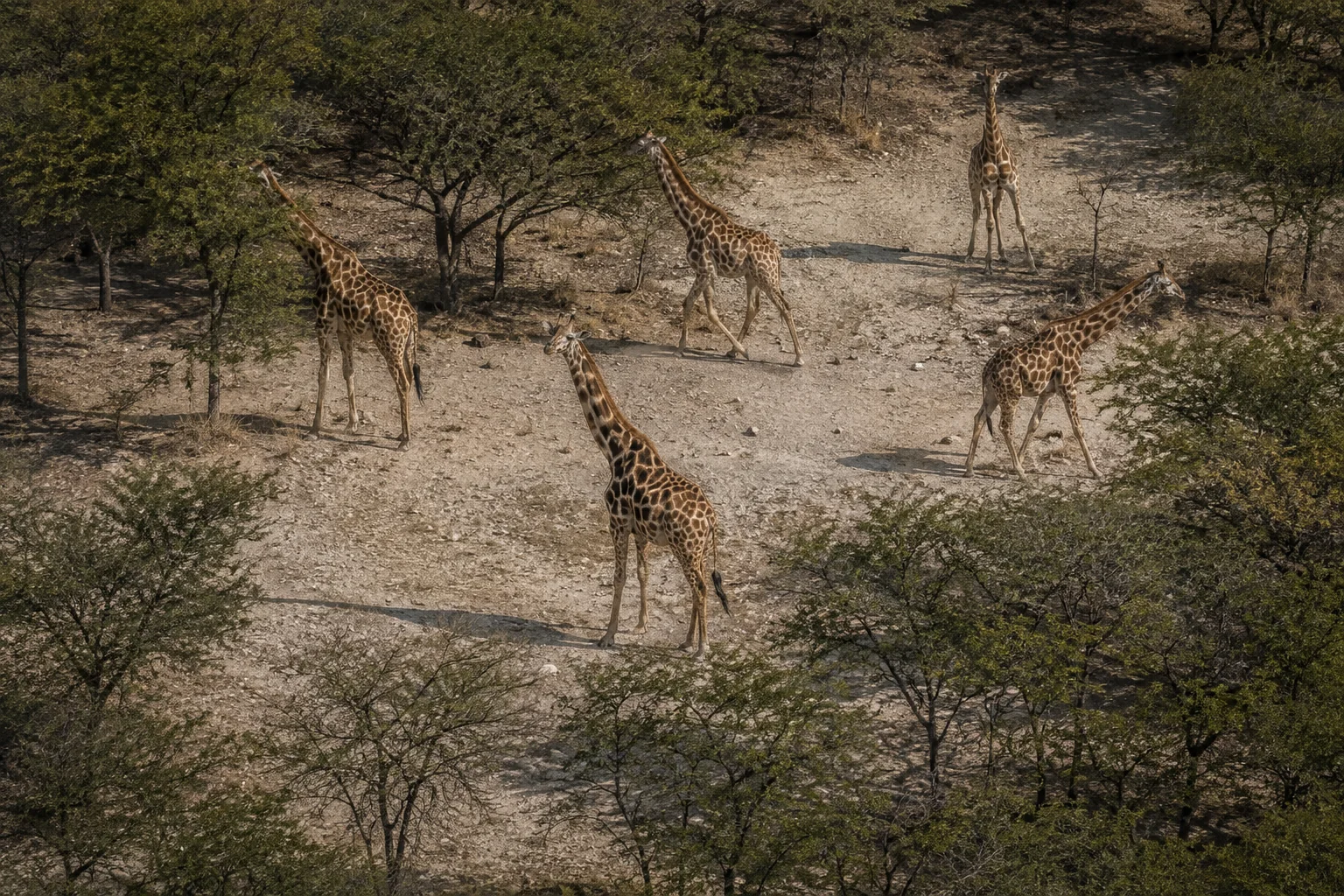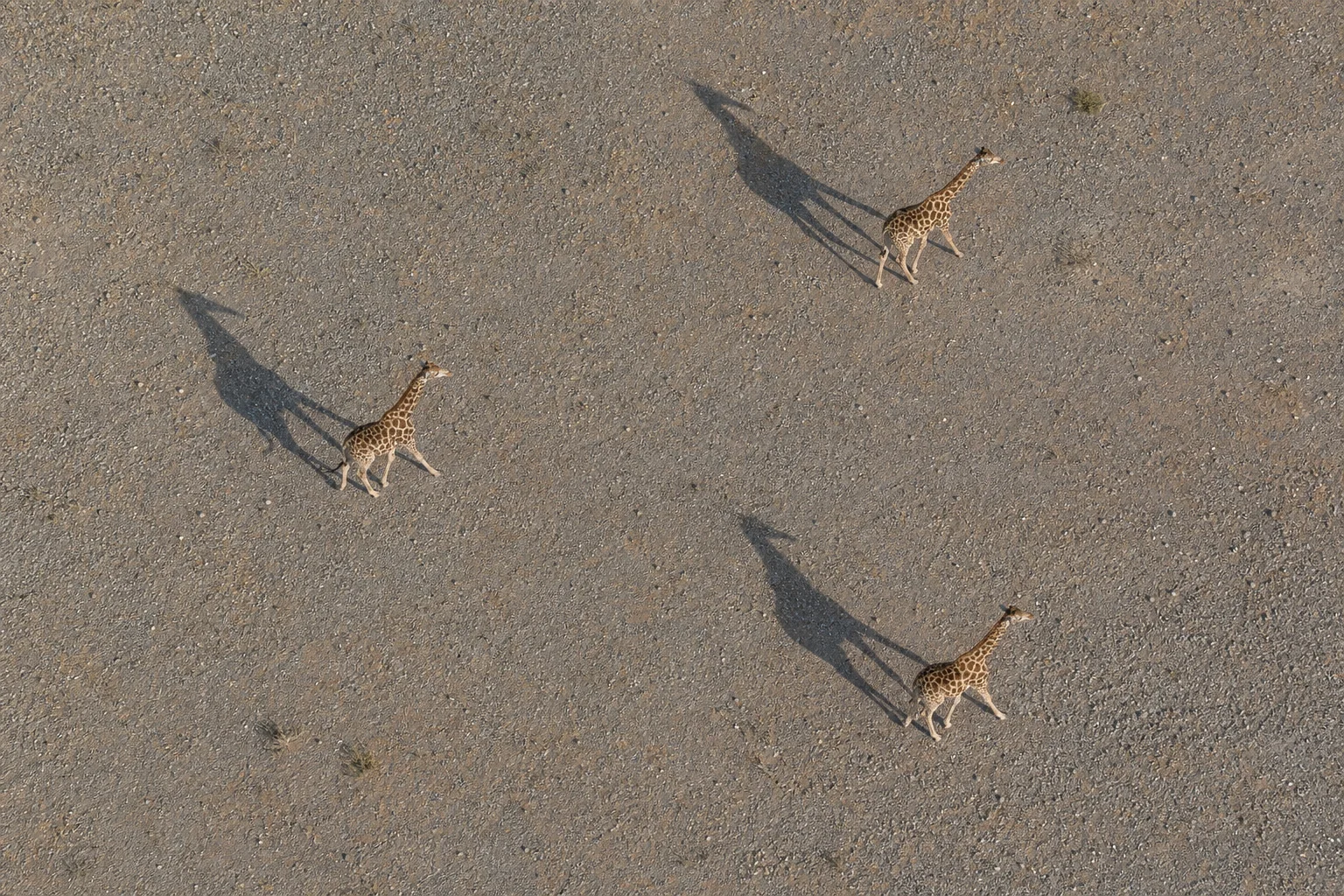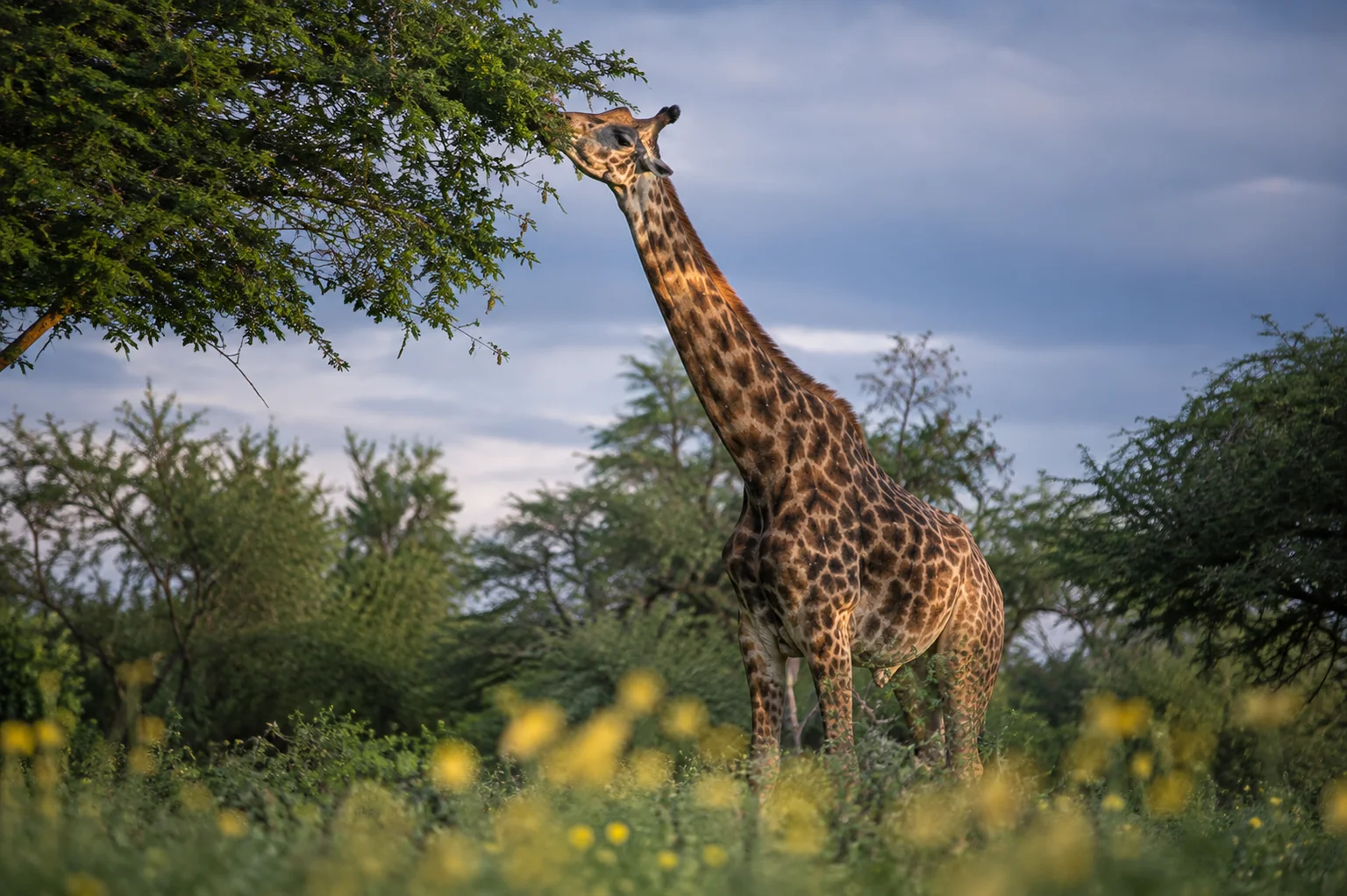
Seeing a giraffe twice does not mean there are two giraffes. That distinction becomes surprisingly difficult when a long-running field project accumulates thousands of photographs. Each new image must be linked to an existing animal or recognised as someone absent from the catalogue.
An incorrect match can merge two animals’ histories. A missed match can split one animal into two apparent individuals. Either error can interfere with the population questions photographs help answer: which animals survive, where they move and how many different giraffes have been encountered.
Shahrzad Gholami, Derek E. Lee and colleagues tackled that bottleneck in a 2026 study of assisted giraffe identification. Their GIRAFFE system combines image processing, rapid pattern comparison and an interface through which researchers inspect the proposed matches.
Finding a familiar pattern inside an unfamiliar photograph
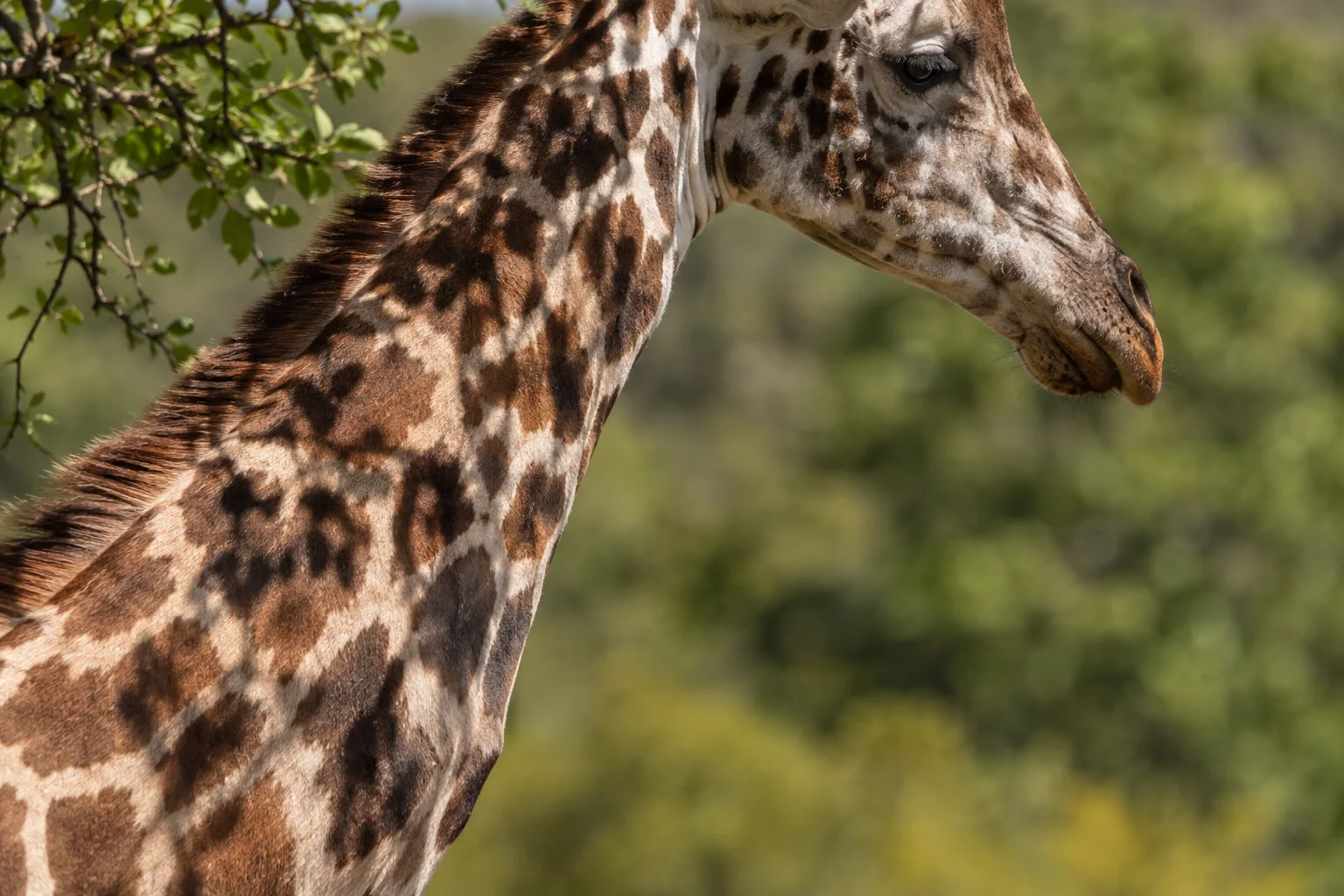
An animal’s identifying markings do not always look identical to a camera. Lighting, distance, body position and vegetation alter the visible pattern. Comparing the photograph as a whole would also mix the animal with trees, sky and other irrelevant surroundings.
The researchers first isolated the relevant part of the giraffe and extracted small, distinctive features within its coat pattern. Those features became searchable descriptions. Instead of laboriously comparing every new picture against every catalogue image, the system used an indexed search to retrieve likely matches quickly.
The strongest candidate was chosen partly through repeated agreement among those local features. Many separate details pointing to the same previously identified giraffe provide a different kind of evidence from one superficially similar photograph.
A cutoff then determines whether the match is strong enough to accept. That decision matters because a catalogue does not contain every giraffe. A system forced always to choose an existing name would confidently misidentify new animals.
Testing return visits and genuine newcomers together
The study drew on 25,363 photographs representing 3,987 Masai giraffes, collected during surveys in Tanzania from 2012 to 2020. Existing identifications provided the comparison against which the new system was assessed.
The team divided photographs into reference catalogues and new queries. Some query animals were deliberately absent from the reference collection. The tests therefore asked both whether the software could find familiar individuals and whether it could recognise that a giraffe had no previous entry.
Those tasks pull in different directions. Demanding stronger agreement before accepting a match reduces the risk of giving a newcomer someone else’s identity, but can leave a genuinely familiar giraffe unmatched. Relaxing the cutoff recovers more familiar animals while increasing the danger of false matches.
The researchers examined that balance across catalogue sizes. They also divided larger catalogues into smaller searchable sections and combined their results, helping stabilise performance as the collection grew.
In the main divided-catalogue tests, overall accuracy was about 95%. The paper separately reports 99% accuracy for assigning identities to re-identified known individuals. These figures describe different parts of the problem; the latter is not a promise that 99% of every incoming photograph will receive a flawless final identity.
New animals need their photographs brought together
Unmatched images create a second problem. Several may show the same newcomer. Assigning a fresh identity to every image would inflate the catalogue even if the system correctly recognised that none belonged to a previously known animal.
The researchers therefore tested grouping unfamiliar animals’ images before adding them. They compared those groups with the established individual labels. Supplying the search index with reference images as a starting context produced more consistent grouping than beginning with an empty index.
That step gives the tool a practical role beyond finding old matches: it helps organise the material that researchers must label next. The interface allows experts to review familiar matches, check apparent newcomers and inspect the groups created from their photographs.
Human review is part of the method’s design. A poorly exposed or partly hidden torso can still defeat the pattern comparison; researchers can reject a proposed match or skip an unsuitable image.
The team also applied GIRAFFE to 16,326 new photographs collected from 2020 to 2025, outside the training and test sets, identifying 421 previously unrecorded animals. A subsequent review with human operators checked individual animal records for merged identities and split identities. The reported animal-specific error rates were 1.0% for erroneous merges and 1.5% for erroneous splits. These measure errors in animal identities after that application, rather than accuracy for each incoming photograph.
Speed can make a long-term record usable
The complete processing route took roughly two seconds per query under the study’s computing conditions. The authors report a 120-fold speed improvement over their slower comparison method. Faster matching can reduce the delay between collecting survey photographs and turning them into individual encounter histories.
That gain has a defined setting. The experiments used GPU acceleration and substantial memory, and the authors explicitly caution that smaller machines may be much slower. Their cost comparison concerns computation on the specified system, rather than the complete cost of field surveys, data care and expert checking.
The image scope also matters. The study consistently used the right side of the torso. Its results do not establish that a photograph of the left flank can automatically match a right-flank entry, or that the same performance is already demonstrated for another species. The authors propose extending the approach while preserving consistent annotation.
A useful next comparison would measure expert time across complete survey-processing workflows and examine how remaining identity errors affect ecological estimates. That would show how computational gains translate into researchers’ workload and conclusions about animals’ lives. Gholami and colleagues have made the matching work faster and more inspectable; its biological value comes when reliable identities turn successive photographs into a history of the same giraffes.
Sources
Shahrzad Gholami, Derek E. Lee, Caleb Robinson, Monica L. Bond, Rahul Dodhia and Juan M. Lavista Ferres. (2026). An accurate, efficient, and accessible AI-powered solution for wildlife re-identification in conservation. Scientific Reports. DOI: 10.1038/s41598-026-54115-w. Read the full paper.