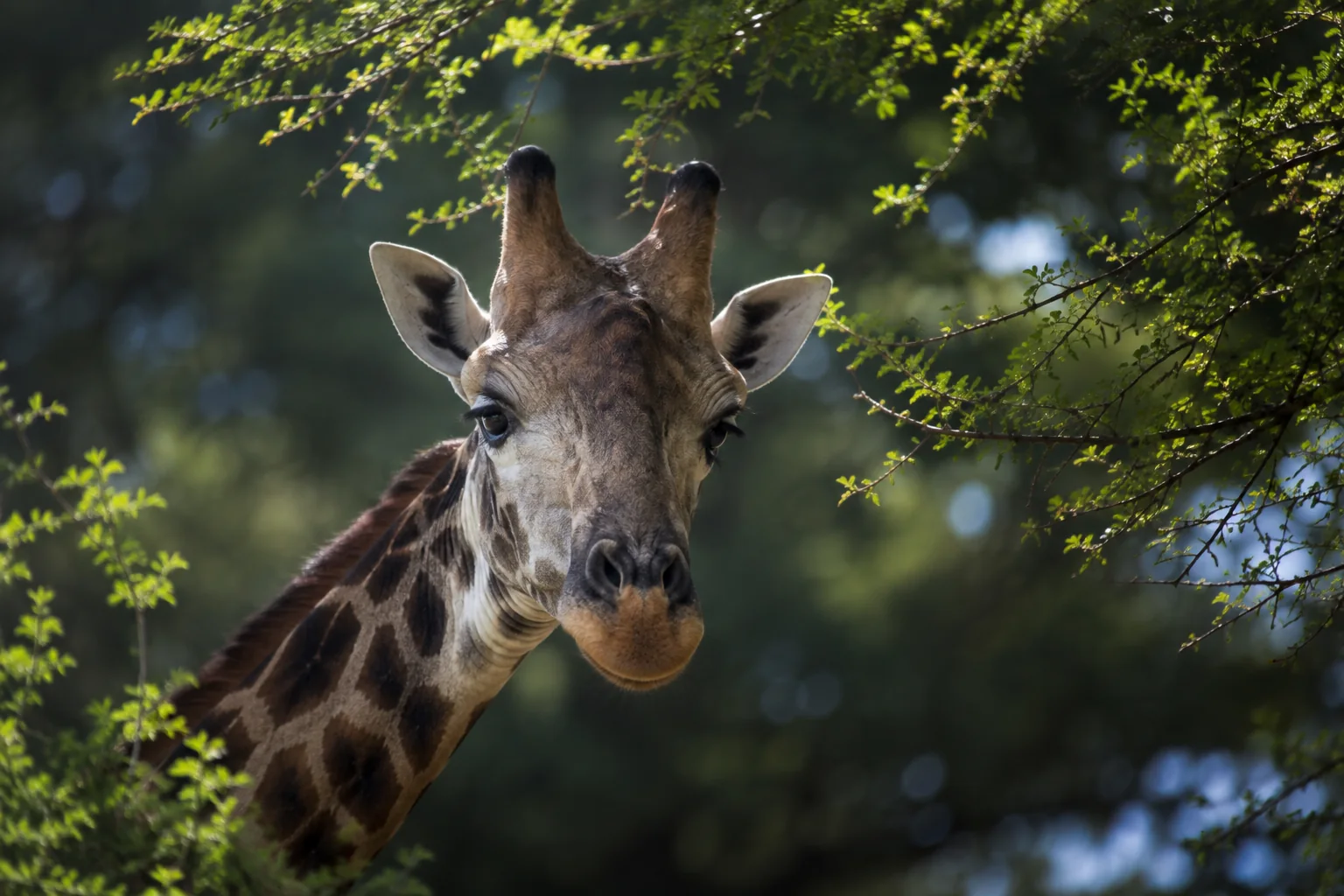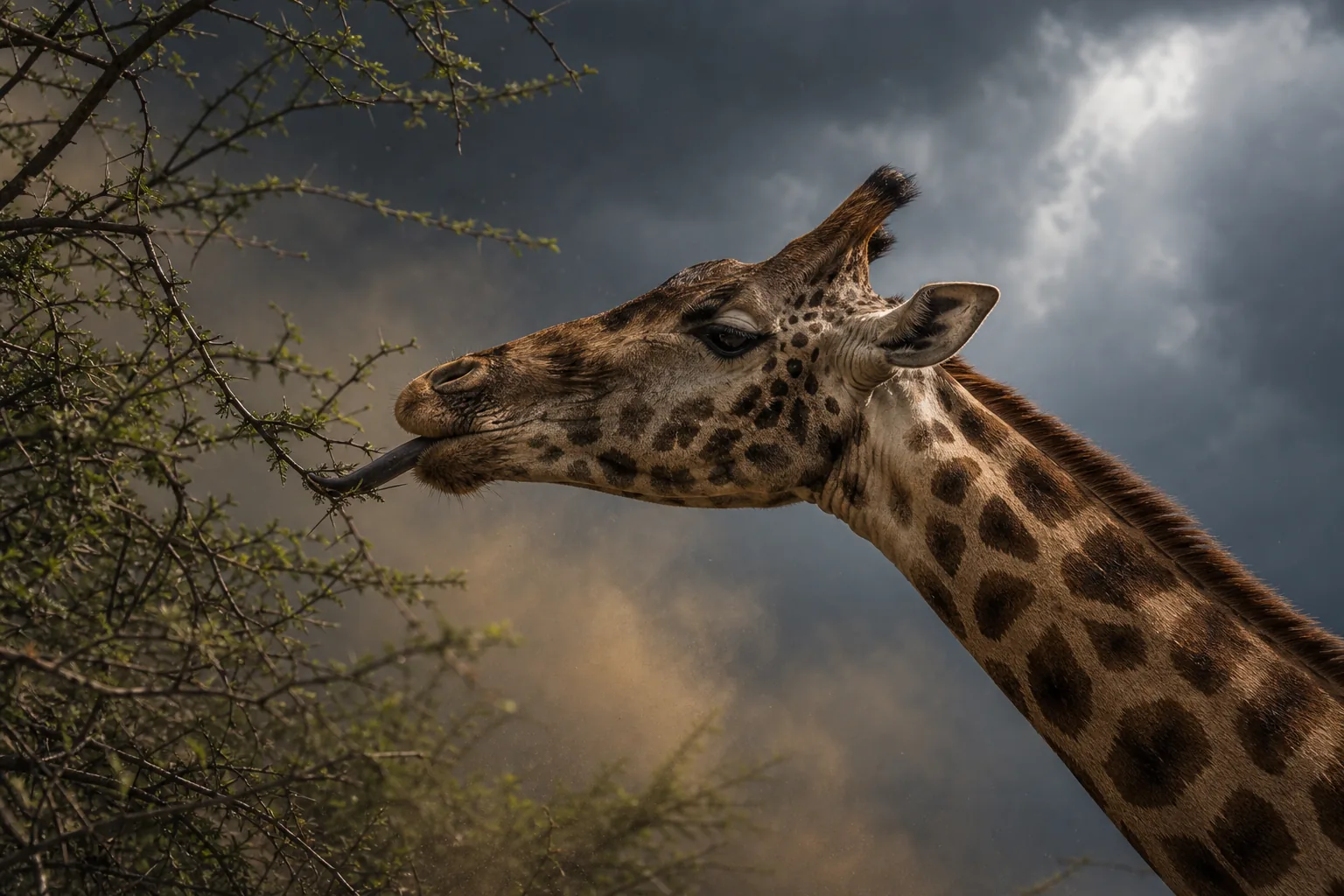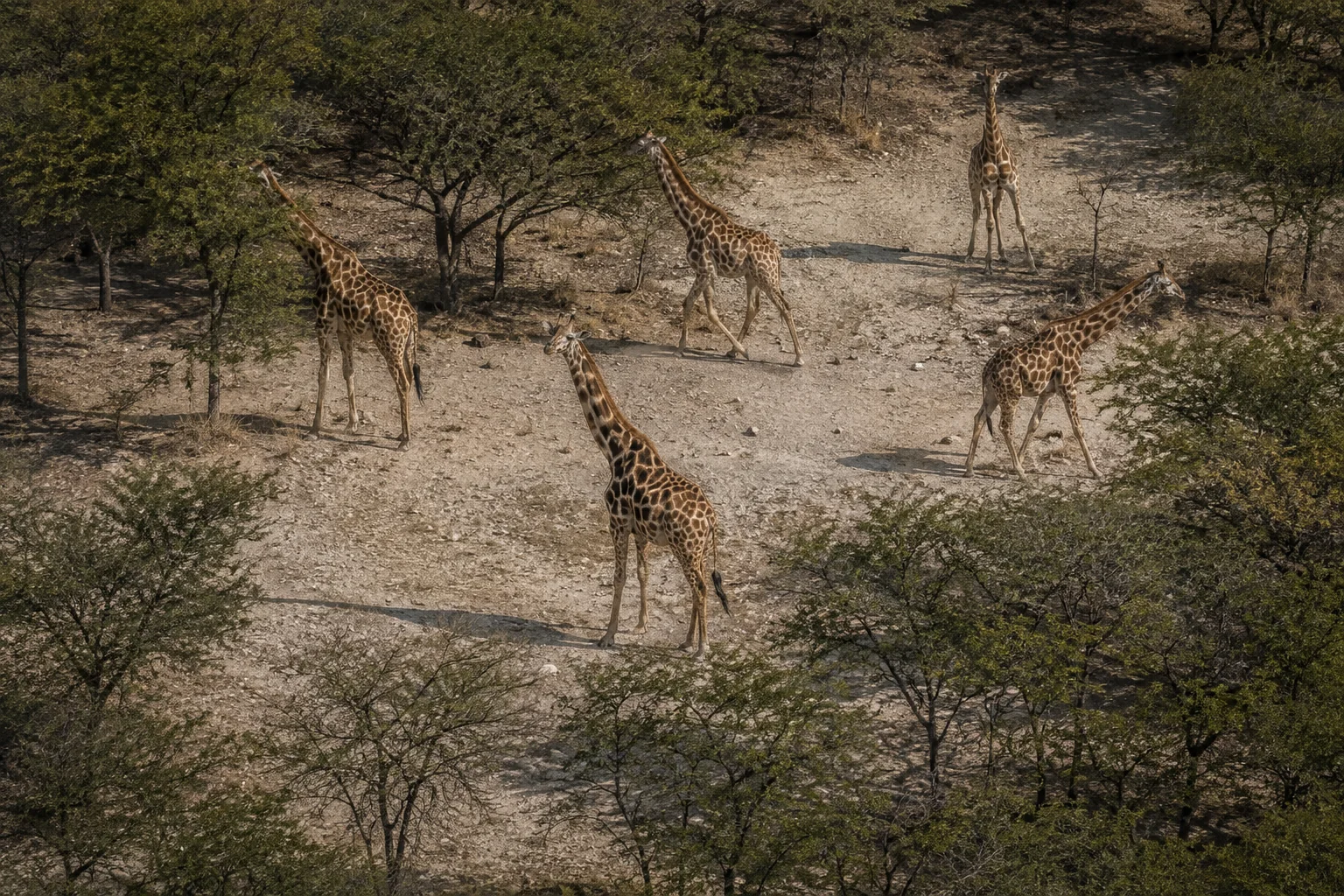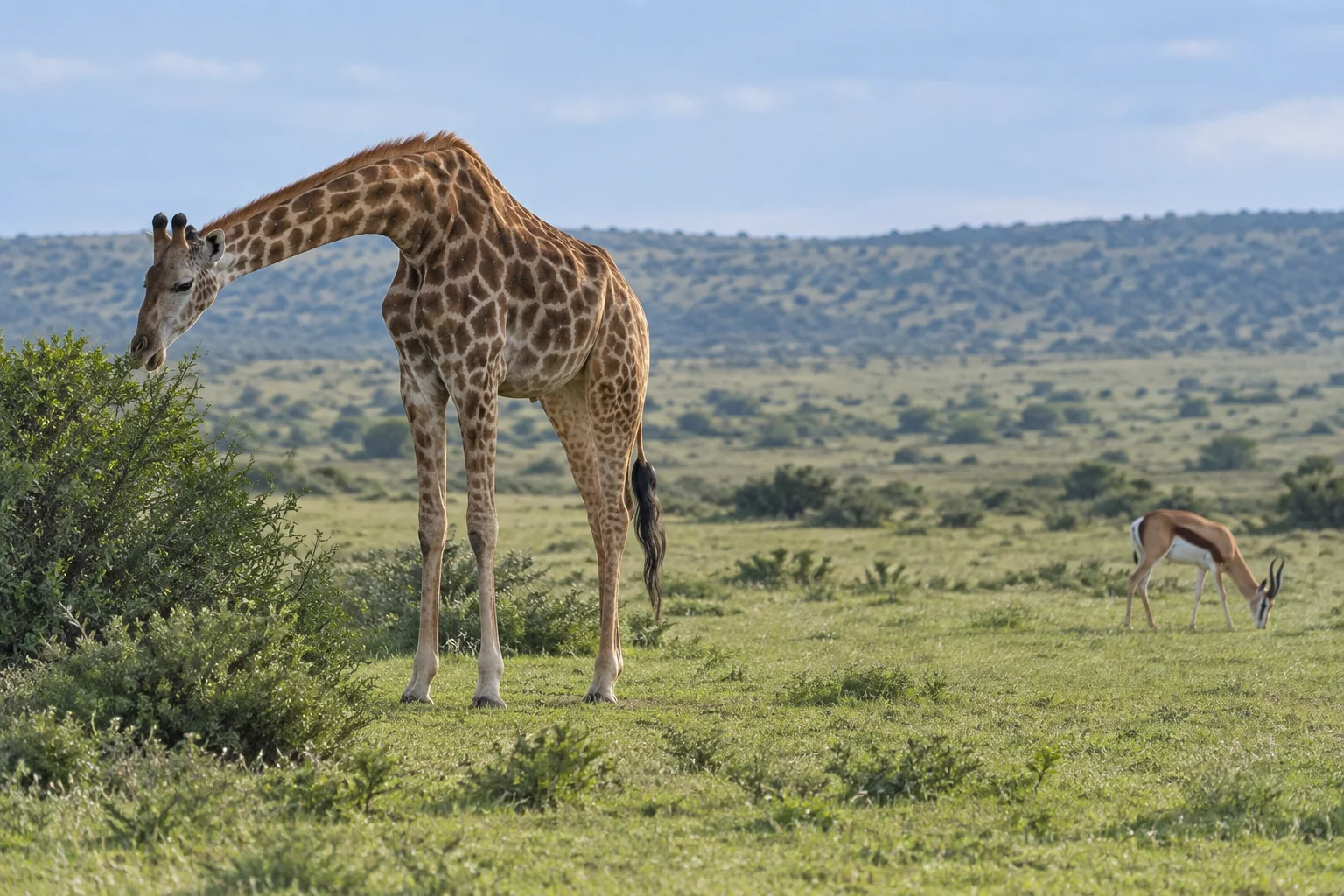
Two animals can eat the same shrub without taking the same mouthfuls. A giraffe may reach its upper branches while a camel removes leaves closer to the ground. Yet a difference in feeding height does not settle whether they compete. The leaves available tomorrow also depend on where each animal can go, how much it removes and how quickly the plant grows back.
David A. O’Connor, Bilal Butt and Johannes B. Foufopoulos examined that problem at Mpala in northern Kenya. Their 2015 paper combined observations of feeding animals with measurements of the vegetation along their routes. Giraffes and camels overlapped in the plants they ate, but differed in height, diet emphasis and habitat use. Human decisions about camel movements were part of that ecological picture.
Following mouths through a structured landscape
The researchers worked from May to August 2011 across three habitats distinguished by their soils and vegetation. During repeated group scans, they recorded feeding heights and food plants. Neck positions were converted into height categories using measurements, rather than assuming that every raised or lowered head represented the same distance above ground.
The giraffe data contained 3,617 feeding observations across 85 encounters. The paper summarised these as 337 animal records, with an explicit warning that a giraffe could have been seen on different days. These were not 337 independently identified animals. Adult males and females were included.
The camel comparison was narrower. Researchers followed one accessible managed herd for five days and observed adult females; the herd contained 62–78 females. Its 7,340 feeding records therefore captured repeated activity by a relatively small group. The observers avoided periods of active herding, but the animals’ broader access to the landscape still depended on management.
To describe that landscape, the team surveyed woody vegetation along 33 foraging-route transects. This mattered because a lower feeding height might reflect a shorter menu of available trees as well as an animal’s anatomy or preferences.
A clear difference in height
Giraffes fed at an average height of 3.0 metres, compared with 1.36 metres for the female camels. The separation remained when the researchers removed giraffe observations from black-cotton habitat, where camels had not been sampled. It also held when camels were compared separately with male and female giraffes.
Within the giraffe observations, males averaged 3.7 metres and females 2.5 metres. Both sexes changed their feeding heights across habitat types. Their bodies provided different reaches, but the distribution of branches still shaped where they ate.
Those results support a real division in the height of feeding during the study. They do not describe two sealed feeding zones. An average is a centre of a distribution, and both animals can use a range of heights. Nor does a higher mouth necessarily mean a better meal; the study did not turn those heights into measurements of energy or nutrition gained.
The same species can matter differently
The animals shared six identified food plants, but their main foods were not identical. Only Acacia mellifera appeared among the four most frequently used plants for both browsers. Listing shared species alone would therefore exaggerate how similar their observed diets were.
Even that difference needs context. On the comparable red-soil and transitional routes, plants along camel paths had a median height of 1.75 metres, compared with 2.18 metres along giraffe paths. Camels were feeding in shorter vegetation. Different plant availability along those routes could also contribute to different diets, so the observations cannot be read simply as a free-choice test of taste.
This is where herders enter the explanation. Camels can choose individual bites while people influence the places where those choices occur. The location of overnight enclosures and routes through the landscape can affect which shrubs a herd encounters. The paper treats these management decisions as possible contributors to separation between the browsers, rather than background details.
Separation is evidence about opportunity, not a verdict on competition
The immediate finding is that the observed animals did not use woody food in the same way. That reduces the basis for assuming direct, uniform competition merely because both are tall browsers. It does not establish that competition was absent.
To demonstrate food competition more directly, researchers would need evidence that one animal’s use reduced resources available to the other and affected its feeding, condition or demographic performance. This study did not manipulate camel access, measure such losses or follow giraffe survival. A short observation period and one female camel herd also leave open how the relationship changes with drought, stocking levels or other herd compositions.
A useful next comparison would follow changes in herding routes or enclosure locations while measuring vegetation and both animals’ feeding. That would help distinguish separation caused by plant structure from separation created by management, and test whether either breaks down when food becomes scarce.
For readers asking what giraffes eat, the study adds an essential dimension. A food plant is not a single resource equally available to every browser. Its height, location and route of access help determine whose meal it becomes.
Sources
David A. O’Connor, Bilal Butt and Johannes B. Foufopoulos. (2015). Foraging ecologies of giraffe (Giraffa camelopardalis reticulata) and camels (Camelus dromedarius) in northern Kenya: effects of habitat structure and possibilities for competition?. African Journal of Ecology, 53, 183–193. DOI: 10.1111/aje.12204. Read the full paper.