A line between two animals on a social-network diagram represents something the researchers chose to measure. It might mean the animals stood in the same group, used the same area or visited the same water source. None of those observations automatically demonstrates that a microbe passed between them.
Kimberly VanderWaal, Edward Atwill, Lynne Isbell and Brenda McCowan addressed that gap in a study published in 2014. They built one set of connections from the behaviour of wild giraffes at Ol Pejeta Conservancy in Kenya and another from genetic fingerprints of bacteria in their dung. The comparison let a biological measurement test the meaning of a behavioural map.
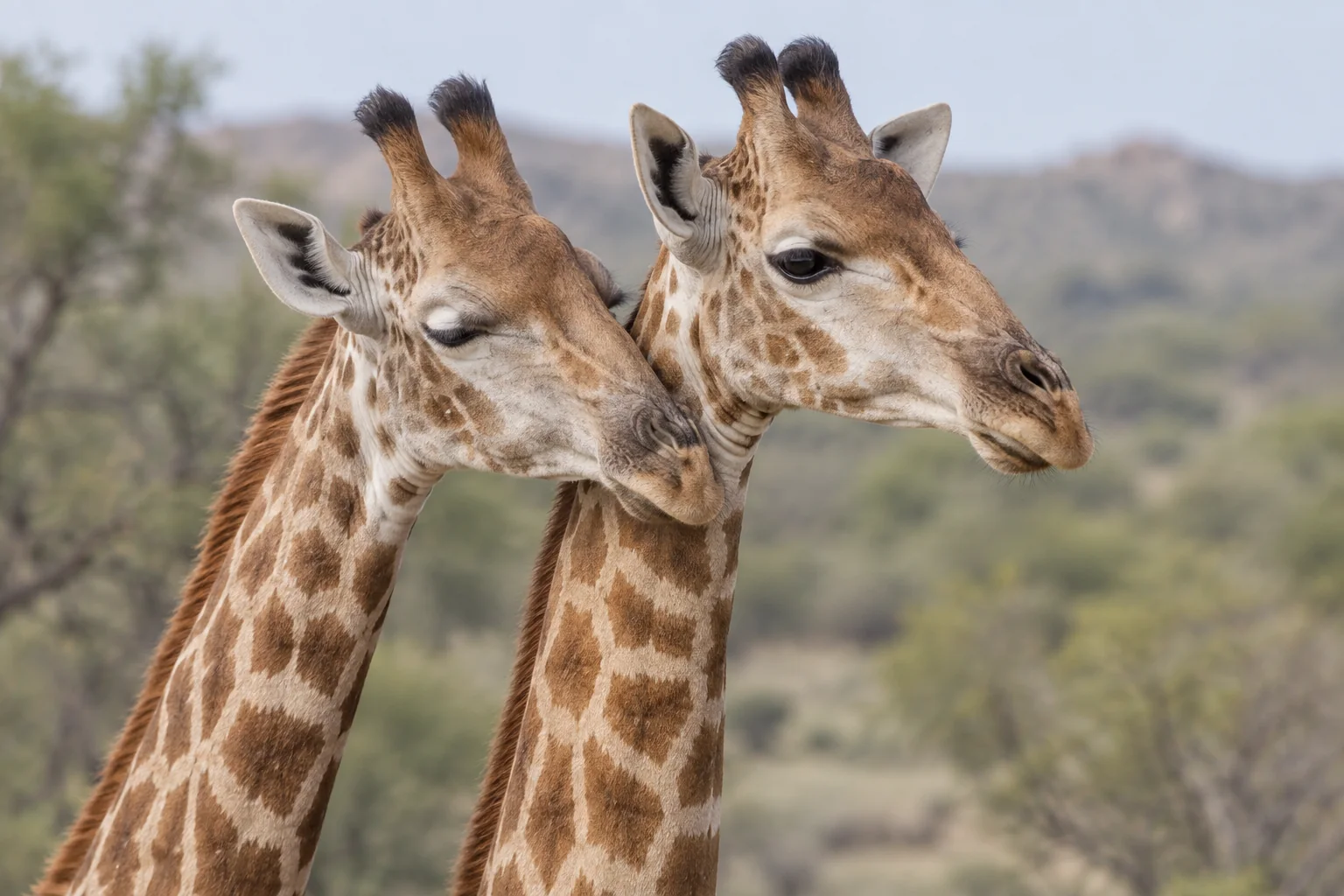
Pairs of giraffes with stronger observed social associations were more likely to share a bacterial subtype. Their overlapping use of the landscape, considered alone, did not explain sharing in the same way. Being recorded together contained information that a map of shared space missed.
Two ways to connect the same animals
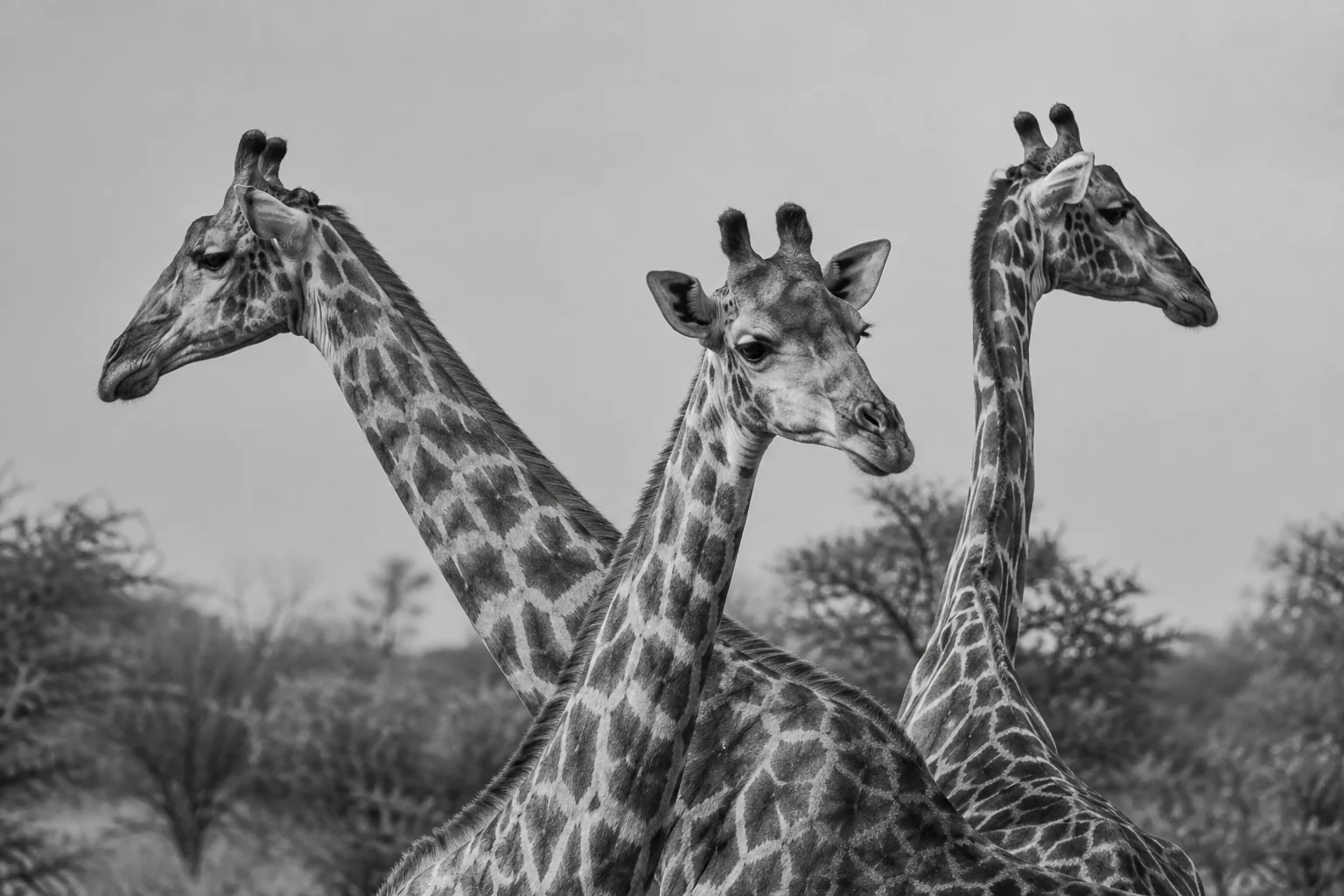
The behavioural records came from 1,089 group sightings between January and August 2011. Coat patterns allowed the researchers to recognise individuals and track which giraffes repeatedly appeared together. From those records they calculated an association strength for every pair: the proportion of sightings of either animal in which both occurred together.
The team also mapped the central areas used by each giraffe. Two animals whose home ranges overlapped received a spatial connection, whether or not observers had found them together. A third comparison described potentially shared water sources within their home ranges. This was an estimate of access to the same sources, rather than a record of actual drinking visits.
Then came the independent biological evidence. Researchers collected fresh dung from 194 giraffes, mainly during a short period after the behavioural study, and cultured four Escherichia coli isolates from each sample. Bacterial genetic fingerprints divided the resulting 776 isolates into 134 subtypes.
E. coli is often a normal gut inhabitant. Here it provided a tractable marker of microbial sharing; the team was not documenting an outbreak of illness. Its diversity mattered because the researchers needed to distinguish types, rather than merely establish that many giraffes carried the same broad bacterial species.
For the microbial network, two animals received a connection when they shared at least one subtype. The social, spatial, water-access and microbial networks all contained the same 194 giraffes, allowing their patterns to be compared directly.
Social associations carried a useful signal
A pair’s association strength was positively related to its probability of sharing a bacterial type. Home-range overlap and potential water-source sharing, tested separately, showed no clear relationship with microbial sharing.
The social result was less decisive in one combined analysis. It remained statistically supported when potential water sharing was included, but fell short of the conventional significance threshold when home-range overlap was included instead. The evidence therefore favoured social associations as a useful indicator without cleanly separating every contribution of social behaviour and space use.
At the individual level, giraffes with greater social connectivity also tended to connect with more animals in the microbial network. The study’s measure of social connectivity incorporated both the number of associates and the strengths of those associations. It did not simply label every animal in a large group as equally influential.
That correspondence gave the study a practical contribution. Social observations can help identify variation in opportunities for microbial exchange, provided the relationship is checked against biological evidence. The analysis did not demonstrate that a particular giraffe had transmitted bacteria to many others.
Shared space has a clock
Why might observed associations tell researchers more than overlapping home ranges? Two animals can use the same part of a conservancy weeks apart. Appearing in the same group establishes a closer connection in time as well as space.
That distinction can matter for microbes passed through contaminated surroundings. Animals travelling or feeding together may encounter the same material while it remains capable of transmitting bacteria. Social association can therefore predict microbial sharing even when direct physical contact is unnecessary.
The authors raised this timing explanation, but did not directly test it. They did not sample bacteria from water sources or track every drinking event. A shared bacterial subtype could reflect transmission between two animals, a chain involving other animals, or exposure to a common environmental source. The fingerprint itself provides neither a direction nor a date of transmission.
A check on the meaning of a network
A later Ol Pejeta analysis related intestinal worm eggs to the giraffes’ social ties. Connections outside an animal’s usual circle were more closely associated with parasite detection than repeated connections within that circle. Both papers used the same 2011 association programme, so their biological measurements complement one another without constituting independent behavioural replications.
The worm analysis distinguishes kinds of relationship. The bacterial study makes a different contribution: it tests whether a map made from observed relationships resembles one constructed without using those observations to define its links. That is a useful step whenever researchers want to infer transmission from social behaviour.
Repeated samples could show when a bacterial type first appears in different animals, while environmental sampling could test whether the same type occurs at shared sites. Combining those records with the timing of associations would narrow the possibilities, although unsampled animals and missed bacterial types would still complicate a complete transmission history.
The study’s achievement was to connect two kinds of evidence that are easy to assume will agree. The agreement was informative, and its limits reveal what a social map can help investigate next.
Sources
- Kimberly L. VanderWaal, Edward R. Atwill, Lynne A. Isbell and Brenda McCowan (2014). “Linking social and pathogen transmission networks using microbial genetics in giraffe (Giraffa camelopardalis).” Journal of Animal Ecology 83, 406–414. DOI · Author-hosted full paper.
- Kimberly L. VanderWaal, Vincent Obanda, George P. Omondi, Brenda McCowan, Hui Wang, Hsieh Fushing and Lynne A. Isbell (2016). “The ‘strength of weak ties’ and helminth parasitism in giraffe social networks.” Behavioral Ecology 27(4), 1190–1197. DOI · Author-hosted full paper.