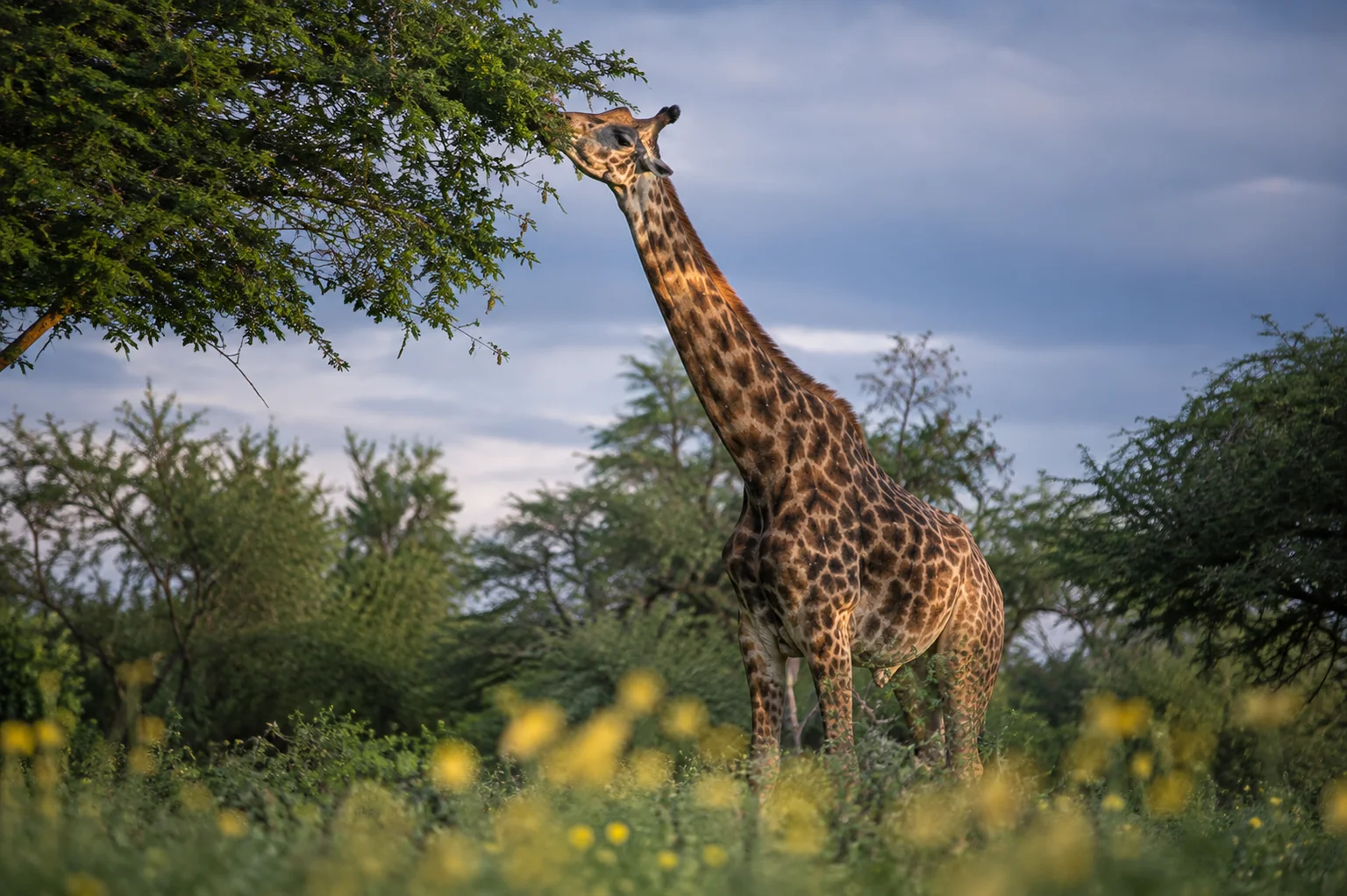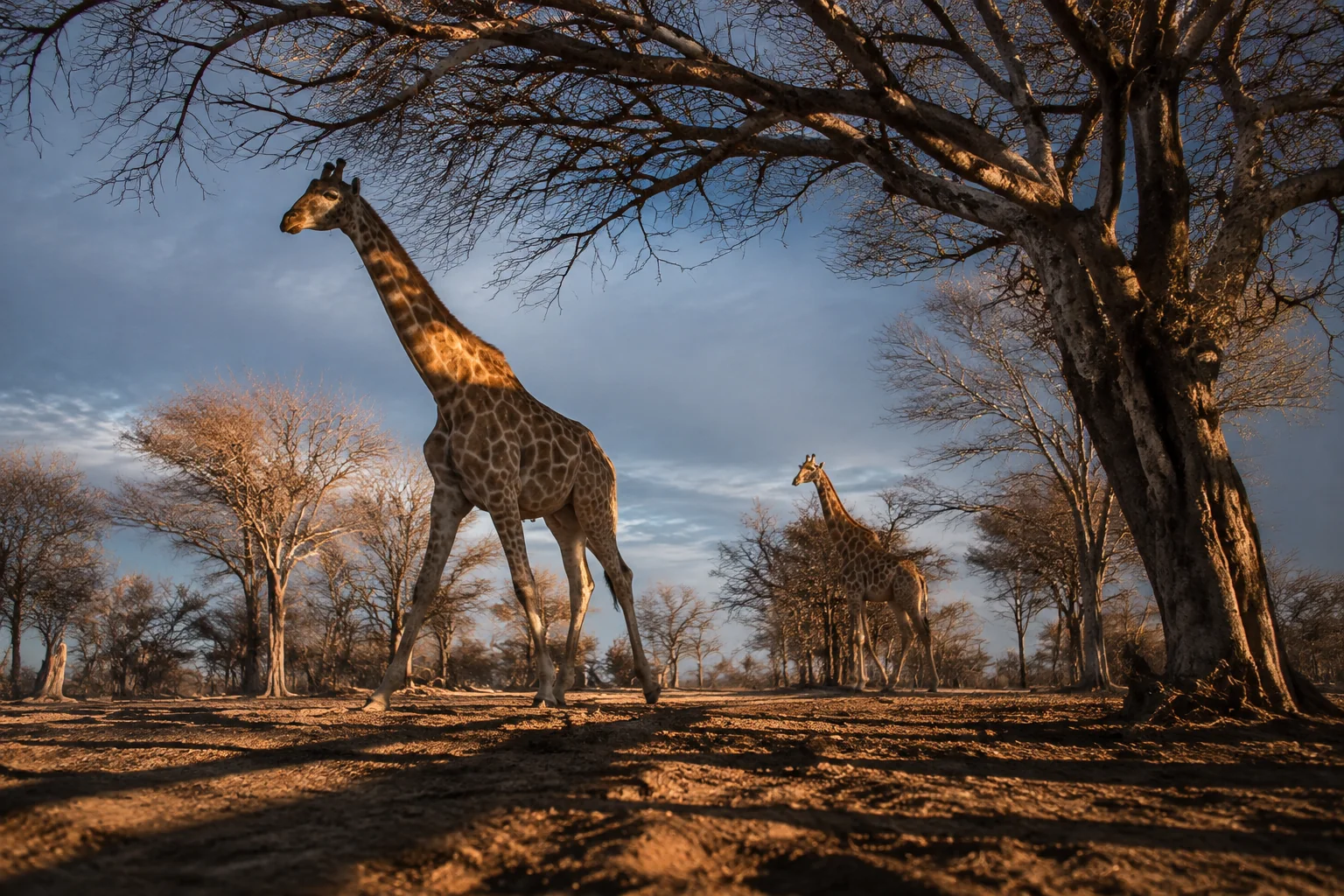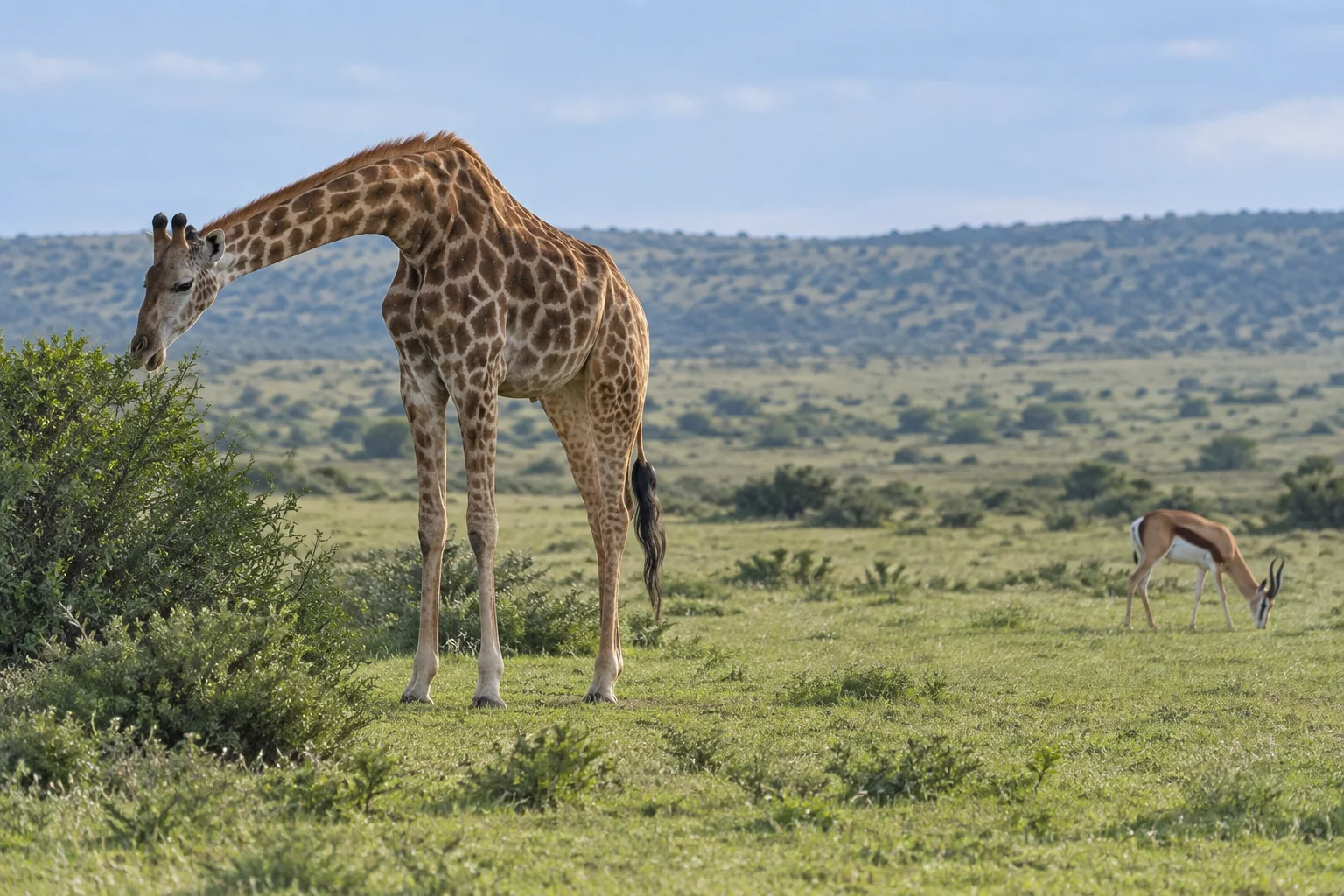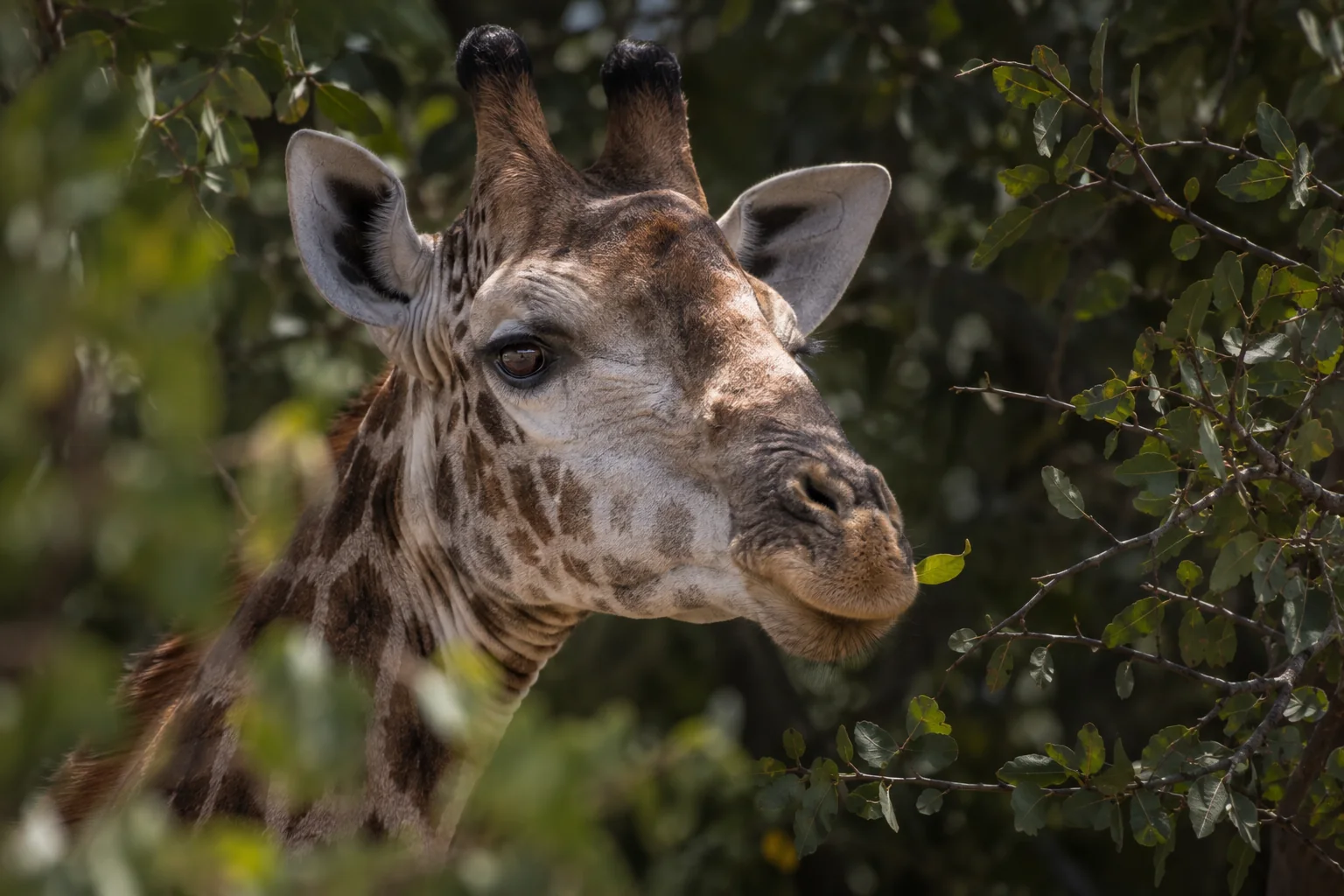
An expanding shrub can mean different things to different herbivores. For an animal that eats grass, it may occupy ground that would otherwise provide grazing. For a giraffe, its leaves may be the reason to visit that ground. Deciding whether to clear bush therefore requires knowing who uses it, and how.
Matana Levi and colleagues addressed that question in the Tarangire Ecosystem of northern Tanzania. Their 2022 study examined a native shrub, Dichrostachys cinerea, which can spread into grasslands and is sometimes targeted for removal. The researchers expected giraffes to avoid it. The animals’ feeding choices showed the opposite.
A frequent meal is not necessarily a favourite
Simply watching a giraffe eat a plant cannot establish preference. If one shrub covers most of a landscape, it could dominate meals even when the animal seeks other species whenever possible. To identify a preferred food, scientists need two measurements: how often it is eaten and how much is available.
The team observed feeding during the wet and dry seasons of 2019 in Tarangire National Park, Manyara Ranch and Randilen Wildlife Management Area. Repeated scans of feeding herds produced 3,728 observations from 105 herds. Those are feeding records and herd encounters, rather than 3,728 different giraffes.
The researchers then measured woody vegetation in two ways. They sampled plants in the patches where giraffes had just fed, and surveyed systematically spaced locations across the wider landscape. A botanist helped identify plants; specimens that could not be named in the field were collected for identification.
Together, these observations connected actual meals with the choices surrounding them. A plant counted as selected when its share of feeding was greater than expected from its availability, allowing for uncertainty in the comparison.
The shrub mattered at both scales
The vegetation surveys identified 118 woody plant species. Giraffes were observed feeding on 38. A much smaller group supplied most meals: Vachellia tortilis accounted for about 25% of feeding observations, D. cinerea for 23%, and Vachellia mellifera for 17%.
The result for D. cinerea went beyond abundance. Giraffes selected it more often than its availability would predict in both seasons, and at both spatial scales. They were choosing the shrub within feeding patches as well as concentrating their feeding on it relative to the wider landscape.
That distinction is useful because a plant can seem preferred under one comparison but not another. An animal may travel to a patch rich in one food, then choose a second food once inside it. Measuring only the immediate patch can miss the first decision; measuring only the landscape can obscure the second.
Some plant results did change with scale in this study. The strong result for D. cinerea survived both comparisons. Its importance was therefore harder to dismiss as an artefact of where availability had been measured.
What makes the shrub useful?
The study measured food use and plant availability rather than testing digestion or nutrient intake. The authors suggest that the shrub’s nutritional qualities and pattern of losing and replacing leaves could help explain its appeal. Those are plausible explanations for the observed choices, not chemical findings newly established by these feeding observations.
This separation matters for management. The evidence already shows that giraffes use and select the plant; it does not require every nutritional mechanism to be resolved first. But it cannot tell managers how many giraffes a particular area of shrub will support, or how far animals would move if it disappeared.
Our guide to what giraffes eat explains the broader browsing diet. Levi and colleagues add a more specific lesson: a plant described as undesirable for grazing can be desirable to a browser. A label applied to the landscape is not an account of every animal’s food supply.
Clearing changes more than grass cover
The authors warn that removing D. cinerea to favour livestock grazing could have unintended consequences for giraffes and other browsing wildlife. This was not a clearing experiment, so the study did not measure a resulting fall in giraffe numbers or nutrition. It established the dietary link that makes such consequences worth investigating.
A useful comparison would follow giraffe feeding and movement before and after carefully documented clearing, alongside similar uncleared areas. That could reveal whether animals switch successfully to other plants or lose access to an important seasonal resource. Measuring the remaining food supply would distinguish simple displacement from an actual shortage.
The finding does not settle every bush-management decision. It changes what needs to be counted before making one. Grass gained and giraffe food lost can be two outcomes of the same operation.
Sources
Matana Levi, Derek E. Lee, Monica L. Bond and Anna C. Treydte. (2022). Forage selection by Masai giraffes (Giraffa camelopardalis tippelskirchi) at multiple spatial scales. Journal of Mammalogy, 103(3), 737–744. DOI: 10.1093/jmammal/gyac007. Read the full paper.