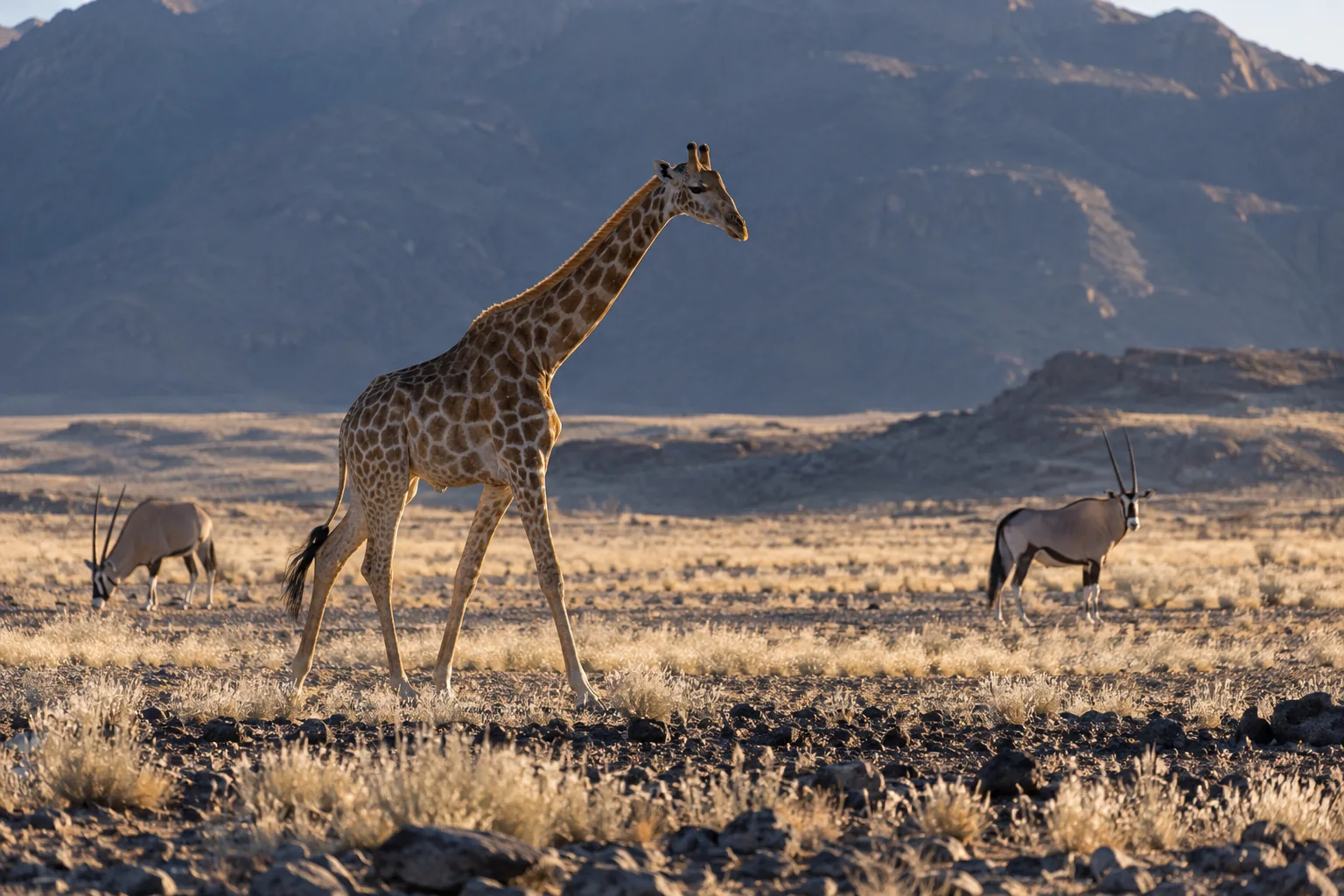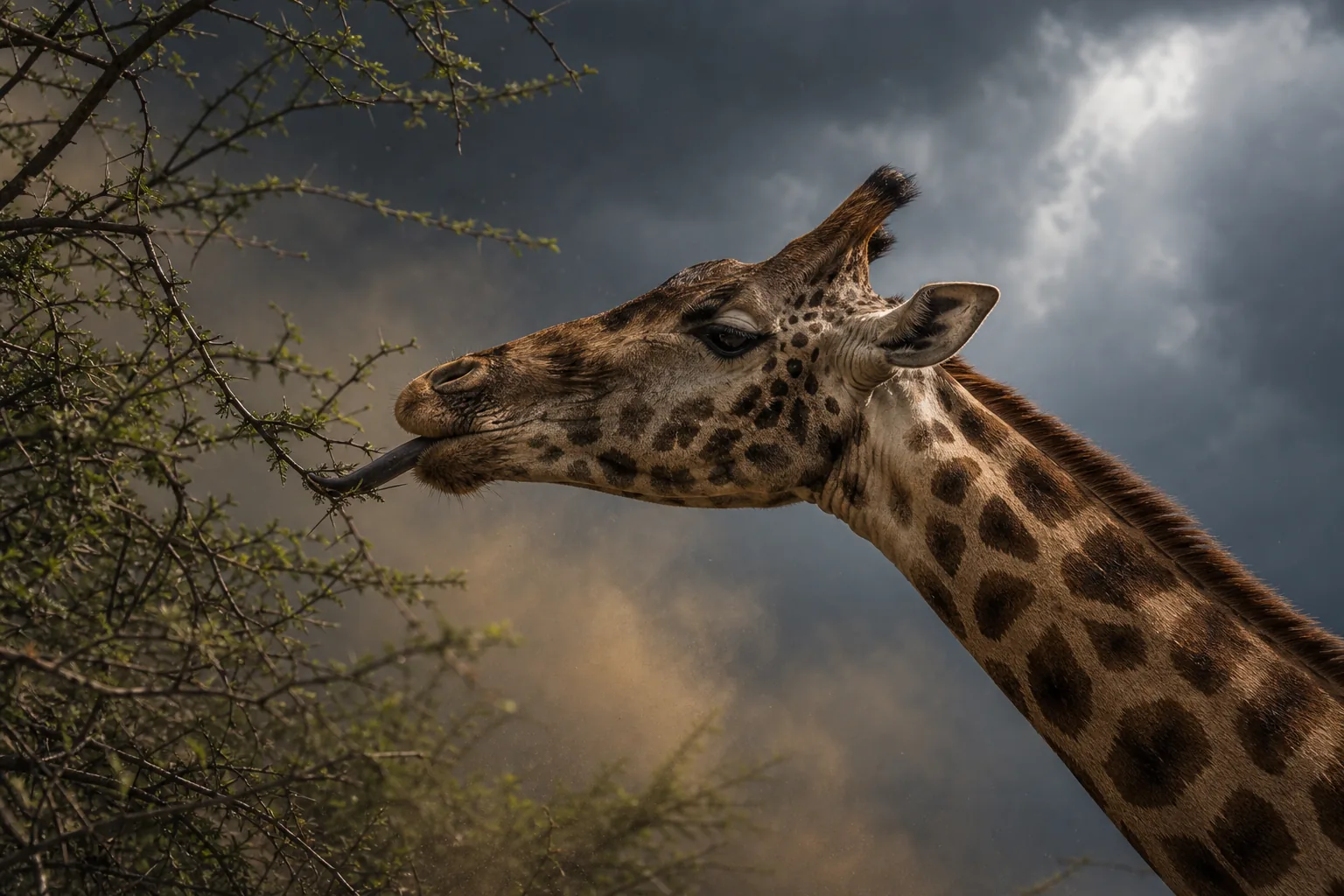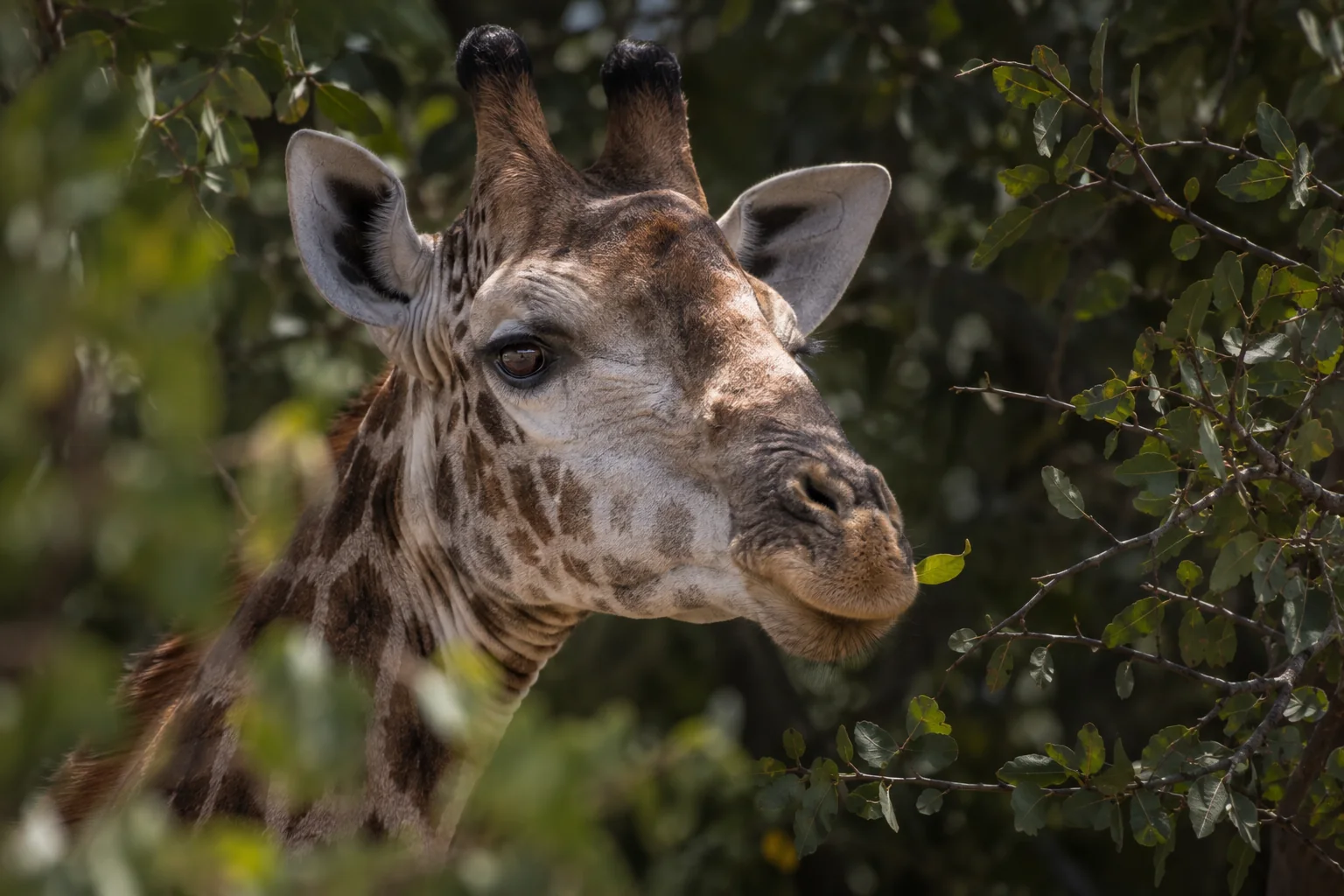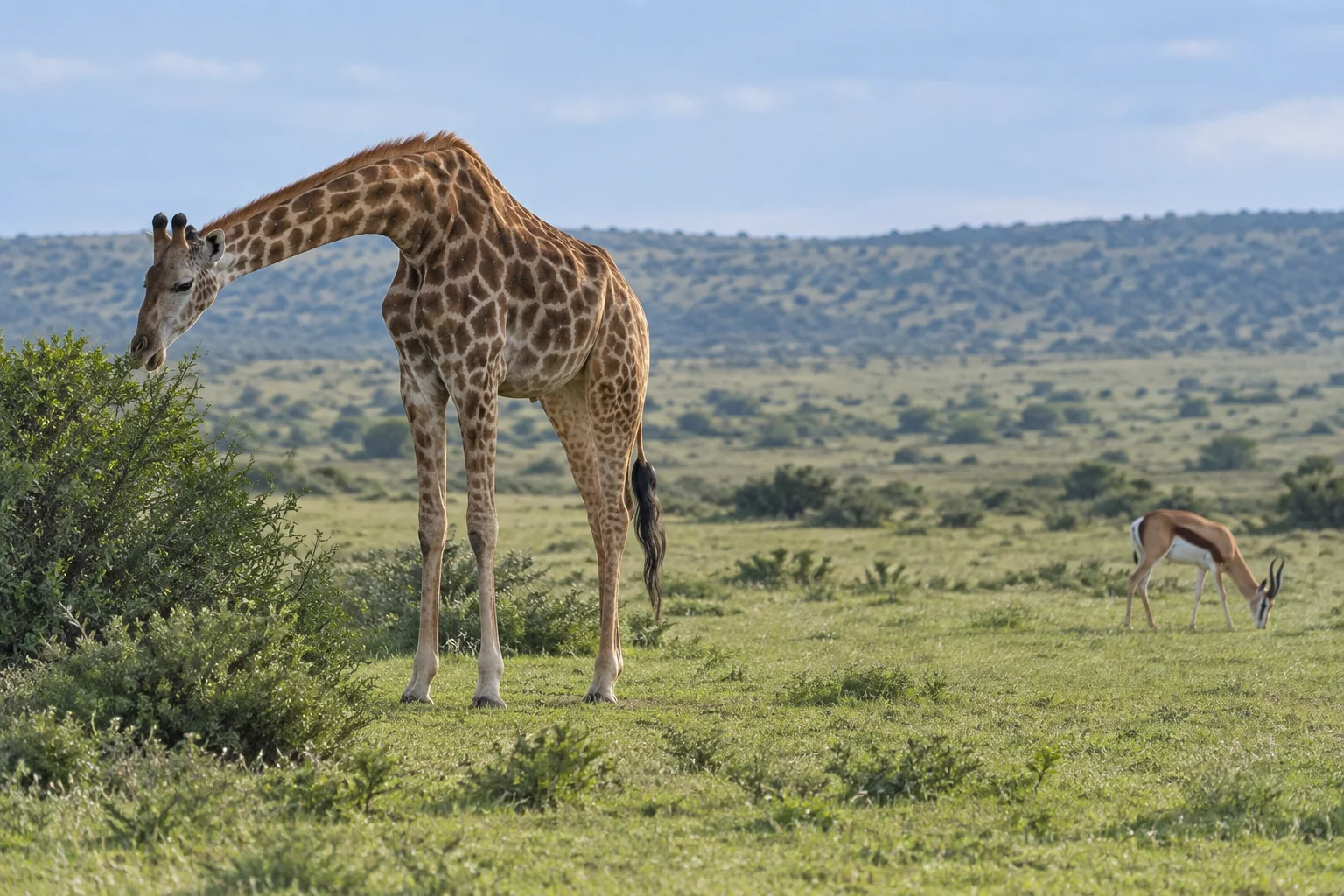
A giraffe with its front legs spread and its head close to the ground could be drinking. It could also be licking soil—or eating grass. Those behaviours look similar from a distance, yet they raise very different questions about what the animal needs.
Peter A. Seeber and colleagues took care to distinguish them during observations in Hwange National Park, Zimbabwe. Their short study, published in 2012, documented repeated grass feeding at a time when trees and shrubs still offered leaves.
Checking what entered the mouth
The team observed giraffes for 188 hours between March and May 2011. When an animal fed from the ground layer, they watched its movements and later examined the feeding patch. They counted grazing only when drinking and soil eating could be excluded.
The local herb layer was dominated by grass, and the visual evidence showed grass being consumed. Photographs also captured grass in a giraffe’s mouth. This mattered because an unusual posture alone would not have been sufficient evidence of an unusual meal.
The observers photographed individuals so that repeated sightings could be distinguished from new animals. In all, they recorded 31 grazing occasions involving 21 identifiable giraffes. Three individuals were seen grazing on different days. Most occasions involved adult or subadult females, although the sampling was not designed to estimate a population-wide difference between the sexes.
A small behaviour with a clear pattern
The giraffes accumulated 174 minutes actually ingesting grass. That represented about 1.5% of the study’s observation time. It indicates that grazing was a minor part of what the researchers watched; it is not a precise estimate of the proportion of every giraffe’s annual diet.
Most grazing observations began when researchers encountered an animal already feeding. Such opportunistic starts can miss the beginning of a bout and make frequency estimates difficult. The main contribution was documenting that the behaviour occurred repeatedly across animals, days and places.
Grazing often came in short bouts interrupted by looking around. The giraffes generally stood up again before moving between patches. Almost all grazers were in groups, and on some occasions several animals grazed together.
These observations show that reaching grass was possible, but involved a different pattern of posture and vigilance from ordinary browsing. They do not show that grazing was effortless or that it supplied a large amount of food.
Why eat grass when leaves remain?
The obvious explanation—there were no leaves left—did not fit the observations. Usual browse plants were in leaf and were also being eaten during the study.
The grass layer, meanwhile, was already ageing. Drawing on previous nutritional research, the authors reasoned that its value as a source of readily digestible energy or protein might be limited. They proposed that it could instead supply micronutrients insufficiently available from the animals’ other foods.
Several details made that possibility worth considering. Five of the seven grazing locations were close to salt licks, and two grazing events were followed shortly afterwards by soil eating. Hwange’s sandy soils also provided an ecological reason to ask about nutrient limitations.
None of those observations measured a mineral shortage in the animals or a nutritional advantage in the grass. The study collected behavioural evidence; the micronutrient explanation remains a hypothesis.
What would settle the nutritional question?
The authors specifically call for measurements of the micronutrients in the plants eaten. Sampling grazed grasses alongside available browse would test whether the proposed nutritional contrast exists. Repeated observations across seasons could then establish whether grass feeding becomes more frequent when that contrast is greatest.
Those comparisons would need to distinguish eating grass from nearby use of soil or salt licks. Proximity alone cannot tell which resource attracted an animal or whether both behaviours served the same need.
The result adds precision to the familiar statement that giraffes are browsers. That description captures their main diet. It does not make occasional grass feeding impossible. By documenting the exception carefully, Seeber and colleagues opened a question about what a small, unusual part of a diet might supply.
Sources
Peter A. Seeber, Honestly T. Ndlovu, Patrick Duncan and André Ganswindt. (2012). Grazing behaviour of the giraffe in Hwange National Park, Zimbabwe. African Journal of Ecology, 50(2), 247–250. DOI: 10.1111/j.1365-2028.2011.01314.x. Read the full paper.