Scientific commentary
A giraffe population can survive on borrowed animals
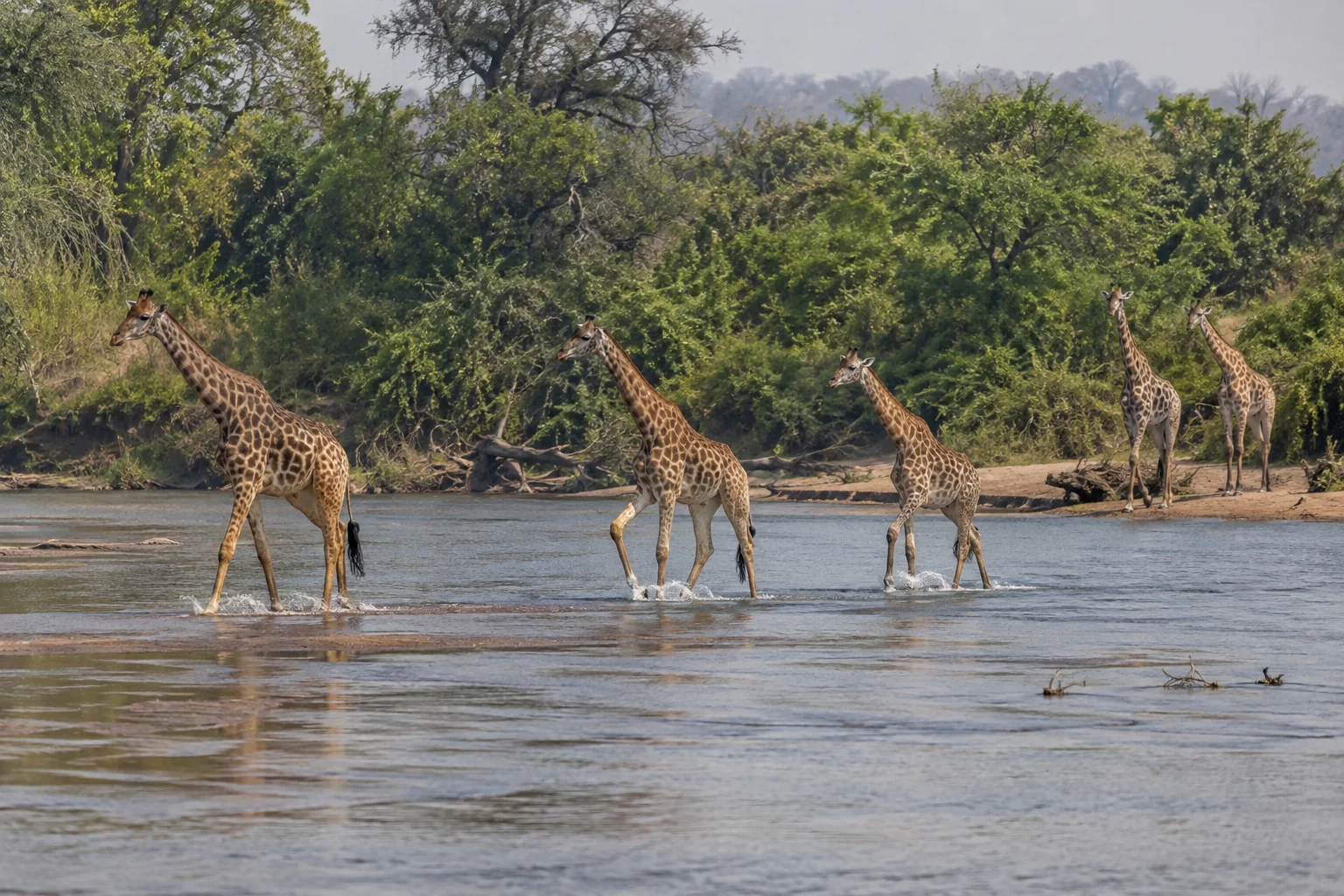
Some landscapes contribute giraffes to their neighbours. Others remain occupied partly because animals keep arriving. Following individuals reveals the difference.

The questions, fieldwork and discoveries behind giraffe science. Each story explains an original study, what it found and what remains uncertain.
109–117 of 179 stories
Scientific commentary
Some landscapes contribute giraffes to their neighbours. Others remain occupied partly because animals keep arriving. Following individuals reveals the difference.
Scientific commentary
A landscape model placed community ranches inside the conservation picture, while showing why predicted connections still need field evidence.
Scientific commentary
A plant's contribution to giraffe habitat depends on when its leaves remain available, as well as how commonly it grows.
Scientific commentary
Watching a giraffe feed is only half the comparison. Researchers also counted the trees around it to ask which available species were used.
Scientific commentary
A national recovery can hide a shrinking map. Uganda's historical record showed why counting giraffes and counting viable populations answer different questions.
Scientific commentary
One protected area held more giraffes, yet far fewer were young. The contrast exposed a warning that abundance alone could conceal, without identifying its cause.
Scientific commentary
Four months without visitors created an unusual comparison, but the animals’ lives kept changing while the gates were closed.
Scientific commentary
Two giraffes joined a visitor-feeding activity and two did not. Studying all four showed why participation, choice and wider conditions belong in the same assessment.
Scientific commentary
A landscape-scale social network found that females near traditional homesteads had weaker average ties and more uneven relationships within their communities.