Scientific commentary
Heavily Browsed Trees Had a Different Defence Profile
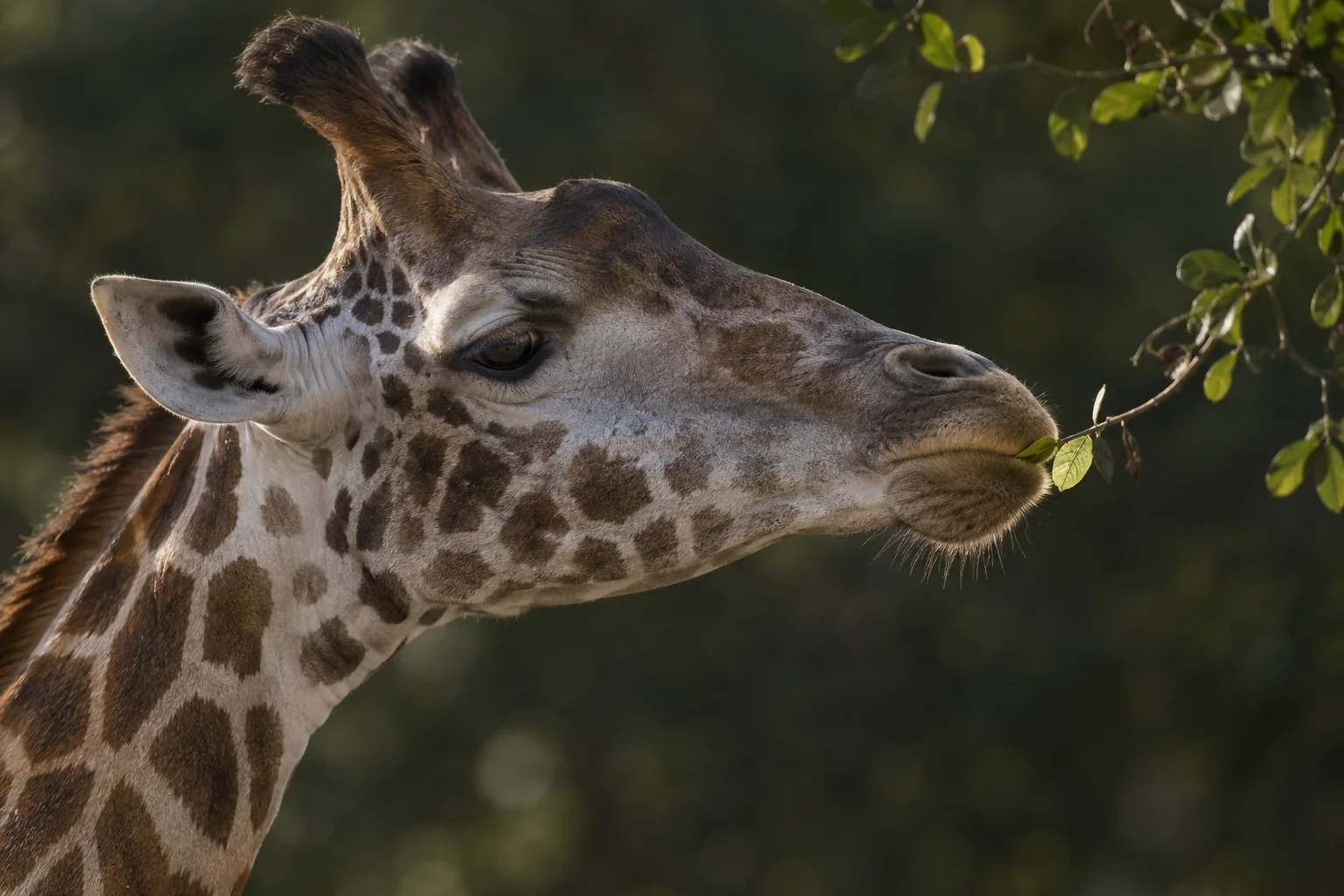
A tree’s leaves and spines can change the work of feeding. Comparing browsed trees revealed several defensive differences, but not a universal chemical response.

The questions, fieldwork and discoveries behind giraffe science. Each story explains an original study, what it found and what remains uncertain.
91–99 of 179 stories
Scientific commentary
A tree’s leaves and spines can change the work of feeding. Comparing browsed trees revealed several defensive differences, but not a universal chemical response.
Scientific commentary
One tracked return showed why release day is only the beginning of a translocation’s outcome.
Scientific commentary
Bramiscus combined familiar headgear with a different place on the giraffid family tree.
Scientific commentary
The same specialised cell type was spread through the tissue, but its stored proteins were not.
Scientific commentary
Behind the mobile lips and tongue lies a network whose layout cannot be inferred from outward appearance.
Scientific commentary
The virus resembled bovine coronavirus in its sequence and laboratory behavior. A calf experiment tested something a family tree alone could not.
Scientific commentary
A male’s lip curl follows a short exchange with a female—and a direct route from her urine to a specialised sensory organ.
Scientific commentary
Preferred female companions were associated with a wider pattern involving their calves in a small introduced population.
Scientific commentary
Repeated observations showed that a mature bull’s reproductive activity could change faster than its size or appearance.