Scientific commentary
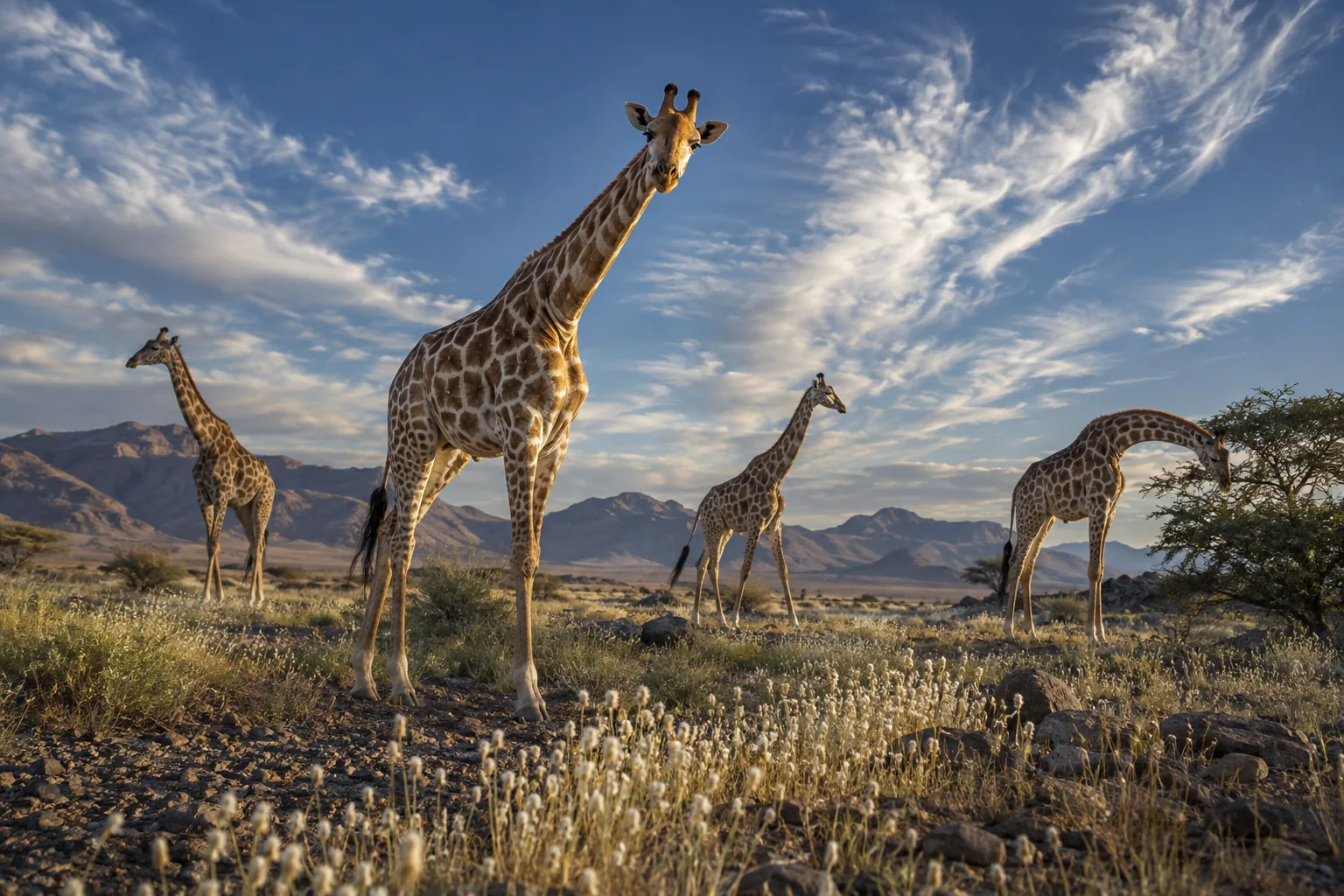
Why a Giraffe Population Crash Can Hide in Its DNA
A genetic reconstruction and a wildlife count describe different histories. Comparing them reveals both the value and the limits of a genomic record.

The questions, fieldwork and discoveries behind giraffe science. Each story explains an original study, what it found and what remains uncertain.
82–90 of 179 stories
Scientific commentary
A genetic reconstruction and a wildlife count describe different histories. Comparing them reveals both the value and the limits of a genomic record.
Scientific commentary
Bones can preserve clues to movement, but growth changes both the bones and the spaces between them.
Scientific commentary
A large lung has to distribute both incoming air and circulating blood. A rare physiological measurement investigated how well those two supplies met.
Scientific commentary
A long neck adds air that never reaches the gas-exchange surface. Lung growth changes the room available for each breath.
Scientific commentary
An unborn female giraffe already has remarkably active-looking ovaries. A study asked how that development fits into the hormonal support of pregnancy.
Scientific commentary
A fossil with a disk-shaped head and unusually reinforced neck offered researchers a way to test what those extra bony supports actually did.
Scientific commentary
The awkward posture is familiar from drinking. Close observation revealed a different reason for lowering a giraffe’s head to the ground.
Scientific commentary
A giraffe can be present in a photograph and absent from the resulting data. Camera settings help determine whether volunteers notice it.
Scientific commentary
A useful wildlife catalogue must recognise familiar giraffes, leave room for newcomers and avoid turning several photographs into several imaginary animals.