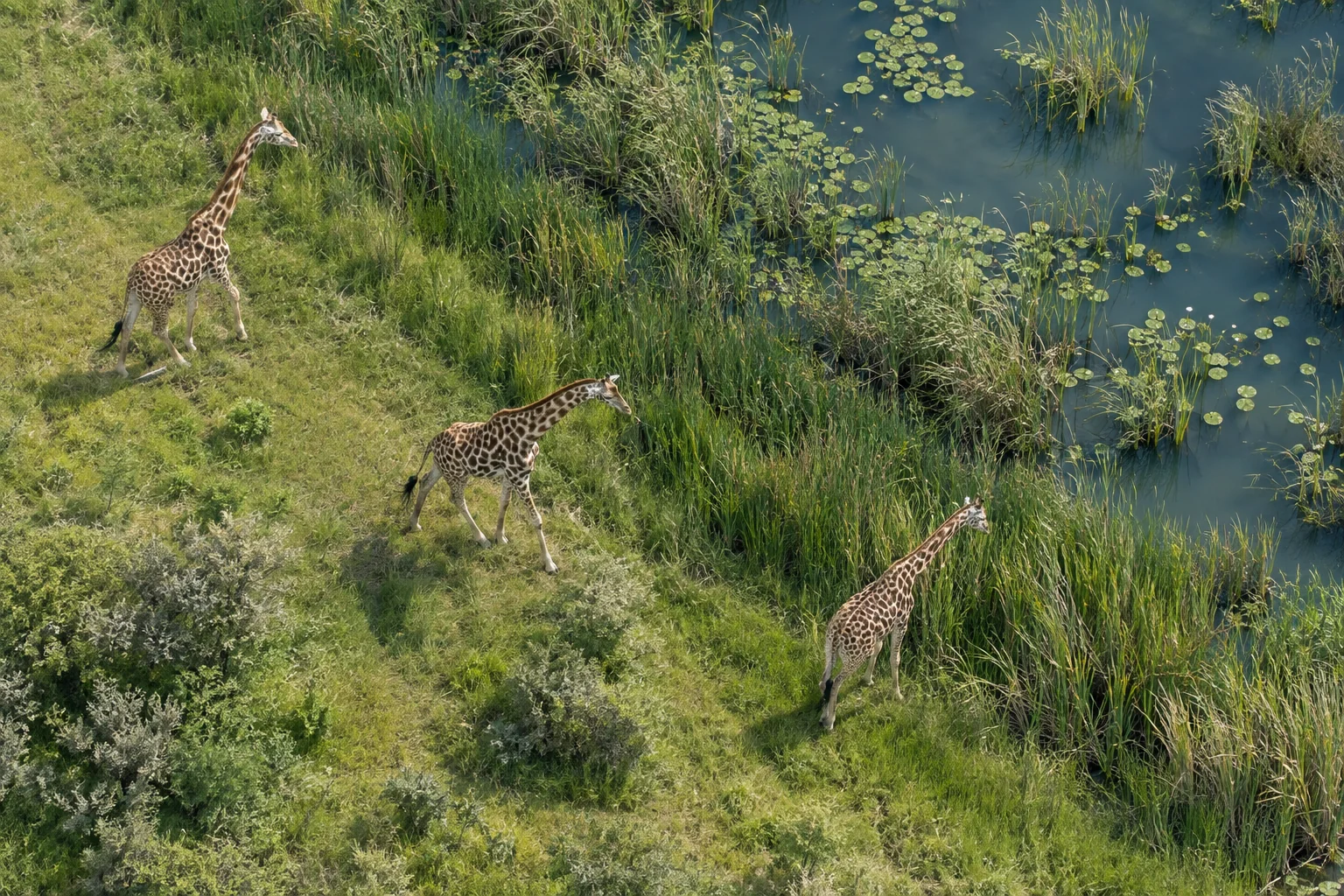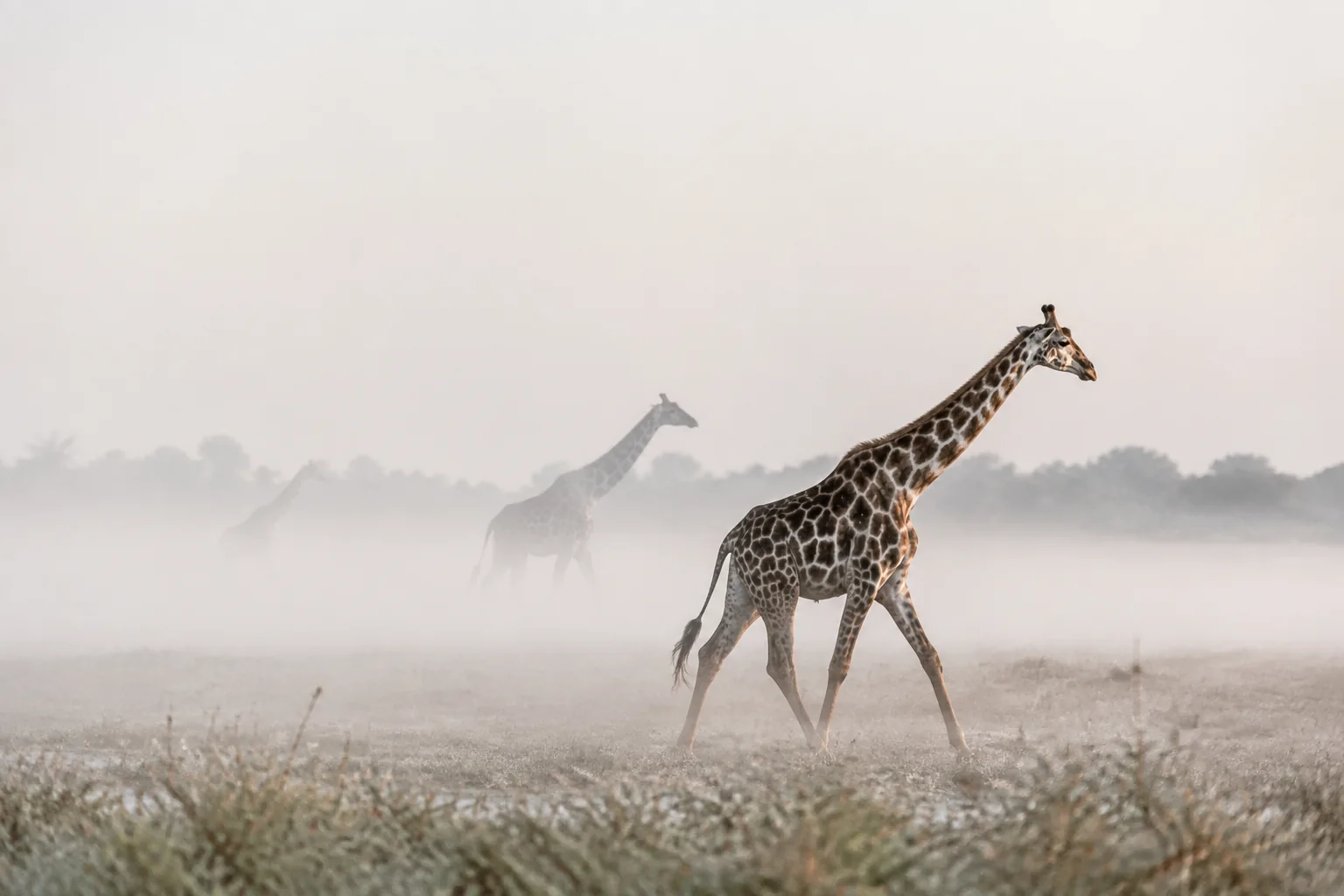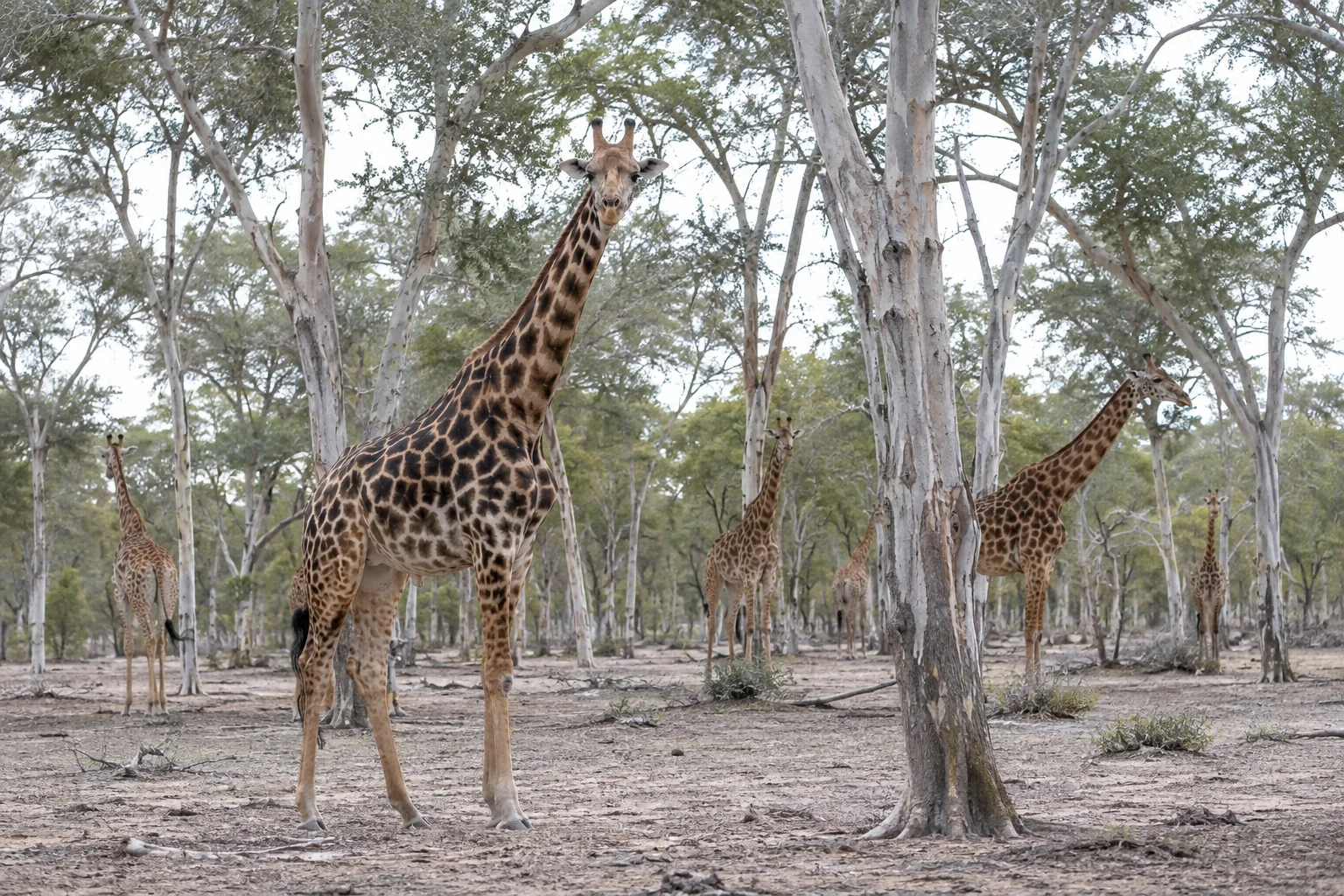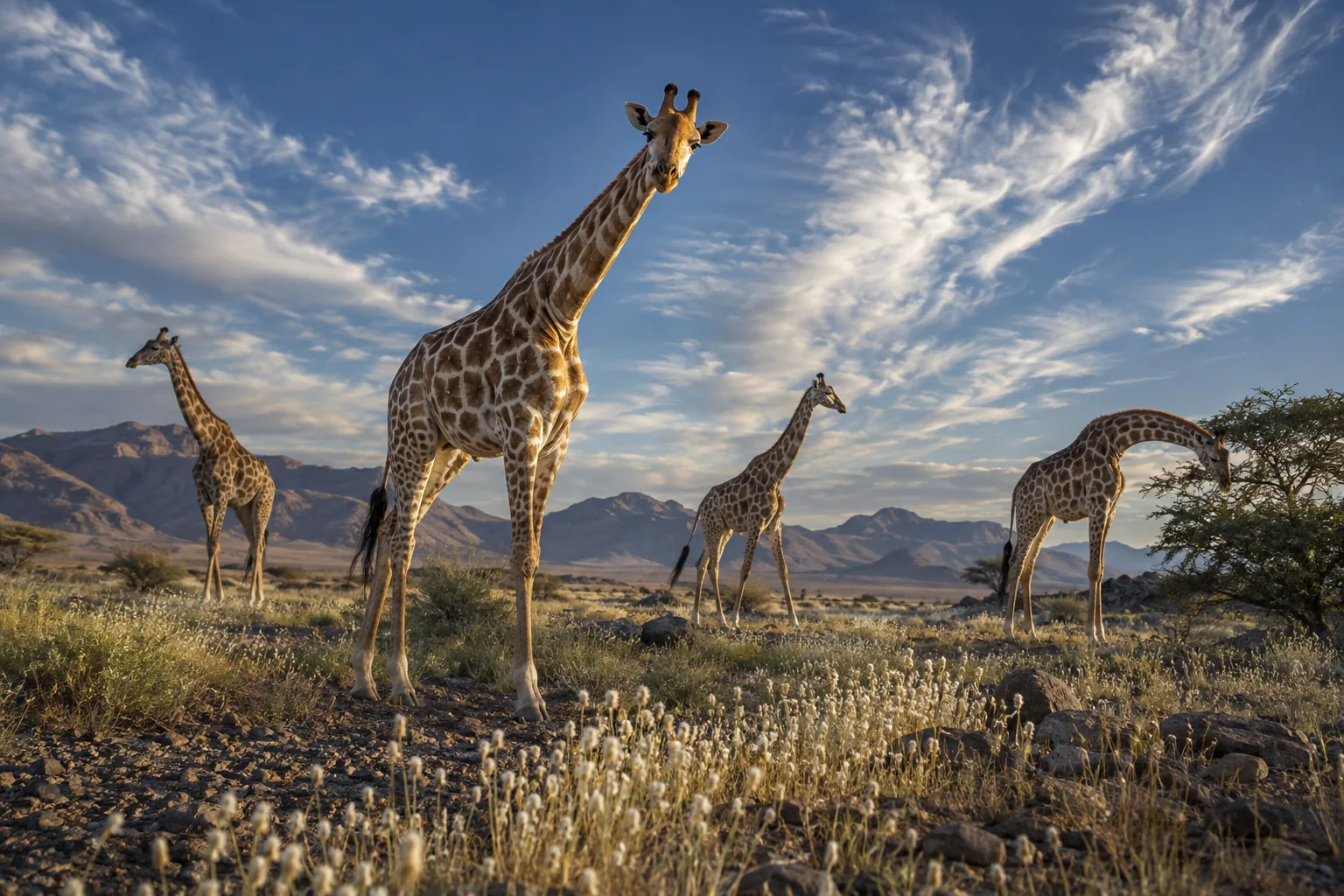
A severe fall in the number of living giraffes might seem certain to leave an equally sharp mark in their DNA. Yet a 2022 study of northern giraffes found a more complicated relationship. The genetic history of West African giraffes indicated a long decline, but did not resolve their documented recent population crash as a separate dramatic event.
That absence did not mean the crash had failed to happen. It showed that a reconstruction from present-day genomes is not a replay of successive wildlife counts. Raphael Coimbra and colleagues combined several kinds of genetic evidence to ask what the genomes could reveal about declining populations—and which aspects of their history remained difficult to recover.
Their answer contained both retained variation and evidence of shared ancestry. West African giraffes still carried genetic diversity, but on average they also showed stronger signals of inbreeding than Kordofan giraffes in the same study. Those findings are compatible because they measure different properties of the surviving genomes.
From samples to a history
The team collected new tissue samples from West African giraffes in Niger and Kordofan giraffes in Chad. They sequenced mitochondrial markers in those samples and added them to a broader collection of published sequences. Mitochondrial DNA follows the maternal line and helped establish how the new specimens fitted into known giraffe lineages.
For the detailed nuclear analysis, they generated ten new whole genomes and combined them with sixteen existing ones. The resulting sample contained ten West African, ten Kordofan and six Nubian giraffes. Thousands of positions distributed across the genome could then be compared, rather than relying on one maternal history.
The nuclear comparisons distinguished the three northern subspecies and revealed additional structure among some geographically separated populations. That structure matters for interpreting the demographic analysis. Combining distinct populations can produce a genetic pattern different from one freely interbreeding population, even if the total number of animals has not changed in the same way.
To reconstruct population history, the researchers examined the frequencies of genetic variants. Mutations arise over generations, and population size and ancestry affect how frequently different variants are found in descendants. A model used that distribution to infer changes in effective population size through time.
Effective population size is the size of an idealised breeding population that would produce the observed genetic behaviour. It is influenced by reproductive contributions and population history. It should not be read as a literal number of giraffes that a survey team would have counted.
The long decline was clearer than the recent crash
The West African reconstruction showed a gradual decline in effective population size over approximately the last ten thousand years. The estimate approached a much smaller recent value than its ancient value, consistent with a long contraction of the population's genetic history.
But the model did not recover an additional, sharply defined bottleneck during the last century corresponding to the recent crash described in field records. Nor did it reproduce the subsequent recovery as a detailed sequence of annual changes.
There are reasons to expect imperfect correspondence. A recent census event affects only a few generations in a long-lived animal. The surviving genomes carry information accumulated over many generations, and a limited sample does not preserve every historical change with equal resolution. The model is also estimating effective population size rather than the census quantity in the historical account.
Its calendar depended on assumptions: the team scaled the results using a ten-year generation time and an estimated mutation rate. Changing those assumptions would alter the timing and size estimates. The confidence bands around the reconstructed history further showed that the curve was not an exact historical measurement.
The Kordofan reconstruction differed, with inferred declines interrupted by a recovery. But the authors cautioned that its geographic population structure could confound the model. More genomes from each separate population would be needed to distinguish changes within populations from effects of combining them.
The informative result is therefore not that DNA disproved a recorded decline. It is that the longer genetic contraction was detectable while a particular recent event was not resolved as a separate sharp feature.
Variation can remain alongside inbreeding
The team next measured heterozygosity, the proportion of examined positions at which an individual's two inherited DNA copies differed. Median estimates were fairly close across the northern subspecies: about 0.038 percent in West African giraffes and 0.042 percent in Kordofan giraffes, with Nubian giraffes between them.
Those values describe this analysis and its filtering choices. They are not a universal threshold separating a secure population from one in danger. Their immediate use is to compare the sampled groups measured through the same pipeline.
A second analysis searched for stretches in which both chromosome copies were inherited from a shared ancestor. Such matching segments reveal another aspect of history. Long segments generally point toward more recent shared ancestry; recombination tends to break inherited stretches into smaller pieces over generations.
West African giraffes had more of the classes associated with relatively recent inbreeding. After excluding the classes most likely to reflect very ancient population history, the median estimated fraction of the genome assigned to shared-ancestry segments was about 20 percent in West African giraffes and nine percent in Kordofan giraffes.
That difference was more pronounced than the modest difference in average heterozygosity. A population can retain variants across much of the genome while recent relatives contribute increasingly similar chromosome stretches to their descendants. The overall amount of variation and its distribution are related, but one does not substitute for the other.
There was also variation within Kordofan giraffes: the sampled populations did not all have the same inferred inbreeding history. A single subspecies average can therefore hide differences relevant to particular populations.
Why one diversity score cannot settle the question
A later whole-genome study of zoo giraffes makes this distinction especially clear. Mischa Fraser and colleagues found that some individuals had ancestry from several lineages but still carried long homozygous stretches consistent with recent inbreeding. Mixed ancestry could increase variation outside those stretches while close relationships reduced it within them.
That study used different samples and methods, so its raw heterozygosity values cannot be directly compared with the northern giraffe percentages. The meaningful comparison is how both investigations separate sources of variation from evidence of shared recent ancestry.
For West African giraffes, retained diversity was encouraging, but it did not demonstrate that inbreeding had no effect on health or reproduction. Coimbra and colleagues did not measure those outcomes. Likewise, a rebound in animal numbers cannot automatically restore every variant lost during a decline or immediately erase the ancestry of the surviving population.
The study supplies a baseline for following those processes with later samples. It shows which genetic measurements can change even when a demographic reconstruction fails to resolve a recent event. Interpreted together with field counts, the genomes reveal a history with different layers: long-term contraction, surviving variation and recent shared ancestry, each visible through a different comparison.
Sources
- Raphael T. F. Coimbra, Sven Winter, Barbara Mitchell, Julian Fennessy and Axel Janke (2022). “Conservation genomics of two threatened subspecies of Northern giraffe: the West African and the Kordofan giraffe.” Genes 13, 221. Full paper.
- Mischa F. Fraser, Rasmus Heller, Laura D. Bertola, Christina Hvilsom, Renzo F. Balboa, Xiaodong Liu and Anna Brüniche-Olsen (2026). “Unfolding admixed ancestry and genomic diversity in zoo giraffes.” Conservation Genetics 27, 21. Related study.