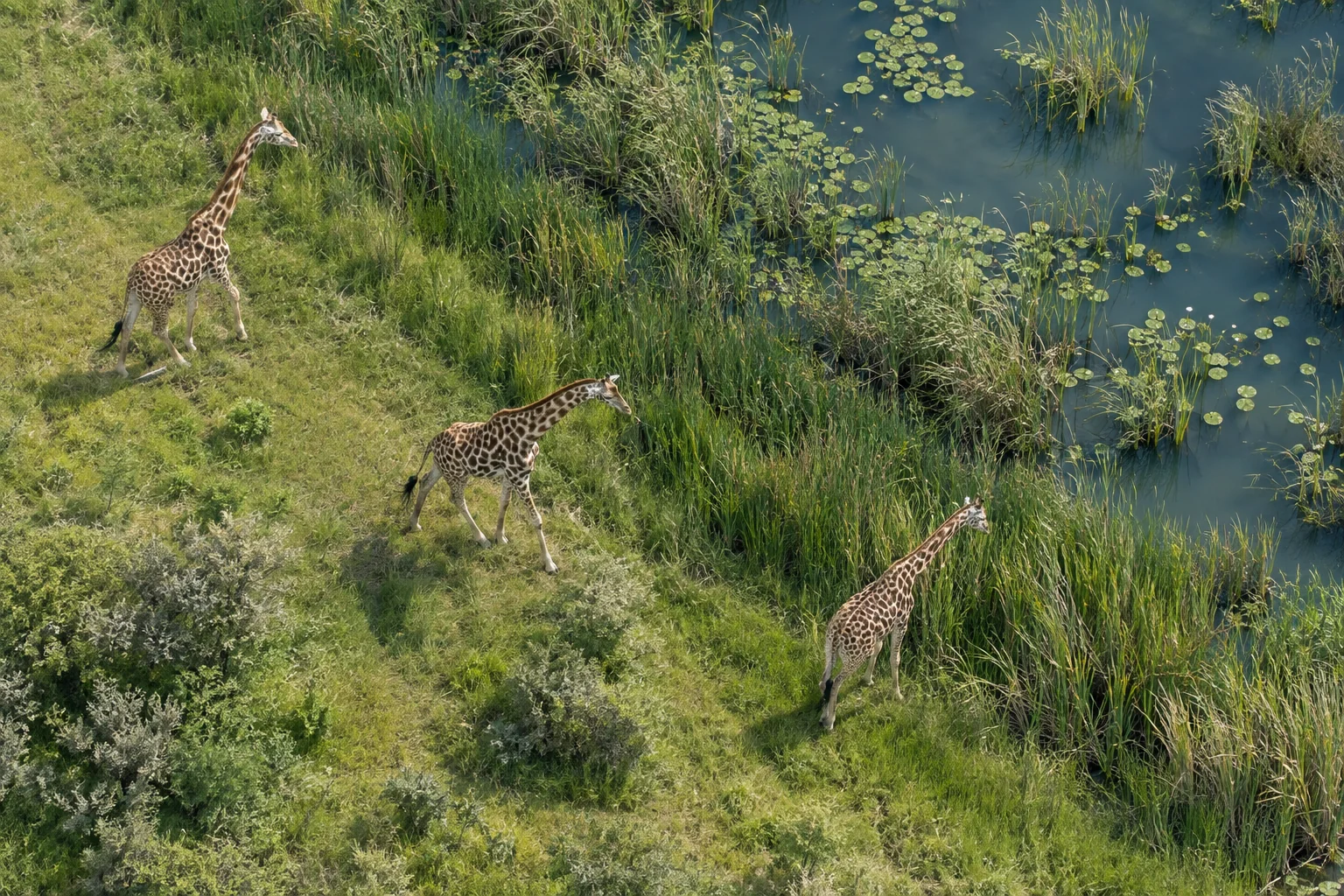
When a giraffe population dwindles, it can lose more than animals. Genetic differences disappear too, narrowing the inheritance available to future generations. In South Sudan, decades of conflict had made wildlife protection and research difficult. Scientists wanted to know how much of that inheritance the surviving Nubian giraffes still carried. Their answer was unexpectedly encouraging: considerable genetic variety remained.
Sam van Giessen and colleagues reported the finding in a September 2026 study in Scientific Reports. By bringing previously little-studied giraffes into a wider DNA comparison, the team revealed a population with a distinctive history and an important place in the future of Nubian giraffe conservation.
A missing piece of the giraffe’s genetic map
Nubian giraffes live in parts of South Sudan, Ethiopia, Uganda and Kenya. They are one of the three subspecies within the northern giraffe. Yet scientists’ understanding of their genetics had depended heavily on animals sampled outside South Sudan. Conflict and the difficulties of working there had left a large gap.
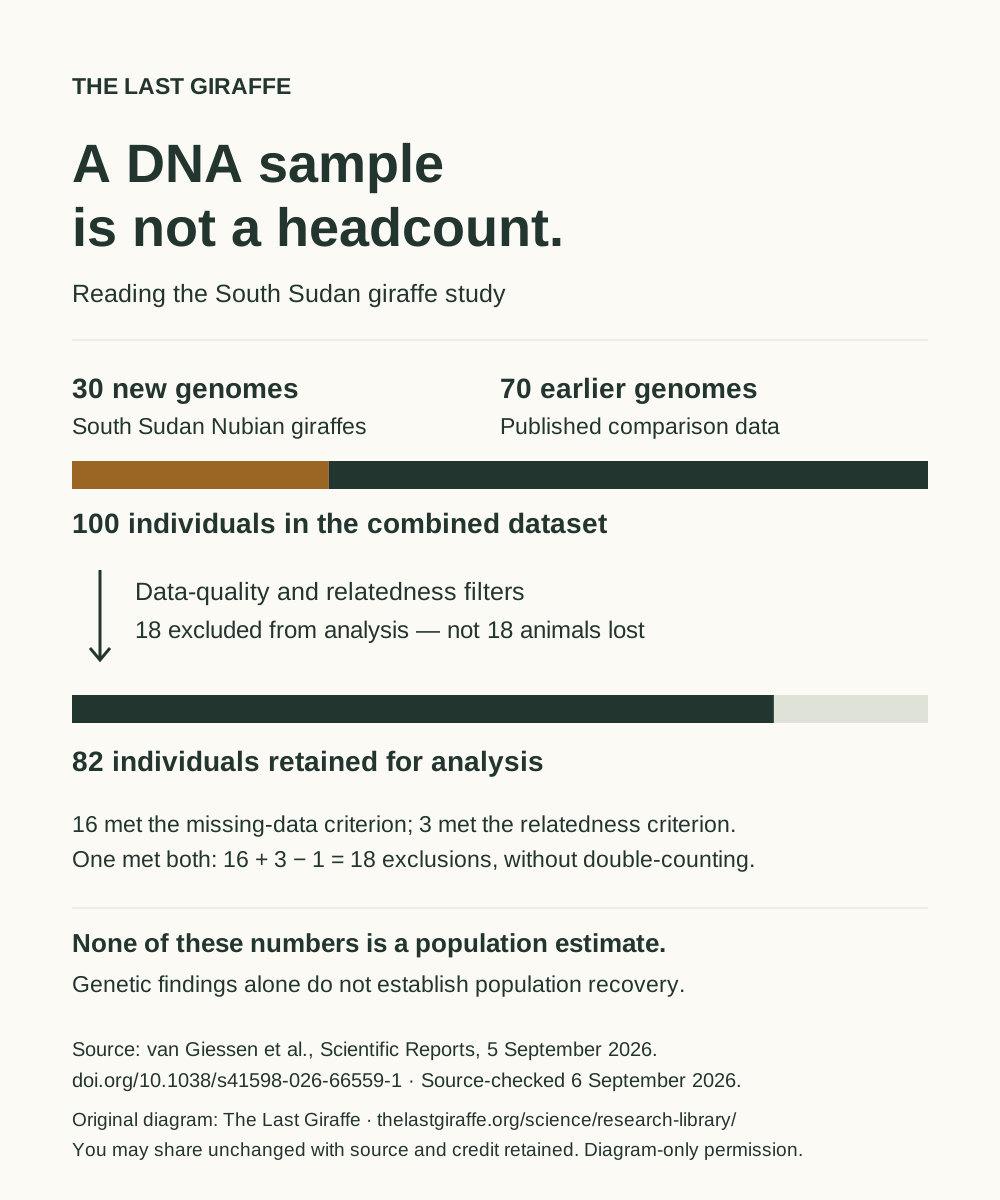
The new study began with skin samples from 30 giraffes in Boma and Badingilo national parks. The Giraffe Conservation Foundation and partners collected them during a satellite-tagging operation, working with African Parks and the Government of South Sudan. That collaboration made it possible to ask questions that could not be answered from neighbouring countries alone.
The team sequenced the animals’ genomes—their complete sets of DNA instructions—and compared them with 70 previously published giraffe genomes. After removing records with too much missing information or close relatedness, 82 individuals remained in the combined analysis. Those numbers describe the research sample; estimating the wild population requires different survey methods.
The comparison let the researchers investigate three connected questions. How much genetic variety survived? Were close relatives breeding together? And how were South Sudan’s giraffes related to populations elsewhere?
What genetic variety means for a giraffe’s future
A giraffe inherits one copy of most of its DNA from each parent. At some positions those copies match; at others they differ. Scientists call the proportion of differing positions heterozygosity. It is one way to measure genetic variation within an individual.
This variation matters because evolution works with inherited differences. As conditions change, some variants may help their carriers survive or reproduce. Conserving genetic variety helps preserve the possibilities available to future generations, even though a genome-wide measure cannot tell us which variants will prove useful.
Most of the South Sudan giraffes had relatively high heterozygosity in the study’s comparison. The reported level was around 0.14%, slightly above the northern giraffe average in this dataset and higher than the Kenyan Nubian populations examined.
The result was striking because the history of severe decline gave the researchers reason to expect greater genetic loss. Their work showed that South Sudan’s surviving giraffes still carried an inheritance worth protecting.
Long stretches of DNA tell a second story
The team also looked for long stretches where an animal’s two inherited DNA copies were effectively identical. These can occur when both parents pass on DNA from a shared ancestor. The technical name is runs of homozygosity.
Their length is informative. DNA gets reshuffled between generations, gradually breaking inherited stretches into smaller pieces. Especially long matching stretches therefore point towards shared ancestors in the more recent past—and can reveal recent inbreeding.
Most South Sudan individuals had fewer of these very long stretches than the Kenyan Nubian giraffes in the comparison. One South Sudan giraffe was a clear exception, showing much stronger signs of recent inbreeding. The overall finding was encouraging, while that individual showed why continued monitoring would be useful.
The authors suggest that population history and room to move may help explain the difference. Some Kenyan populations were founded by small numbers of giraffes and now occupy fenced areas. In South Sudan and neighbouring Ethiopia, giraffes inhabit a much larger open landscape. That is a plausible explanation for the genetic pattern; the study did not directly measure which animals were meeting and breeding across that landscape.
A shared history with Ethiopia—and a puzzle at the White Nile
The new genomes also helped resolve relationships within Nubian giraffes. The analysis identified three regional groups: Ethiopia–South Sudan, Kenya, and Uganda. The Ethiopian and South Sudanese animals clustered together, showing that a national border cuts through a shared genetic history.
The authors suggest that these regional groups could deserve distinct attention in conservation planning. In practical terms, protecting Nubian giraffes means considering the different histories represented across their range. The study does not propose a new giraffe species.
Farther west, the White Nile presents another question. Nubian and Kordofan giraffes occur on opposite sides of this major river and its associated wetlands. Had that landscape kept their ancestors entirely apart?
The team found traces of historical genetic exchange between the broader groups. Gene flow is the movement of inherited variants between populations when animals breed and leave descendants. Its signature can remain in DNA long after the original encounters.
This is a glimpse of a more connected past, although its geography remains unresolved. The signal appeared when samples were combined into broad regional groups, and was absent from the finer analysis of individual populations. It therefore cannot locate a crossing or show that giraffes travel across the river today. That unresolved history is itself an interesting question for further research.
How this discovery fits a bigger picture
The South Sudan result joins a growing body of work showing that giraffe history includes both separation and contact.
In a 2023 Kenyan study, Raphael T. F. Coimbra and colleagues found Nubian ancestry in 13 reticulated giraffes from the Laikipia Plateau. The evidence pointed mainly to historical exchange; estimates of recent gene flow were too uncertain to distinguish from zero. Our explanation of that study explores how giraffe species can remain genetically distinct while carrying traces of past interbreeding.
Laura D. Bertola, Liam Quinn, Kristian Hanghøj and colleagues approached the question across 90 wild giraffes from 29 locations in a 2024 paper. Their models incorporated ancient genetic exchange as well as the separation of lineages. The resulting picture is closer to a branching family history with occasional reconnections than to branches that never meet again. Neither study resolves the White Nile’s history, but both help explain why the new South Sudan evidence is biologically plausible and worth investigating.
A different connection concerns what happens next. Monica L. Bond, Dominik M. Behr and colleagues’ Serengeti study used repeated photographs to follow identifiable giraffes, finding lower adult survival associated with declining local populations. Those observations concern Tanzania, but they show how genetics and field monitoring could complement each other: one describes an inherited resource, the other follows the animals carrying it.
Can this inheritance endure?
The central conservation message is hopeful and specific. South Sudan’s giraffes retain genetic variation that could still be passed on. Protecting the animals and the landscape they use could help preserve that inheritance.
The authors also suggest that this population could eventually contribute to reintroductions where Nubian giraffes have disappeared. That possibility would need a separate assessment of the source population and the places receiving animals, but it gives the genetic finding a potential role in restoring the subspecies’ range.
The authors also raise a reason to look ahead carefully. Genetic losses can take generations to become visible after a population crash. Adults may still carry variation inherited from a much larger population, even if fewer animals are now contributing to the next generation. The DNA results therefore do not establish that giraffe numbers are recovering.
This work opens up several questions for future research.
Are younger giraffes inheriting the same variety?
Comparing adults with younger generations over time could test the delayed-loss possibility raised by the authors. Researchers could examine whether long matching DNA stretches are becoming more common, alongside records of births and survival. Comparable sampling would help separate a real generational change from simply sampling different families.
Which connections still support breeding today?
Combining genetic relationships with movement records could reveal whether giraffes using different parts of the South Sudan–Ethiopia landscape still contribute to a shared breeding population. More geographically balanced genetic sampling could also help locate the source of the historical river signal. Movement and ancestry would answer complementary parts of the question.
How does genetic variation relate to animals’ lives?
Following identifiable individuals could help researchers ask whether genetic measures are associated with survival or reproductive success. Age, habitat and family relationships would also need consideration. This would connect the genomic discovery to outcomes that matter directly for conservation.
Van Giessen and colleagues have made those questions more approachable by establishing a genetic starting point for a population that had been difficult to study. Their work gives conservationists a clearer picture of what survives in South Sudan—and something concrete to work towards preserving.
Sources
The research behind this story: Sam van Giessen, David Prochotta, Menno Jeroen de Jong, Richard Harvey, Megan Claase, Julian Fennessy and Axel Janke (2026). Genomic insights into the persistence of Nubian giraffe (Giraffa camelopardalis camelopardalis) in conflict-affected South Sudan. Scientific Reports 16, 27825. Published 5 September 2026. Read the full paper.