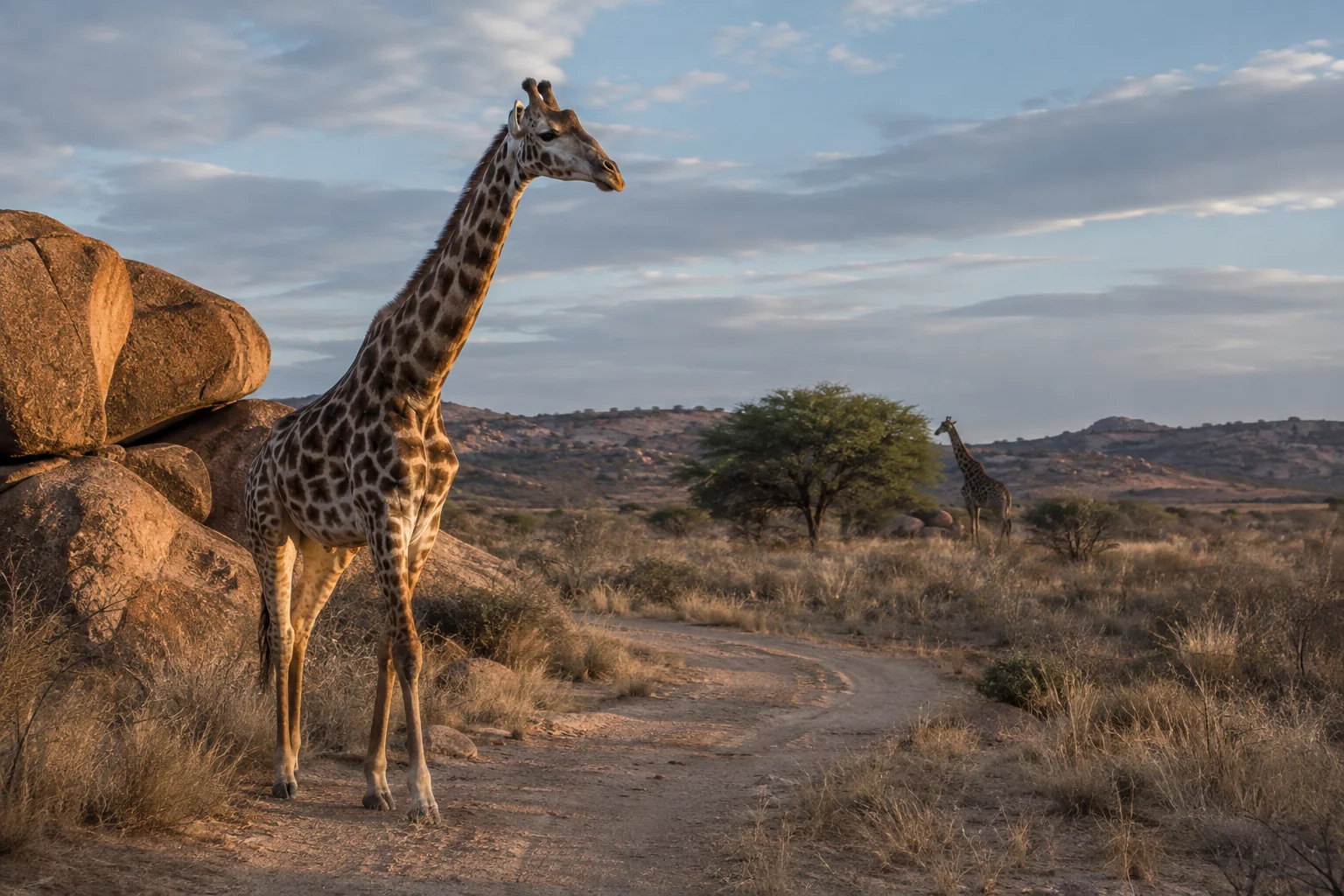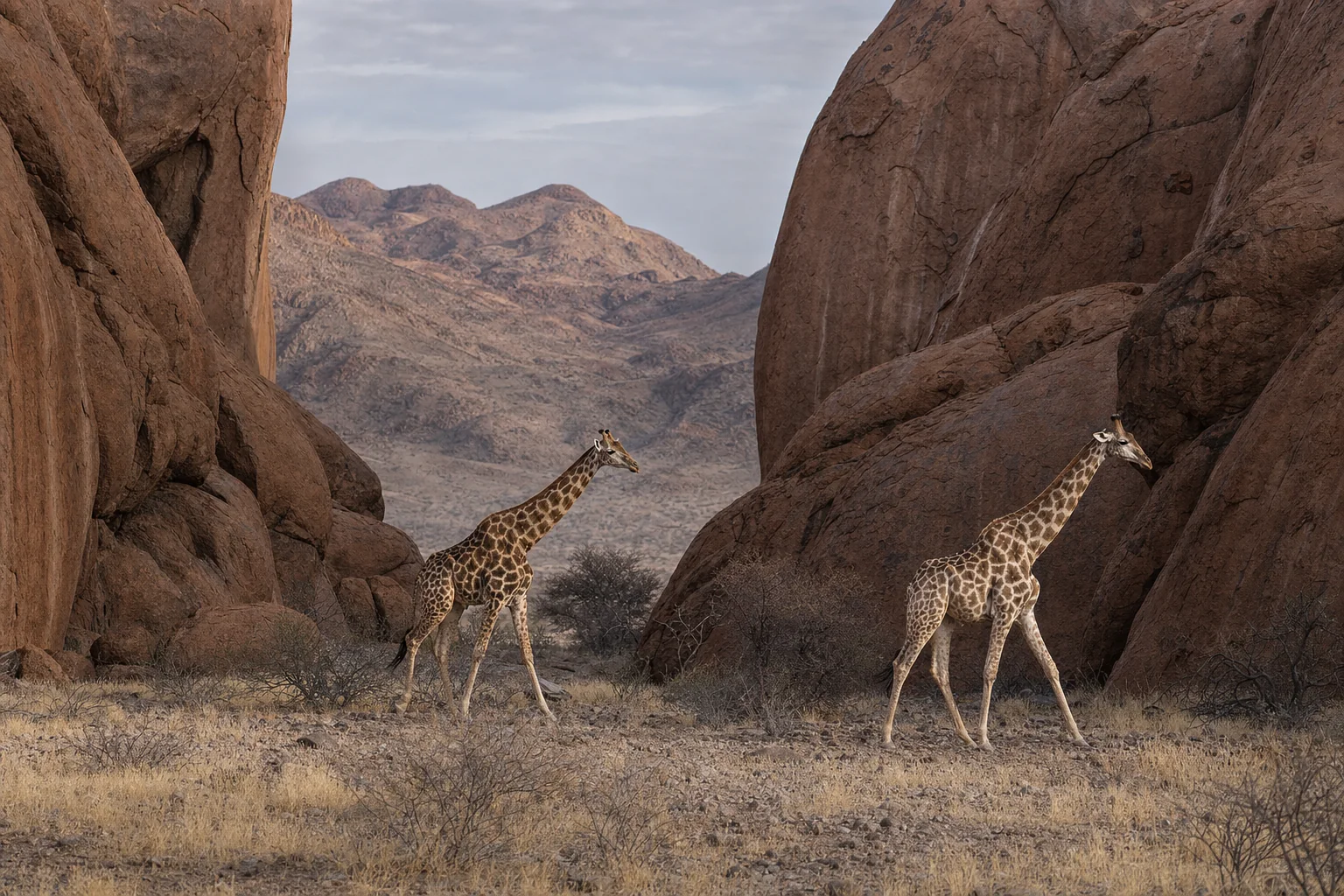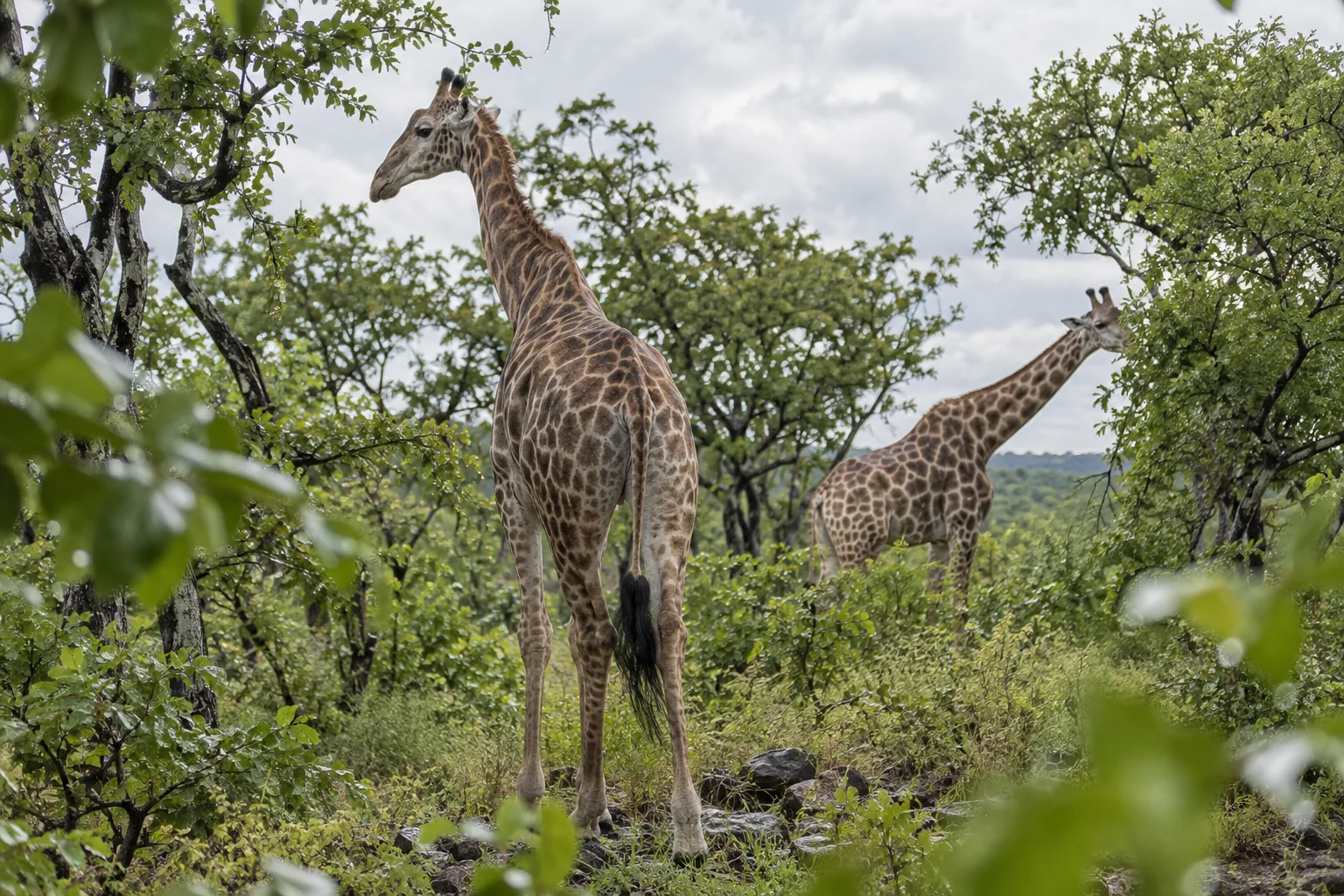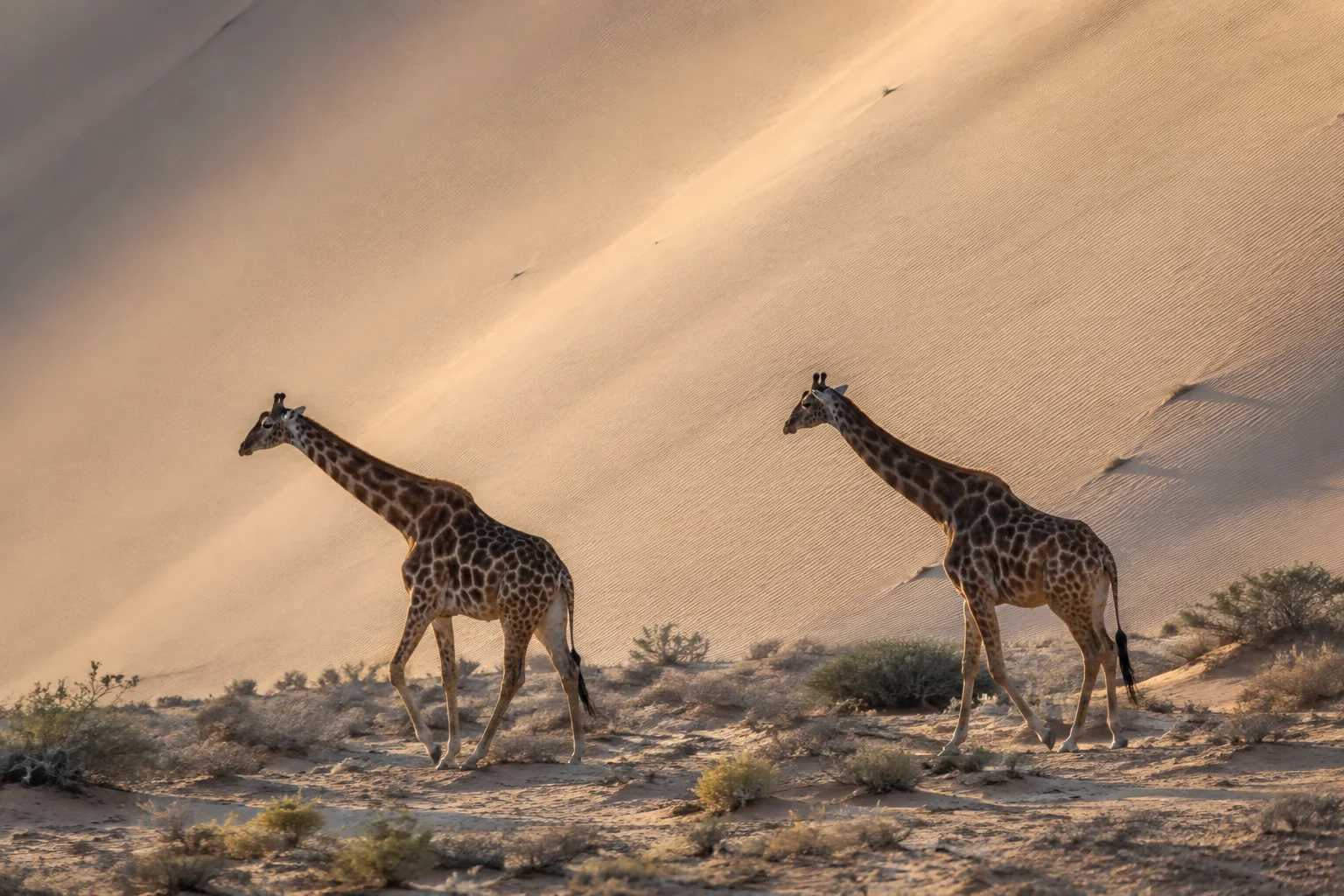
The distance between two places can conceal the journey taken between them. After a female Angolan giraffe was moved to a Namibian reserve, she eventually returned to the property where she had been captured. The sites were about 155 kilometres apart in a straight line. Her recorded route added up to almost 894 kilometres.
Julian Fennessy and colleagues described that return in a 2024 research report. GPS tracking followed a giraffe called Jinjeh through long stops, changes of direction and a revisit to the release area before she reached her original home. The authors reported it as the first documented case of post-translocation homing in giraffes.
The animal’s destination was clear. Her navigational method was not. That distinction makes the report more useful than a story about an unerring instinct to head home.
Six animals, followed beyond release
In April 2022, three female and three male subadult Angolan giraffes were captured at Farm Nomtsas in southern Namibia. They were transported approximately 165 kilometres by road to ProNamib Nature Reserve and released the following morning. The move formed part of a reserve restoration effort that included bringing giraffes back to the area.
Each animal received a GPS satellite ear tag programmed to record four positions per day. Across the dataset, the tags actually returned an average of 2.69 locations per day. Researchers used successive positions to estimate distances travelled and mapped the areas the animals used.
This was a monitored management operation, not an experiment that assigned giraffes to alternative release treatments. Its strength was the ability to observe what happened after the truck departed. Its small size and uneven tag histories limited how broadly the results could be applied.
Most of the giraffes remained around the release area, although one female lost her tag soon after release and lacked enough tracking data for a home-range estimate. Jinjeh was the conspicuous exception.
A journey with pauses and reversals
Jinjeh initially moved north and spent 52 days on another farm. She then headed south before turning north again, arriving back at the release reserve in June. After another ten days she left once more, taking a route that eventually brought her farther south to Plattfontein farm.
She stayed there for 63 days. In September she moved north again and subsequently turned northeast. On 28 September 2022, she reached Farm Nomtsas, her original capture property. The authors calculated a journey lasting 155 days with a cumulative recorded distance of 893.65 kilometres.
Those figures describe different aspects of the event. The 155-kilometre straight-line separation is the distance between origin and release area. The roughly 894-kilometre route includes Jinjeh’s indirect movements between them. Neither number should be confused with the approximately 165-kilometre road journey used for transport.
The route estimate also connects discrete GPS fixes. It cannot record every turn or movement between positions and should not be treated as an exact measure of every metre she walked.
Returning home did not mean travelling straight home
The researchers considered a stricter definition of directional homing, based on movement towards the capture site within a specified angle of the homeward direction. Jinjeh did not follow the sustained, direct route that such a definition would imply. Nevertheless, because she actually returned to the capture property, they classified the overall outcome as homing.
That is a distinction between destination and mechanism. A successful return does not, by itself, show that the animal knew the direction throughout the journey. The track cannot establish whether she used remembered landmarks, other sensory information, exploration or some combination.
The landscape also contained fences, roads and mountainous terrain that could shape possible routes. The paper discusses these barriers as influences on the journey, but does not experimentally separate their effects. A bend in a GPS track is evidence of movement, not proof of the animal’s reason for turning.
Her return was more than a fleeting crossing. Tracking placed her back at Farm Nomtsas until her tag fell off in March 2024. Observations using her distinctive coat pattern confirmed that she was still there in June 2024.
What counts as a successful move?
All six giraffes survived in the short term, which is one meaningful measure of the operation’s outcome. But survival, settlement at the intended destination and establishment of a reproducing population are separate questions. Jinjeh survived while no longer contributing to the reserve population she had been moved to join.
The authors could not yet establish long-term success through both survival and reproduction. Nor could one returning female provide a reliable probability that another giraffe would do the same. It would be misleading to convert this case into a general translocation failure rate or a rule about how far giraffes must be moved.
For giraffe translocation science, the practical contribution is the value of sustained monitoring. Managers need to know whether animals settle, travel beyond the destination or return to their former range. Comparing more operations, including different release approaches and landscapes, could clarify which conditions matter. Jinjeh’s journey supplies a documented possibility that planning must allow for, while leaving the explanation of her remarkable return open.
Sources
J. Fennessy, M. B. Brown, P. Ekandjo, S. Fennessy, S. Ferguson, L. Tindall, M. Tindall and C. J. Marneweck. (2024). Homeward bound: post-translocation homing behaviour of an Angolan giraffe in Namibia. Namibian Journal of Environment, 9, Section B, 11–15. DOI: 10.64640/2f1msv90. Read the full paper.