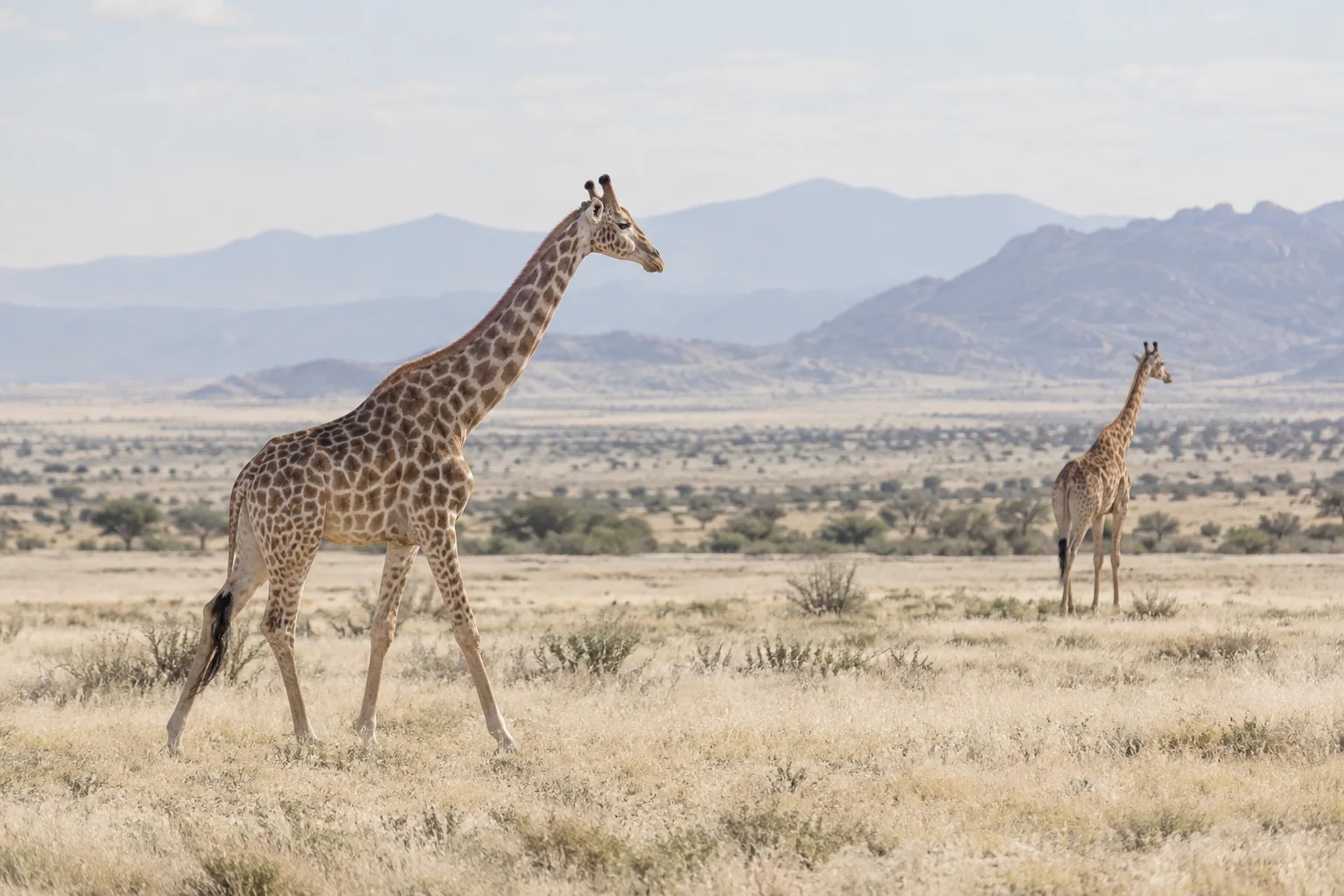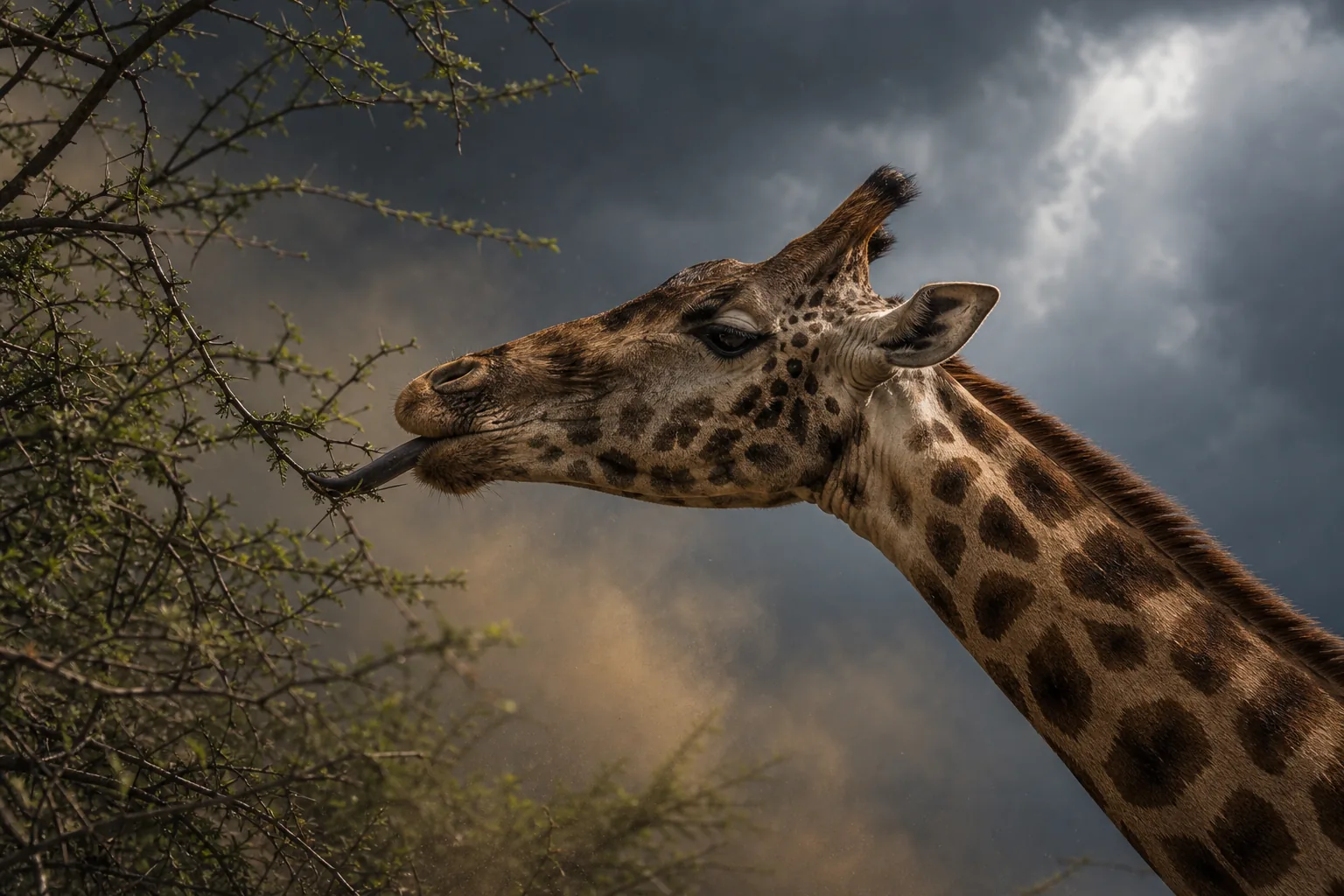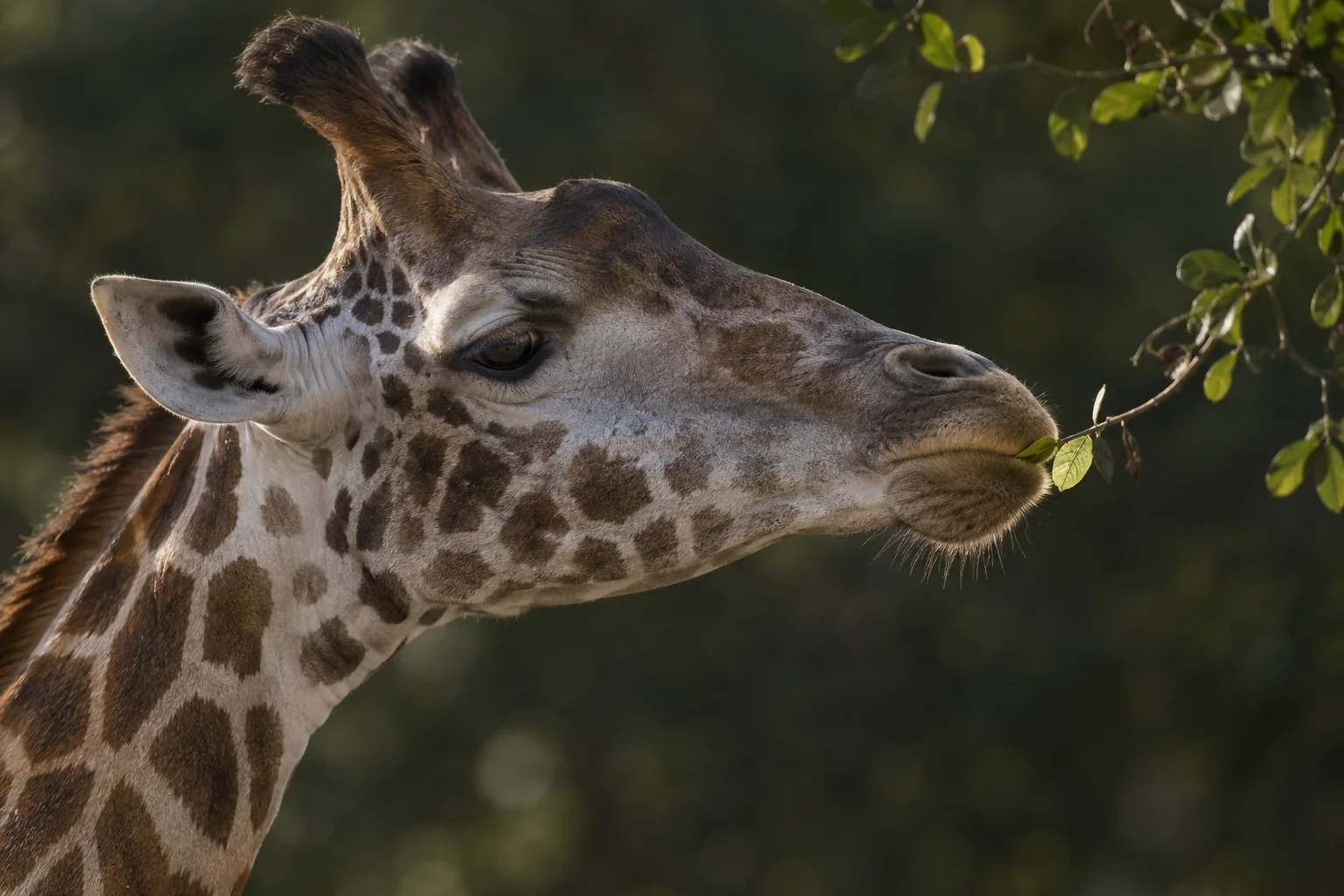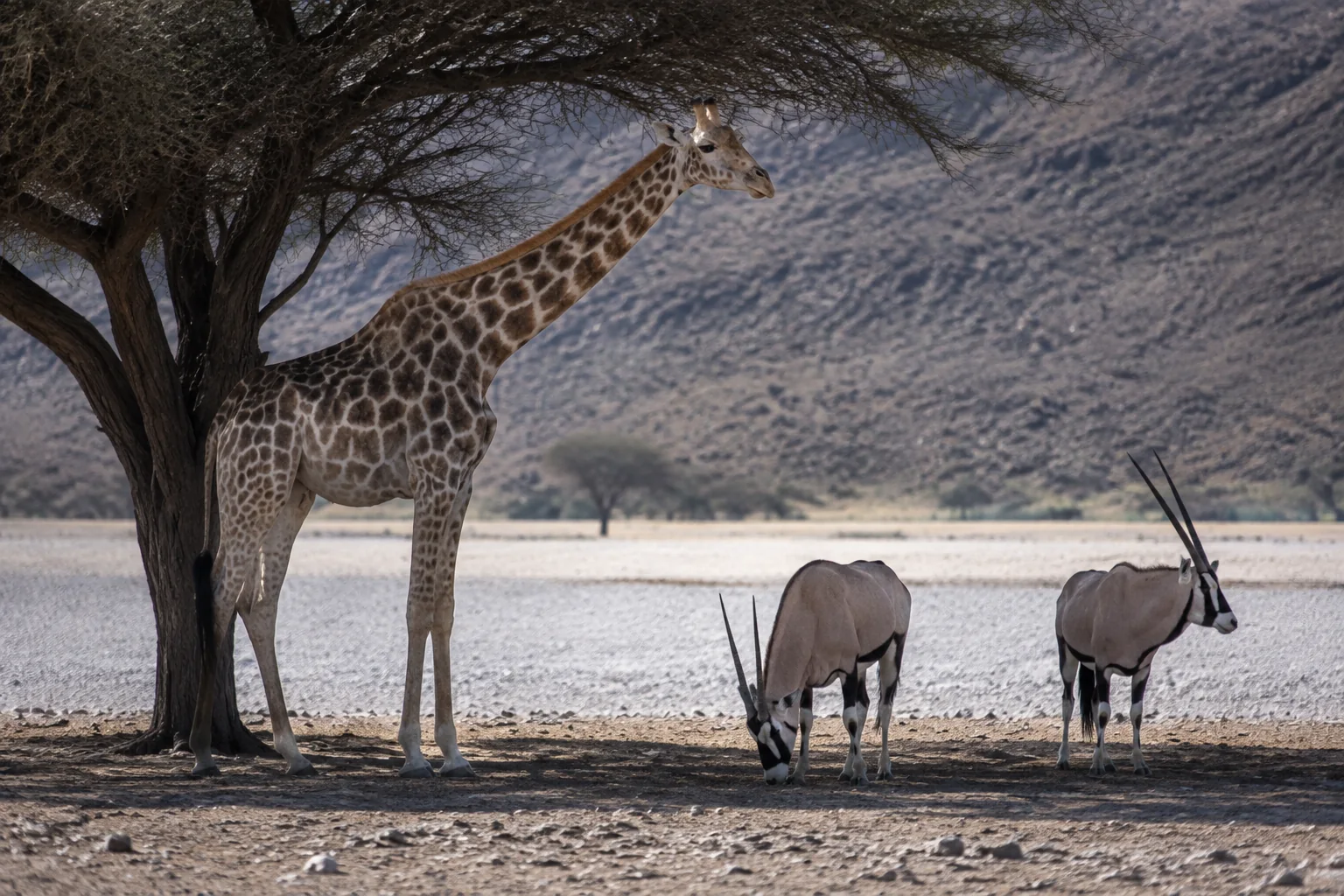
A tree can grow beside a feeding giraffe without becoming its food. That simple observation opens a more useful question than a list of plants eaten: when several kinds of tree are within reach, which does the giraffe actually use?
Takunda V. Munyaka and Edson Gandiwa investigated that question after giraffes were introduced to Umfurudzi Park in northern Zimbabwe. Their 2018 study recorded feeding and then examined the surrounding vegetation. Giraffes browsed 12 of the 29 woody species found in the observation plots, and the pattern of use differed between the sampled dry and wet periods.
The study provides an early picture of animals using a new environment. Its scale also matters: the observations came from a herd of eight giraffes inside an acclimatisation enclosure, rather than a survey of the entire park.
Learning a new landscape within a boundary
Umfurudzi's rehabilitation programme brought giraffes into the park in 2012 and 2013. The animals studied later were confined within an approximately 30-square-kilometre enclosure intended to support acclimatisation before wider access became available.
The surrounding vegetation belonged to a miombo landscape, offering a different mixture of woody plants from the acacia-dominated picture often associated with giraffe feeding. Identifying the actual food plants was therefore a sensible first step toward understanding whether and how the introduced animals were using the habitat.
Between May and December 2016, observers followed the study herd during daylight hours. When a selected focal giraffe browsed, they identified the plant from a distance and waited for the animal to move away before approaching it.
Around that browsed plant, they established a circular vegetation plot with a radius of 15 metres. This paired the feeding observation with information about nearby woody species.
The researchers assessed 106 such plots: 71 during May–October, the dry-season period, and 35 during November–December, the beginning of the wet season. Those unequal windows are important. The study did not observe a complete wet season or repeat the comparison over several years.
Turning a feeding record into a comparison
The authors calculated two indices. “Availability” described how often a plant species occurred among the observation plots. “Acceptability” described how often it was browsed among plots in which it occurred.
Consider a plant found in many plots but rarely recorded as food. It can have high availability and low acceptability. Another plant might occur less often but be browsed frequently whenever it is present.
These indices help separate the presence of a tree from its use. They also have a specific denominator: the vegetation around places where the researchers had already observed a giraffe feeding.
That is not a random sample of every habitat in the enclosure. Areas the giraffes did not visit, or where observers did not encounter feeding, were less likely to enter the comparison. The study therefore describes choice within sampled feeding environments more directly than it describes park-wide habitat availability.
It also measured occurrence of woody species rather than the quantity of edible leaves on each one. A tree still counted as present after losing much of its foliage. Equal species occurrence across seasons would not demonstrate equal food supply.
A broader menu than the acacia stereotype
The 12 browsed species included sweet thorn, reported as Acacia karroo, and several members of the Combretum genus. Other recorded food plants included Flueggea virosa, Olea africana and Ziziphus mucronata.
The results show that the giraffes were using a range of woody plants within the enclosure. They were not relying exclusively on one familiar genus.
The seasonal comparison found a statistically detectable difference in the acceptability index, while differences in the availability index and woody-species diversity were not statistically detectable. That supports a difference in how the sampled plants were used; it does not prove that the food environment stayed unchanged.
One illustrative result concerned Combretum apiculatum. Its reported availability index was similar in both sampled periods, while its acceptability was higher during the wet-season observations. In other words, its occurrence around feeding sites did not by itself explain the change in recorded use.
The small wet-season sample means that individual species estimates need caution. A high index based on relatively few encounters is a useful lead for further observation, rather than a universal ranking of giraffe favourites.
What could make the seasonal choices change?
The authors proposed several plausible explanations. Trees change as leaves emerge, mature or fall, and the availability of fruits and other plant parts also changes. Giraffes might respond to these changes in edible material, nutrients or plant defences.
Their field observations included sweet thorn providing fruits during the dry period and leaves during the wet period. This illustrates why a species name alone can hide a changing food resource: the giraffe may be eating different parts of the same kind of tree.
The study did not analyse protein, tannins, digestibility or other chemical properties. It therefore could not establish that giraffes selected the most nutritious species, even though nutritional quality is a reasonable candidate explanation.
Nor did a non-significant difference in species availability show that availability played no role. The measure did not capture all dimensions of food availability, including leaf quantity, height and accessibility. A comparison with limited observations may also miss real differences.
The most defensible account is that feeding patterns changed and several mechanisms could explain why. Distinguishing those mechanisms requires additional measurements.
Feeding in an enclosure is an early sign, not proof of establishment
Finding giraffes eating local plants is encouraging for an introduction. It demonstrates that the animals can use some of the available vegetation.
Successful long-term establishment asks more. Are they obtaining enough food through the hardest months? Are adults surviving and reproducing? Are calves growing? Can the plants sustain repeated browsing without losing the structure and regeneration on which other organisms depend?
This study did not measure those outcomes. Its enclosure also restricted the range of alternatives the animals could encounter. A diet recorded inside that boundary may differ from the one the same giraffes would choose across the wider park.
The authors accordingly recommended extending observations beyond the enclosure. The initial plant list provides a starting point for that work, rather than a carrying-capacity estimate or a completed assessment of introduction success.
Putting availability into seasonal context
A separate Kalahari study makes the distinction between plant presence and seasonal food especially clear. There, a few woody species dominated feeding observations, and evergreen browse became more important as other trees lost leaves.
The two studies use different methods and concern different environments. They do not supply interchangeable plant preferences. Together, however, they show why habitat assessment needs both a description of the vegetation and observations of how animals use it through time.
For Umfurudzi, the next useful step is to follow that process across a fuller seasonal cycle and a wider area, pairing feeding records with accessible foliage and animal performance. The question is no longer merely whether giraffes can find something to eat. It is whether the landscape continues to provide the right opportunities as its plants change.
Sources
Takunda V. Munyaka and Edson Gandiwa (2018). “An Assessment of Forage Selection by Giraffe Introduced into Umfurudzi Park, Northern Zimbabwe.” Scientifica 2018:9062868. Full study.
Francois Deacon, Gert Nicolaas Smit and Andri Grobbelaar (2023). “Resources and Habitat Requirements for Giraffes' (Giraffa camelopardalis) Diet Selection in the Northwestern Kalahari, South Africa.” Animals 13:2188. Related seasonal feeding study.