How much of a day a giraffe spends eating is only one part of its response to changing seasons. The animal can keep roughly the same schedule while switching foods. That matters in a fenced park, where a changing supply of leaves cannot always be met by moving into a different landscape.
Consolata G. Gitau and colleagues studied both sides of that response in Lake Nakuru National Park, Kenya. Their observations revealed a clearer seasonal change in the use of one food plant than in the overall proportion of daytime records devoted to feeding.
Watching activities and identifying meals
The researchers divided the park into survey blocks and observed adult Nubian giraffes during dry and wet periods in 2019. In selected morning and afternoon hours, they repeatedly scanned a herd and recorded what each visible animal was doing. Other team members photographed giraffes and identified the plants being eaten.
A scan gives a sample of activity at a particular time. Accumulated across observations, it can estimate the share of sampled time spent foraging, moving, resting or drinking. It does not produce a continuous record of each animal’s whole day, and it says nothing directly about night-time activity.
The team collected 11,280 activity records. These were repeated observations of animals, not a population of 11,280 giraffes. Observations spanned 12 survey days, a limited window that the authors recognise when interpreting seasonal differences.
Recording the food plant beside each feeding observation made it possible to ask a second question: were similar-looking feeding schedules built from similar meals?
Much of the day still went to food
Foraging represented 53% of dry-season activity records and 57% of wet-season records. Although the wet-season value was higher, the statistical comparison did not clearly distinguish the two. Movement and resting proportions also showed no statistically clear seasonal difference.
That is a more restrained result than saying that rain caused the animals to spend substantially more time feeding. The observations show foraging dominating the sampled day in both periods. A longer study might identify a consistent difference, but this one does not establish it.
The hourly pattern added another view. Morning samples contained a high share of feeding in both seasons. In dry-season afternoon observations, resting became particularly prominent before feeding increased again later in the day. These observations help describe when behaviours occurred, without assigning a cause such as heat or hunger that the study did not experimentally separate.
A different plant supplied more wet-season meals
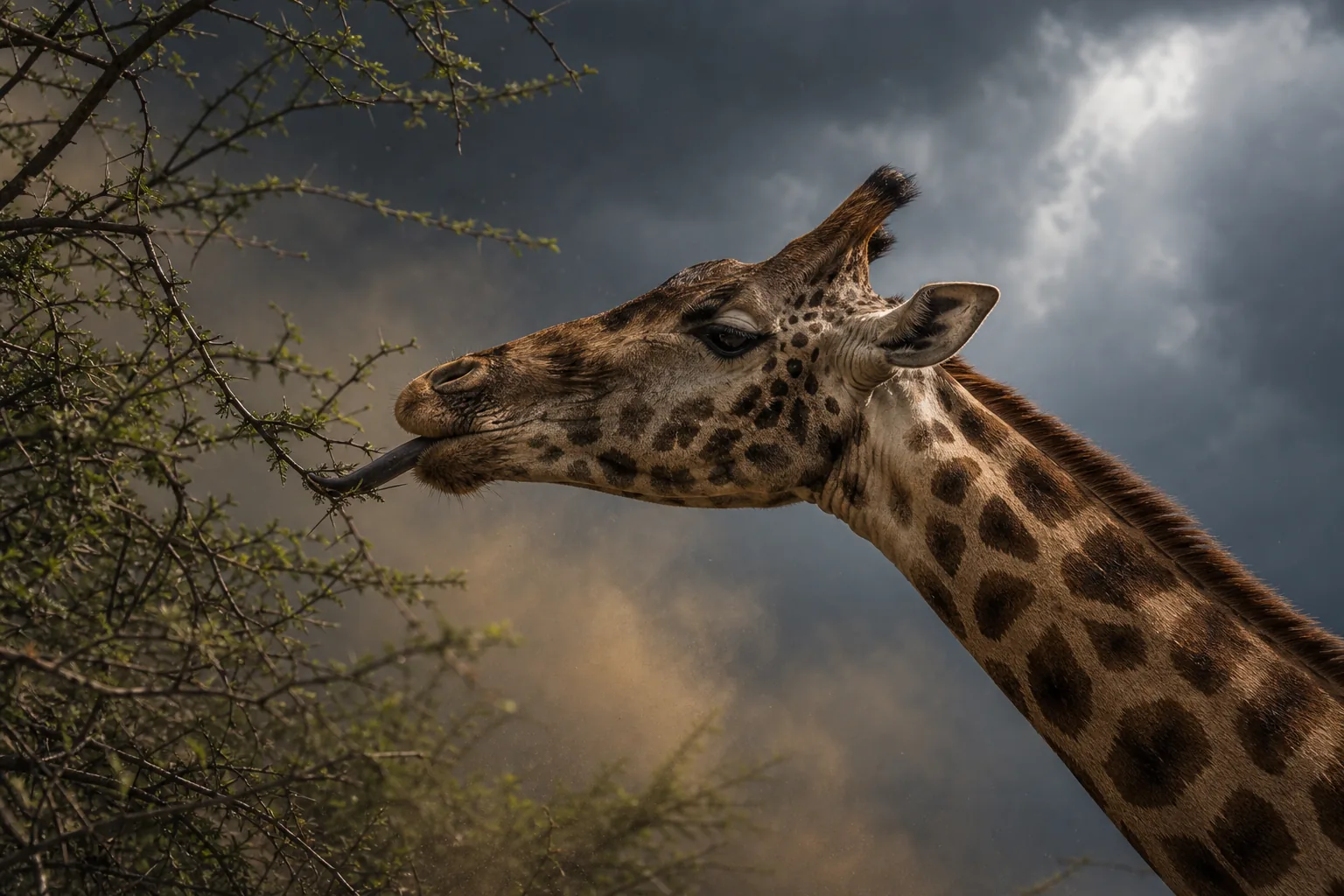
The plants told a stronger seasonal story. The researchers recorded eight food species across the study. Vachellia xanthophloea, the fever tree, was the most frequently recorded in both seasons: about 72% of dry-season feeding records and 63% of wet-season records.
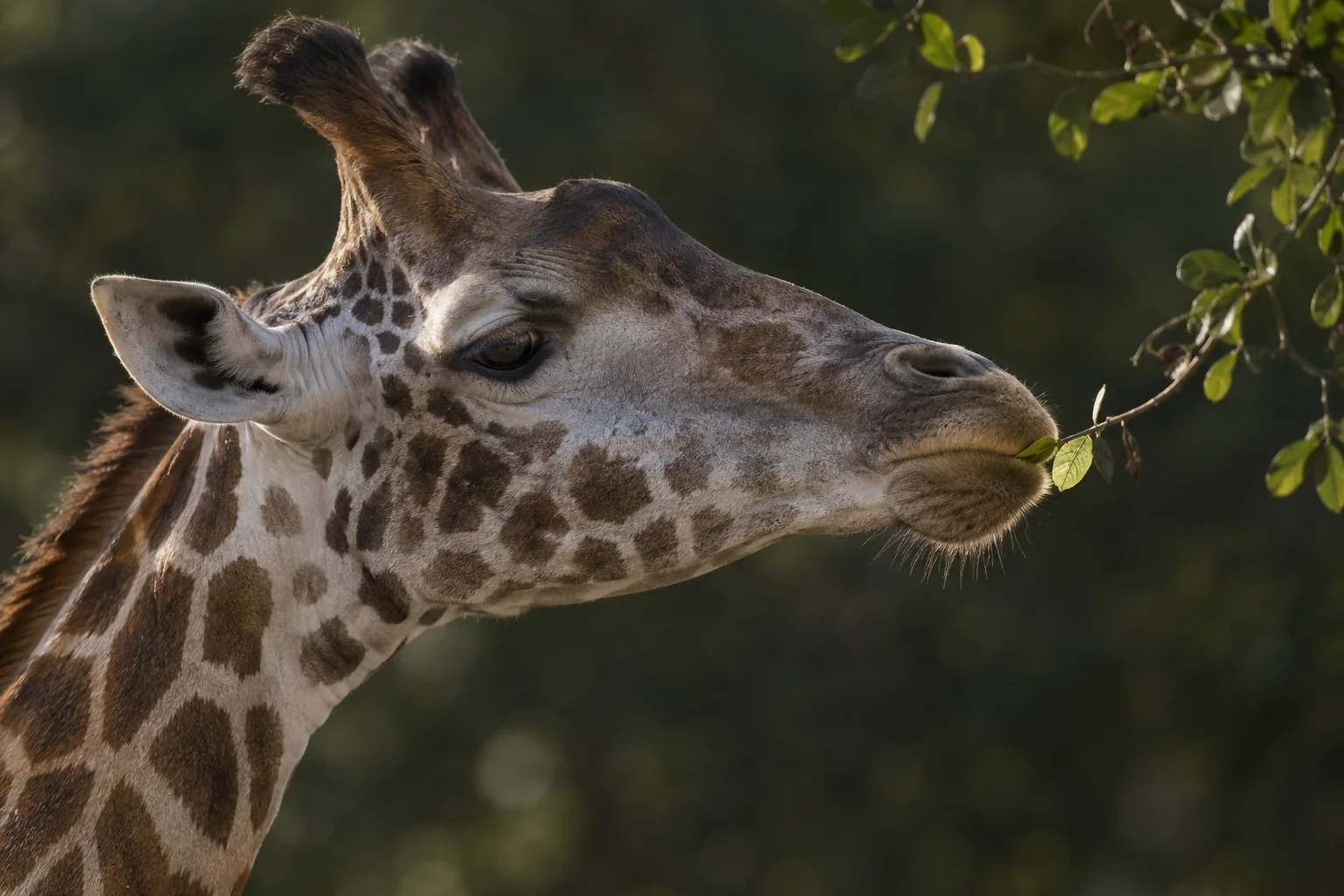
Maytenus senegalensis increased from about 12% to 23%. That change was statistically supported in the authors’ comparison. It means that an animal recorded as “feeding” was much more likely to be eating this plant during the wet-season observations.
The percentages are shares of observed feeding events. They do not measure the mass of leaves swallowed, the energy gained, or the proportion of every giraffe’s diet. Different plants and bites can deliver different amounts of food.
Nor does frequency alone prove preference. To show that giraffes actively select a plant, researchers must compare consumption with how much is available. This study’s strongest direct evidence concerns the composition of recorded meals. Its seasonal result is consistent with the authors’ explanation that deciduous Maytenus becomes more available after rain, but it did not experimentally test that mechanism.
A separate Tarangire study made that availability comparison and found that giraffes selected an encroaching shrub more often than its abundance would predict. The two approaches answer complementary questions: which foods appear in meals, and which are chosen disproportionately from the options available.
Keeping the observation separate from its explanation
The discussion also suggests that medicinal properties known from other contexts might help explain Maytenus use. No test of self-medication was performed in these giraffes. A seasonal increase in feeding cannot establish that the animals were treating parasites or another condition.
The simpler ecological question is already useful: how does the supply of different food plants change through the year? Matching repeated observations to measurements of new leaves, plant abundance and nutritional quality could help distinguish seasonal availability from other reasons for changing meals.
That would also connect diet monitoring with giraffe habitat protection. Knowing where giraffes spend time is only a start. Managers also need to know which plants sustain feeding in different periods and whether those resources persist as conditions change.
Gitau and colleagues made a modest but informative distinction visible. At Nakuru, a broadly similar amount of observed feeding concealed a substantial change in one component of the menu. Watching the clock and identifying the food answer different questions; understanding seasonal life requires both.
Sources
Consolata G. Gitau, Judith S. Mbau, Robinson K. Ngugi, Emmanuel Ngumbi and Arthur B. Muneza. (2024). Activity budget and foraging patterns of Nubian giraffe (Giraffa camelopardalis camelopardalis) in Lake Nakuru National Park, Kenya. Ecology and Evolution, 14, e11463. DOI: 10.1002/ece3.11463. Read the full paper.