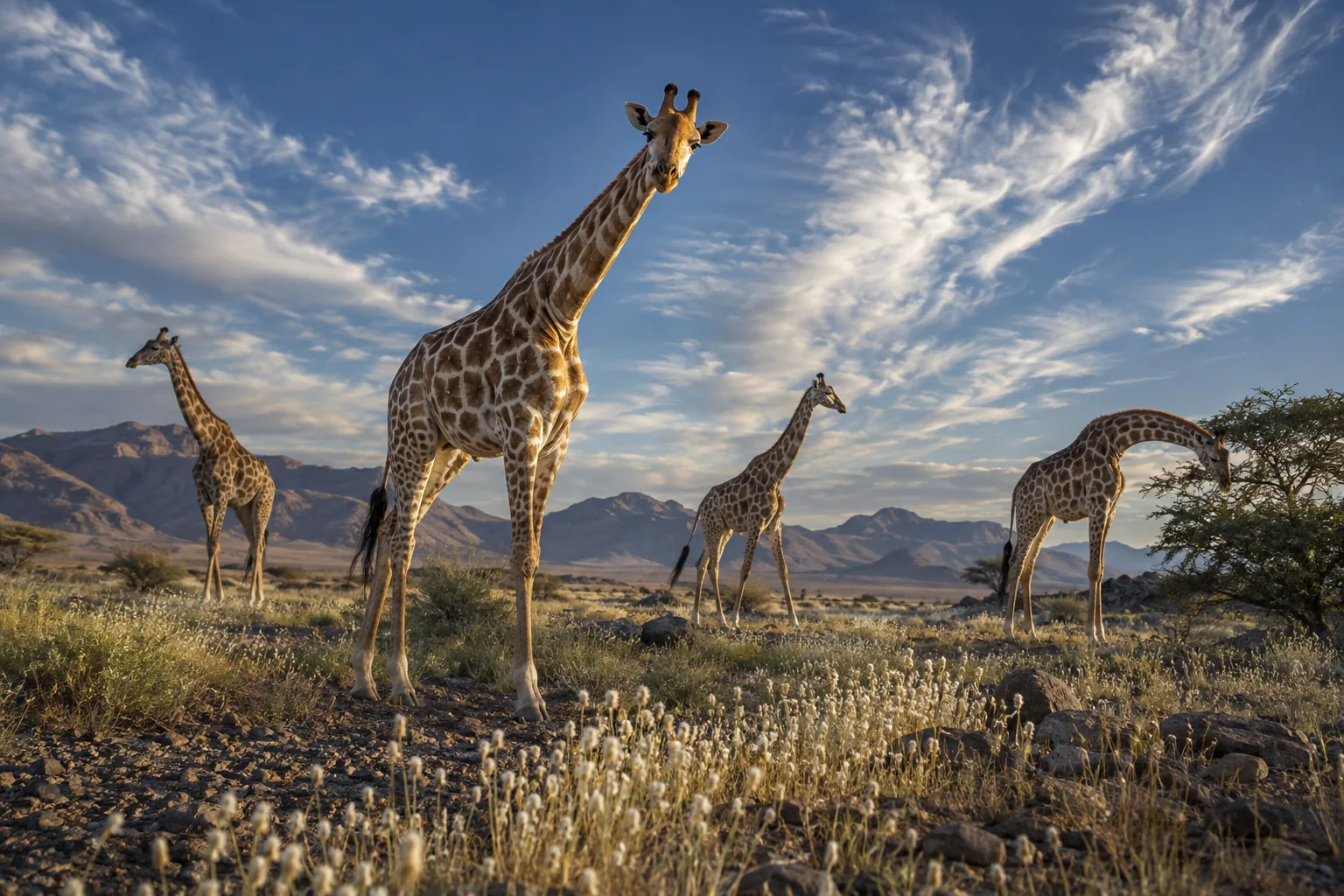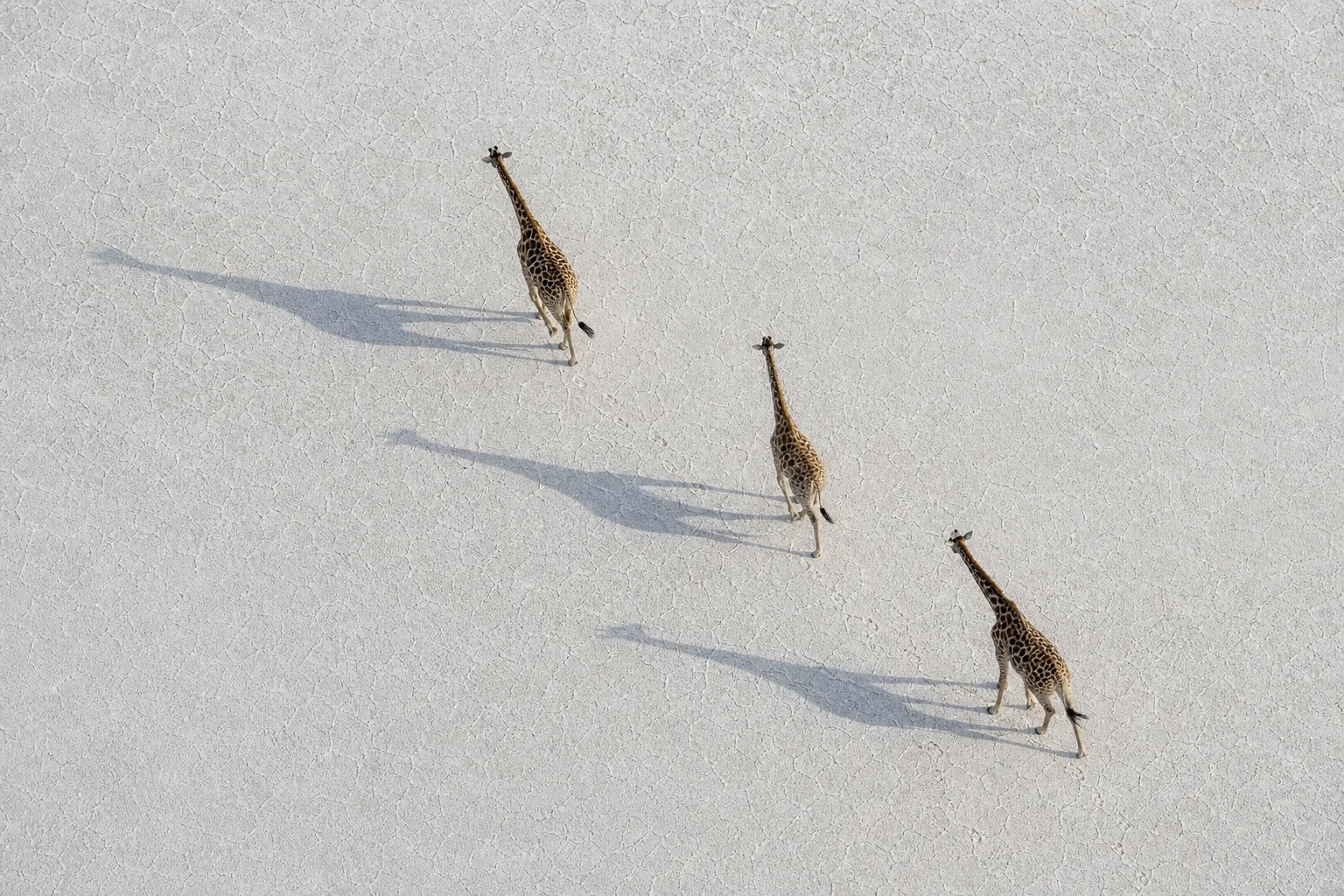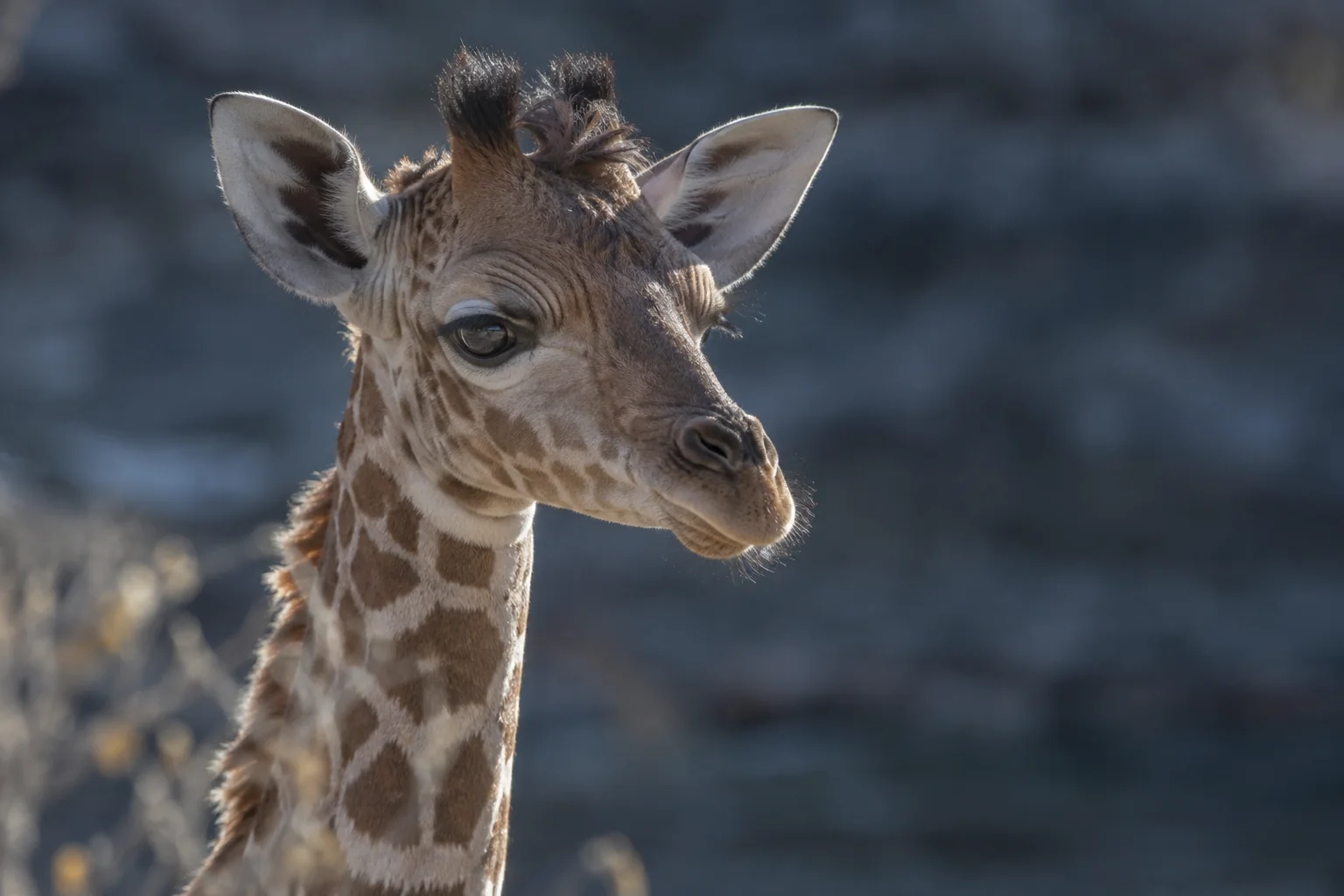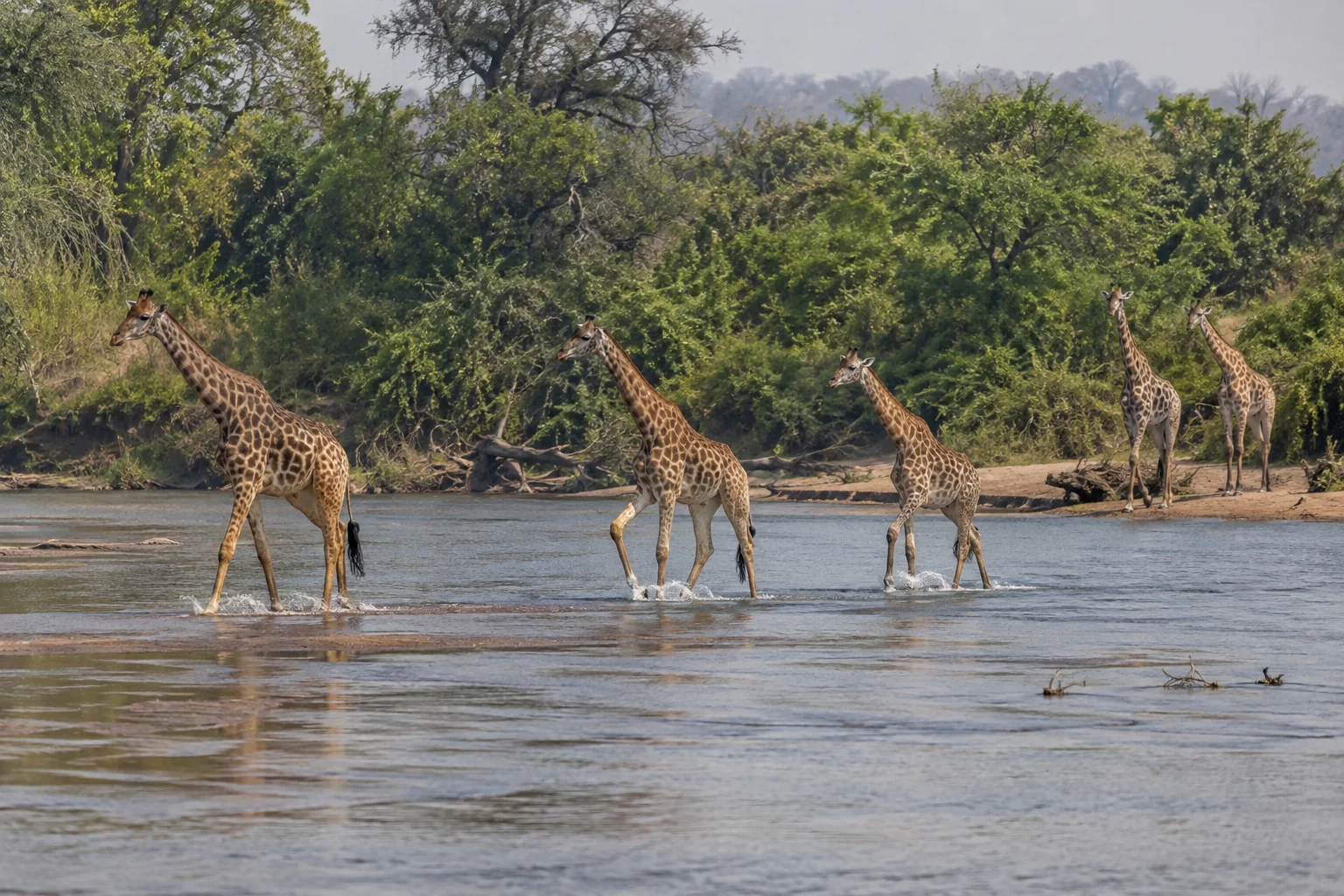
A giraffe standing in a landscape looks like evidence that the landscape is supporting giraffes. Sometimes that is true in a deeper sense: the animals survive and produce enough young to contribute to neighbouring populations. Sometimes the picture conceals a deficit. Animals keep arriving, while local survival and reproduction are insufficient to sustain the population's contribution on their own.
Derek E. Lee and Douglas T. Bolger investigated that distinction in Tanzania's Tarangire ecosystem. Their 2017 study followed individually recognisable female giraffes across five connected areas. Three were classified as demographic sources, and two as sinks. A national park with an unremarkable density of giraffes turned out to be one of the system's major contributors.
The finding changes what it means to protect a population. Keeping animals present in one place and keeping the processes that sustain those animals are related achievements, but they need different evidence.
Five areas, one connected population
The researchers divided their study system into Tarangire and Lake Manyara national parks, Manyara Ranch Conservancy, and two game controlled areas. These were management boundaries, not fences or five separate giraffe species. Individuals could move across them.
The areas differed in protection and land use. National parks had stronger enforcement against illegal hunting and excluded permanent settlement, agriculture and livestock. Manyara Ranch combined conservation with livestock grazing. The game controlled areas had more settlement and cultivation and weaker enforcement. These differences gave the study a useful range of conditions, although they did not isolate any single cause experimentally.
Between January 2012 and October 2014, the team conducted 18 photographic surveys. Giraffes were recognised from their coat patterns. Paired surveys within each seasonal sampling period helped estimate the chance that an animal was present but missed, rather than treating every disappearance as a death or every new sighting as a birth.
The analysis used encounter histories for 1,094 females of different ages. Females were the focus because their survival and reproduction directly determine the supply of future calves; the researchers considered males sufficiently widespread that mating opportunities were not limiting the modelled population. That is a modelling choice for this system, not a claim that males have no ecological importance.
Crucially, every photographic encounter carried information about which management area the giraffe occupied. A succession of identities and places could reveal exchanges that a series of anonymous counts would hide.
What makes an area a source?
Imagine two places with the same number of giraffes. In the first, many adult females survive, calves join the breeding population, and some animals leave. In the second, fewer survive, but incoming giraffes replace part of the loss. Their counts may look similar while their contributions to the wider population differ profoundly.
The paper combined estimates of survival, reproduction, population size and movement to distinguish those contributions. Its source–sink statistic asked how much an individual associated with each area contributed to the larger population, including animals that subsequently left. This is why a source cannot simply be identified as a place that exports more giraffes than it imports. An animal leaving remains part of the wider system.
By that demographic calculation, Tarangire National Park, Lake Manyara National Park and Manyara Ranch were sources. The two game controlled areas were sinks. Manyara Ranch contributed most per individual, whereas Tarangire's larger population gave it the greatest overall contribution.
Lake Manyara illustrates another distinction. It qualified as a source, but its small population and limited exchange meant that it contributed relatively little to the wider system. Good local performance does not automatically make a population a large supplier of animals elsewhere.
Movement changes the meaning of the count
No area was completely isolated. Movement probabilities were generally low, and several pairs had no observed direct exchange, but each area was connected to at least one other part of the system.
The direction of net movement was particularly revealing. One game controlled area received an estimated net inflow of about 18 adult females per year. Its estimated local demographic performance nevertheless placed it among the sinks. Arrivals were helping sustain the presence of giraffes in an area that was contributing relatively poorly through its own demographic processes.
These annual flows were calculated from estimated movement probabilities and population sizes. They were not 18 individually witnessed, permanent relocations in a single year. The distinction matters because the photographic sampling described changes in area use between survey periods. Some giraffes may have had home ranges straddling a boundary or made seasonal shifts, rather than moved their entire lives to a new place.
The authors explicitly recognised that ambiguity. It does not make the exchanges irrelevant: a seasonal journey can expose an animal to different food, protection or mortality risks. It does mean that the results should not be presented as a complete map of permanent dispersal.
A connection can help and hurt
The usual conservation argument for connectivity is straightforward: animals can reach resources, find mates and replenish populations after losses. This study adds a difficult complication. If animals repeatedly move into places where mortality is high, a connection can also transfer some of the demographic gains made elsewhere into continuing losses.
The researchers suggested that the game controlled areas could act as attractive sinks or ecological traps. That remains an interpretation. Demonstrating a trap would require stronger evidence that giraffes prefer an area or select it using misleading cues, and that this choice reduces their fitness. The movement and demographic records alone did not measure what the animals knew or preferred.
Nor do sink labels make an area dispensable. A sink can contain many animals, provide resources at particular times and become more productive if mortality falls. Its role can change. Abandoning such an area or severing its connections could remove those possibilities while leaving the remaining populations more isolated.
The paper therefore supports improving conditions across connected landscapes, while recognising the places currently making the largest demographic contributions. It does not establish fencing as a solution.
Two models, two answers about overall growth
An especially useful limitation appears in the paper's own results. One calculation gave a whole-system growth measure slightly above replacement, at 1.015. The matrix model, which projected age-specific survival, reproduction and movement forward, produced an asymptotic growth rate of 0.941, below replacement.
These are different calculations with different assumptions. The authors considered the wider population likely to be declining, drawing on longer-term survey evidence, but their two demographic approaches did not resolve that direction consistently.
That disagreement prevents a clean claim that the connected population was definitively growing or shrinking at one precise annual rate. It also helps keep the more robust lesson in view: local populations differed in their demographic contributions, and movement linked their fates.
A related 2016 analysis supplied the survival and reproduction estimates used here. It found strong differences in adult female survival across the same management landscape. This is connected evidence from the same research programme and overlapping field records, rather than an independent replication of the source–sink result.
What conservation monitoring needs to see
The contrast between Tarangire and its neighbours makes the practical lesson concrete. Similar densities concealed very different demographic roles. Protecting only the places with the most visible giraffes could miss a population whose surviving females and offspring help sustain animals far beyond its boundary.
The next useful observations are therefore more than additional totals. They include whether adult survival improves in the lower-performing areas, whether arriving females survive and reproduce, and whether exchanges persist as land use changes.
A landscape can be occupied without being secure. Following recognisable giraffes through time shows whether their presence is being renewed locally, supported by neighbours, or sustained by a combination of both.
Sources
Derek E. Lee and Douglas T. Bolger (2017). “Movements and source–sink dynamics of a Masai giraffe metapopulation.” Population Ecology 59:157–168. Full paper.
Derek E. Lee, Monica L. Bond, Bernard M. Kissui, Yustina A. Kiwango and Douglas T. Bolger (2016). “Spatial variation in giraffe demography: a test of 2 paradigms.” Journal of Mammalogy 97:1015–1025. Related demographic analysis.